










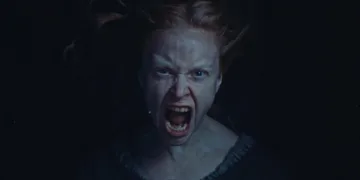




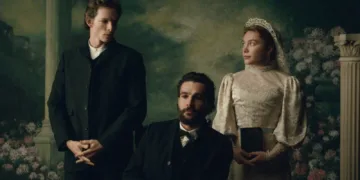











Giovanni Columbu’s Balentes moves like a ritual in shadow, an animated elegy that reshapes a local story into a meditation on fate and betrayal. Sardinia, 1940. The island stands on the threshold of war. Two friends, Michele and Ventura, attempt an act of unsullied idealism: freeing horses marked for military service.
Their gesture, born from a code of honor, fractures under betrayal and leads to ruin. Hand-drawn rotoscoping gives the film a haunted, impressionistic surface, a memory sealed in monochrome and sepia. Innocence meets the blunt weight of history, and the impact leaves an imprint that feels permanent.
The Aesthetics of Absence and Fate
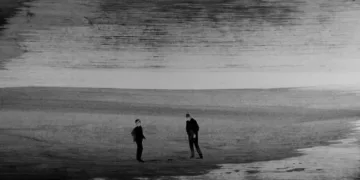
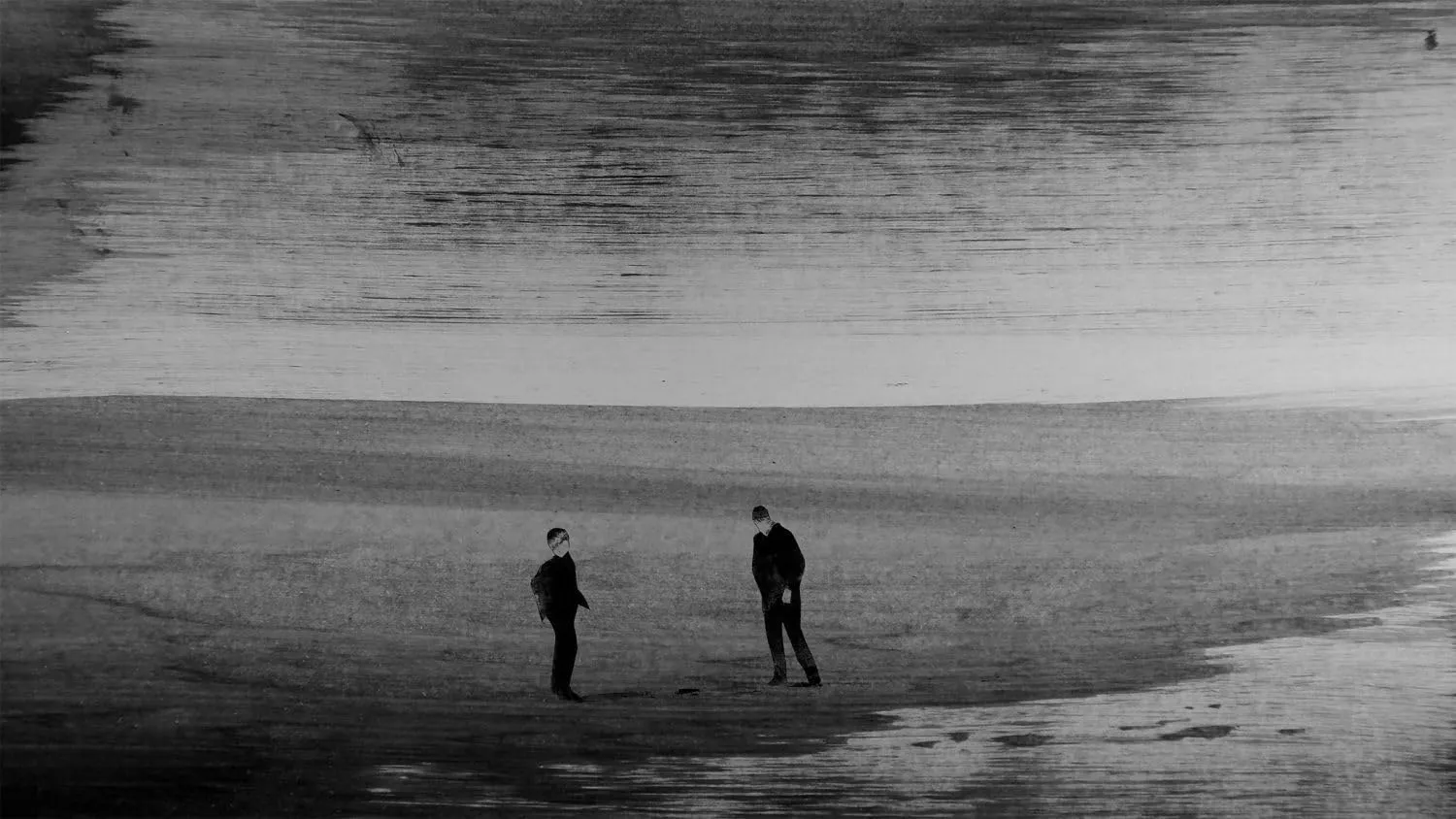
The visual design follows a severe discipline. Rotoscoping, joined with hand-painted marks, gives movement the texture of breath, as if the images were sketched in charcoal and remorse. The palette stays restricted to black, white, and gray, with brief warmth from a mournful sepia.
The figures avoid easy expressiveness. Faces arrive as hints, eyes as patches of darkness, and the distance between spectator and character remains deliberate. The frame proposes a world where the individual recedes beneath an encroaching historical shadow.
Sparse strokes carry symbolic charge. Horses appear with economical grace, their musculature and force presented with clarity, qualities soon absorbed by the machinery of war. Human bodies feel closer to smoke, present and fading at once. A smear of darkness lifts and becomes a flurry of butterflies, a small surge of life across the gray field.
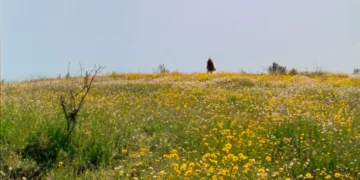
The film remembers the first languages of image-making. A bare Sardinian horizon echoes the frontier line of Westerns, and the motion recalls Eadweard Muybridge while the brush suggests the restraint of contemporary Japanese calligraphy. One nocturne fixes the boys at a fire, while owls hover above as silent witnesses. That hush arrives like a pause before an ending that will not spare them.
Balentia, Betrayal, and the Wheel of Tragedy
Balentes takes the form of contemplation. Plot yields to tone. Dialogue in the Sardinian dialect remains minimal, and silence becomes a kind of law. The story’s core is the boys’ abigeato, a livestock theft they understand as a matter of honor and of balentia, a Sardinian idea that names courage while casting a shadow of pride. Youthful conviction enters the cold geometry of state power, where fate feels mechanical and absolute.
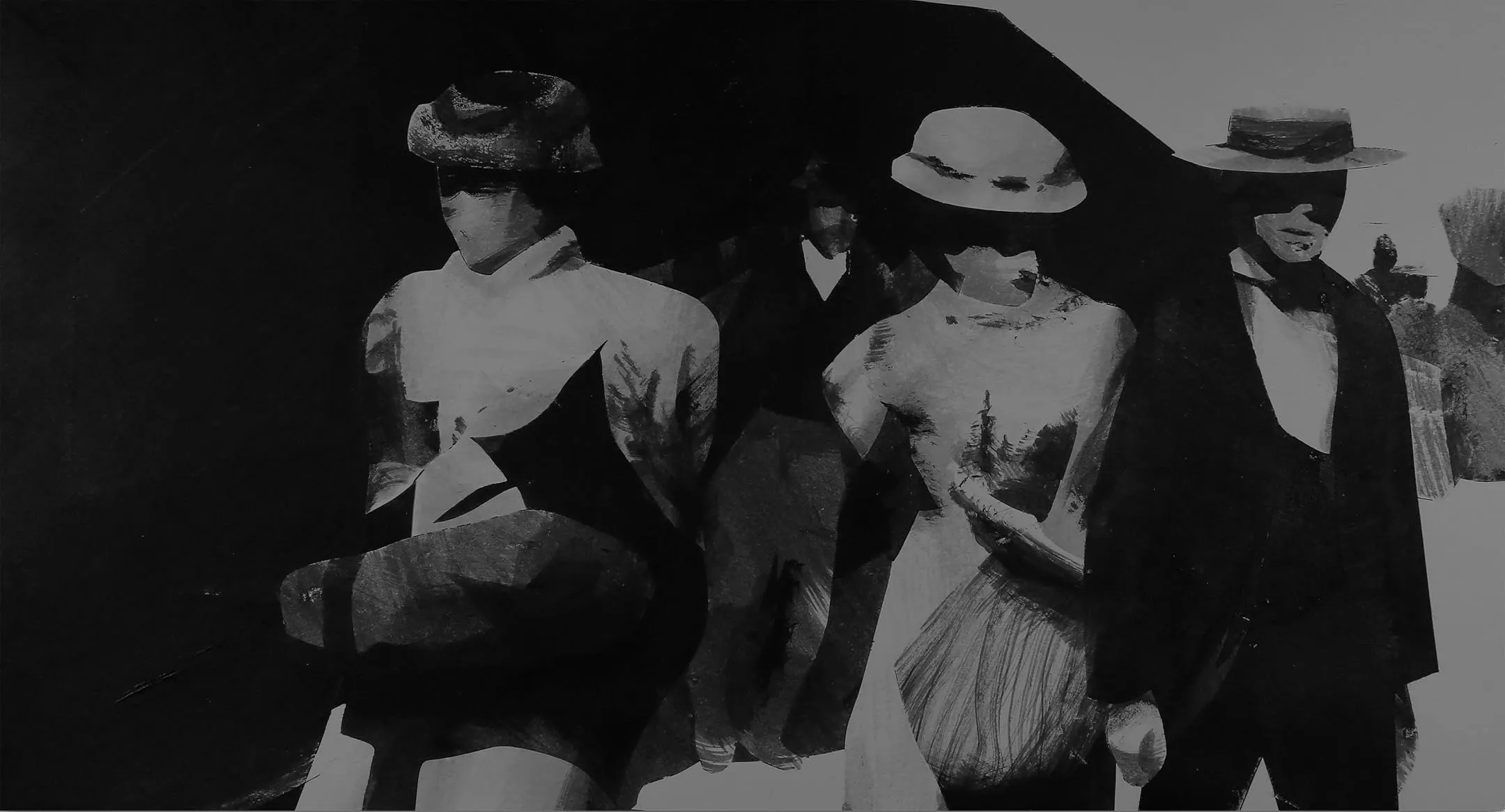
Columbu ties the conflict to Sardinia’s particular history. Anti-military feeling shapes Michele and Ventura, and the island’s strained relation to outside rule colors every choice they make. Tragedy takes the foreground. The land seems to obey fate, as if each step moved deeper into night. Melchior stands as the figure of malign intent.
He urges the theft, then commits the final betrayal, and that act sets calamity in motion. The island’s code of revenge closes in on him with equal force, a circle that tightens because it must. Near the end, the train sequence cuts through with a severe clarity. The film recalls the Lumière Arrival of a Train at La Ciotat and recasts it as an echo in mourning, a visitation that brings a coffin and devastation and empties the future from the track.
Sound, Silence, and the Funeral Ode
Sound organizes the emotion of the piece. Dusk and quiet frame the listening, and absence speaks with volume. Excerpts from Wolfgang Zeller’s score for Dreyer’s Vampyr thread a chill through the imagery. The music refuses illustration and clothes the narrative in measured austerity, a cool surface where grief collects.
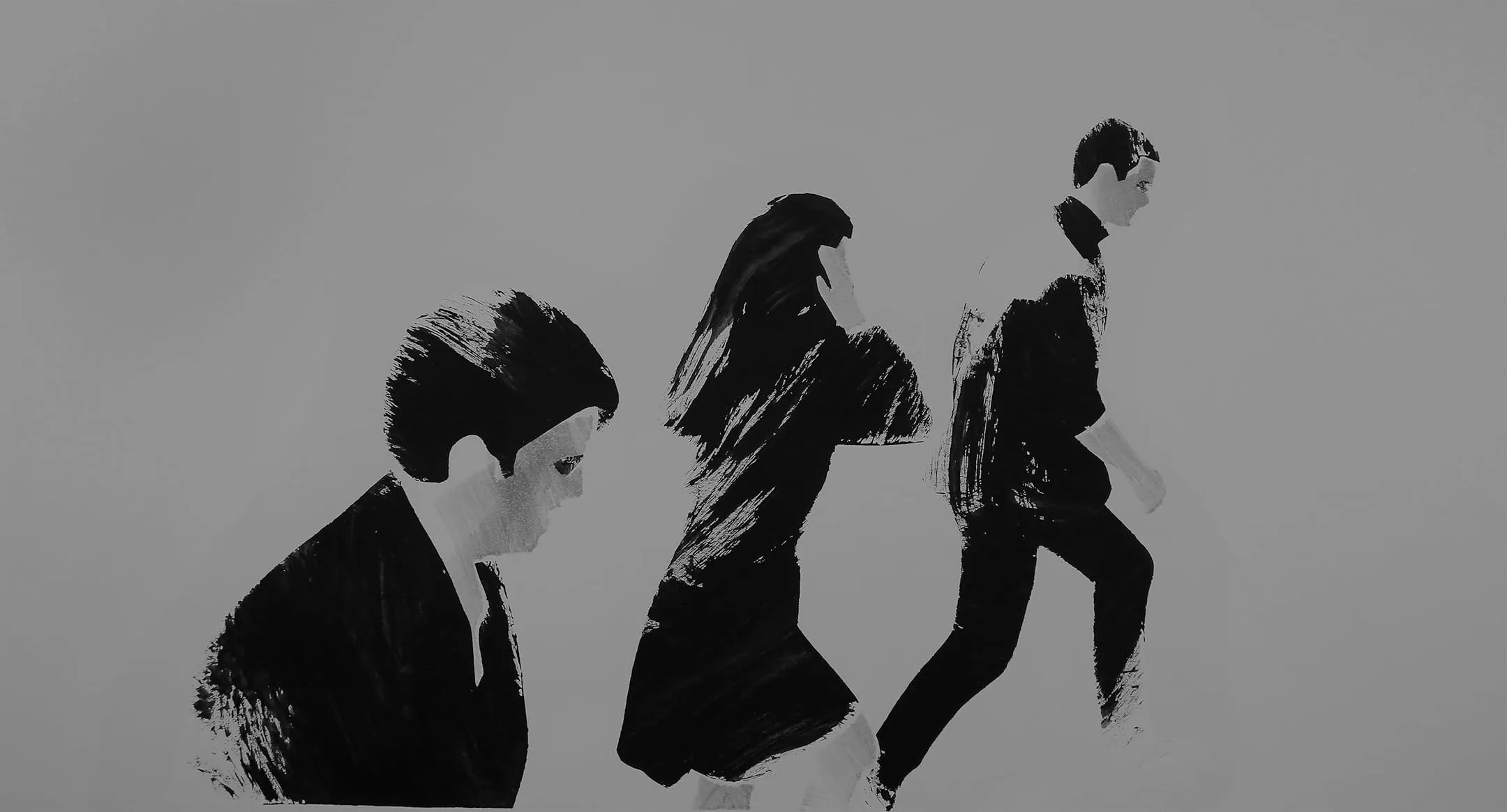
Voices matter, and their textures carry history. The whisper of omertà meets the cries of attittos, and the boys lift brief hymns of freedom. These layers build a landscape of sound where private feeling confronts the heavy pressure of time. Monochrome images and the score join to shape a single lament, an animated elegy that moves with the pace of a funeral ode.
The film’s spiritual severity calls to mind Bresson’s Au Hasard Balthazar, not as comparison of value but as kinship of restraint. Suggestion rules, and feeling deepens within that restraint. The questions it raises stay open: where courage ends, where pride begins, where fate ceases to be an idea and settles into the body. The film does not resolve these lines. It leaves them in the air, like ash that refuses to fall.
Balentes is an animated film directed by Giovanni Columbu. The film had its international premiere at the Rotterdam International Film Festival (IFFR) in 2025 and has also screened at other international festivals. It is a Sardinian-language film that runs for 70 minutes and is a co-production between Italy and Germany. The film tells the story of two young men in 1940 Sardinia who attempt to free a herd of horses from being sent to war, an act of youthful idealism that leads to tragedy. Details on its content rating and a wide distributor for general viewing are not readily available as of its festival run.
Credits
Title: Balentes
Distributor: Luches S R L
Release date: 2024
Running time: 70 minutes
Director: Giovanni Columbu
Writers: Giovanni Columbu
Producers and Executive Producers: Giovanni Columbu, Daniele Maggioni, Flavia Oertwig
Cast: Bruno Sedda, Andrea Sedda, Simonetta Columbu, Maria Antonietta Secchi, Giovanni Secchi
Editors: Giovanni Columbu, Benni Atria
Composer: André Feldhaus, Filippo Ripamonti, Stefano Tore
The Review
Balentes
Balentes is a mesmerizing, challenging work that rejects conventional narrative comfort to engage with the profound burden of history and fate. Columbu channels a Sardinian elegy through abstraction, resulting in an experience both beautiful and difficult. The film's formal rigor and emotional chill make it essential viewing for those seeking cinema that explores the dark, cyclical nature of human tragedy and the fragility of youthful honor against the mechanical force of the state.
PROS
- Striking, highly aesthetic monochrome animation that feels like a moving charcoal sketch.
- Deep, philosophically contemplative exploration of existential themes like fate, honor, and betrayal.
- Powerful sound design utilizing classical music and atmospheric silence to amplify mood.
- Bold use of abstraction and cinematic references that enrich its artistic context.
CONS
- Abstract character rendering limits direct emotional connection to human figures.
- Sparse narrative approach can feel hermetic or potentially overstretched despite its short runtime.
- Reliance on occasional text cards suggests a limit reached by the bare-bones narrative technique.