







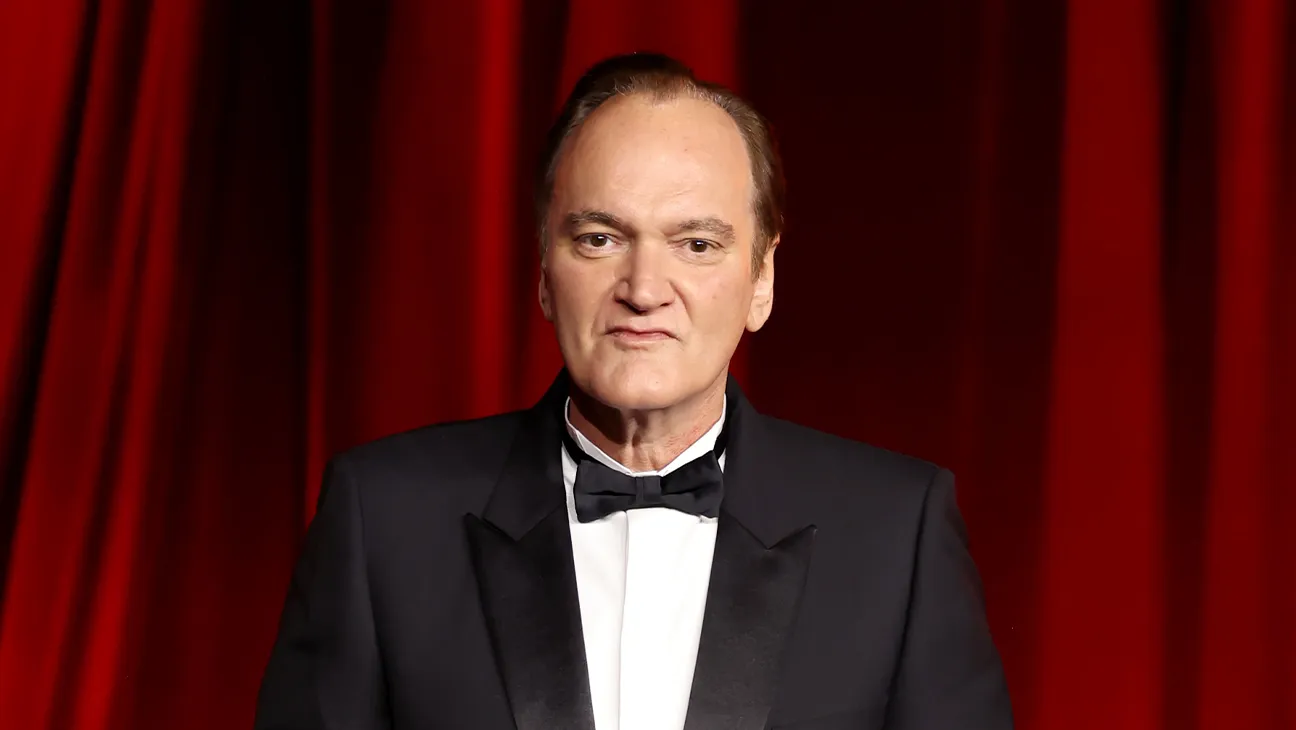

Quentin Tarantino has reignited a long-running debate about the origins of The Hunger Games, arguing that Suzanne Collins’ bestselling dystopian series “ripped off” the Japanese novel and film Battle Royale. Speaking on The Bret Easton Ellis Podcast, the filmmaker said he could not understand why Battle Royale author Koushun Takami never sued Collins, claiming the later franchise copied the earlier story’s premise of school-age children forced to fight to the death by an authoritarian state.
Tarantino, a long-time admirer of Battle Royale who has previously praised it as one of his favorite films, described The Hunger Games as “just Battle Royale except PG” and criticized literary critics for treating Collins’ work as groundbreaking when it was first published in 2008. According to his account, many reviewers were unfamiliar with Japanese cinema and therefore failed to flag the similarities, while film critics immediately drew the connection once the movie adaptation arrived in 2012.
Battle Royale was published in Japan in 1999 and adapted for the screen the following year, gaining cult status for its graphic violence and satirical portrait of a militarized society that forces a class of students into a televised death match. Nearly a decade later, The Hunger Games introduced a similarly lethal competition in the nation of Panem, where children are selected at random to participate in a state-run spectacle. Since the early 2010s, fans and commentators have argued over whether these parallels amount to imitation or a shared spin on older gladiatorial and dystopian tropes.
Collins has consistently rejected the idea that she borrowed from Battle Royale. In a 2011 newspaper interview, she said she had never heard of Takami’s book or the film adaptation until after turning in her manuscript, and that her main influences ranged from the Greek myth of Theseus and the Minotaur to Roman gladiator games, war coverage and reality television. She has said she avoided reading or watching Battle Royale even after learning of it, to keep its world out of her own imagination.
Commentary over the years has often landed somewhere between those positions. Some writers highlight the structural overlap between the two franchises, while others point to differences in tone, politics and audience: Battle Royale as a brutal, hard-edged satire, The Hunger Games as a young adult narrative centered on resistance and media manipulation.
Takami himself has previously responded with relative calm, acknowledging the controversy but saying that if readers find value in either work, “that’s all an author can ask for.” Tarantino’s remarks arrive just as the Hunger Games series returns to cinemas with a new prequel, ensuring the argument over influence and originality is unlikely to fade soon.