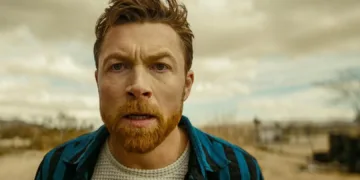




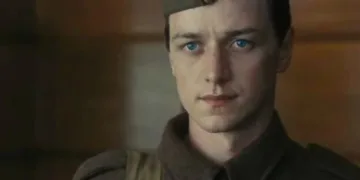
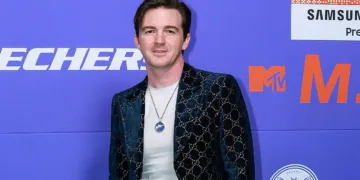















The Disinvited, written and directed by Devin Lawrence, opens on a blunt premise: a man shows up where he has been told he should not be. Framed by the wide, eerie solitude of the Joshua Tree desert, the story follows Carl (Sam Daly) as he crashes a reunion and wedding thrown by a circle of friends who have long cut him out. The first stretch leans into the brittle etiquette of people who share history and do not know what to do with it anymore.
The awkward tension is thick, and the group’s fragile social balance feels ready to crack. That uneasy quiet snaps into disorder as the day drags on through ruptured alliances, old resentments surfacing, and a slide into psychological strain. Carl soon sees that he is not the only unwanted presence in the desert, and that knowledge pushes him toward a dangerous face-off. Lawrence aims for a horror story rooted in exclusion, ego, and the way identity splinters when a community denies you a place.
The Troubled Lead and Misfired Dialogue
Carl is the film’s hinge, and Daly plays him with a raw, manic charge. He lurches between neediness and threat, his turmoil keeping the audience unsure where sympathy should land. The script holds him in a gray zone: a man chasing redemption after clear mistakes, or a self-absorbed intruder who has earned his exile.
This ambiguity taps a social dynamic that makes sense across cultures. Belonging often rests on memory, jokes, and small rituals, so Carl’s refusal to accept the group’s verdict reads as tragic and invasive at the same time. The film uses his instability to press on questions of responsibility and self-image, letting viewers carry competing readings at once.
His volatility keeps the room and the viewer on edge, yet the people around him struggle to feel like a real unit. The supporting cast brings commitment, but the script keeps forcing them into melodramatic flare-ups and shout-heavy delivery. Their chemistry comes off staged, and the friends rarely sound like people who have lived in each other’s pockets for years.
The dialogue reaches for a witty, referential style, tossing pop-culture nods from Creed to Spider-Man into casual talk. In practice, many exchanges feel contrived, inane, and unreal, draining tension they are meant to tighten. Those references may signal a shared media language for this group, but they land like placeholders for real hurt.
The pacing adds to the drag. The first two acts move slowly and unevenly, and the narrative keeps swerving among psychological thriller, a flirtation with sci-fi, and slasher horror. The tonal wobble may mirror Carl’s shattered headspace, yet it makes the early stretch a chore, leaving the 90-minute run feeling far longer.
Technical Finesse and Genre Friction
For a small independent production, the technical work stands out as the film’s strongest asset, proof that careful craft can lift modest material. J. Connor Bjornson’s cinematography pulls sharp, anxious beauty from Joshua Tree, turning the desert into a psychological map whose open distances and harsh light track Carl’s unraveling.

Sound design by Ando Johnson and the score from Jaco Caraco and Jacob Fatoorechi lay in a steady undertow of dread, staying thickly atmospheric and keeping pressure on even when scenes pause to talk. The production design gives each space a lived-in, slightly crooked feel that fits the growing unease.
Lawrence adds slick transitions and a few smart character feints, and the climax uses practical splatter and gore to good effect. The film still wrestles with genre traffic. It gestures toward psychological horror, a survival tale, and slasher beats, creating an experience that can feel inconsistent and disorienting.
The payoff hits hardest in the final act, when the scattered threads tighten into violence and catharsis. One smaller irritation is the reliance on borrowed songs, especially repeated covers of “House of the Rising Sun,” which start to feel like a crutch.
Themes of Exclusion and the Violent Climax
The Disinvited works as a close study of rejection and the damage left by friendships that rot in place. The sting of being shut out is easy to recognize in any setting, and the film plays on the fantasies people build to reverse that verdict.
Carl’s ego, unresolved trauma, and gnawing insecurity swell into obsession, and the film frames that swell as social horror. It sketches a present tense in which resentment blocks closure and forgiveness slips into myth. Stuck to Carl’s viewpoint, the story blurs paranoia with truth, asking viewers to stay alert to what is real and what is projected.
That sense of instability pays off in a final stretch that turns chaotic, gripping, and brutally violent. The last act breaks open with a rush of catharsis, bringing the film’s tension and ideas to an intense climax that feels earned. After a patience-testing start, the ending lands hard and hangs around past the credits with a dark, unsettled satisfaction. The film’s boldness sits in its mood, its technical control, and its final eruption of anger and sorrow, capturing the ache of being cast out by the people who once mattered most.
The Disinvited is an American psychological dark comedy thriller that had its world premiere at the 2024 Fantaspoa Film Festival. It follows Carl as he crashes the wedding of his estranged former friends in the California desert, only to set off a chaotic day of betrayal and violence. The movie was released for a limited theatrical run starting November 6, 2025, and is available on Digital platforms starting November 18, 2025.
Full Credits
Title: The Disinvited
Distributor: Dark Star Pictures
Release date: November 6, 2025 (Limited Theatrical), November 18, 2025 (Digital)
- Director: Devin Lawrence
Writers: Devin Lawrence, Matthew Mourgides
Producers and Executive Producers: Matthew Mourgides, Sam Daly, West Harris, Jordan Langer, Michael Mourgides, Ted Ringeisen, Chris Schwartz
Cast: Sam Daly, Dani Reynolds, Ryan Vincent, D.K. Uzoukwu, Alana Johnston, Samantha Jean Kwok, Ronnie Gene Blevins, Mia Challis, Patrick Gallo, Ingrid Haas, Tommy Bechtold, Bryson Robinson
Director of Photography (Cinematographer): J. Connor Bjornson
Composer: Jaco Caraco, Jacob Fatoorechi, Mark Snow
The Review
The Disinvited
The Disinvited is a highly ambitious independent thriller that skillfully uses its technical strengths, particularly cinematography and sound design, to build an atmosphere of genuine psychological dread. Its core analysis of social exclusion and ego is timely and hits a raw nerve. However, the film is hindered by an inconsistent screenplay, featuring awkward dialogue and highly uneven pacing that makes the first two acts a frustrating viewing experience. While Sam Daly's performance is compellingly manic, the overall narrative structure only truly coalesces into a satisfying, violent climax. It's a messy, but ultimately memorable, descent into fractured identity.
PROS
- High-quality cinematography, sound design, and score effectively create a haunting, tense atmosphere.
- Sam Daly delivers a volatile, memorable portrayal of Carl.
- The climax is chaotic, cathartic, and provides a rewarding payoff for the earlier slow-burn tension.
- Effectively explores the psychological horror of social rejection, ego, and the need to belong.
CONS
- The first two acts are slow, often confusing, and feel significantly longer than their actual runtime.
- Dialogue is often contrived, inane, and fails to feel authentic.
- The film shifts awkwardly between genres (thriller, horror, survival) without fully committing, leading to disorientation.
- Carl is difficult to connect with, and the supporting cast is sometimes hampered by melodramatic line delivery.