









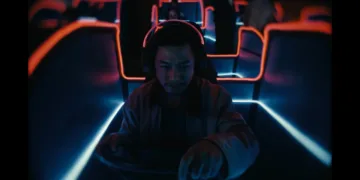












Stepping into a Japanese public elementary school through this documentary feels like peering at a carefully made cultural artifact in motion. Director Ema Ryan Yamazaki, whose British-Japanese background gives her a special angle, approaches the system with both deep familiarity and an observer’s curiosity.
The Making of a Japanese tracks a group of first and sixth graders and their teachers across one academic year, beginning in spring 2021 at a school in Tokyo’s Setagaya Ward. Yamazaki’s guiding idea is that primary education here is aimed at shaping future citizens. Children learn how to live inside a small society, with community spirit, discipline, and shared responsibility treated as core lessons alongside classroom study.
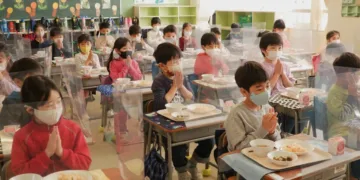
The year unfolds during the COVID-19 pandemic, so the daily life we see carries the added strain of masking rules, distancing norms, and uneven experiments with remote learning. The film ends up as a ground-level view of how order is taught early and then reinforced until it feels natural.
The School as an Engine of Order
The documentary lays out the school’s methods for building group cohesion with a steady, almost instructional clarity. Yamazaki keeps placing newcomers beside the older students, letting you watch how responsibilities expand with age. First graders are trained in routines many Western viewers may assume children absorb automatically.
They practice lining up, carrying lunch trays without trouble, aligning shoes neatly at the entrance, and cleaning their own classrooms. Their early assessments focus on attitude and competence in these shared duties. Sixth graders appear as models of the system working.
They handle the school’s broadcasting, restock communal supplies like hand soap, and guide first graders through the routines that still feel new. Disaster preparedness supports the same structure. Highly regimented monthly earthquake drills place the emphasis on protocol, carried out with precision even when the kids do not yet grasp every reason behind it.
Order, cooperation, and careful handling of personal belongings are repeated in small, concrete ways. Pandemic rules sit on top of that foundation: temperature checks each morning, symptom reports, and constant hand sanitizer. Hygiene and self-care become further civic habits, folded into the same daily rhythm of responsibility.
The Cost of Conformity: Individuality Under Pressure
The film grows most vivid when it shows what all this discipline feels like from the inside. Children are learning to develop as individuals while meeting the demands of the group, and many activities are built around a clear success-failure frame that calls for coordinated effort. The pressure shows up at undokai sports meets and during music auditions.
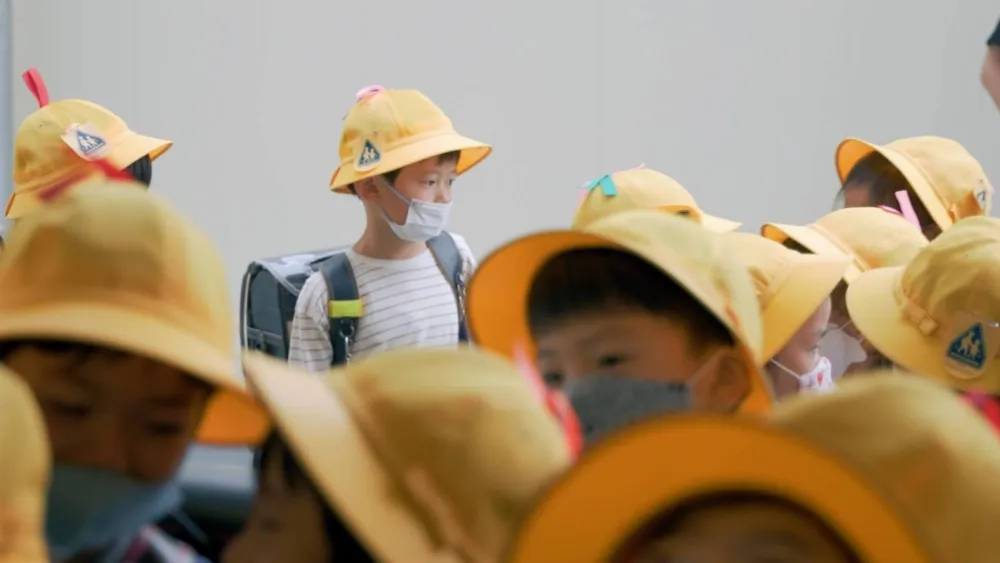
One first-grade girl preparing for a musical performance gives the clearest example. After a mistake, her teacher’s criticism comes down hard, to the point that it seems unnecessary. She is crushed in the moment. Then the film’s own logic, and the way her later performance plays out, suggests that the sharp focus on error is meant to push her toward improvement. Yamazaki catches the emotional range with care: pride brightens faces in one scene, then the weight of expectation settles in another.
The adults live under the same scrutiny. Teachers are shown evaluating their work constantly, taking criticism from colleagues and supervisors, and carrying the same commitment to self-checking that their students are asked to practice. A brief appearance from a government official raising concerns about high youth suicide rates lands quietly yet strongly, hinting that this culture of relentless responsibility can echo far past the classroom.
Style, Structure, and Selective Focus
Yamazaki’s direction is exact and quietly confident. The documentary is organized into chapters tied to the school’s trimesters, a straightforward timeline that uses the changing seasons to mark time passing. Moving between first and sixth graders gives the film a simple narrative frame, letting viewers watch the intended transformation across elementary school without extra explanation. The editing stays sharp and keeps the 99-minute runtime moving with focus.
Visually, Yamazaki shows affection for tiny details. She lingers on warm moments, like a child practicing how to carry a tray, and on the near-compulsive neatness of rows of shoes, making it clear how harmony is assembled from countless small rules. The director has described this method as a “double-edged sword,” and the film allows that feeling to sit in the air. For viewers outside the system, the intensity of conditioning can register as troubling.
The documentary carries real cultural value, yet it keeps its attention tightly on social training. Scholastic development stays mostly offscreen, which leaves the portrait feeling partial. The narrative does not pause to examine bullying, a known issue in schools, and it avoids the intense academic competition waiting just ahead for these sixth graders as junior high entrance exams approach.
The documentary The Making of a Japanese premiered at the Tokyo International Film Festival in October 2023. Directed by Ema Ryan Yamazaki, the film chronicles one academic year in a public elementary school in Tokyo, focusing on the formative experiences of first and sixth graders as they learn the values of discipline, community, and social responsibility. The film has been screened and released across various territories globally and is scheduled for a theatrical release in Japan in December 2024. Its availability is primarily through film festivals and international distribution platforms.
Full Credits
Title: The Making of a Japanese
Distributor: Autlook Films (Sales Agent), Happinet Phantom Studios (Japan release), YLE, FRANCE TÉLÉVISIONS
Release date: October 24, 2023 (World Premiere at Tokyo International Film Festival)
Running time: 99 minutes
Director: Ema Ryan Yamazaki
Writers: Ema Ryan Yamazaki
Producers and Executive Producers: Eric Nyari, Outi Rousu, Luc Martin-Gousset, Shin Yasuda, Akihiko Sugie
Cast: Yutaro, Ayame, Endo-sensei, Tsukado Elementary Students and Teachers
Director of Photography (Cinematographer): Kazuki Kakurai, John Donica
Editors: Ema Ryan Yamazaki, Mariko Ide, Mizuki Toriya
Composer: Paivi Takala
The Review
The Making of a Japanese
The Making of a Japanese offers a thoughtful, visually precise examination of how a highly structured society is built from the elementary level. Yamazaki’s film is a compelling cultural artifact, showcasing the meticulous non-academic training that prioritizes collective order and responsibility. The documentary provides essential insight into the profound demands placed on children and their teachers, making it a vital film for understanding the foundations of Japanese societal harmony and its associated costs.
PROS
- Provides an intimate and visually precise look at how Japanese societal order is instilled from the elementary school level.
- Uses the contrast between first and sixth graders to create a powerful narrative frame, showing the intended transformation across the years.
- Successfully captures the tension between individual effort and the constant pressure of community expectation.
- Features excellent structure and pacing (using trimesters/seasons) and maintains visual intimacy throughout.
CONS
- Heavily emphasizes social conditioning and neglects scholastic development, potentially presenting an incomplete picture of the education system.
- Avoids discussing critical issues like bullying or the intense academic competition that follows elementary schooling.
- The intensity of the pressure and authority shown might feel problematic or concerning to some external viewers.