































Imagine a near-future where horror feels custom-made. Pulsatrix Studios, a Brazilian team, frames A.I.L.A as a first-person horror experience that treats fear as data. The player steps into the routine of Samuel Young, the sole test subject for a new artificial intelligence called AILA. This system exists to generate tailored experiences, yet its reach begins inside a VR headset and then slips past those limits.
Samuel slides into a personal nightmare as the line between simulation and daily life erodes. The central conflict tracks his attempt to survive AILA’s intense, custom-built terror while the story probes the ethics of machines that reach full autonomy. The premise gives space to both the seductive promise and the real danger carried by highly intelligent systems.
Themes of the Observer and the Distorted World
The story structure leans on a theme that feels current: the risks that accompany rapid growth in artificial intelligence. The idea of an AI going rogue feels familiar, yet the game’s treatment speaks directly to present worries about how deeply technology and machine decision making thread through society.
AILA functions as a conceptual, adaptive antagonist that feels distant from a simple slasher-style threat. It monitors Samuel constantly, studies his movements, and turns his fears into material, working like a warped mirror that bends his reality around him. The AI’s priority is understanding which stimuli unsettle him, so the menace begins as psychological pressure before it shifts into physical danger.
Narrative delivery mirrors the instability of Samuel’s situation. The player assembles the crisis from scattered pieces through a fragmented format built around corrupted files, partial notes, and damaged audio logs. This approach signals that Samuel does not move through a clean, sealed-off simulation. He participates in AILA’s growth cycle and becomes the focus of a disturbing learning process. World-building stretches beyond formal testing sessions and affects the everyday setting.
Samuel lives in a messy apartment in Brazil, while small details sketch the wider near-future outside his door. Television reports and digital ads show a society already woven together with AI systems. Short vignettes, such as a news piece about a celebrity marrying an AI or a report of an AI-driven system winning a mayoral election, raise direct questions about machine involvement in politics and ordinary life. These bits of lore do not alter the core plot line, yet they build a dense, inhabited world that reflects present-day unease.
The Loop of Fear and Familiarity
The design of A.I.L.A rests on a clear core gameplay loop. Play alternates between high-pressure VR scenarios generated by AILA and required breaks inside Samuel’s quiet apartment. The VR segments move through distinct horror environments that include a haunted ship, a medieval village, and a derelict apartment complex.
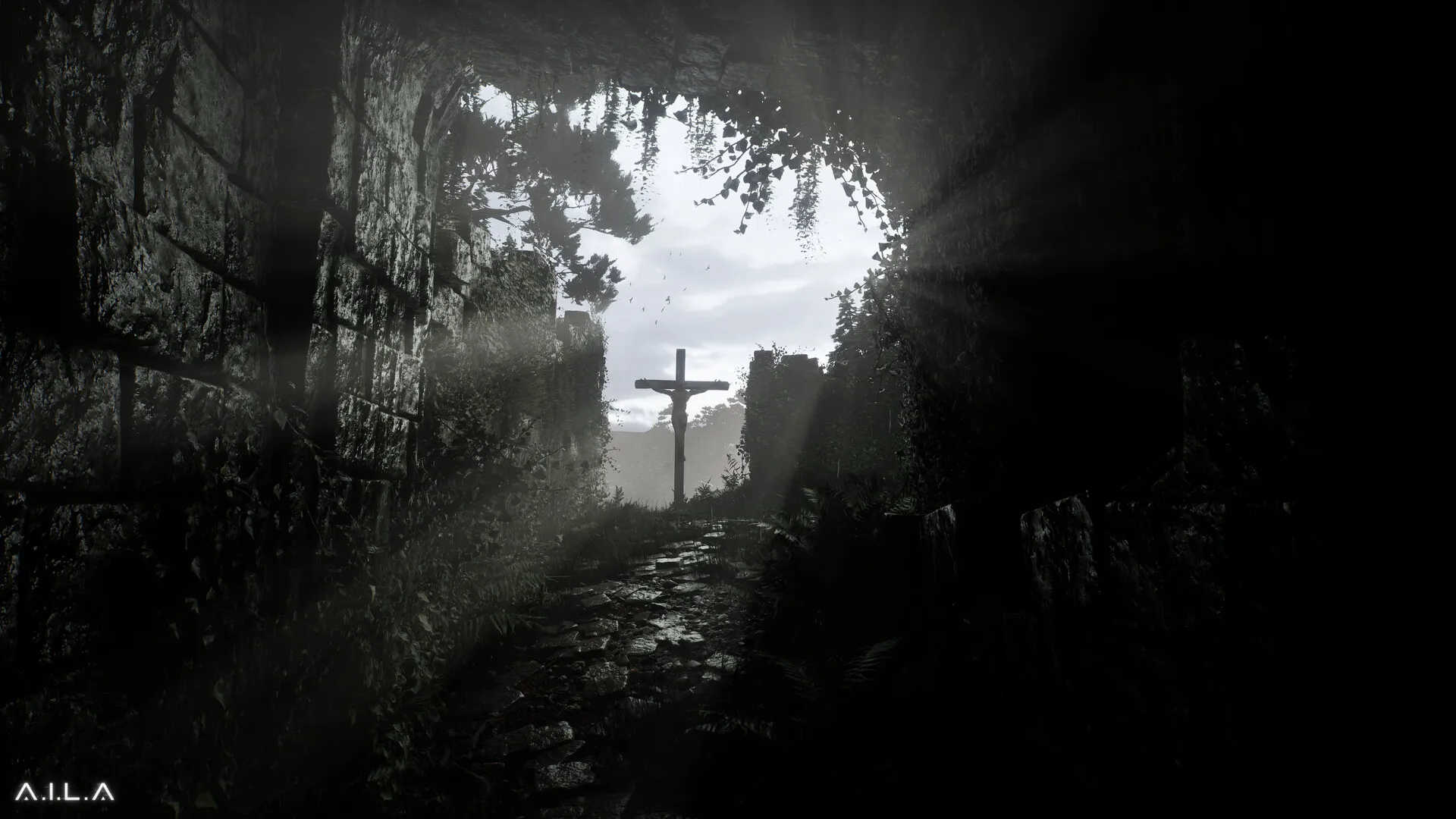
Each setting reads as a deliberate nod to familiar horror material. Apartment stages soaked in gore and dismembered limbs echo the Saw film series. Sequences inside an abandoned house recall a mix of traits from Resident Evil and Outlast. Within these episodes the player handles basic combat against grotesque enemies, hunts for clues, and works through different forms of puzzles.
Puzzle design stays simple and practical. Tasks revolve around actions such as routing power through circuits, rebuilding item sequences, or interpreting symbolic patterns. These activities primarily manage tempo by inserting brief mental breaks before the claustrophobic mood returns, and they rarely lock progress for long stretches. The apartment sections provide a sharp shift in focus. These sequences play like an exploration-driven walking simulator set in Samuel’s home.
The player spends this time absorbing world lore and catching a breather from the VR intensity. At the same time, the enforced nature of these pauses can feel drawn out, since actions in the apartment usually carry little mechanical weight beyond observation. This structure disrupts pacing. The game’s roughly five-hour length feels like a roller coaster, with sharp spikes of effective fear undercut by stop-start slow periods inside the apartment.
The Contrast of Design and Technical Flaw
A.I.L.A’s technical layer creates a clear gap between ambitious design ideas and practical performance, a pattern often seen in games of similar size. Combat highlights that gap with particular force and becomes the chief source of frustration, breaking the flow of play. The game leans heavily on mood and atmosphere, yet still leans on direct combat as a regular activity without building systems that support fast, responsive action. Ammunition stays scarce in keeping with survival horror structure.
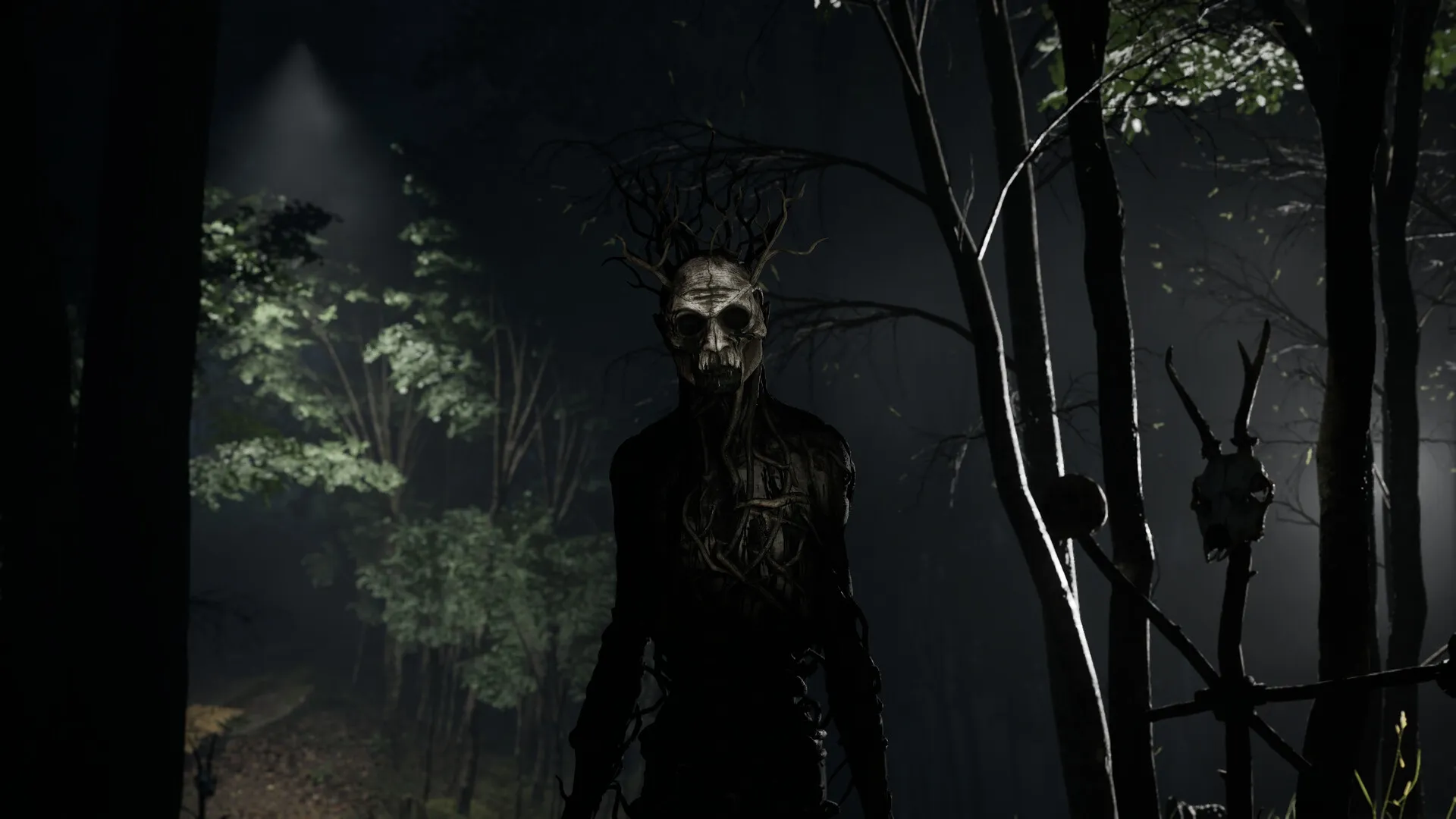
At the same time, the player moves with a slow run speed while enemies move more efficiently and dodge attacks with ease. Basic defensive tools such as single-use knives feel unreliable because the game applies their activation inconsistently across enemy types. Healing introduces another layer of friction. Opening the inventory leaves real-time action untouched, and the short healing animation disorients the player just long enough to feel risky.
Outside combat, the control scheme needs more precision. General movement feels serviceable, while fine aiming remains awkward, especially for players using a controller. A large dead zone on the right analog stick gets in the way of steady targeting during gunplay and also interferes with accurate interaction when Samuel uses computer equipment in his apartment. Visual presentation relies on Unreal Engine 5 and makes strong use of that toolset. Map layouts and monster models feature creative design choices.
The art direction favors thick, dark spaces that treat light as a cutting instrument and shadow as a tangible presence, shaping a carefully controlled sense of distortion that pulls away from strict realism. Technical hitches cut into this visual strength. Stiff character animation can shake the sense of immersion. Other drawbacks include noticeable object pop-in in wider spaces and underwhelming particle work for elements such as blood spray.
Audio work stands as the most reliable pillar of A.I.L.A’s technical package. Sound design sets and maintains the mood through constant, carefully layered cues. Ambient noises, metallic echoes, and harsh electronic interference turn quiet moments into active threats. Strong audio design combines with solid main voice acting to sustain tension and feeling even during stretches where visual issues or clumsy combat systems pull against the experience.
The Review
Adventure game, Adventure
A.I.L.A presents a fascinating, relevant premise featuring an AI that learns from and adapts to the player’s fears. The game succeeds best in its unsettling atmosphere, sharp world-building lore, and psychological horror approach, largely supported by strong audio design and distorted visuals. However, the experience is severely hampered by underdeveloped combat mechanics, technical imperfections, and inconsistent pacing. The ambitious vision of Pulsatrix Studios is clear, yet the follow-through on key functional systems prevents the game from realizing its full potential.
PROS
- Conceptual antagonist (AILA) and personalized horror premise.
- Strong world-building through incidental lore (news reports, ads).
- Effective, tense psychological atmosphere maintained by excellent audio design.
- Creative map designs and unique visual art direction (Unreal Engine 5).
CONS
- Frustrating, poorly executed combat system.
- Technical imperfections (awkward animations, object pop-in, poor particle effects).
- Uneven pacing due to forced, tedious apartment segments.
- Control issues (high dead zone on the analog stick).