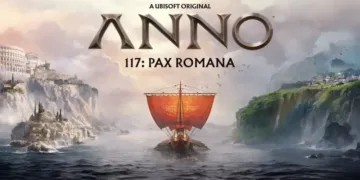



























Anno 117: Pax Romana situates the long-running city-building and economic strategy series across the Mediterranean and the frontier of 117 AD. As a Roman governor, the player manages two contrasting provinces: Latium, the cultured core of the Empire, and Albion, a volatile borderland shaped by Celtic communities. The loop revolves around founding settlements, extending influence, and running layered production networks that satisfy rising citizen needs.
The familiar Anno emphasis on supply chains fits a historical backdrop with strong visual character. The setting supports Roman, Celtic, or hybrid settlement development, framed by striking aqueducts, theaters, and vast colosseums. This entry delivers the classic management challenge with a distinct cultural frame.
The Calculus of Civilization
Citizens rise from the opening population tier, the Liberti, once core needs are met. New tiers arrive with demands for advanced goods and civic services. Production webs expand quickly, and efficient growth depends on trade routes connecting islands and provinces to gather resources that a single location cannot provide. Inter-province trade between Latium and Albion becomes a growth engine because certain materials appear in one region and not the other.
A refined Revised Needs System underpins this economy. Citizen desire now appears as a point-based attribute model, so players hit thresholds rather than checking every need. Supplying fish to early tiers influences income, while porridge steers population growth. This design pushes planning from box-ticking to targeted attributes that define a settlement’s economic identity.
City layout gains new weight. Production buildings near housing provide practical bonuses such as better fire safety and extra income. Coverage from public institutions like hospitals and fire stations matters for cost control and service reach, which encourages careful spatial decisions. Active Pause eases the workload by letting players plan, move, and build without time pressure.
Shaping Culture and Unlocking Potential
Player agency expands through a Cultural Choice in Albion: Romanization or preservation of Celtic culture. The decision shapes aesthetics, architecture, and resource profiles for later tiers. The path invites repeat play with distinct looks and demands. The approach builds an empire with local character that grows from regional identity.

Progression gains extra texture with the Grammaticus, a research hub that resembles a skill tree. Economic, Civil, and Military tracks provide permanent upgrades such as improved roads and more effective public services. Advancement does not rely solely on population milestones, and certain research paths still connect back to shipments that keep the economy engaged with development.
The Gods and Faith system ties theme to strategy. Roman gods, or Celtic counterparts, confer specific economic or production benefits to a settlement. Players can change patrons to match shifting needs, which keeps planning flexible. Presentation-focused tools arrive as well, with diagonal roads and the Hall of Fame progression. The latter awards decorations and permanent unlocks for in-game actions, which encourages varied play styles.
Narrative Forks and Operational Efficiency
Two primary modes structure play: a Campaign and a highly tunable Sandbox/Endless Mode. The campaign features Marcia Tertia and Marcus Kaukratius, whose arcs provide different tones as the player moves from Latium to Albion. The experience offers guidance and a clear path, though certain narrative turns arrive abruptly and miss chances for extended consequence.

Sandbox favors control. Players adjust starting resources, research tempo, and the behavior of aggressive AI rivals like Caeso and Voada. Settings support calm infrastructure building or a management scenario with naval and land combat.
War functions as an economic stress test. Ships and land units consume resources and attention, placing the spotlight on logistics rather than intricate battlefield tactics. Diplomacy links to this layer. Reputation and contract fulfillment with other governors open trade opportunities and non-aggression agreements. Conflict stays anchored to the strategic management game.
The interface supports all of this work. It is clean, readable, and effective at presenting dense information, a model for builders and management sims. Visuals carry the theme with cinematic and first-person cameras that highlight detailed Roman and Celtic architecture, creating a historical space that feels vivid and coherent.
The Review
Anno 117: Pax Romana
Anno 117: Pax Romana is a successful, highly refined strategy experience. It builds upon the established core with meaningful new systems like the point-based citizen needs and the detailed research tree. The choice between Roman and Celtic cultural development provides excellent replay value and thematic depth. While the campaign narrative falters at key moments, the efficient interface and stunning visual presentation of the Ancient World make city management immersive and satisfying. This title represents a new high-water mark for strategic city builders.
PROS
- Refined and streamlined core economic mechanics.
- Strategic point-based citizen needs system.
- Meaningful Roman versus Celtic cultural choices.
- Excellent, highly efficient user interface.
- High visual quality and detailed historical setting.
- Active Pause greatly improves planning.
CONS
- Campaign story feels underdeveloped or abrupt.
- Core gameplay loop is highly familiar to series veterans.
- Resource scarcity often forces trade dependency.