




























The moment Lumines Arise starts, it presents a confident fusion of rhythm game and falling-block puzzler. Developer Enhance/Monstars Inc. continues its focus on synesthesia, treating sound, sight, and tactile feedback as parts of a single interactive system. This release refreshes the classic falling-block framework and extends the idea of a musical puzzle game into new territory.
The core objective revolves around dropping 2×2 blocks, each composed of two colors, onto a wide horizontal grid. Players rotate and position these blocks to build contiguous 2×2 squares, or larger shapes, made from one color. Many puzzle games clear pieces as soon as matches appear. Lumines instead ties clearance to the Timeline (Sweeper), a vertical line that travels from left to right at the tempo of the current stage.
Only completed, same-color squares vanish when this Timeline crosses them, granting points and combo multipliers. The player constantly weighs the geometry of falling blocks against the timing of this sweep, which creates steady pressure around planning and execution. The design encourages a deep focus, and the combination of rhythm and spatial planning draws players into a strong flow where stretches of play pass in concentrated, musical bursts.
Synesthesia as Core Design
Lumines Arise treats music as a mechanical pillar rather than a passive backdrop. Each action, such as placing or rotating a block, triggers sound effects that join and evolve the current track. The soundscape responds directly to the player’s timing and choices, forming a loop where mechanical decisions shape the music and the music guides the pace of play.
The structure of the game is built around a Stage System that cycles through dozens of distinct visual and audio themes, or skins. Every stage introduces a new song, a specific block texture set, and a distinct rhythmic tempo. The range feels broad, spanning rapid, intense electronic and techno tracks through quieter, contemplative pieces that feature forceful vocal performances. As the player advances, this shifting playlist constantly reframes how the core mechanics feel, from aggressive, high-speed pressure to slower, more reflective rhythms.
Visually, Lumines Arise reaches a level of artistic complexity reminiscent of independent short films. The blocks transform from simple geometric forms into unexpected surfaces such as hen’s eggs and feathers, edible legumes and vegetables, or meticulously rendered watch faces and metallic parts. Behind the grid, animated scenes show dancers in motion, astronauts reaching the edges of space, and fluid natural environments that respond to both performance and musical pulse.
VR support on PSVR2 and SteamVR, together with advanced DualSense haptics, strengthens the sense that audio and imagery are surrounding the player. For those who find this sensory density overwhelming, the game offers key accessibility settings that adjust background transparency, zoom distance, and particle intensity, allowing players to tune the presentation to their comfort level.
The Strategic Layer of Burst
The longstanding mechanical tension in Lumines comes from the delay built into the Timeline. Blocks only clear once the Timeline crosses them, so a fast tempo can quickly fill the board and raise stress levels. Players constantly decide between building large, high-value combos and performing rapid, low-yield clears to protect their remaining space. Every placement becomes a choice between short-term survival and long-term scoring potential.
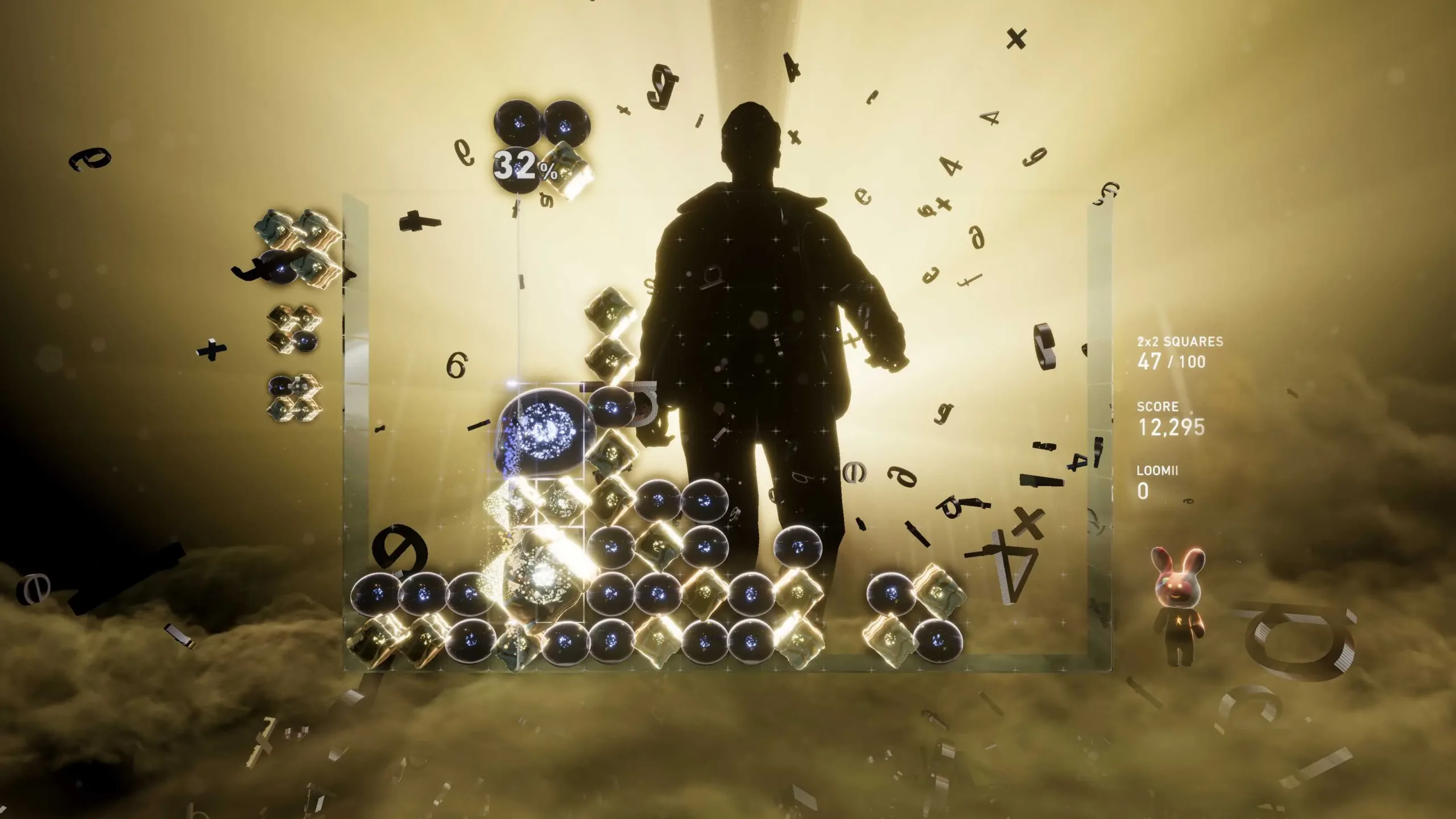
Arise introduces the Burst Mechanic as a strategic release valve and scoring instrument. A power meter fills as the player performs standard clears. Triggering Burst Mode temporarily freezes the Timeline and highlights a crucial uncleared square on the grid. The player can then stack adjacent blocks of the same color onto this anchor to create a massive formation.
Blocks of the opposing color are pushed aside during this window, giving the player breathing room to reshape the field without immediate time pressure. Once Burst ends, the large formation clears in one event, and the displaced blocks drop back into place, often creating dramatic chain reactions and generous score multipliers.
This system raises a persistent question of timing. Players can hold Burst for looming disaster, treating it as an emergency escape, or activate it early to convert a promising layout into a huge combo. Learning how long to wait for a full charge, and when a partial charge is enough, becomes a key element of mastery.
The design further refines this layer with minor tools such as Fuse Blocks, which allow the clearing of connected same-color squares regardless of shape. These moments of structural freedom temporarily loosen the strict geometric requirements and give players flexible ways to rescue messy boards or extend specific patterns.
Modes and Progression Structure
The central mode is Journey Mode, a focused campaign built from over 30 sequential levels that present the full spread of visual and musical themes. The first clear of this route moves quickly, but the design clearly expects players to replay stages to chase higher scores and better grades across multiple difficulty settings.
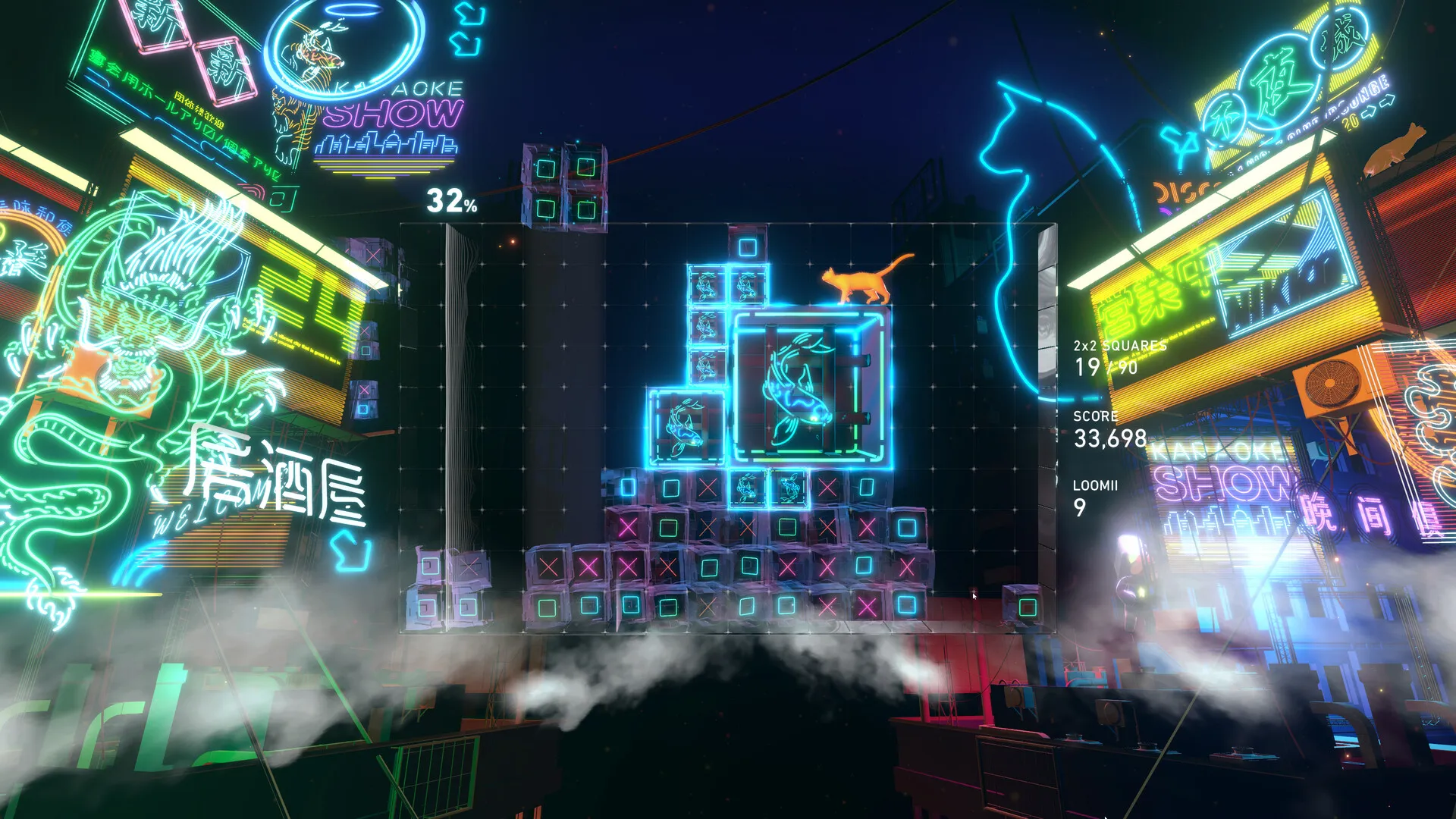
A subtle sense of community emerges through the Loomii, small in-game avatars that represent other players. During runs, these Loomii can be “rescued” by using the Burst Mechanic, which turns the mode into a shared effort to collect 1,000 of them and gives each successful rescue a social dimension that sits inside the mechanical loop.
Outside the main route, Lumines Arise offers a set of single-player variants that frame the same core systems in different ways. Survival Mode challenges players to clear the entire Journey in one continuous attempt, placing endurance and consistency at the center of the experience. Playlist Mode lets players assemble custom stage sequences, so they can focus on preferred songs, visuals, or tempos while still working within the same mechanical rules.
Challenges and Missions remix the puzzle logic with targeted objectives, such as strict time limits or unusual board templates, which push players to think about the Timeline, Burst, and placement patterns under specific constraints. For those interested in direct competition, Burst Battle supports online, local, or bot matches where efficient clears send garbage blocks to the opposing field. Score Attack Leaderboards cater to high-score hunters, including a demanding variant that pits the player against a steadily rising tide of blocks and tests how far their command of the system can take them.
Arise also layers in limited-time events and shared community objectives that unlock cosmetic items for the Loomii avatar. This structure ties visual customization to participation in ongoing challenges, tying progression, expression, and performance together in a way that keeps the core mechanics and their rhythmic, puzzle-driven storytelling loop in constant use.
The Review
Lumines Arise
Lumines Arise stands as a definitive execution of the rhythmic puzzle concept. The game's spectacular audio-visual presentation merges completely with the timing-based mechanics, creating an absorbing flow. The Burst system adds meaningful strategic depth, rewarding skillful planning and timely execution. While the main sequence of levels is brief, the diverse modes, customizable playlists, and intense competitive play ensure long-term engagement. This title sets a high standard for sensory puzzle design.
PROS
- Spectacular audio-visual design
- Deeply satisfying rhythm gameplay
- Strategic Burst mechanic
- Excellent stage variety
- Optional VR support
CONS
- Main campaign is short
- Visual effects can be distracting
- Lacks a simple, traditional endless mode