




















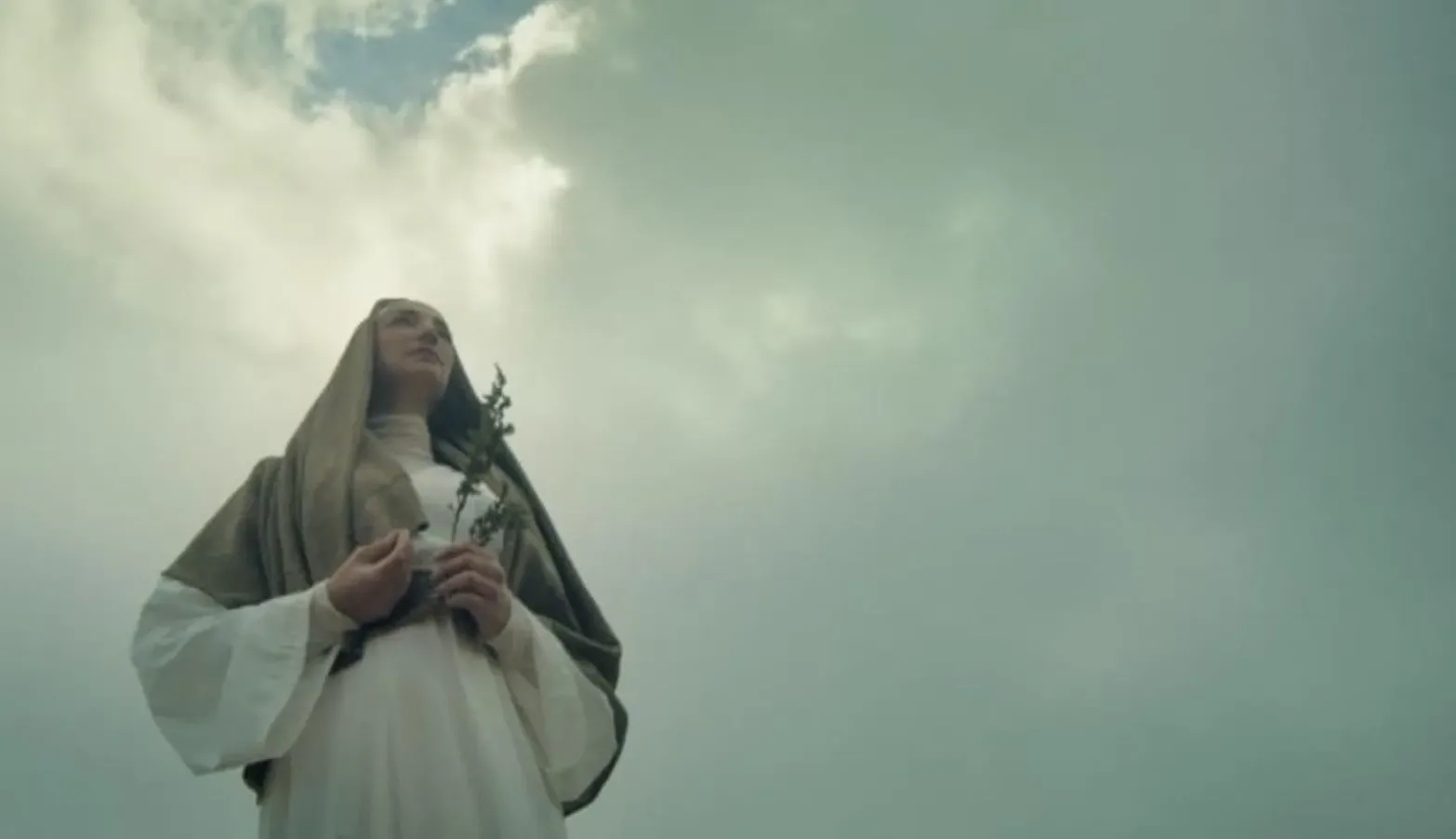

A young woman lies in a cramped bedroom, eyes locked on the pulsing glow of a television preaching American televangelism. That tight frame introduces Iva, the young lead of Ben Charles Edwards’ coming-of-age fantasy thriller Devil’s Play, and it sketches her situation in one brutal image: a life hemmed in by four walls, imported salvation on a screen, and no room to breathe.
Set inside a stagnant Bulgarian environment and shadowed by an abusive stepfather, Iva reads as someone pressed to a jagged breaking point, the kind that turns every day into endurance and every silence into threat. The story tilts the moment she meets a charismatic, ageless boy who calls himself Lucifer. He arrives with the calm assurance of someone who already knows how this ends, and he offers Iva a drastic exit from misery, promising power and peace in exchange for a single act of violence: the assassination of a prominent religious leader.
Edwards plants that supernatural bargain in the grim atmosphere of the Balkans, letting the landscape do a share of the emotional labor. The air feels weighted, the spaces feel worn down, and the mood carries existential dread like a low fog that never lifts. This becomes a world where Iva’s choice hangs over every scene, turning roads, rooms, and faces into extensions of an internal crisis. The film keeps returning to the same nerve: desperate human longing meeting the cost of divine or diabolical intervention, with Iva stuck in the middle as the price becomes harder to imagine and harder to refuse.
The Architecture of Presence and Absence
Eleonora Ivanova charts Iva’s movement from hollow desperation to sharp, newly found empowerment with a volatile precision that keeps the film grounded. Her performance supplies a steady physical truth that holds its shape even when the story drifts into the otherworldly, and that steadiness matters because Dimitar Nikolov plays Lucifer as a figure built from stillness.
He gives the boy a timeless quality, a calm that suggests ancient origins through posture and gaze, with none of the familiar rhythms of teenage agitation. Their dynamic forms the film’s emotional anchor: Ivanova’s fragility turning into resolve, Nikolov’s quiet confidence turning into pressure.
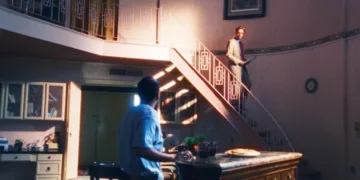
Around them, the acting often shifts in tone, sometimes landing with force, sometimes pulling focus in awkward directions. Mickey Rourke appears as a sleazy televangelist, and his material carries a strange separation from the Bulgarian core of the film. His scenes feel visually and physically detached, like inserted fragments captured in a parallel production space, and the effect is disjointing because his seasoned grit plays as a self-contained performance rather than a thread woven into the same fabric.
Gary Stretch and Geoff Bell offer additional support, yet the ensemble frequently swings between flat, emotionless delivery and sudden bursts of operatic melodrama. Those swings register most sharply in family confrontations, where dialogue can tip into stage-like theatricality, interrupting the gritty realism established in quieter passages.
Shadows of Faith and Structural Fractures
The narrative draws from the philosophical leanings of Mark Twain’s The Mysterious Stranger, shaping a worldview where malice lives in human hearts rather than in the devil as an external source of evil. A Master and Margarita-adjacent sensibility pushes the film away from straight supernatural horror and toward a study of behavior, belief, and the uses of religious language. The story tests the thin line separating organized religion from genuine faith, asking if light can exist without the presence of absolute darkness, and it keeps that question hovering over Iva’s bargain like a permanent stain.

That thematic ambition runs into structural strain. The assassination plot, introduced as the defining demand of Lucifer’s offer, recedes during the second act as the pacing begins to wander. The film spends time in a drift that loses sight of the primary conflict, then snaps back to it with hurried intensity in the final minutes, leaving a noticeable gap where development and escalation should live.
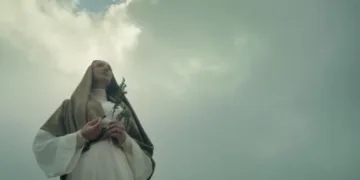
Religious symbols arrive in abundance, pressing for reflection and meaning, yet the execution lands unevenly, with certain images striking and others feeling like gestures dropped into the frame without the same narrative weight. A mid-credit sequence reaches for resolution of the lingering televangelist thread, and it plays like required viewing for anyone seeking closure that the main runtime does not supply.
Visual Grandeur and the Artifice of Voice
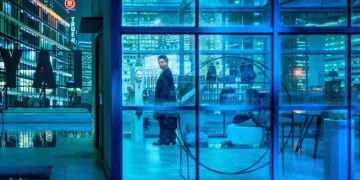
Denis Madden’s cinematography stands as the production’s most dependable strength. He captures the stark contrast between the scenic sweep of the Bulgarian wilderness and the crumbling, decaying urban spaces the characters inhabit, framing beauty and rot within the same visual vocabulary. That ambition extends into the soundscape, which leans on traditional songs such as “Prituti se planinata” to build a haunting, non-mainstream atmosphere that suits the film’s spiritual unease.
A persistent disconnect arrives through language. Bulgarian characters speak English while moving through their native environment, and that choice creates a layer of artifice that never fully settles into naturalism. The missed potential of the native tongue becomes clear in a single whispered exchange in Bulgarian, a moment that carries an intimacy and cinematic charge missing from much of the English dialogue.
The film’s depiction of Bulgaria also leans into weary clichés, circling crime, outcasts, and lawlessness with heavy emphasis. Those elements reinforce the grim tone, yet they can read as an outsider’s narrowed interpretation of a complex culture. The film reaches striking beauty and technical skill through image and sound, then undercuts itself through a script that favors grit-soaked fantasy over cultural authenticity.
Devil’s Play is a coming-of-age fantasy thriller that made its worldwide debut on December 19, 2025. Set against the atmospheric and often grim backdrop of Bulgaria, the story follows a rebellious young woman named Iva who encounters a mysterious boy claiming to be a fallen angel. As of its release this month, the film is available to watch on video-on-demand platforms including Apple TV, Amazon Prime Video, and Google Play.
Full Credits
Title: Devil’s Play
Distributor: Buffalo 8
Release date: December 19, 2025
Running time: 1 hour 49 minutes
Director: Ben Charles Edwards
Writers: Ben Charles Edwards, Mike Shilliam, Dessy Tenekedjieva
Producers and Executive Producers: Dessy Tenekedjieva, Kirsty Bell, Ben Charles Edwards, Matthew Helderman, Kimberly Hines, Nikki Stier Justice, Phil McKenzie, Ian Stack, Gary Stretch, Luke Taylor
Cast: Mickey Rourke, Gary Stretch, Geoff Bell, Eleonora Ivanova, Dimitar Nikolov, Dessy Tenekedjieva, Lee Ryan, Nicky Whelan, Ovanes Torosian, Mihail Mutafov
Director of Photography (Cinematographer): Denis Madden
Editors: Brad Watson
Composer: Will Berger
The Review
Devil's Play
Devil’s Play functions as a striking but fragmented piece of art. It offers a powerful visual language and a provocative premise about the nature of evil. The film falls short of its potential because of a disjointed narrative and a confusing linguistic approach. While the lead actors ground the story, the disconnected secondary roles and uneven pacing create a sense of incompletion. It remains a work for those who appreciate atmospheric cinema over tight storytelling.
PROS
- Striking cinematography by Denis Madden.
- Dimitar Nikolov’s otherworldly and steady performance.
- Provocative central concept inspired by literary classics.
CONS
- Disjointed plot that loses focus in the middle sections.
- Distracting language choice with local characters speaking English.
- Detached and spliced-in scenes featuring Mickey Rourke.