




















Brendan Boogie’s film Tallywacker presents a heartfelt buddy comedy with clear dramatic weight. The story follows the titular two-man band as they try to move past garage status and secure a foothold in the local music scene.
The duo consists of Aleister (Jeremy Dubs), a guitarist who moves through the world in a wheelchair because of osteogenesis imperfecta, and Emmett (Chris Goodwin), the drummer. Their prospects shift when they land an opening slot on tour with established rock star Carly Major (Rivera Reese).
That opportunity sends them on a rock ’n’ roll road trip driven by ambition, by the strain and strength of friendship, and by the exhausting pursuit of a dream. The film connects its specific American indie setting to universal stories of creative longing that appear across world cinema, and it filters those familiar impulses through a personal point of view.
Alchemy of Ambition: The Central Duo
Tallywacker builds its impact on the easy, lived-in chemistry between Jeremy Dubs and Chris Goodwin. Their rapport feels instantly convincing, and it carries a sense of long history and mutual reliance that many viewers will recognize from close friendships. The film spends time on the fault lines that emerge once success tilts toward one member of the partnership.
As the band gathers momentum, encouragement mixes with jealousy and forms a charged tension between the two musicians. The actors handle this shift with sharp timing; their comic rhythm on stage and in casual scenes keeps the relationship playful even as new resentments surface.
Aleister’s path holds particular emotional density. He confronts his physical condition and the controlling behavior of his pill-popping mother Bonnie (Laurie Hamfeldt Mahoney) with a mix of persistence and hope. His growth focuses on claiming his worth as a musician while dealing with the suspicion that some people view his disability as a gimmick and overlook his artistic skill.
Emmett keeps the dramatic stakes grounded. Goodwin gives shape to the sidelined friend whose irritation feels honest, yet he still extends patience and support toward his bandmate’s goals. The wider ensemble, from Rivera Reese’s troubled rock star Carly Major to Adwoa Duncan Williams as kind, aspiring photographer Scarlett, enriches the band’s social world. Their performances give the group’s circle a sense of texture and keep the relationships credible and free of cartoonish exaggeration.
Narrative Resonance: Tradition Meets the Road
Firmly situated in the American independent tradition, Tallywacker leans on a familiar “band on the rise” structure. This framework appears often in international cinema about artistic ambition, and the film taps into that cross-cultural pattern of artists on the move.

Aleister’s condition adds specific emotional weight to this familiar arc. Everyday difficulties of touring life carry extra charge and avoid a narrow reading of his experience as purely physical hardship. The film approaches friendship, desire, jealousy, and pragmatism with an unvarnished, rowdy energy.
The story steers away from a simplistic “triumph-over-disability” template. It places Aleister within an ongoing cultural discussion about visibility and creative labor. Tallywacker holds together its affectionate buddy-comedy mode and its sharper dramatic spikes.
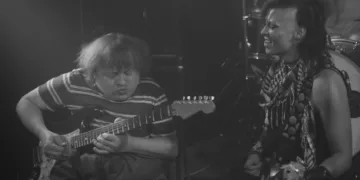
It captures the small-scale authenticity of the local music scene, leaning on catchy, funny original songs that the cast performs with conviction. Select scenes shot in monochrome by Amanda McGrady create a sense of visual timelessness and suit the rough, hopeful mood of musicians still trying to break through.
Crafted Sincerity: Direction and Visual Style
Brendan Boogie’s direction shows a confident sense of pacing that keeps the plot moving while still allowing room for character detail. The script draws partly from real events in Jeremy Dubs’s life, and that connection adds a feeling of sincerity and experience that shapes the dialogue and situations.
The filmmaking choices reinforce the story’s concerns. Cinematography, especially the recurring use of monochrome photography, works as a visual sign that links the band’s travels to idealized rock ’n’ roll history. This approach to image-making pushes Tallywacker past simple record-of-events realism.
The credibility of the music further anchors the film. The songs feel strong, and the fact that the actors perform them with clear commitment gives weight to the band on screen. Tallywacker emerges as a confident independent feature marked by sincerity and by a sharply defined personal angle within a familiar cinematic form.
Tallywacker is a heartfelt musical comedy that centers on the friendship between two bandmates whose relationship is tested when one lands a major gig on a rock star’s tour. The film, directed by Brendan Boogie, was released digitally by Freestyle Digital Media on November 18, 2025. You can typically find it available for rent or purchase on digital platforms such as Amazon, Apple TV, Google Play, and YouTube Movies.
Full Credits
Title: Tallywacker
Distributor: Freestyle Digital Media
Release date: November 18, 2025 (Video Release)
Running time: 1 hour 30 minutes
Director: Brendan Boogie
Writers: Brendan Boogie, Jeremy Dubs
Producers and Executive Producers: Brendan Boogie, Jeremy Dubs, Chris Goodwin, David Levene
Cast: Jeremy Dubs, Chris Goodwin, Adwoa Duncan Williams, Rivera Reese, Laurie Hamfeldt Mahoney, Shawn Ray
Director of Photography (Cinematographer): Amanda McGrady
Editors: Michael Golemo
The Review
Tallywacker
Tallywacker succeeds as a sincere and engaging character study. It takes a familiar music-scene narrative and gives it meaningful depth through the authentic chemistry of its leads and the grounded exploration of friendship tested by ambition. The film avoids easy sentimentality, offering instead a funny and honest look at pursuing a dream while navigating personal challenges. It is a highly effective independent comedy-drama.
PROS
- Jeremy Dubs and Chris Goodwin share a genuinely believable friendship dynamic.
- The film honestly explores ambition, envy, and disability without resorting to clichés.
- Aleister's journey to accept his self-worth is compelling and sweetly resolved.
- Brendan Boogie’s direction maintains a focused, efficient narrative flow.
- The original songs are catchy, often humorous, and organically integrated into the story.
- Select use of monochrome photography adds an effective, timeless rock 'n' roll aesthetic.
CONS
- The overall road-to-success narrative follows a predictable structure.
- Aleister's arc is the most developed; other characters, though realistic, lack the same narrative definition.