
























![Kingdom Hearts Collection [I-III] Review](https://gazettely.com/wp-content/uploads/2026/10/Kingdom-Hearts-Collection-I-III-1-360x180.webp "Kingdom Hearts Collection [I-III] Review: KHII Holds Steady as Newer Entries Fluctuate 37")



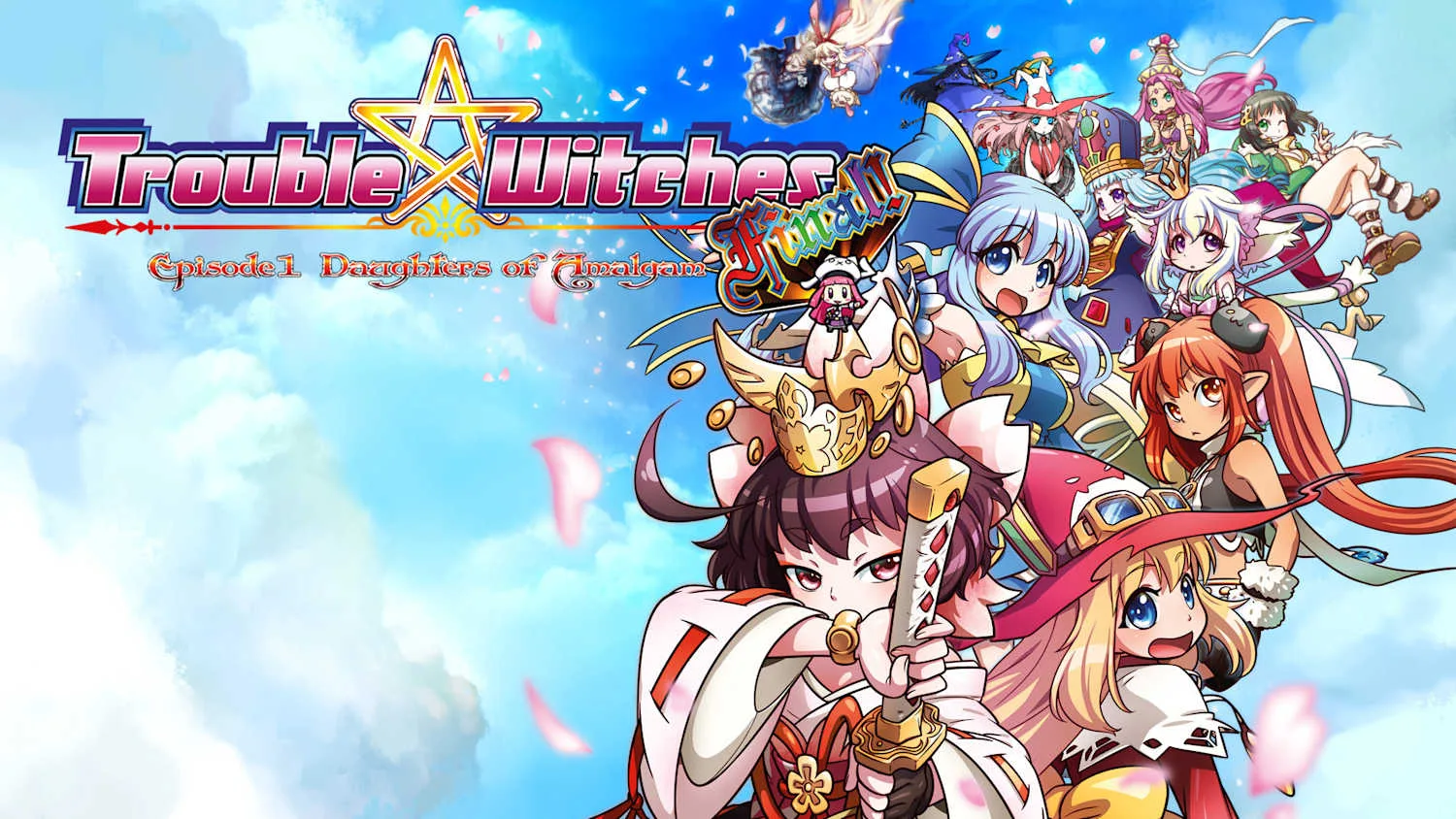

Trouble Witches FINAL! Episode 01 Daughters of Amalgam arrives as a polished revision of Studio SiestA’s 2007 doujin shooter, brought to Nintendo Switch and PlayStation 4 by Rocket Engine and ININ Games. This bullet hell side-scroller takes place in Eihemland, a magical kingdom thrown into chaos after the witch Amalgam steals a ring that once sealed away the demon Draupnhir. She splits this artifact among her children, prompting the King to offer rewards for anyone brave enough to stop them.
What makes this $29.99 release stand out is its commitment to accessibility without sacrificing depth. The game features 12 playable witches (with Cotton from the Cotton series available as DLC), each bringing distinct play styles to the table. The anime-inspired art direction bursts with personality, and the package includes eight different game modes. At the heart of everything sits the Magic Circle mechanic, a system that transforms standard bullet hell survival into something closer to resource management. This is a shooter that welcomes newcomers while offering scoring veterans plenty to master.
The Risk-Reward Dance of Survival
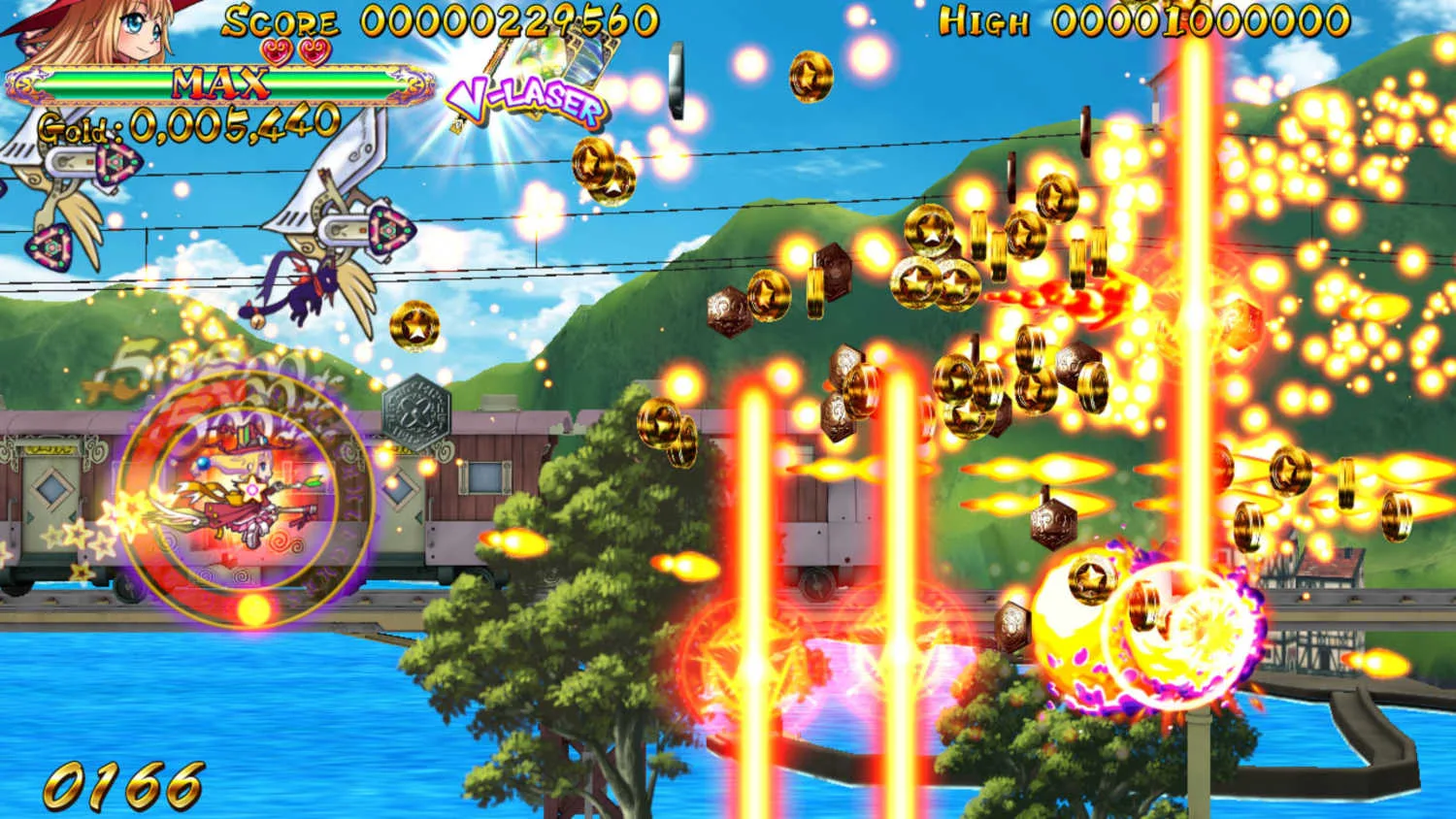
Trouble Witches builds its entire identity around the Magic Circle. Pressing Y creates a glowing field around your witch that slows most enemy projectiles to a crawl. Green bullets caught in this field transform into coins if you destroy their source, but blue bullets pass through unaffected. Let an enemy escape while its shots are trapped, and those same projectiles suddenly snap toward you at full speed. The system demands constant calculation: activate too early and you waste MP, wait too long and you’re overwhelmed.
MP management adds another layer of tension. The gauge depletes while the circle is active and regenerates when you close it. Standing still speeds up recovery, which creates an almost absurd contradiction in a genre built on constant movement. Beginners can treat the circle as a panic button, a temporary shield that buys breathing room. Advanced players see it as a scoring tool, timing activations to maximize coin conversion while minimizing wasted MP.
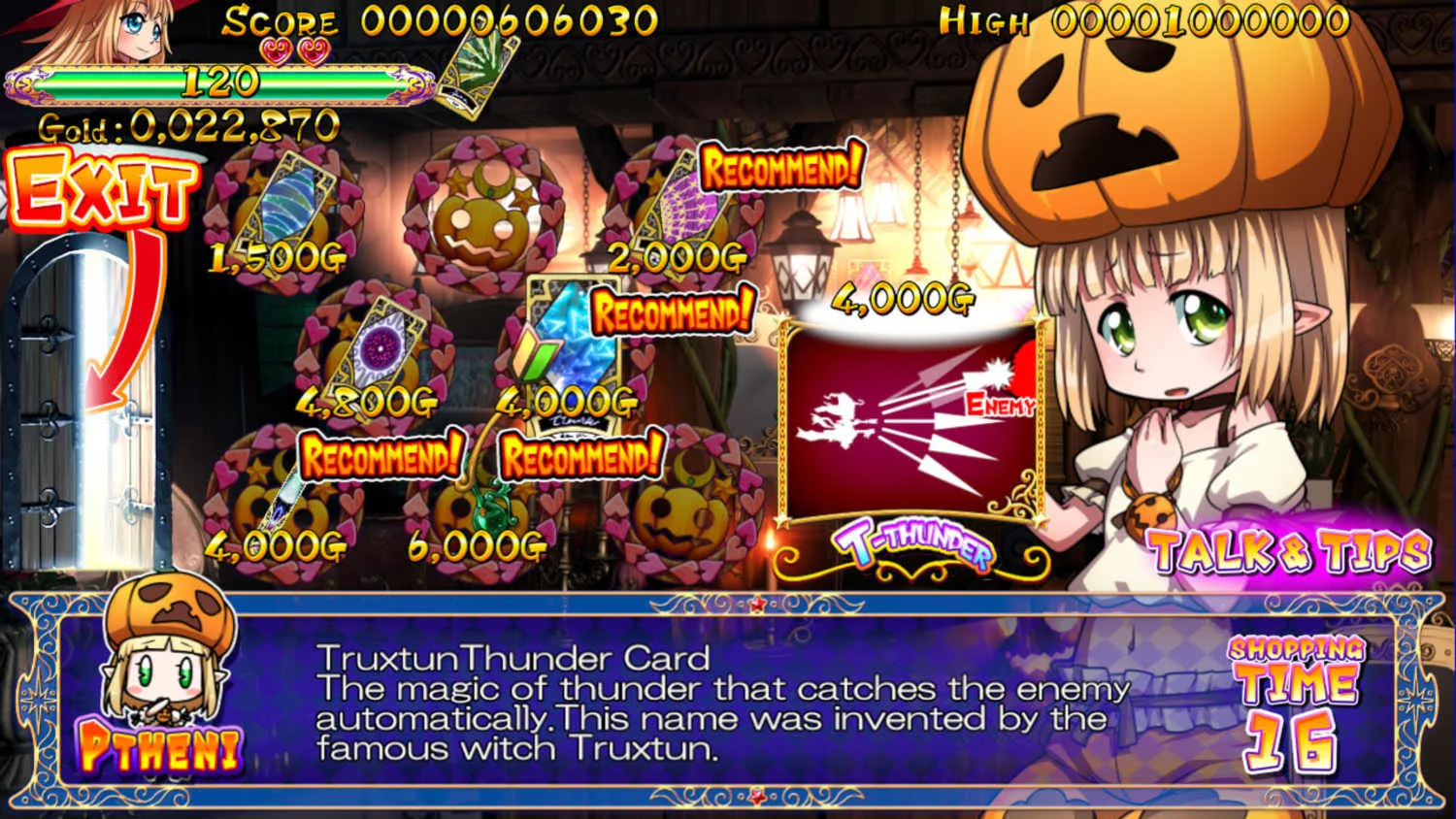
Money collection introduces yet another strategic choice. Coins fall downward after enemies die, and you need to stop firing for them to magnetize toward you. This forces a rhythmic push-and-pull: attack, collect, attack, collect. The Pumpkin Shop appears twice per stage, offering a chance to spend accumulated wealth on MP upgrades, extra lives, and the game’s most important commodity: Magic Cards.
What impresses me here is how these systems interlock. The Magic Circle generates money, money buys cards, and cards clear bullets that would otherwise force premature circle usage. It’s a feedback loop that rewards forward-thinking play while remaining simple enough for casual runs. Games like Schildmaid MX achieve similar depth through shield mechanics, but Trouble Witches feels more immediately readable.
Characters as Mechanical Expressions
The roster of 12 witches represents genuine variety rather than cosmetic differences. Each character comes with distinct stats covering speed, shot power, magic circle effectiveness, and MP recovery rate. Pril and Al the Black Cat serve as the entry point: balanced three-star stats, a spread shot pattern for Pril, and a straight-ahead attack from Al. Other characters demand more specialized approaches. One witch deploys three simultaneous sprites, tripling firepower at the cost of a larger hitbox. Technical characters might have weaker shots but faster MP recovery, rewarding players who can cycle the Magic Circle efficiently.
Shot patterns fundamentally alter how you approach each encounter. A character with a narrow, focused beam excels against bosses but struggles with spread-out enemies. Wide shots handle crowds easily but lack single-target damage. Each witch pairs with a familiar that provides additional support, functioning less like passive bonuses and more like extensions of each character’s mechanical identity.
Story Mode gives each character a unique narrative campaign, and completing it unlocks an EX version with modified stats and abilities. Cotton and Silk’s $4.99 DLC package includes their own story content and music tracks from the Cotton series. The variety here serves a practical purpose: different characters genuinely solve encounters in different ways.
Magic Cards add another dimension to character builds. These three-slot equippable abilities function like limited-use bombs. Pressing A consumes a card to grant brief invincibility and destroy surrounding bullets, but each card also modifies your shot pattern temporarily. The Arrow Card increases fire rate significantly. The Bubble Card generates a concentrated burst of damage. Meteors rain down across the screen.
Cards convert destroyed bullets into star coins that multiply your score, so activating them during dense bullet patterns maximizes their value. The Pumpkin Shop keeps cards flowing if you’re managing money well, which encourages aggressive usage rather than hoarding them for emergencies.
A Feature-Rich Package with Translation Scars
Eight game modes provide substantial content variety. Story Mode adds character-specific dialogue and cutscenes, fully voiced in Japanese with English subtitles. Arcade Mode strips out the narrative for pure action. Walpurgis Night Mode ramps enemy aggression to punishing levels. Score Attack Mode condenses the experience into timed two or five-minute runs. Endless Mode loops the six stages with escalating difficulty. Boss Attack Mode strings together all boss encounters for practice. AC Mode faithfully recreates the 2009 arcade release, removing modern quality-of-life features. Practice Mode lets you customize parameters to drill specific mechanics. Online leaderboards track high scores across most modes.
The presentation excels where it matters most: visual clarity. Trouble Witches keeps the foreground clean and readable even when dozens of bullets fill the screen alongside your own attacks and card effects. The anime art style gives each character personality through sprite work and portraits. The soundtrack maintains an upbeat energy that matches the action. Japanese voice acting sells each character’s personality, from timid shopkeepers to confident spell-slingers.
Then you hit the English translation, and the experience fractures. Story Mode’s localization appears machine-generated, riddled with grammatical errors and nonsensical phrasing. Characters speak in disjointed fragments that destroy any sense of personality the original script might have conveyed. What should be a selling point becomes an embarrassment, making Story Mode feel like wasted potential despite the effort put into voice acting and artwork.
The six-stage structure wears thin faster than I’d like. Each stage has personality through distinct visual themes and enemy patterns, but replaying them across multiple character campaigns exposes the limitations. You learn enemy spawn points, memorize attack patterns, and lose the sense of discovery that makes early runs exciting. Game mode variety suffers from similar issues, with several modes asking you to replay the same content under different conditions rather than offering truly distinct experiences.
The Magic Circle mechanic and character variety do heavy lifting in keeping things fresh. Learning how a new witch handles familiar encounters provides enough novelty to push through another campaign. The game gives you good reasons to keep playing despite the structural repetition.
Trouble Witches FINAL! Episode 01 Daughters of Amalgam is a vibrant “Cute ‘Em Up” side-scrolling bullet-hell shooter that serves as the definitive version of the long-running series originally born in the doujin scene. Released digitally on December 15, 2025 (with physical editions appearing slightly earlier), the game tasks players with controlling one of 12 unique witches as they navigate frantic stages filled with magical projectiles. Its signature gameplay mechanic is the “Magic Circle,” which allows players to slow down enemy bullets and convert them into gold coins, which can then be spent at an in-game shop for powerful magic cards and upgrades. The game is currently available on Nintendo Switch and PlayStation 4, offering multiple game modes including Story, Arcade, Score Attack, and Endless modes to provide deep replayability for both casual and hardcore shooter fans.
Full Credits
- Composer/Sound Director: Ina Kondo
- Developer, Publisher: Studio SiestA, Rocket-Engine Co., Ltd., ININ Games
- Release Date: December 15, 2025
The Review
Trouble Witches FINAL! Episode 01 Daughters of Amalgam
Trouble Witches FINAL! Episode 01 Daughters of Amalgam delivers smart, accessible bullet hell action built around an elegant Magic Circle mechanic that rewards both cautious newcomers and score-hungry veterans. The diverse character roster and interlocking systems create satisfying gameplay depth, while the vibrant presentation keeps the screen readable during chaotic firefights. However, the abysmal English translation undermines Story Mode completely, and six stages stretched across eight similar game modes exposes structural repetition. For shooter fans willing to overlook mangled dialogue, this remains a solid arcade experience with genuine mechanical substance.
PROS
- Magic Circle mechanic creates engaging risk-reward decisions
- 12 distinct characters with meaningful gameplay differences
- Excellent visual clarity during intense action
- Interlocking systems reward strategic play
- Eight game modes for variety
CONS
- Machine-translated English dialogue ruins Story Mode
- Only six stages becomes repetitive quickly
- Game modes feel too similar to each other
- Story content feels generic even beyond translation issues







