
























![Kingdom Hearts Collection [I-III] Review](https://gazettely.com/wp-content/uploads/2026/10/Kingdom-Hearts-Collection-I-III-1-360x180.webp "Kingdom Hearts Collection [I-III] Review: KHII Holds Steady as Newer Entries Fluctuate 37")



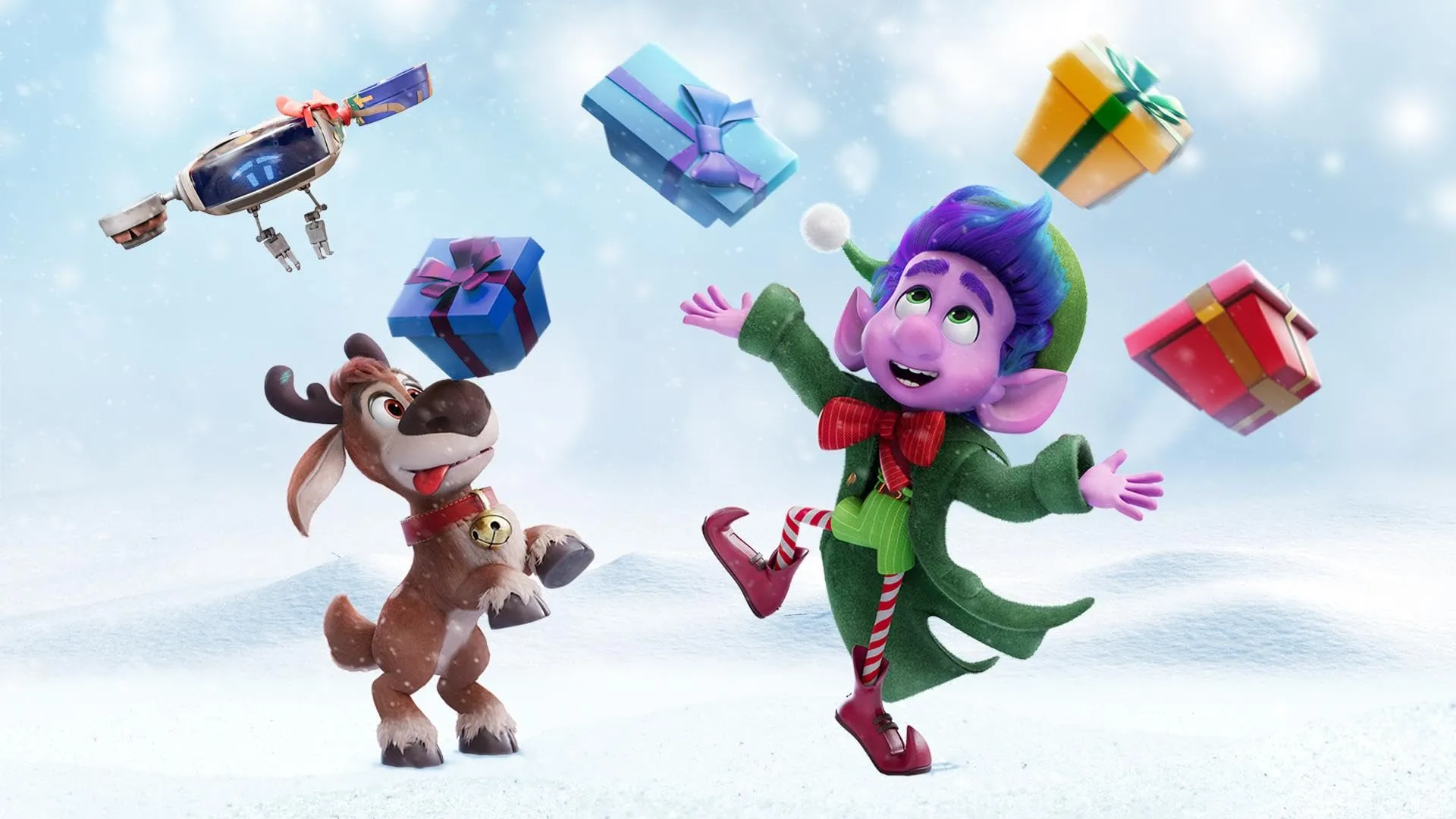

Yoyo steps into the North Pole chasing the golden glow of his grandfather’s stories. What greets him looks like a brutalist fever dream: glass walls, cold LEDs, and a chill that feels engineered. He carries an exhausting reserve of optimism, a relic from a tactile past shuffling through a present made of cold data. The place runs like a gargantuan logistics hub, and the real Santa Claus has vanished. In his place flickers an archive hologram, a wheezing little ghost-light that offers information and nothing resembling warmth.
A digital specter named Cyber Scrooge seizes control with a hostile takeover of the central server, and her infiltration snaps the plot into motion. Yoyo gets pushed into a desperate mission: track down the flesh-and-blood Santa before the hacker wipes the holiday database clean. The film frames the pursuit as holiday whimsy colliding with a sharp satire of the digital age, where tradition clings to a fragile firewall. Yoyo drifts through it all like a clumsy spirit in the machine, a stubborn argument for human error in a world polished smooth by algorithms.
Logistics of the Sterile Workshop
The workshop stands as a monument to techno-capitalism. Magic has been outsourced to Electrical Logistics Specialists, robots branded with the acronym ELF. The rebrand drains folklore from the labor force and leaves tidy units of productivity in its place. Actual elves sit exiled in a miserable complaint call center, processing the grievances of a consumerist world. Coco runs the operation with a tablet glued to her palm, treating the holiday as a spreadsheet of metrics begging for optimization. Her stress reads immediately, the tense vigilance of a mid-level executive trapped in a dying industry.
The film leans into techno-paranoia and paints automation as the mechanism that hollowed joy into a vacuum. Efficiency governs the factory, and wonder survives as a bug in the code. Clinical, flat lighting seals the mood, echoing the sterile sheen of e-commerce giants. One accidental server unplug threatens to erase centuries of tradition, a bleak reminder that speed has replaced resilience. The North Pole plays less like a sanctuary and more like a vulnerable data center with a seasonal paint job.
That idea lands through visual grammar as much as dialogue. Automated systems dominate the frame, and the camera glides with mechanical precision that mirrors the robotic staff. Handheld shakiness never arrives to signal human presence. The film favors wide shots of conveyor belts sprawling toward a digital infinity, a compositional choice that shrinks individuals into workflow. Gifts become packets of data. Smiles become projected holograms.
The narrative circles the existential dread of replacement, the fear that a cleaner, faster version of you will do your job and wear your face. Yoyo watches his heritage get compressed into a spreadsheet. High-contrast lighting keeps pulling him apart from the space around him, separating the warm orange of his scarf from the blue sterility of the factory. The chiaroscuro does the work of a monologue, isolating him as a smudge of color in a monochromatic world. Even the production hall reads like a high-security vault, guarding a secret that has already been liquidated.
A Fellowship of Misfits and Motorheads
Yoyo assembles a team that looks like a system error made flesh. His grandfather brings chaotic energy, resembling a scientist who has spent far too long poking at temporal rifts for sport. He functions as the human counterweight to the cold robots, a reminder that disorder can be a kind of wisdom. Cookie the reindeer joins the mix, along with Snowflake, a packaging drone whose very existence feels like a joke told by an overworked engineer. Together they sketch a strange pairing of the biological and the mechanical.
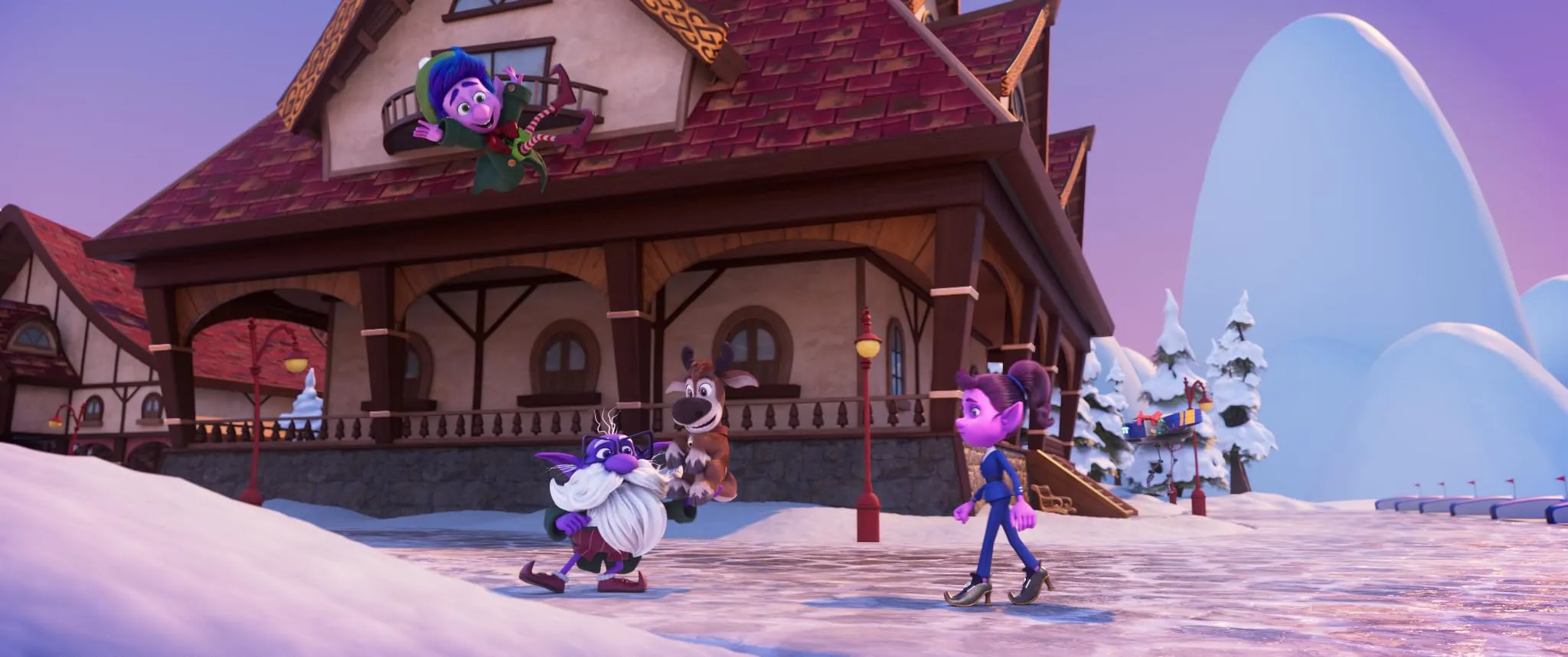
The directors pivot away from tradition by throwing in a biker gang of Santas, tattooed and leather-clad, trading department-store cheer for heavy metal distortion. The soundscape change creates a jolt of friction, the kind that wakes you up mid-scene.
Magical snow globes enter as narrative devices that puncture reality and open portals to parallel dimensions. The team moves through these surreal spaces using a patchwork of ancient spells and modern hardware. Yoyo’s wide-eyed innocence keeps colliding with the weary cynicism around him, and the coalition stays messy on purpose. Their very dysfunction reads as resistance against the homogenization of holiday spirit.
The Biker Santas arrive as a pointed subversion of thriller and noir expectations, staged in a burst of expressionistic framing. Their motorcycles roar with a primal sound that cracks the sterile silence of the automated North Pole, and the film finally lets celebration feel raw again. Fast-paced editing shapes their introduction with the breathless rhythm of a rock concert, steering the viewer’s psychology away from the claustrophobia of a digital heist and toward the recklessness of open road escape.
The snow globes add a kaleidoscopic visual run, each one holding a fragment of lost tradition that the team must stitch back together. The film treats them like archaeology students rummaging through the ruins of their own culture, and it lands a little too sharply to be accidental. Snowflake supplies wry commentary on the absurdity of her own role, a tool of the system that develops a spark of rebellion and seems mildly annoyed that sentience came with customer support duties. This pack of outcasts keeps insisting on connection, and the script treats that insistence as stronger than any synchronized network.
Static Frames and the Weight of Memory
The visual execution carries a curious set of tensions. Backgrounds often look lush and stimulating, with a depth and texture the character models do not always match. Movement can feel stiff, a rigidity that occasionally snaps immersion and registers as limitation. The film finds its soul in grief, and it handles that grief with a seriousness that changes the temperature of the story. Cyber Scrooge emerges from unresolved trauma, her hatred of the holiday rooted in a childhood loss that no gift could repair. The script also brushes against the burnout of the original Santa Claus, who fled the workshop after meaning drained out under automated quotas.
The resolution sidesteps easy magic and treats the holiday as a catalyst for memory, a ritual that lets people hold onto those who have passed away. That is a surprisingly mature note for a children’s film. Pain remains permanent in this framework, and healing comes through acknowledging the shadow that memory casts. Slapstick humor keeps bumping up against existential weight, and the film hits hardest in the moments where the frantic adventure energy recedes and the silence of loss gets room to speak.
The animation style tracks a psychological landscape. The sharp edges of the technology world press against the soft, blurred lines of flashbacks, and those memories hold the only spaces where true color seems to live. The film links obsession with the future to an escape impulse, a sprint away from the pain of the past. Cyber Scrooge wants the database deleted because her sorrow stays intact, and the story uses that desire as a quiet window into human psychology tucked inside a family package.
Pacing slows as the final confrontation approaches, and sound design strips away the mechanical hum of the factory in favor of a quiet, melodic score. The shift forces the audience to sit with the emotional weight instead of sprinting past it. Santa appears as a tired man who has forgotten how to hope, and Yoyo’s victory comes through memory and shared history rather than any weaponized trick. The film argues that magic lives in remembrance, fragile and human, a power that refuses coding and replication.
Mission Santa: Yoyo to the Rescue is an international animated production that debuted in global theaters throughout the final quarter of 2025. The film officially premiered in the United States on December 19, 2025, after successful early releases in European markets such as Germany and Belgium. Directed by Ricard Cussó and Damjan Mitrevski, the story explores a high-tech North Pole where traditional holiday magic has been replaced by cold automation. You can currently watch this holiday adventure in wide theatrical release or via major digital VOD platforms depending on your region.
Full Credits
Title: Mission Santa: Yoyo to the Rescue
Distributor: Falling Forward Films, Sola Media, Toon2Tango
Release date: December 19, 2025
Rating: U, FSK 6
Running time: 91 minutes
Director: Ricard Cussó, Damjan Mitrevski
Writers: Jamie Nash, Peter Johnston
Producers and Executive Producers: Sriram Chandrasekaran, Jo Daris, Roshan Ingole, Kyle Logan, Hans-Ulrich Stoef, Holger Weiss
Cast: Julius Weckauf, Michael Mendl, Bettina Zimmermann, Oliver Kalkofe, Wolfgang Fierek, Götz Otto, Malwanne, Vanessa Maria Braunisch
Editors: Peter Johnston
Composer: Ack Kinmonth
The Review
Mission Santa: Yoyo to the Rescue
The film succeeds as a cynical meditation on the digitization of wonder. It strips away the tinsel to reveal a story about the permanence of grief. While the character movements lack fluidity, the narrative depth offers a refreshing departure from holiday tropes. It is a work that values human memory over algorithmic perfection. This is a cold, metallic adventure that unexpectedly finds its soul in the silence of shared loss.
PROS
- A biting satirical deconstruction of corporate logistics and e-commerce.
- Subversive character archetypes like the heavy-metal Biker Santas.
- Sophisticated handling of psychological themes like grief and parental loss.
- Stylistic use of chiaroscuro lighting and detailed environmental art.
CONS
- Rigid and occasionally unnatural character animation.
- Some predictable plot beats within the digital heist framework.
- Tonal friction between the slapstick comedy and the serious emotional drama.







