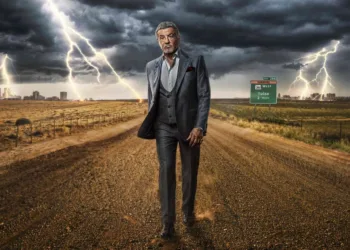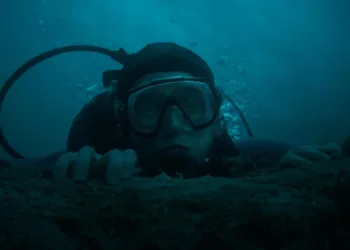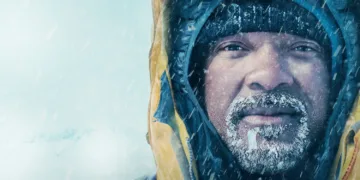


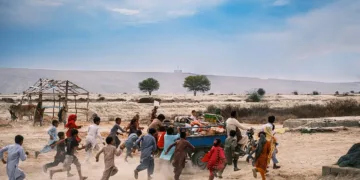























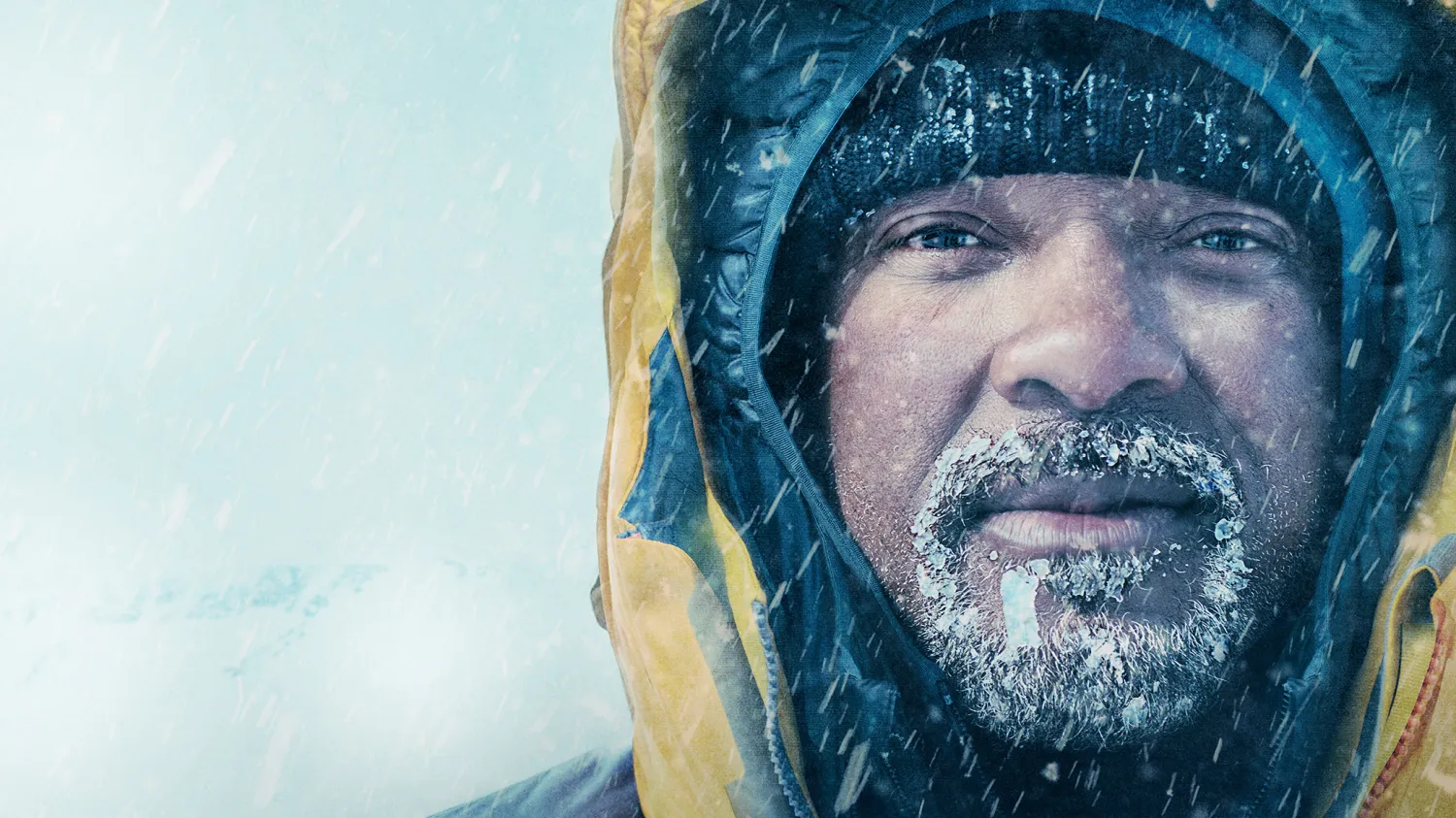

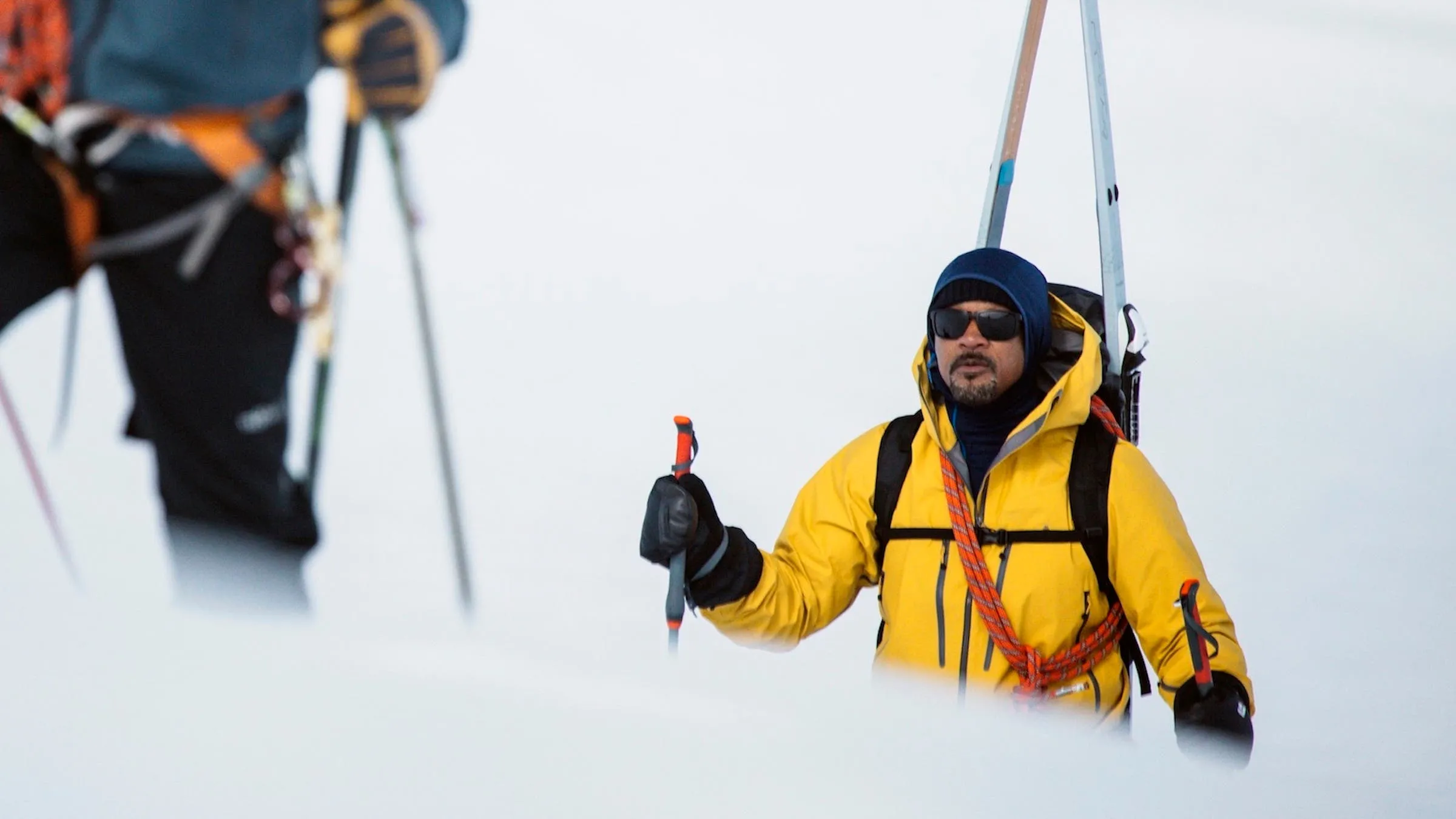
National Geographic delivers a sprawling seven-part documentary that follows Will Smith on a twenty-six-thousand-mile route across all seven continents. The hundred-day trip starts at the geographic South Pole and ends at the North Pole, with stops that cut through the Amazon, the Himalayas, and the Kalahari Desert.
With Darren Aronofsky and Jane Root guiding the creative approach, the series plays like a high-pressure travelogue built around a global superstar placed in genuine extremes. Its guiding idea is simple: the answers to life’s biggest questions live at the literal edges of the map.
By staging that search inside remote ecosystems, the show tries to connect blockbuster-scale spectacle with environmental science that carries real stakes. The production scope is immense, swapping premieres and controlled settings for ice walls, deep-sea dives, and thick jungle canopy. It also marks a shift in Smith’s public image, leaning into raw reactions and unfiltered awe in the face of the natural world.
The Wisdom of the Edge and the Ghost of a Mentor
The intellectual engine comes from the late Dr. S. Allen Counter, a Harvard neurobiologist and explorer who served as Smith’s mentor. Counter’s belief that the planet’s most isolated places hold clues about human existence shapes the series’ purpose and keeps it from sliding into a glossy vacation montage.
Smith presents his involvement as a late answer to Counter’s repeated invitations, invitations he acknowledges he ignored during his peak years of Hollywood stardom. That admission carries weight, and it gives the expedition a sense of personal reckoning tied to a period of intense public turbulence.
Smith reaches for the image of a storm to describe his recent inner life, then links that turmoil to the strange promise of stillness inside a literal blizzard. The series frames geography as a route toward clarity, echoing a long tradition in global storytelling where a protagonist leaves comfort and meets a harsher reality that demands honesty.
The show even nods toward a comparable impulse found in Indian parallel cinema, where spiritual seekers find truth in rugged landscapes and long stretches of silence. Smith’s search aims at discovery, with fame taking a back seat to the need for perspective. He treats the hundred-day trek as a test of the body that might open space for spiritual growth, and that intention grounds the risk-heavy set pieces that come later.
Groundbreaking Science at the Frontiers of Change
The documentary threads serious research into its travel format, regularly turning the spotlight toward international scientific teams. In Antarctica, Smith works with Brazilian scientists studying gas bubbles sealed inside deep ice cores. Those tiny pockets of air serve as a chronological record of the atmosphere reaching back a million years, and the series uses the image of microscopic bubbles to make planetary history feel visible and immediate.
In the Amazon, the focus turns toward the possibility of medical breakthroughs as Smith teams with venomologist Bryan Fry and climber Carla Pérez to study giant tarantulas. Their work targets specific toxins that could one day contribute to treatments for human illnesses, and the show frames the search as both careful and risky.
At the North Pole, Smith joins Dr. Allison Fong to study phytoplankton, organisms presented as a vital early warning system for climate shifts while remaining invisible to the naked eye. The segment stresses how tiny life forms can shape the health of the globe, and it uses that invisibility as a form of cinematic symbolism: the most consequential signals can be easy to miss.
Another key scientific thread arrives with a Waorani expedition to track the green anaconda. One scale from a massive seventeen-foot snake becomes a practical tool, providing the data needed to monitor heavy metal levels in the river. By giving these experts real space and letting their methods drive the action, the series stays informative. The structure keeps Smith from functioning as a passive observer and turns the celebrity framing into a platform for environmental inquiry tied to modern scientific effort.
Ancient Knowledge and the Spirit of Survival
The narrative places real emphasis on indigenous knowledge and the endurance of communities living close to ecological fault lines. In the Amazon, Smith’s time with Waorani elder Penti Baihua brings attention to the physical and legal fights required to protect ancestral lands from oil extraction.
The series treats that struggle as part of cultural authenticity, grounding the adventure imagery in lived reality and present-day conflict. Smith then travels to the Kalahari to learn from the San people, guided by Kane Motswana, who demonstrates survival practices that have lasted for millennia. The show presents these techniques as a form of deep intelligence, shaped by time, climate, and an intimate understanding of place.
A different expression of resilience appears in the Himalayas of Bhutan, where Smith treks to a village thirteen thousand feet above sea level to explore the concept of Gross National Happiness. Conversations with Buddhist monks and local guides offer a view of contentment positioned far from Western consumerism, and the series treats that philosophy as a cultural lens rather than a slogan. In the South Pacific, the documentary turns to the preservation of a language spoken by only five people.
Linguist Mary Walworth explains that the loss of a language equals the loss of a distinct way of seeing the world, a line that ties culture and ecology into the same argument. Across these encounters, the series returns to interconnectedness and frames human survival as dependent on living in harmony with delicate ecosystems. By foregrounding these communities, the show reads as a tribute to people presented as guardians of the natural world.
Cinematic Grandeur and the Human Element
Visually, the series carries the high production standards associated with National Geographic, paired with the dramatic instincts linked to Darren Aronofsky. Aerial photography over the Ellsworth Mountains conveys scale in a way television documentaries often struggle to capture, while close-ups under Arctic ice create a surreal, almost alien atmosphere.
Smith remains the audience’s entry point through his openness and vulnerability. He talks plainly about fears of spiders, snakes, and heights, and the series builds tension by letting those fears play out on camera. Seeing a world-famous actor show real terror while climbing a three-hundred-foot ice wall gives the spectacle an emotional hook that feels easy to understand.
The sound design matches Smith’s quick humor against the heavy silence of remote landscapes, using shifts in audio texture to keep the tone human. Music cues amplify dread during a dangerous dive beneath moving ice, and the editing keeps momentum moving across all seven episodes without letting the research segments stall the pacing. The camera refuses to sanitize the physical reality. It catches freezing wind, fatigue, and the particular exhaustion that comes with isolation.
Even with a Hollywood-sized support system, the cold and terrain dictate the rules of what can happen in a given moment. The series settles into a pattern where high-intensity sequences give way to quieter beats of reflection, with the stark white of Antarctica giving way to the dense green of the Amazon to keep the viewing experience visually active. That rhythm keeps the educational material engaging, and it leaves the project as a polished account of human endurance set against the beauty and threat of the planet’s most remote places.
Pole to Pole With Will Smith is an ambitious seven-part nature and adventure docuseries that premiered on the National Geographic channel on January 13, 2026, and became available for streaming the following day on Disney+ and Hulu. Spanning 26,000 miles over 100 days, the series follows Academy Award-winning actor Will Smith as he traverses all seven continents, moving from the South Pole to the North Pole. Inspired by his late mentor, Dr. S. Allen Counter, Smith seeks to answer existential questions by visiting the Earth’s most extreme “edges,” including the Antarctic ice fields, the Amazon rainforest, and the Himalayan peaks. The series blends high-stakes exploration with scientific discovery, highlighting the resilience of indigenous communities and the urgent reality of global climate change.
Full Credits
Title: Pole to Pole With Will Smith
Distributor: National Geographic, Disney+, Hulu
Release date: January 13, 2026
Rating: TV-PG, TV-14
Running time: 45 minutes
Director: Tom Barbor-Might, Dionne Bromfield
Writers: Tom Williams
Producers and Executive Producers: Will Smith, Darren Aronofsky, Jane Root, Terence Carter, Miguel Melendez, Peter Lovering, Ari Handel, Tom Williams
Cast: Will Smith, Richard Parks, Heitor Evangelista, Bryan Fry, Carla Pérez, Penti Baihua, Dacher Keltner, Tshering Denkar
Director of Photography (Cinematographer): Paul Williamz, Steve Lidgerwood, Freddie Claire
Editors: James C. Cooper, Tom Young, Ollie Aston
Composer: Benjamin Wallfisch, Chris Egan
The Review
Pole to Pole With Will Smith
Pole to Pole With Will Smith succeeds as a visually arresting exploration that effectively merges celebrity introspection with global environmental urgency. While the narrative occasionally leans into the familiar tropes of a star seeking redemption, Smith’s genuine curiosity and vulnerability prevent the project from feeling like a hollow PR exercise. The show provides a valuable platform for scientific discovery and indigenous voices, making it a substantive addition to the nature documentary genre. It is a polished, thoughtful journey that manages to balance high-stakes adventure with quiet, meaningful reflection on our planet's future.
PROS
- Stunning cinematography and high production value typical of National Geographic.
- Authentic representation of indigenous cultures and their local struggles.
- Strong integration of diverse scientific experts and climate research.
- Smith’s relatable vulnerability and humor make the science accessible.
CONS
- Occasional reliance on Hollywood-style dramatization of personal events.
- Some scripted segments feel less natural than the raw field interactions.
- The "star in peril" narrative can sometimes overshadow the environmental data.
- Certain philosophical segments border on being overly sentimental.