
















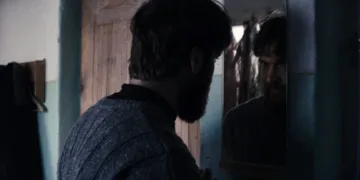









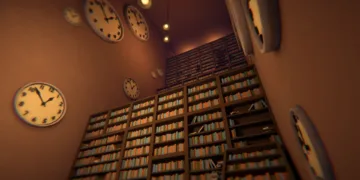




Love Through A Prism sets itself up as a period story rooted in 1910s London, then immediately locks its heroine into a deadline that shapes almost every scene that follows. Lili Ichijoin arrives from Japan to enroll at the Saint Thomas Art Academy with an arrangement that comes with a razor-edged timer: her mother allows the move on one condition, and that condition is rank. Lili has six months to reach the top of her class.
If she falls short, she returns to Yokohama, takes over the family kimono shop, and accepts an arranged marriage. The series uses that simple contract to keep the story tense, even during its quieter stretches. At Saint Thomas, Lili runs into Kit Church, a prodigy whose effortless output and chaotic habits place him directly in her path.
Their dynamic turns the act of making art into something closer to a survival skill, and Lili’s first days in a new city play like a search for a voice she can call her own. With 20 episodes to work with, the show gives the setting room to breathe while tracking the personal shifts of a young woman trying to rewrite her future.
The Pressure of the Brush: Stakes at Saint Thomas
The six-month ultimatum is the narrative engine. It keeps the series from drifting into pure mood, because Lili’s choices always loop back to that deadline and what waits for her in Yokohama. The family kimono business hangs over her like a weight she can feel in her shoulders, and London becomes a narrow window of self-determination that can slam shut at any moment.
Saint Thomas presents itself as a place where skill outranks pedigree, at least in theory. The academy demands oil painting proficiency and strict technical discipline, then turns progress into a public spectacle. Students fight for space in gallery displays, and the top three names sit in view for everyone to study. The ranking system creates a clear ladder inside the school, with Kit Church planted at number one. He does not need to say a word for the point to land: he is the gap Lili has to close.
Their first encounter arrives with little charm and even less polish. Kit comes off as a strange presence, rummaging through belongings and chewing on charcoal-stained bread like it counts as a normal meal. Lili’s approach to her work has structure and intent, and Kit’s behavior reads like someone who forgot the world invented manners. For Lili, he becomes an obstacle tied directly to staying in England.
The series builds their clash around craft rather than flirtation, at least at first. Lili carries a foundation in traditional aesthetics, then walks into a curriculum built around European standards and expectations. Her promise to surpass Kit pushes her into exhaustion, and the academy setting becomes a laboratory for the show’s bigger questions about how talent gets cultivated, evaluated, and rewarded.
Saint Thomas reinforces hierarchy through more than a list on a wall. The grand architecture, the constant competition, the sense of being watched all keep Lili aware of her outsider status. She has to learn the curriculum and protect her sense of self in the same breath. Kit’s skill comes easily enough to irritate someone who earns every inch through effort. The story treats their rivalry as a professional conflict with real stakes, then allows the emotional complications to arrive later, after the groundwork is in place.
Faces Behind the Frames: Character and Voice
Lili Ichijoin carries the emotional pressure of the series, and the writing leans into her mix of drive and restless energy. The animation underlines that volatility through physical comedy and visible fatigue: frantic sprints down hallways, sudden yawns that look like the body calling an emergency meeting. Atsumi Tanezaki’s vocal performance matches that swing. Lili can sound polite and composed one moment, then sharpen into fierce conviction the next, particularly during a confrontation in a London church. That range keeps her readable as a person, not a symbol.

Kit Church works well as her foil. His disheveled appearance and casual disregard for social expectations hide an intense focus on his sketchbook. He moves on instinct, responds on his own schedule, and treats etiquette like a suggestion printed on a pamphlet he never picked up. His aristocratic ties create friction with the very world he comes from, and that tension complicates the “prodigy” label. The show makes room for the idea that talent can function as both shield and trap, especially inside institutions that love genius as long as it behaves.
The supporting cast steadies the story when Lili and Kit spiral into their own intensity. Dorothy Brown stands out as Lili’s roommate, and her interest in Japanese culture avoids turning her into a punchline. She offers level-headed observations that push back against the leads’ impulsiveness, and she often functions as the audience’s common sense in a room full of artists trying to win a war with a paintbrush.
Professor Brant starts as a rigid authority figure, then shifts into genuine support, and the change plays as a portrait of mentorship earned over time. The academy’s antagonists embody smaller, pettier barriers: social gatekeeping, status games, the kind of cruelty that thrives in competitive spaces.
Even when the archetypes feel familiar, the performances give them specific motivations and presence. The character design adds texture too. Lili’s pointy nose and puppet-like expressions give her a classic edge, and her frequently chaotic movement style matches the strain of balancing her mother’s demands with her new life. Kit’s habit of messing up his hair to assert himself lands as a small, pointed detail, a visual way of signaling his resistance to the expectations waiting at home. These touches strengthen the storytelling because they keep the characters active on the screen, not trapped inside dialogue.
The Texture of 1910s London: Visual Artistry
WIT Studio’s production style aligns with the series’ subject matter in a straightforward, smart way. Many backgrounds resemble finished oil paintings, which gives the 1910s setting a soft, crafted atmosphere. The show’s attention to London landmarks and the English countryside comes through in the careful rendering, and scenes frequently highlight fabric movement and shifting light as part of the period texture.

Color use is controlled and purposeful. A substantial portion of the series moves into monochrome, tied to Lili’s lowest emotional stretches, and the drained palette places the viewer inside her sense of a world losing its shine. When color returns, it plays as a sign of internal recovery rather than a decorative flourish.
The artwork produced by the characters carries personality. Kit’s pieces come across as raw and observant, while Lili’s progress shows up in the way her brushwork develops over time. The mix of traditional 2D animation with 3D elements is visible, and the effect varies. Many sequences blend smoothly, yet certain moments look slightly detached from the surrounding space, as if the scene and the element agreed to meet in the same frame without becoming friends.
Naoki Chiba’s score supports the drama without crowding it. The music stays present and steady, then steps back when the emotion needs quiet. Silence gets used with care, letting key moments land without a musical cue insisting on importance.
The opening song, “Star Flower,” fits the series’ prevailing mood of longing. Sound design adds another layer of craft: the rustle of paper, the scrape of a brush, the small noises that make the academy feel like a place where work happens. The show keeps chasing a painterly quality frame by frame, and that visual commitment mirrors the characters’ dedication to their art.
The Rhythm of Displacement: Growth and Pacing
Lili’s life as an immigrant runs through the series as a steady thread. The show pays attention to daily adjustments: trading kimonos for English dresses, wrestling with unfamiliar food, taking mockery for bowing as a reminder of the era’s social rules. Her isolation comes through clearly. No language barrier exists, yet she still sits at a distance from her peers, present in the room while feeling far away from it.
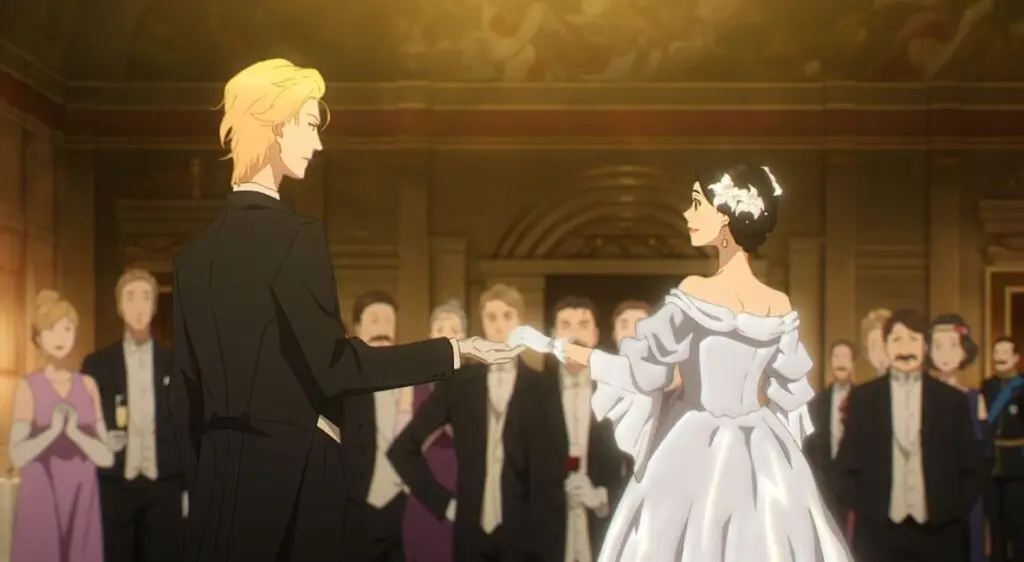
The narrative places personal growth ahead of romantic closure, and that choice shapes how Lili and Kit’s relationship plays. They carry flaws that create friction. Lili struggles to say what she feels in direct terms. Kit often misses the impact of his actions on other people. That mismatch can be powerful and irritating in equal measure, which feels appropriate for two characters learning how to function outside their own habits. Lili also reaches a key realization: imitation will not earn her freedom. She needs an artistic path that belongs to her.
Pacing leans contemplative, favoring introspection over rapid twists. Some viewers may feel that patience get tested, since the series often chooses internal shifts and small steps rather than big turning points. The 20-episode length supports that gradual movement, giving emotional arcs time to unfold with a measured rhythm. Late in the story, a time skip arrives, and the change feels hurried.
Several plot beats appear and resolve quickly during the final episodes, and that speed stands out next to the steadier cadence that defines much of what came before. The series keeps returning to small moments of growth, and it presents development as messy trial and error rather than a clean march from problem to solution.
Love Through A Prism (also known as Prism Rondo) premiered on January 15, 2026, exclusively on Netflix. This 20-episode original net animation, produced by the acclaimed WIT Studio, is set in the early 20th century and follows Lili Ichijoin, a determined Japanese artist who travels to London to study at the prestigious Saint Thomas Art Academy. Faced with a strict ultimatum from her mother to become the top student within six months or return to Japan for an arranged marriage, Lili finds herself in a fierce rivalry with the eccentric aristocratic prodigy Kit Church. The series is celebrated for its lush, painterly aesthetic and its mature exploration of how ambition and personal identity intersect with romance. You can currently stream the entire first season on Netflix.
Full Credits
Title: Love Through A Prism (Prism Rondo)
Distributor: Netflix
Release date: January 15, 2026
Rating: TV-14
Running time: 20–25 minutes per episode (Episode 6: 40 minutes)
Director: Kazuto Nakazawa, Tetsuya Takahashi (2nd Director), Saki Fujii (3rd Director)
Writers: Yoko Kamio, Saki Fujii
Producers and Executive Producers: Keita Yoshinobu, Yoko Kamio
Cast: Atsumi Tanezaki, Koki Uchiyama, Yuki Kaji, Megumi Han, Shogo Sakata, Yohei Azakami, Sumire Uesaka, Akari Kito, Hochu Otsuka, Yuhko Kaida, Junichi Suwabe
Director of Photography (Cinematographer): Keisuke Nozawa
Editors: Chika Ishii, Satoshi Ishii
Composer: Naoki “naotyu-” Chiba
The Review
Love Through A Prism
Love Through A Prism is a thoughtfully constructed drama that prioritizes the textures of personal growth and artistic discovery over the usual beats of romantic melodrama. Its strength lies in its atmospheric world-building and the expressive journey of its protagonist. While the late-series pacing experiences some turbulence, the painterly visuals and the nuanced exploration of ambition make it a rewarding experience. It serves as a sincere look at the sacrifices required to find one’s own creative voice in a foreign land.
PROS
- Exquisite painterly background art and period-accurate aesthetic.
- A grounded, expressive vocal performance by Atsumi Tanezaki.
- Deeply relatable themes regarding cultural displacement and family pressure.
- A focus on individual artistic identity rather than just romantic resolution.
CONS
- Some jarring visual inconsistencies between characters and 3D backgrounds.
- Pacing issues in the final episodes, including a rushed time skip.
- Supporting characters occasionally feel like underutilized archetypes.