
























![Kingdom Hearts Collection [I-III] Review](https://gazettely.com/wp-content/uploads/2026/10/Kingdom-Hearts-Collection-I-III-1-360x180.webp "Kingdom Hearts Collection [I-III] Review: KHII Holds Steady as Newer Entries Fluctuate 37")




The dust of rural America settles over Jack and Ava with a slow, implacable patience. The setting registers as a terrain of arrested motion. Everyone knows where everyone has failed. That shared ledger of history and grudge frames the protagonists. Jack and Ava stand for the desperate youth of the periphery. They attempt escape through a reckless heist.
They take unmarked firearms from local predators. That theft begins a frantic 72-hour countdown. Time acquires weight. The film moves inside a tradition of bleak Americana and borrows the moral architecture of noir. The horizon offers no promise of clean departure. Crime feels grown from the same exhausted soil as the town.
The stakes are immediate. Survival functions as currency. We watch two people try to outrun their own shadows. The clock throbs with a persistent, dull cadence. The premise follows a classic noir blueprint. The trap exists before any gun is fired. One imagines the exit sealed for years.
The Human Cost of Survival
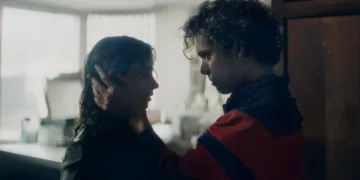
Isaac Lee gives Jack a somber stillness. He shapes an orphan whose weariness precedes his years. He carries the accumulation of failed attempts. Elisha Herbert furnishes Ava with sharp edges. Her scars read like weather on a face. Her outbursts supply sudden, jarring electricity. Those eruptions flatten into a calmer, distant register. Distance becomes a defensive architecture.
The camera frequently observes that retreat as if it were a physical action. Expressionistic framing highlights the internal retreat. The sequence of shots often isolates a single shoulder, a turned head, an off-center gaze. This composition reads as psychological shelter. Deion Smith grounds Will with a hardened exterior.
His posture and line readings suggest a man disgusted with his own past. Jordan Lacovella supplies reprieve as Robbie. He carries a strain of southern levity that undercuts bleakness. He draws attention to absurdity inside danger. The link between Jack and Ava rests in shared trauma. Their chemistry depends on silence. They choose each other because the town offers no other claims.
Their choices arise from an existential hunger. They attempt to define themselves beyond the crimes that mark them. The ensemble functions without a weak link. Each performer honors the gravity of their role. The collective provides the human texture necessary for a story about people pushed toward collapse.
Shadows and Tight Frames
Eric Dodson composes with an insistence on extreme proximity. The camera remains uncomfortably close. At times the audience may wish for a telescope. Handheld motion injects a frantic instability. Wide vistas are withheld. The frame becomes a kind of containment. Characters inhabit the camera as if it were another wall.
That claustrophobia echoes the tightening of circumstance. Lighting prefers heavy shadow and dim backrooms. The production references chiaroscuro from classic noir through concentrated pools of light and steep falloff at the edges of frames. Darkness swallows the screen margins. That visual void corresponds to ethical uncertainty.
Every corner registers possibility and threat. Sound design completes the visual strategy. The score presses with percussive, restless motifs that mimic an accelerating heartbeat. This audio design resists a steady rhythm and keeps the viewer slightly off balance. The production shows notable technical command.
The team shot the feature in four weeks. They used temporal limits to sharpen compositional focus. The result reads as a polished, gritty surface. The constraints operate as creative instruments. Each shot feels chosen with care. The absence of breathing room performs a thematic duty.
Echoes of Consequence
Narrative priority lies with interior conflict rather than spectacle. The 72-hour window exerts steady pressure. The film declines the frantic speed of a conventional thriller. Pacing opens room for quiet considerations of loyalty. The script privileges character choices. These characters attempt to act rightly toward those they love inside a system that punishes compassion.

The story examines the cost of a second chance. It raises whether a clean slate remains possible when history is stained by violence. The resolution avoids genre clichés and arrives in a manner that feels earned. The writing possesses a rawness typical of a first feature. Certain scenes could have benefited from further development. Still, the central architecture remains firm. The film contends with moral gravity.
It demonstrates that actions carry mass and will alter trajectories. The potential of the storytelling appears in image after image. Ambition is visible in formal choices and tonal risk. The script derives strength from the messy reality of its characters. These figures seek survival inside consequences they helped make. They remain human, brittle and persistent.
Jack and Ava is a gritty crime thriller that premiered on digital platforms on January 23, 2026, following a limited theatrical window that began earlier that month. Produced by Ollie & Panda Films in association with the Easy Brothers, the movie follows two young lovers—an orphan and an abuse survivor—who find themselves in a deadly race against time after a heist involving illegal firearms goes wrong. You can currently stream the film on various Video on Demand (VOD) platforms, including Apple TV, Amazon Prime Video, Fandango at Home, and Google Play.
Full Credits
Title: Jack and Ava
Distributor: Freestyle Digital Media
Release date: January 9, 2026
Rating: NR (Not Rated)
Running time: 90 minutes
Director: Michael Pollard
Writers: Michael Pollard, Isaac Lee
Producers and Executive Producers: Justin Lorence, Tazi Starfire
Cast: Isaac Lee, Elisha Herbert, Deion Smith, Jordan Iacovella, Joshua Albert Brooke, Carter Sirianni, Malik J. Ali, Holden Smith
Director of Photography (Cinematographer): Eric Dodson
Editors: Andrew Hunter, Michael Pollard
Composer: Will Stuart
The Review
Jack and Ava
Jack and Ava functions as a deliberate exercise in atmospheric dread. The film utilizes its limited setting to examine the harsh reality of desperate choices. While the narrative flow occasionally falters, the visual commitment to a claustrophobic aesthetic remains effective. The performances offer a grounded emotional center to this bleak tale of survival. It provides a stark entry into modern rural noir.
PROS
- Handheld camera work creates palpable tension.
- Strong performances from the lead and supporting cast.
- Rich atmosphere of rural decay.
- Authentic sound design.
CONS
- Uneven characterization for the female lead.
- Pacing issues during the middle act.
- Script elements feel unpolished.







