






















The abduction of fourteen year old Elizabeth Smart from her bedroom in Salt Lake City on June 5, 2002, anchors Kidnapped: Elizabeth Smart with a grim, unsparing clarity. The documentary situates that crime inside the early 2000s, an era of aggressive cable news expansion when private family tragedies became public spectacles.
The media is presented as a machine that thrust the image of a missing girl into living rooms across the country. The film treats the story as a piece of journalistic reconstruction, peeling back tabloid static to listen for the human rhythm beneath. The Smart family, prominent within their Mormon community, felt their sanctuary violated when a predator vanished into the Utah night.
Thousands of volunteers joined the search, a communal attempt to repair a ruptured sense of safety. Benedict Sanderson returns the story to the screen and searches archival material for a resonant echo. The film traces a case that dominated headlines for months and marks a moment of national fixation on childhood in peril.
The Weight of Suspicion
The hours after the disappearance thickened with suburban dread. Mary Katherine Smart, the nine year old sister and sole witness, remained haunted by the memory of a voice that threatened her life. Her recollection supplied the only map for an investigation that frequently lost its bearings.
Law enforcement confronted a void, and suspicion concentrated on those closest to the family. Ed Smart endured public scrutiny that equated proximity with culpability. The media fed a hunger for a domestic antagonist and cast the father in a suspicious light. Richard Ricci, a handyman with a violent past, became a focus of police attention. As the family bore the burden of being treated as suspects, the community mounted a vast show of solidarity. Tens of thousands of leads arrived and most ended in dead ends that increased the overall noise.
The investigation reveals how fragile civic systems can be when pressed by fear and rumor. This portion of the film registers the psychological strain of a family engaged in two struggles: coping with the loss of a child and resisting the machinery of public suspicion. Police attention centered on specific profiles and neglected other possibilities for danger.
The Architecture of Memory and Light
Benedict Sanderson composes images that mirror the fractured logic of memory. He withholds Elizabeth’s personal testimony until the forty minute mark, a structural choice that generates a haunting tension in the film’s first act. The delay forces the viewer to feel her absence before hearing her voice. Cinematography exploits sweeping Utah landscapes so that mountain beauty reads as indifferent to the human suffering beneath.
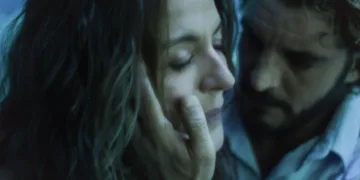
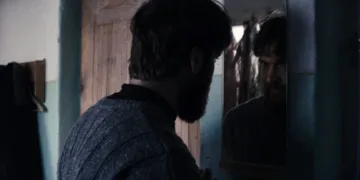
These frames imply a world capable of concealing terrible truths. The director uses extreme close ups in interviews to catch the micro expressions of the Smart family as they reopen old wounds. Home video footage and original 911 calls are placed alongside those close ups, grounding lyrical imagery in the raw facts of the case. Shadowy recreations appear at intervals to fill spaces where cameras could not stand, using light and silhouette to suggest the presence of the kidnappers.
The score avoids genre tropes and supports the emotional weight of events rather than manipulating it. By pairing police interrogation tapes with contemporary reflection, the film stages a dialogue across time. Silence and archival news footage carry a heavy burden here, letting past broadcasts testify to the chaos of that moment.
The Recovery of the Self
Nine months of captivity define a descent into a private hell shaped by the religious delusions of Brian David Mitchell. Along with Wanda Barzee, Mitchell held Elizabeth in a primitive encampment and employed threats and psychological coercion to erode her will. He styled himself as a prophet while acting as a predator who hid behind religious language.

The documentary recounts the daily abuse Elizabeth endured and her proximity to a world that failed to see her. Her rescue arrives suddenly when police stopped the trio and she reclaimed identity by confirming her name. The legal aftermath stretched across a decade and documented the slow mechanics of justice.
Mitchell sought to invoke his mental state as a shield; the proceedings show how the law addressed those claims and eventually held him accountable. The film presents Elizabeth now as a mother and a forceful advocate for survivors. She uses a public platform to remove shame from the experience of survival and to assert an ethic of inner strength.
Her life functions as a study in endurance. She fashioned a meaningful existence out of the ruins of childhood and made a return of light after a very long night. Her presence stands as a quiet victory over the darkness that once sought to claim her.
Kidnapped: Elizabeth Smart is a definitive feature-length documentary that premiered on Netflix on January 21, 2026. Directed by the award-winning Benedict Sanderson, the film revisits one of the most high-profile abductions in American history: the 2002 kidnapping of 14-year-old Elizabeth Smart from her home in Salt Lake City. Unlike previous dramatizations, this documentary centers on Elizabeth’s own voice as she provides a harrowing and deeply personal account of her nine months in captivity under religious fanatic Brian David Mitchell and his accomplice, Wanda Barzee. Featuring exclusive interviews with her family—including her sister Mary Katherine, the sole witness—and never-before-seen archival footage, the film explores the psychological manipulation of her captors and Elizabeth’s inspiring journey toward survival, advocacy, and healing. You can stream it exclusively on Netflix.
Full Credits
Title: Kidnapped: Elizabeth Smart
Distributor: Netflix
Release date: January 21, 2026
Rating: TV-MA
Running time: 91 minutes
Director: Benedict Sanderson
Writers: Benedict Sanderson
Producers and Executive Producers: Gabby Alexander, Claire Goodlass, Sophie Jones, Morgan Matthews
Cast: Elizabeth Smart, Heather Coombs, Steevan Glover, John Stableforth, Mary Katherine Smart, Ed Smart, Lois Smart
Director of Photography (Cinematographer): James Incledon
Editors: Holly Bridcut
Composer: Mat Davidson
The Review
Kidnapped: Elizabeth Smart
Kidnapped: Elizabeth Smart serves as a somber meditation on the persistence of the self within the void of trauma. Benedict Sanderson avoids the cheap thrills of crime stories, focusing instead on the quiet gravity of survival. It is a work of heavy atmosphere and stark truth. Elizabeth remains the primary light within a story defined by shadows.
PROS
- The structural shift to Elizabeth's firsthand perspective.
- The removal of tabloid sensationalism in favor of dignity.
- Stark, evocative cinematography of the Utah mountains.
CONS
- The reliance on shadowy recreations occasionally distracts.
- The slow pacing requires significant patience.