The Sinjajevina region of Montenegro is framed as a vast stretch of high-altitude pastureland, made up of rocky plateaus and calm meadows that seem removed from the rush of the twenty-first century. A small community holds on to a subsistence economy built around herding goats and cattle.
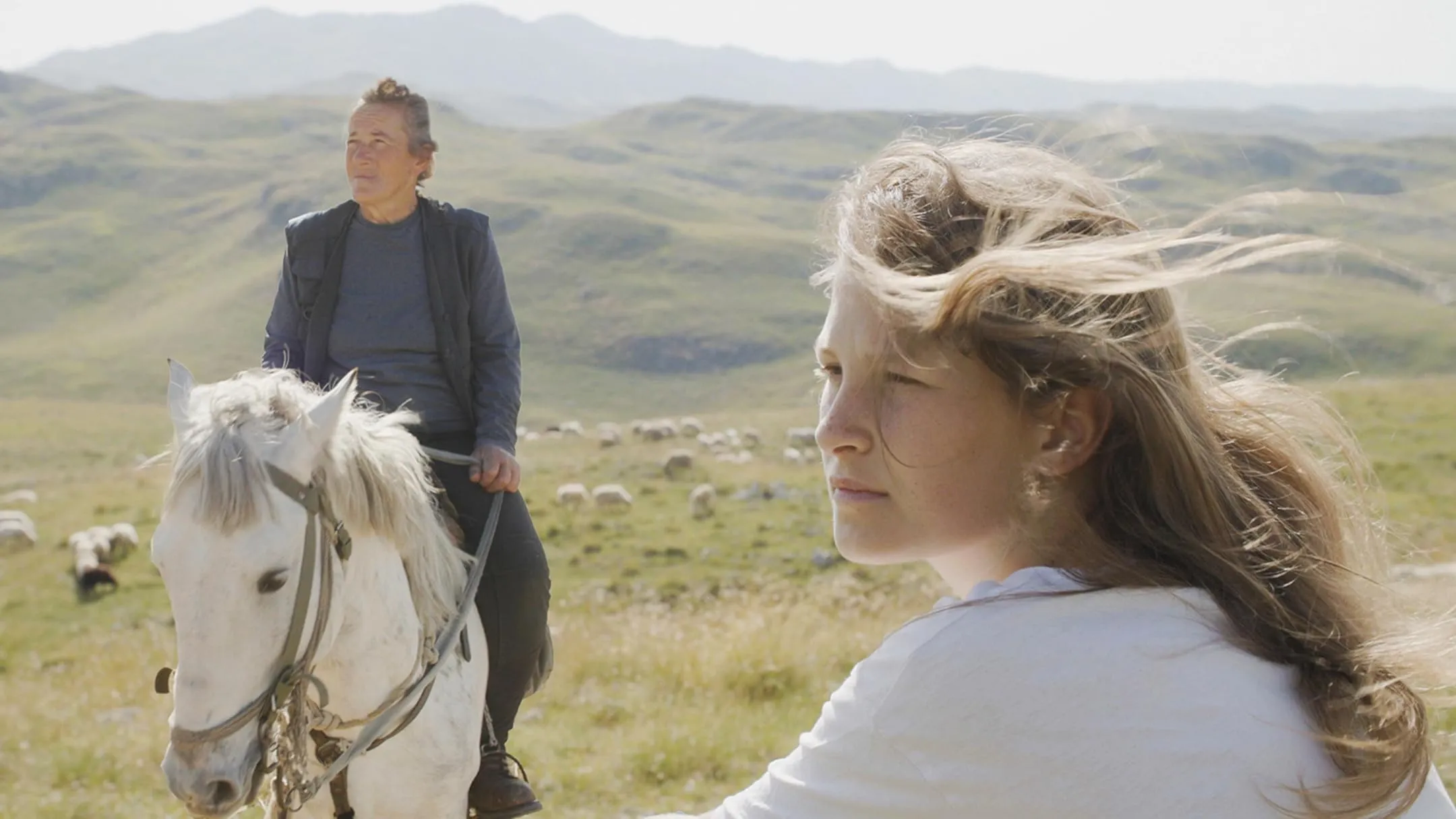
To Hold a Mountain introduces Gara, a veteran shepherd shaped by the toughness of the highlands, and Nada, a teenager growing up with her days tied to these slopes. Directors Biljana Tutorov and Petar Glomazić keep the approach naturalistic and observational, letting the routines and silences speak for themselves as they capture the steadiness of rural life.
That steadiness fractures with the arrival of NATO forces and the Montenegrin military. The plan is to turn this UNESCO-protected site into a training ground and shooting range, and the film tracks the friction that follows. The storytelling keeps returning to two forces moving through the same space: the quiet dignity of the shepherds’ daily work and the hard logic of modern geopolitics. The stakes of preservation register through the environment itself, carried in the wind sweeping across the plateau.
Cycles of Milk and Memory
Tutorov and Glomazić spend time on the labor needed to survive above the treeline, and the film’s structure starts to feel like a carefully built loop. Milking is shown as repetition with purpose, and cheese-making comes across as a craft with tight precision. The physical cost sits close to the surface, and the trek between farms in this alpine terrain demands stamina that the camera never romanticizes away. By returning to these tasks again and again, the film establishes a rhythm that functions like a system you learn by watching: small actions, repeated daily, holding an entire life in place.
Gara and Nada form the emotional anchor, and their relationship reads through behavior rather than speeches. Shared meals, hair washing, and sleepy cuddles sketch a quiet intimacy that has grown across a decade of isolation. The camera’s proximity matters here. It stays present in the kitchen and on the hillside in a way that makes the bond feel lived-in, with no push toward easy sentiment.
As Nada moves deeper into her teenage years, a generational shift becomes part of the film’s forward motion. Gara tries to keep their world small and sustainable. Nada starts showing curiosity about what exists beyond the mountain. She paints her nails. She looks toward school away from the ridge. The directors observe these changes with restraint, letting the tension between continuity and adolescence register in small choices. The pacing follows the slow turn of seasons, giving each daily task room to land emotionally.
One of the most affecting threads comes through Gara teaching Nada how to stuff cheese into bags for sale. The moment plays like a transfer of knowledge with weight behind it, and the camera stays close on Gara’s weather-beaten hands as proof of a life spent in the elements. The film leans away from rapid cutting and stays with long stretches of work, so the viewer sits inside the routine as it unfolds. That sustained attention builds attachment to the spaces and the gestures, which raises the emotional temperature once the military presence moves into view.
Rallying on the Ridge
Once the military formalizes its plans, the narrative shifts from intimate portrait to organized resistance. Gara becomes a public face for her neighbors. She rides her horse with a bullhorn, calling the community to block mountain passes as soldiers approach.
Her arguments for defending the land come through as clear and fierce. In a televised debate in the city, she confronts an army officer with confidence, and the exchange leaves the military representative searching for words. The film treats the mountain as a sanctuary the residents refuse to hand over to a shooting range.
The pressure from outside forces connects to the internal strength required to live in this climate. Residents speak and act from a sense of ancestral home, and their attachment clashes with a state view that treats the area as usable terrain for a military objective.
The storytelling leaves gaps about how the press first arrived, yet the emotional throughline stays strong because the film has already invested so much time in lived detail. Gara’s leadership points to a kind of courage rooted in heritage and necessity, and the conflict keeps exposing a divide between urban policy and rural reality.
The visual language sharpens as armed men begin their climb, and that image lands hard after so much time spent on herding and food-making. Gara keeps moving forward, treating her locally made cheese as a form of cultural identity with real force behind it.
Her fearlessness spreads across the cluster of farmsteads, and the film captures the grit of standing in front of a government that has already treated your land as expendable. Editing by George Cragg shapes these moments into standoffs that feel timed, building a sense of a clock advancing as the military presence grows.
The Weight of the Peaks
Eva Kraljević’s cinematography presents the landscape with quiet awe. Morning light on the peaks and the stark sight of a snow-covered cabin carry the environment’s power without needing explanation. These images echo the patience and endurance the film has been tracking through labor and daily repetition.
As the story continues, hidden histories surface. The film reveals Gara’s past and the tragedy connected to Nada’s biological family. Domestic violence and personal loss become part of the emotional map, informing Gara’s determination to protect her surroundings. She sees the mountain as a place where women can find safety away from male brutality, and that idea reshapes the conflict into something intimate as well as political.
The title holds two meanings at once. It points to the physical fight to keep the pastureland from becoming a military space. It also points to the emotional burden of ending cycles of generational trauma. Long, unbroken takes give these themes time to register. A subtle score by Drasko Adžić supports the imagery while leaving space for wind and livestock to carry the soundscape. Shots of sheep moving up a hillside become recurring markers of fragility and strength, a small-scale motion that matches the film’s patient pacing.
The victory on the mountain reads as a reclamation of soil and spirit. Nada is shown maturing, taking on the stoicism of her aunt while still living with the dark history tied to her biological parents. The film handles these revelations with restraint, letting the audience assemble pieces through stray comments and quiet reflection.
Visual symbols keep appearing: a dead cow covered in flies, a shrine-like photo of Nada’s mother on the wall. These images add philosophical weight alongside the direct activism, and the final impression is clear. Gara fights for the land because the land has become a definition of belonging, and because that place has offered refuge from violence.
To Hold a Mountain is a poignant documentary that premiered at the Sundance Film Festival on January 26, 2026, where it won the World Cinema Grand Jury Prize for Documentary. Currently, the film is continuing its festival run, with upcoming screenings scheduled for CPH:DOX in March 2026. While a wide streaming release date has not yet been announced, the film is represented by MetFilm Sales and Submarine for international distribution, making it a title to watch for on major arthouse and documentary platforms later this year.
Full Credits
Title: To Hold a Mountain
Distributor: MetFilm Sales, Submarine, Wake Up Films
Release date: January 26, 2026 (World Premiere)
Running time: 105 minutes
Director: Biljana Tutorov, Petar Glomazić
Writers: Biljana Tutorov, Petar Glomazić
Producers and Executive Producers: Biljana Tutorov, Petar Glomazić, Quentin Laurent, Rok Biček, Megan Gelstein, Bianca Oana, Sean Flynn, Ben Fowlie, Lucila Moctezuma, Chandra Jessee, Rebecca Lichtenfeld, Megha Agrawal Sood, Shanida Scotland
Cast: Mileva Gara Jovanović, Nada Stanišić
Director of Photography (Cinematographer): Eva Kraljević
Editors: George Cragg, Catherine Rascon
Composer: Drasko Adžić
The Review
To Hold a Mountain
8Score
This documentary succeeds as a sensory experience that links the preservation of soil to the preservation of the soul. The directors capture a rare, unyielding strength in Gara, making her struggle against military expansion feel deeply personal. While the narrative occasionally leaves procedural questions unanswered, the emotional resonance of the central relationship and the sheer beauty of the Montenegrin highlands carry the film. It is a quiet, powerful look at a community refusing to be erased.
PROS
Bold and immersive cinematography that captures the harsh beauty of the highlands.
A nuanced, authentic portrayal of the bond between Gara and Nada.
Strong thematic links between land preservation and the rejection of generational trauma.
Gara serves as a remarkably articulate and compelling lead subject.
CONS
Minor gaps in the storytelling regarding the logistics of the political protest.
The deliberate, slow pacing might feel slight to those seeking a high-tension narrative.