




























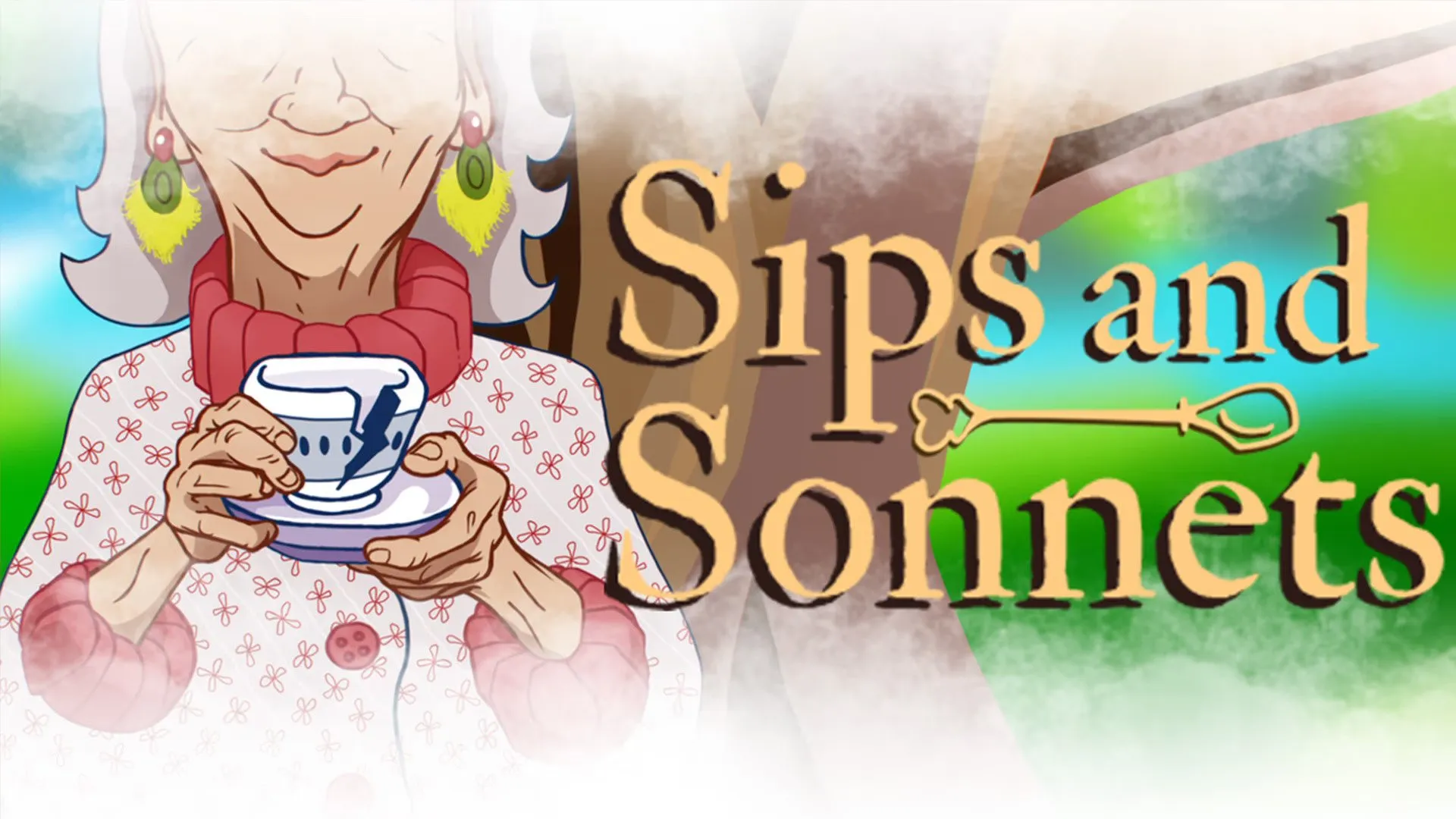

In the crowded field of visual novels, some games shout for attention with complex mechanics or dramatic plot twists. Sips and Sonnets takes a quieter approach. It invites you into Meadows’ Tearoom, a cozy establishment in the English countryside run by the game’s protagonist, Ms. Meadows. She is an elderly former journalist who now spends her days crafting poetry and serving tea.
The game places you in her gentle care, tasking you with listening to the problems of her patrons and offering them a warm cup and a kind word. The experience is best described as a short, heartfelt story, more like a playable piece of short fiction than a traditional game. It establishes a warm, sometimes melancholic, atmosphere from the first moment and maintains it throughout its brief runtime.
Poetry in Motion
The narrative structure of Sips and Sonnets is best understood as a collection of vignettes, a short series of days that offer a window into a life. With a playtime of only two to three hours, the game is paced like a slow burn novella. It never rushes its conversations, allowing the quiet moments to breathe and letting players sink into the gentle rhythm of the tearoom.
This deliberate pacing reinforces the game’s focus on reflection. It asks the player to slow down and simply be present, an approach that feels increasingly rare. The story is self-contained yet hints at a much larger world of experiences, primarily through the life of its protagonist.
Ms. Meadows is far from a passive observer or a player-insert cipher. She is a fully realized character with a rich and storied past. We learn that before settling into the quiet life of a tea shop owner, she was a journalist who traveled the world. This history is not merely exposition; it is woven into the fabric of the tearoom itself. The trinkets on her shelves and the pictures on her walls are all artifacts from a life lived with curiosity and adventure.
Her advice to customers is therefore imbued with the weight of experience. She is not just repeating platitudes; she is drawing from a deep well of personal triumphs and sorrows, making her guidance feel earned and authentic. Her personal journey, grappling with her age and fading memories, forms the emotional spine of the entire game.
The supporting cast provides the perfect canvas for Ms. Meadows’ wisdom. We meet Ollie, a young village regular feeling directionless, and Adam, a temporary resident working through his own personal struggles. Your dialogue choices can gently push them toward new perspectives, and seeing their subtle growth is one of the game’s quiet rewards.
A more complex relationship develops with the evening nurse, who arrives each day to administer Ms. Meadows’ medicine. Her attitude is initially cold and professional, creating a fascinating dynamic where Ms. Meadows must extend her warmth to someone who seems resistant to it. Beneath the surface of these daily interactions are hints of a deeper personal story involving a childhood friend named Esmee, adding a touch of unresolved mystery to Ms. Meadows’ past.
Player choice is handled with a delicate touch. Unlike the high-stakes, world-altering decisions of a Mass Effect or a Telltale game, the choices in Sips and Sonnets are intimate and personal. They are about finding the right words of encouragement or asking the right question to unlock a person’s feelings. The consequences are felt in the shifting moods of the characters and the evolving atmosphere of the tearoom, leading to one of three distinct endings. These conclusions offer different emotional resolutions based on the strength of the connections you have forged, providing a solid incentive for repeat playthroughs.
The game’s thematic core is its profound exploration of aging and memory. The developer’s background in neuroscience research is evident in how these themes are integrated into the experience. The narrative does not shy away from the difficult realities of growing older, including physical frailty and the haunting fear of losing one’s own history.
The game’s release during World Alzheimer’s Awareness Month feels intentional and resonant. This focus on memory is reflected in subtle gameplay where you are expected to recall details from earlier conversations, placing you directly into Ms. Meadows’ perspective as she works to hold onto the important threads of her life.
This mature handling of its subject matter places Sips and Sonnets in conversation with other thoughtful narrative games. It shares the reflective, story-driven DNA of What Remains of Edith Finch, another game about piecing together a life story from memories and objects.
Where Edith Finch uses fantastical vignettes, Sips and Sonnets remains grounded in the realism of everyday human connection. It also evokes the gentle, compassionate spirit of Spiritfarer, a game that deals directly with themes of passing on. Yet, while Spiritfarer externalizes the process of saying goodbye, Sips and Sonnets presents a deeply internalized and personal struggle against the slow fade of time.
A Mild Brew
The gameplay mechanics in Sips and Sonnets are all purposefully designed to serve its narrative themes and cozy atmosphere. The core loop is a satisfying, symbiotic rhythm of conversation, tea-brewing, and poetry writing.

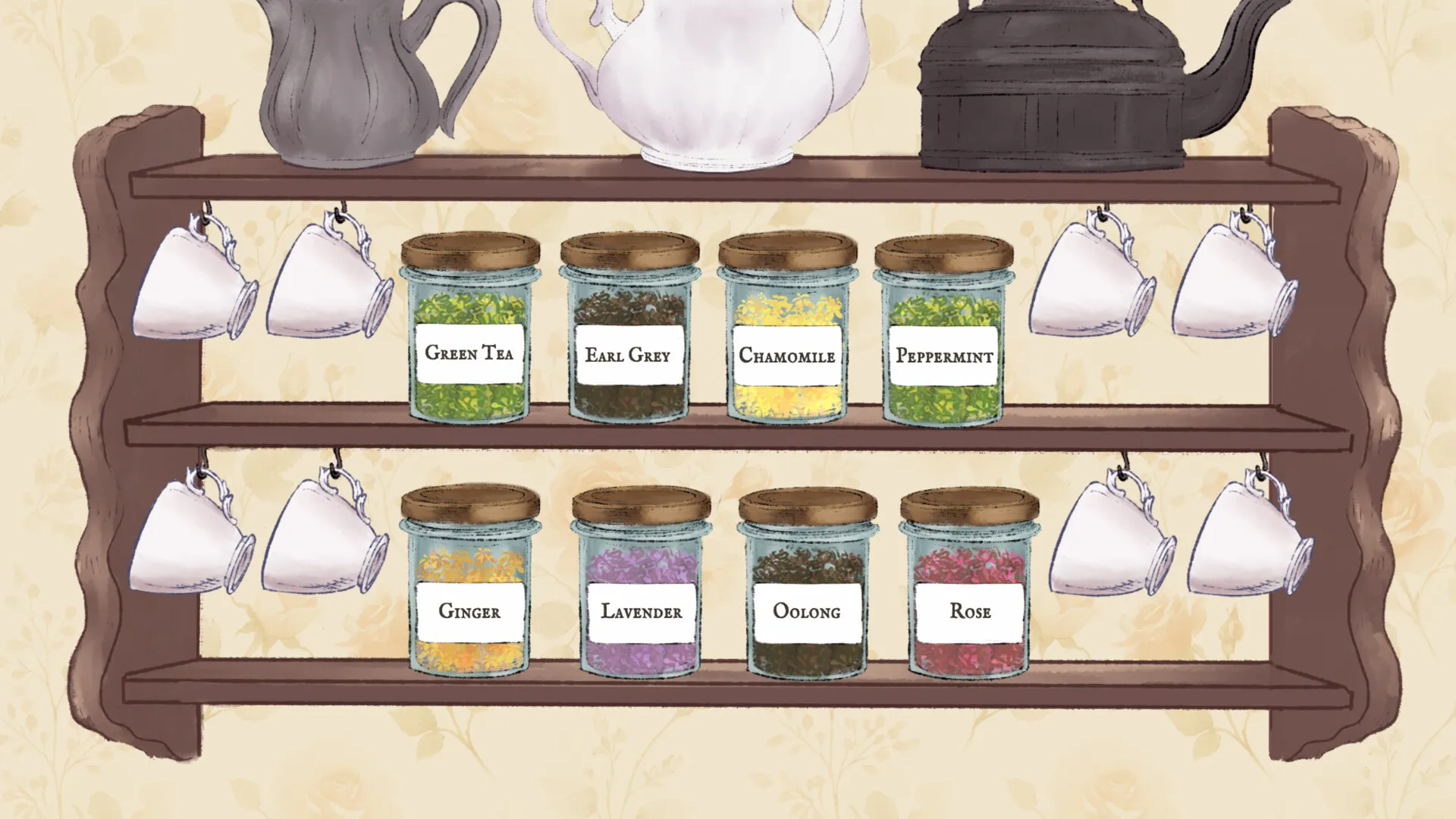
Each element flows logically into the next: the details of a conversation inform which of the eight available teas is most appropriate, and the emotional tenor of that interaction provides the inspiration for the evening’s poem. This creates a cohesive experience where your actions feel directly connected to the emotional state of the world and its characters. The gameplay is not there to provide a challenge; it is there to deepen the player’s immersion in the role of a caregiver and confidante.
The tea-making system is a perfect example of this design philosophy. It is a simple yet engaging mini-game that functions as an act of empathy. When a customer arrives with a problem, you must listen carefully to their needs. A patron complaining of sleepless nights might benefit from a calming lavender tea, which you would learn by consulting Ms. Meadows’ charmingly illustrated tea encyclopedia.
The brewing process itself requires you to steep the tea for a specific duration to achieve the right strength. Serving a perfectly brewed, thoughtfully chosen cup of tea can unlock additional dialogue, rewarding your attentiveness and reinforcing your role as a source of comfort. It is a system that finds its depth not in complexity, but in the care it encourages.
At the end of each day, Ms. Meadows retires to her desk to compose a sonnet. This poetry mechanic acts as a reflective summary of the day’s events. Presented with the bare-bones structure of a poem, you select words from a curated list to fill in the blanks. Your choices determine the final tone and message of the verse, allowing you to process the day’s conversations and express Ms. Meadows’ inner feelings. The game assigns a theme to each day, such as “Staccato” or “Running Away,” and the poetry you create directly engages with that idea. This active participation in creating the game’s titular sonnets provides a satisfying capstone to each chapter of the story.
Beyond the primary loop, smaller interactive elements add further texture to the world. The tearoom is filled with artifacts from Ms. Meadows’ travels, and you can initiate conversations about these objects to learn more about her past life as a journalist. These moments are key to uncovering her backstory. Another significant interaction is the evening medicine mini-game.
When the nurse visits, you are tasked with administering the correct dose of medication to Ms. Meadows. This brief mechanical interaction cleverly inverts the game’s central dynamic. For a moment, Ms. Meadows is the one receiving care, highlighting her vulnerability and deepening the player’s connection to her struggles. These simple activities ensure the player is always an active participant in the story.
Within the visual novel genre, the level of interactivity in Sips and Sonnets finds a pleasing middle ground. It offers more engagement than a kinetic novel, yet it avoids the complex logic puzzles of an investigation game like Phoenix Wright: Ace Attorney. Its closest relatives are titles like Coffee Talk and VA-11 HALL-A, which also use a beverage-service mechanic as a vehicle for storytelling. Sips and Sonnets distinguishes itself with its additional layers of interaction, like the poetry and artifact systems, creating an experience that feels mechanically simple but narratively rich.
A Painted Postcard
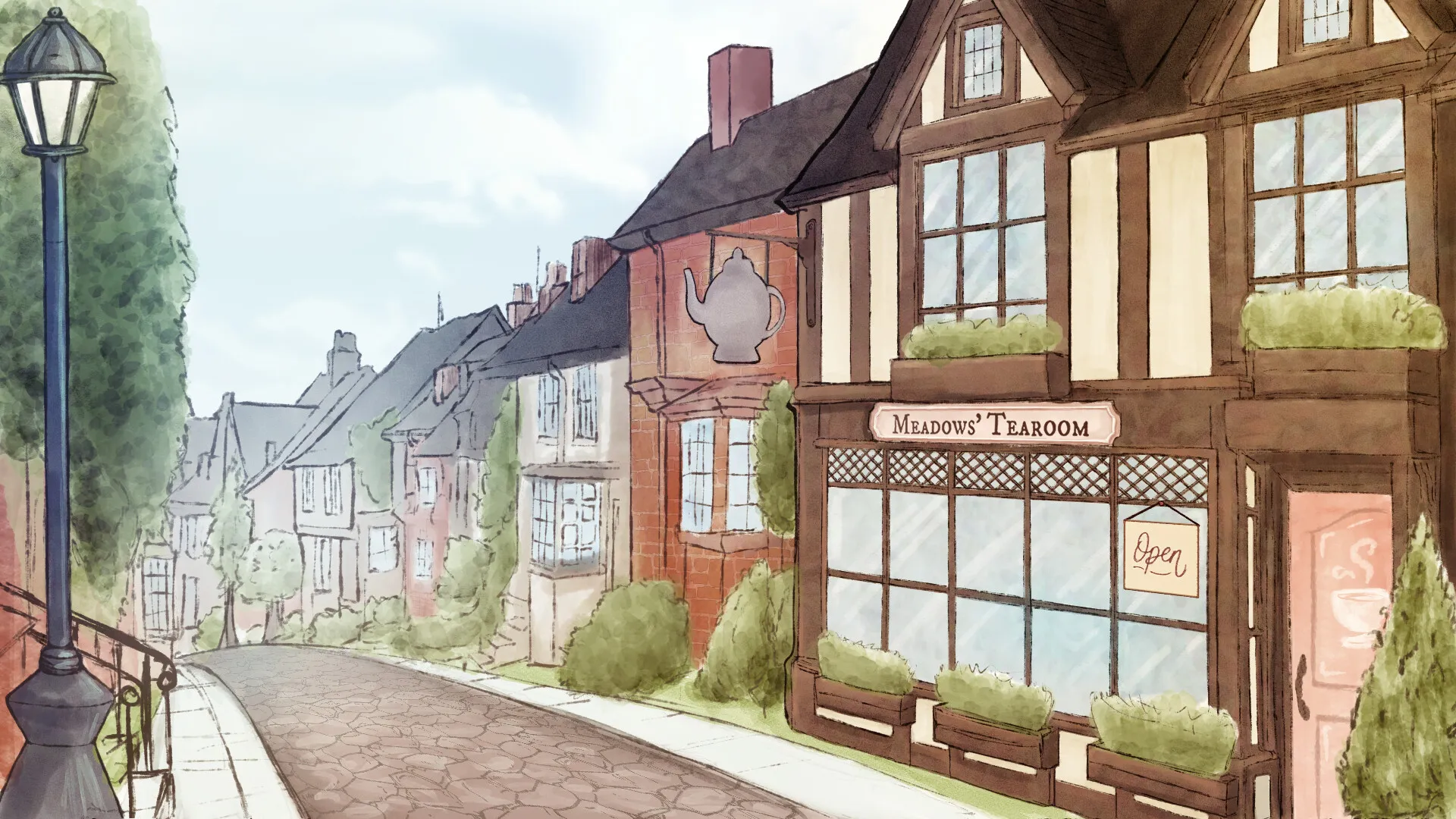
The presentation of Sips and Sonnets is instrumental in creating its powerful sense of place and atmosphere. The game employs a gorgeous watercolor visual style that makes every scene feel like a page from an illustrated storybook. The color palette is dominated by warm, soft tones that give Meadows’ Tearoom an immediate feeling of comfort and safety.
This gentle aesthetic extends to the lighting, which shifts realistically from the bright light of midday to the cool, quiet hues of the evening. The backgrounds are detailed and feel lived-in, filled with the personal touches that transform a space into a home. This painterly approach is perfectly suited to the game’s gentle, reflective tone.
Character art and animation are handled with similar care. The designs are simple yet expressive, effectively communicating each character’s personality. In a genre that relies heavily on static images, the artists have done an excellent job of conveying a wide range of emotions through subtle shifts in facial expressions and body language.
A slight downturn of the lips or a furrowed brow speaks volumes, allowing the emotional weight of the dialogue to land with greater impact. The game also uses its art style to create more abstract, unsettling imagery during dream sequences, like the vision of a faceless woman, providing a striking visual contrast that hints at Ms. Meadows’ underlying anxieties.
The sound design is another pillar of the game’s immersive quality. The charming, relaxing soundtrack is primarily composed of gentle piano and acoustic guitar melodies. The music is reactive, subtly shifting in tone to match the mood of a conversation, but it never becomes overbearing. It functions as a constant, comforting presence. This score is complemented by a rich layer of ambient sound. The soft clinking of teacups, the ticking of a clock on the wall, and the sound of rain against the windowpane all work together to make the tearoom feel like a real, tangible space.
What elevates the audio experience is the full voice acting. The entire script is performed by a talented cast, which brings the characters to life with remarkable depth. Bethan Dixon Bate, known for a very different role as the lich queen Vlaakith in Baldur’s Gate 3, delivers a phenomenal performance as Ms. Meadows.
Her voice captures the character’s gentle wisdom, her quiet humor, and the weary fragility of her age with perfect nuance. The supporting cast is equally strong, with Lenval Brown’s familiar voice lending a quiet gravitas to the character of Ollie. This commitment to high-quality voice work transforms the game from a simple text-based story into a fully realized performance piece.
The Lasting Taste
Sips and Sonnets masterfully uses its cozy aesthetic as a vessel for exploring profoundly human and often difficult subjects. Many games in the “cozy” genre focus on pure escapism, offering a retreat from life’s complexities. This game, however, provides something different: a safe and comforting space in which to confront those complexities head-on.
It does not shy away from the sorrow inherent in its themes of mortality, loss, and cognitive decline. Instead, it handles them with a gentle honesty that is both heartbreaking and beautiful. The experience can be deeply emotional, leaving you with a sense of poignant reflection rather than simple relaxation. It finds its comfort not in avoidance, but in the shared experience of navigating life’s inevitable challenges.
The game’s short length and branching narrative give it significant replay value. Discovering all three endings is a primary motivation to return, as each one casts the story and its characters in a slightly different light, offering a new perspective on Ms. Meadows’ final legacy. The promise of unlocking “author’s notes” after multiple playthroughs is another compelling reason to revisit the tearoom. This material offers a chance to gain deeper insight into the developer’s creative process and the real-world research that inspired the game’s narrative, adding an academic and personal layer for invested players.
Sips and Sonnets is an easy recommendation for established fans of visual novels, but its appeal is much broader. It should be played by anyone who appreciates thoughtful, character-driven storytelling, regardless of the medium.
If you enjoy independent films that prioritize emotional depth or literary fiction that finds meaning in the small moments of everyday life, you will feel right at home in Meadows’ Tearoom. In a market saturated with high-octane spectacles, this game offers a necessary counterpoint: a quiet, intimate, and profoundly moving experience. It is a potent reminder that some of the most powerful stories are not about saving the world, but about taking the time to truly listen to another person.
The Review
Sips and Sonnets
Sips and Sonnets is a beautiful, poignant narrative experience. It uses its simple mechanics not as a challenge, but as a way to immerse the player in a heartfelt story about memory, aging, and human connection. With an exceptional watercolor art style and a powerful lead vocal performance, it delivers an emotional weight that far exceeds its short runtime. This is a must-play for anyone who values storytelling in their games.
PROS
- A deeply moving and thoughtfully written story.
- Stunning watercolor art style and presentation.
- Superb, fully-voiced performances, especially the protagonist.
- Meaningful exploration of mature themes.
CONS
- Gameplay mechanics are minimal and offer little challenge.
- The short 2-3 hour length may leave some wanting more.