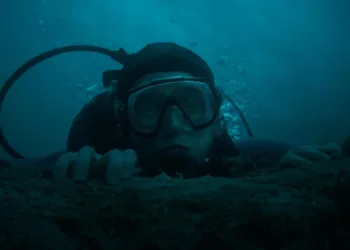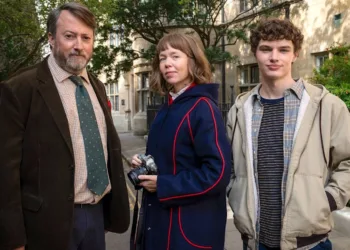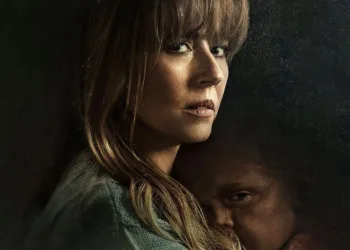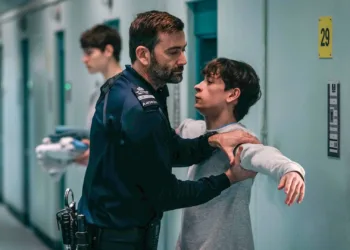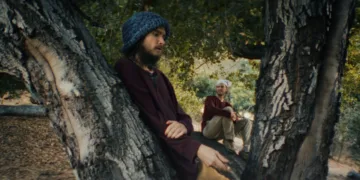


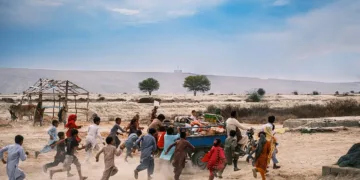


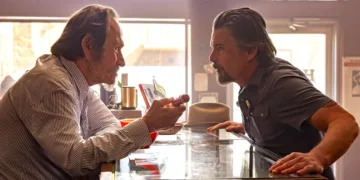















In 2003, the quiet community of Vernon, British Columbia, became fascinated with two young men who seemed to have wandered out of a pioneer postcard. Calling themselves Tom and Will Green, they claimed they had been raised entirely outside civilization by parents they called Mary and Joseph. This two-part docuseries, directed by Jeremiah Hammerling and Rita Baghdadi, reconstructs their arrival, the media surge that stamped them the “Bush Boys,” and the moment their carefully staged story finally gave way.
The series traces the brothers’ search for food and shelter, which set off a wave of local generosity led by residents such as Tami Ryder. Police and reporters begin pulling at loose threads, and the tale starts to fray: their “skills” look performative, their confusion about modern life looks selective.
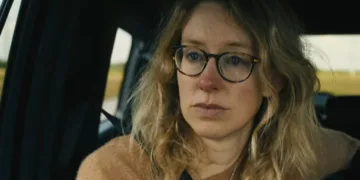
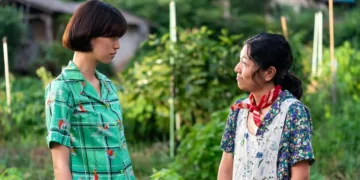
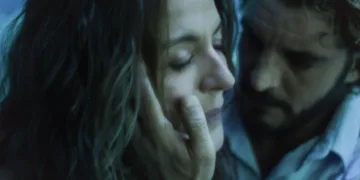
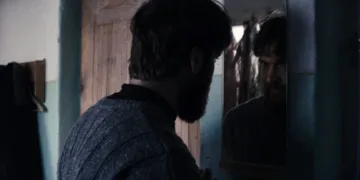
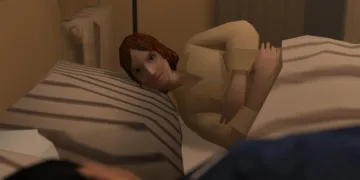
Using archival news clips, present-day interviews, and reenactments, the docuseries follows the story’s movement from survival yarn toward a study of family dynamics and health fixations. It plays like a case study in projection, the way a town can pour its longing for frontier purity into two strangers with empty pockets and a ready-made myth.
The Architecture of a Frontier Hoax
The arrival of the “Green” brothers in Vernon worked like a Rorschach test for a town steeped in the Canadian ethic of communal support. When they showed up, the younger brother looked skeletal, his body serving as proof-of-concept for a struggle against a hard, punishing nature.
Their backstory leaned on biblical archetypes: parents named Mary and Joseph, a remote cabin, a life kept far from the corruptions of the state. The pitch hit a cultural nerve, the appetite for an off-grid ideal that treats the digital age like a moral contaminant.
Tami Ryder becomes the emotional anchor of this local mission of rescue. She offers clothes, quarters, and a room at a hostel, performing a specifically Canadian form of radical hospitality. That same “niceness” forms a protective bubble around the boys while warning signs start appearing, fast and stubborn. Police observe how quickly the brothers handle public internet terminals for supposedly unschooled woodsmen.
Their hands tell another story, missing the callouses and the basic working knowledge that wilderness living tends to carve into a person, including the simple mechanics of chopping wood. The boys sell an image of rugged isolation with the confidence of practiced storytellers. I kept thinking of it as “feral-fishing,” a technique that throws out bait shaped like hardship and reels in sympathy from people eager to believe that a simpler life still exists somewhere past the last cell signal.
The Californian Mirror and the Horn Identity
The fiction collapses once a CBC film crew and a persistent reporter get the brothers on camera. That exposure leads a mother in California to identify them as Kyle and Roen Horn. The reveal flips the genre in an instant. The story stops being a wilderness fable and becomes a suburban drama with a Canadian backdrop.

These were not children of the bush. They were middle-class Californians who had disappeared a year earlier. The gap between the persona they performed and the lives they came from carries a sharp geographic irony: they leave American modernity and try to find sanctuary inside a mythic idea of the North.
Interviews with Rodger and Diane Horn sketch a family environment steeped in what the series frames as “alt-reality” thinking. Their home life sits in a posture of suspicion toward mainstream institutions, stretching from flat-earth theories to a broad distrust of medical authorities. That ideological atmosphere gives the brothers a language of resistance they later deploy in Canada.
One practical question hangs in the air: how did two teenagers without passports cross the international border without detection? The series leaves the logistics unresolved, and that silence starts to feel pointed. The border begins to read like a psychological line as much as a physical one. Conspiracy thinking, the docuseries suggests, can function like an inheritance. It gets handed down, polished, protected, and treated like family property, even when it weighs more than anyone wants to admit.
The Fruitarian Prison and the Autonomy Trap
The series presents their flight as something driven less by a romance of the wild and more by a desperate attempt to control a fragile body. After a childhood bike accident and the removal of his spleen, Roen develops a crippling fixation on “safe” foods.
The obsession hardens into an extreme fruitarian diet that rots his teeth and strips weight from his frame. When child protective services threaten institutionalization and the use of feeding tubes, Kyle takes his brother and disappears. He frames it as protection, a defense of bodily autonomy against a clinical system that intends to intervene.
Years later, the brothers come across as chillingly detached from the people they deceived. In contemporary interviews, they offer no apologies to Tami Ryder, treating her generosity as her own decision rather than something that created an obligation. They appear stuck in a loop I can only call “autonomy-extremism,” where the self stands as the sole legitimate authority.
Roen now runs a YouTube channel focused on longevity, still chasing a body that never betrays him. The Canadian wilderness has been swapped for a digital one, and the pursuit stays the same: outrun mortality by turning life into a control system. The docuseries lands as a bleak portrait of what happens when fear of death becomes the organizing principle of a life.
Wild Boys: Strangers in Town is a gripping two-part true-crime docuseries that premiered on February 18, 2026, on Paramount+. The series chronicles the bizarre true story of two brothers who appeared in the town of Vernon, British Columbia, in 2003, claiming to have been raised entirely off the grid. As the community rallies to help them, the investigation reveals a complex web of deception, health obsessions, and family secrets. You can currently stream the entire series exclusively on Paramount+.
Where to Watch Wild Boys: Strangers in Town Online





Full Credits
Title: Wild Boys: Strangers in Town
Distributor: Paramount+
Release date: February 18, 2026
Rating: TV-14
Running time: 91 minutes (2 episodes)
Director: Rita Baghdadi, Jeremiah Hammerling
Writers: Jeremiah Hammerling, Rita Baghdadi, Sam Mullins
Producers and Executive Producers: James Goldston, Max Heckman, Rita Baghdadi, Jeremiah Hammerling, Adam Hoff, Matthew Shaer, Dana J. Olkkonen, Marina Stadler, Arun Gulati, Susan Zirinsky, Terence Wrong, Trent Johnson, Aysu Saliba, Cara Tortora, Sam Mullins
Cast: Kyle Horn, Roen Horn, Tami Ryder, Henry Proce, Rodger Horn, Diane Horn, Sean Harvey
Director of Photography (Cinematographer): Jeremiah Hammerling, Rita Baghdadi
Editors: Jeremiah Hammerling, Rita Baghdadi
Composer: Jeremiah Hammerling, Rita Baghdadi
The Review
Wild Boys: Strangers In Town
Wild Boys: Strangers In Town is a chillingly detached study of how health anxiety and conspiracy culture can radicalize family loyalty. While it functions as a mystery, its true power lies in its refusal to offer a warm resolution. The directors avoid easy sentimentality, presenting the brothers as complex, occasionally unlikable figures. It is a slow-burn examination of the friction between personal liberty and public responsibility. While the two-part structure feels slightly stretched, the psychological depth makes it a haunting, essential watch for those interested in the fringes of modern belief.
PROS
- Fascinating look at "alt-reality" family dynamics.
- Strong use of archival news and media footage.
- Avoids judging subjects, allowing viewers to decide.
- Emotionally resonant interviews with Tami Ryder.
CONS
- Two-episode format feels slightly padded.
- Some reenactments feel distracting or unnecessary.
- Unresolved logistical details (like the border crossing).
- The subjects' lack of remorse may frustrate some.