













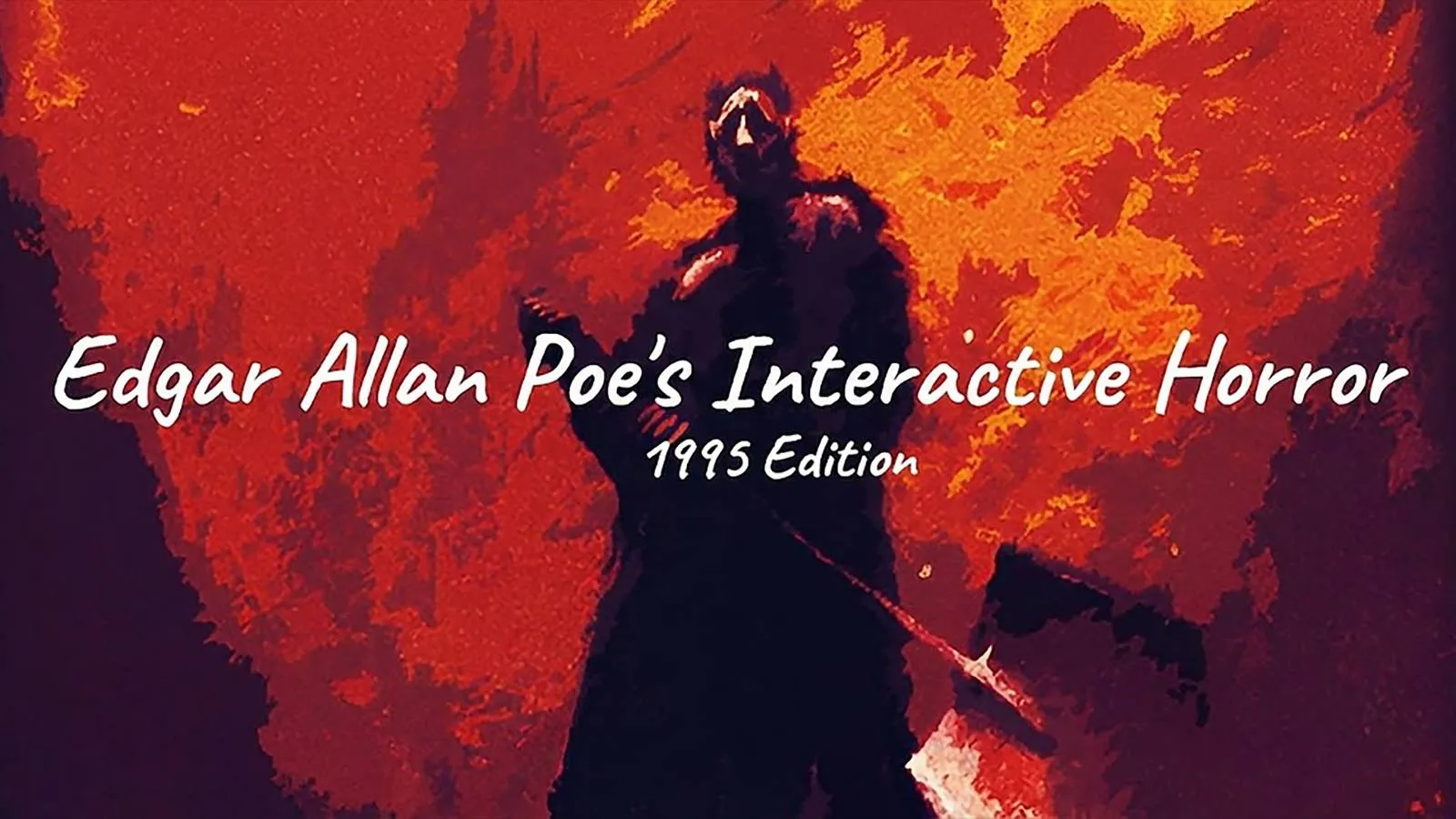

GMedia has pulled a long-lost relic out of the multimedia era and placed it back on modern storefronts: the 1995 point-and-click experiment once released as The Dark Eye, now sold as Edgar Allan Poe’s Interactive Horror: 1995 Edition. The new title frames the experience accurately. It plays like a digitized anthology of classic terror, with the interactivity serving the stories more than any conventional idea of “winning.”
You step into the role of a nameless visitor arriving at a desolate cliffside estate, there to see a reclusive uncle. The uncle is a painter, and William S. Burroughs gives him a gravelly, haunted presence that hangs in the air even when the screen goes still.
That setup acts as a narrative wrapper for slipping out of the manor’s mundane halls and into Poe’s prose. The package includes interactive renditions of “The Tell-Tale Heart,” “Berenice,” and “The Cask of Amontillado,” plus written versions of “To Helen” and “The Premature Burial.” Thomas Dolby’s audio work sits underneath it all, pushing and pulling at the characters’ psychological instability. As you move room to room, the initial errand of visiting family curdles into guilt and obsession, aiming to bottle the spirit of 19th-century Gothic fiction inside mid-nineties software limitations.
The Aesthetics of Discomfort and the Uncanny
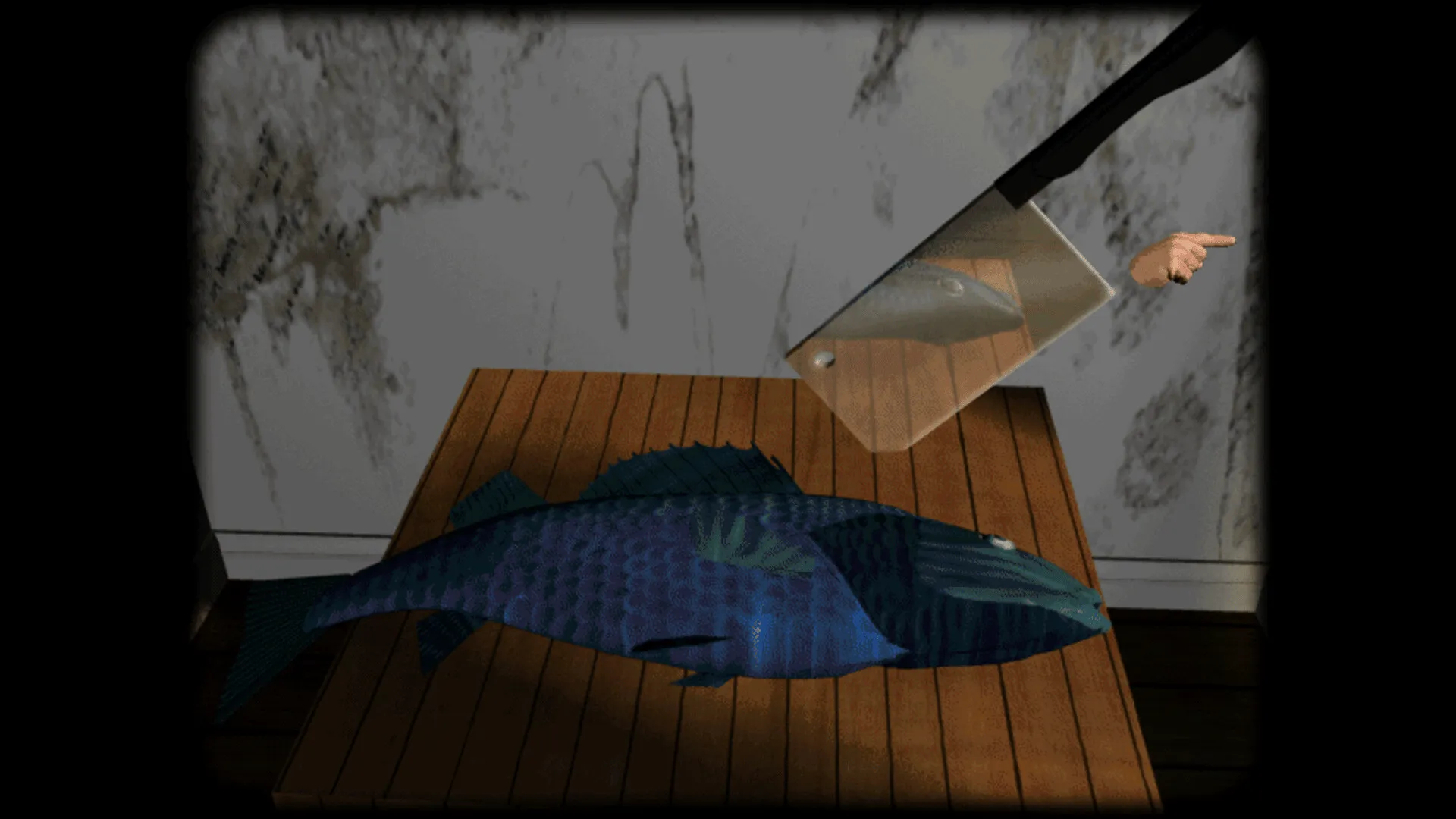
The visual identity depends on a deliberate collision of mediums, and the clash stays loud on purpose. Characters appear as stop-motion puppets, a choice that drops you straight into the uncanny valley. Their faces lean into exaggeration, and their eyes have that glassy, lifeless stare that makes even simple dialogue feel confrontational. The animation’s frame-by-frame jerkiness creates a kind of unnatural motion that modern high-definition polish rarely recreates, partly because this style never tries to look smooth or reassuring.
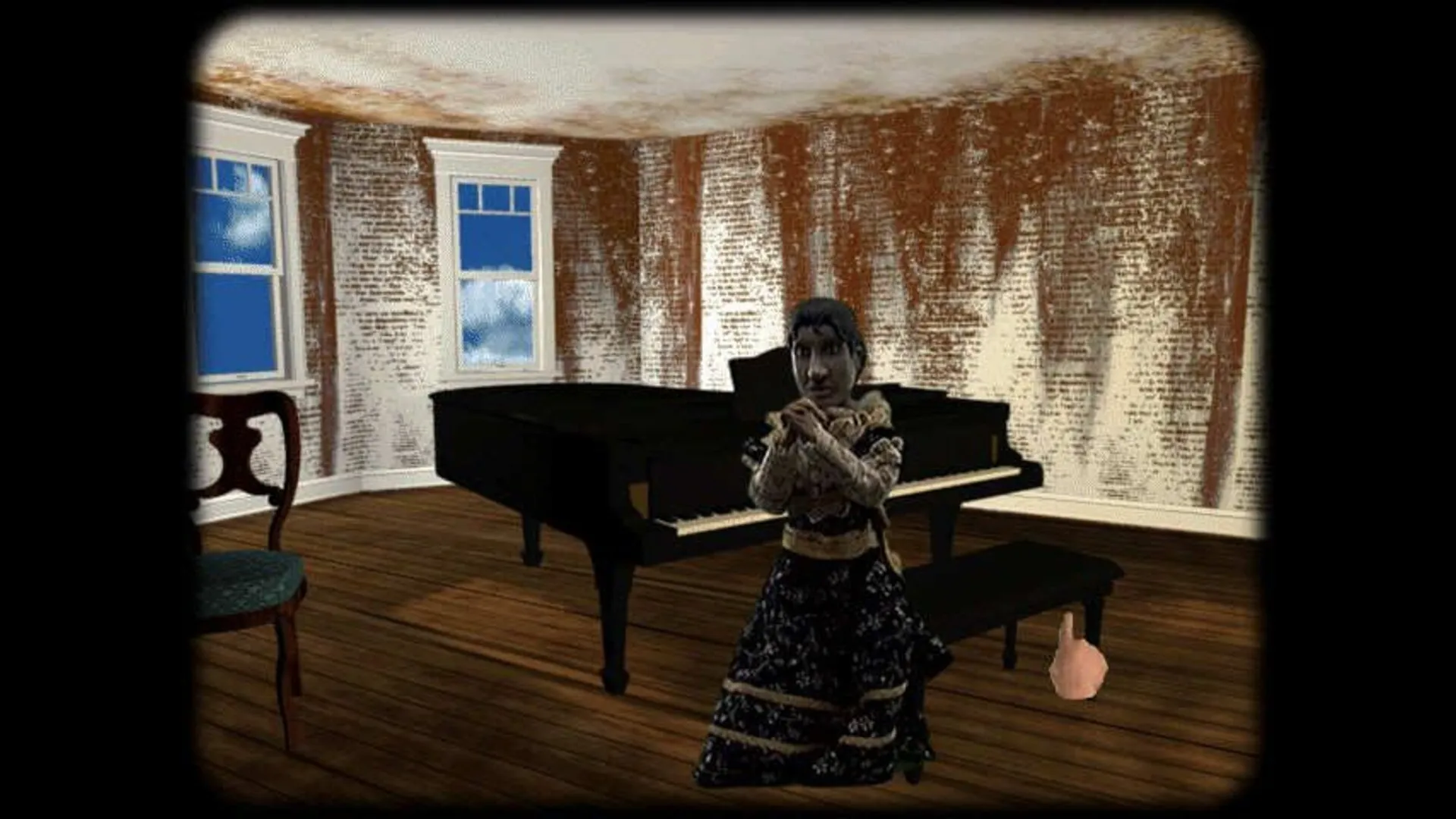
Those puppets sit on top of Full Motion Video sequences and 2D artwork, producing a collage that feels broken in a way the game seems to welcome. That fractured look tracks with the fragmented mental states driving Poe’s protagonists. The spaces you explore are often sparse and dreary, and they still land because the austerity feels intentional rather than accidental. The manor reads less like a cozy hub and more like a staging ground, a place where texture and emptiness work together to keep you uneasy.
Sound does a lot of the heavy lifting, and it does it in layers. The audio design leans on low-frequency drones, distant moans, and surreal instrumental swells, building an environment where silence never registers as safety. The effect matches Poe’s fixation on mental decay and the pressure of a guilty conscience tightening from the inside.
The project’s approach lines up with 1990s cult oddities like Harvester or Bad Mojo, games that chase discomfort and grotesque imagery rather than traditional beauty. Here, the graininess of the FMV and the low-resolution backgrounds add to the horror. The world ends up feeling like a fading, diseased memory that keeps you moving through it.
Interactive Narratives and the Dual Perspective
Mechanically, the game keeps its distance from many familiar adventure-game habits. It skips the rubber-chicken comedy beats and the elaborate inventory logic that define plenty of point-and-click staples. Interaction stays pared down to clicking on people or objects to advance the script. That restraint changes your role. You are less a problem-solver and more a witness, watching tragedy unfold with just enough input to keep the scenes in motion.
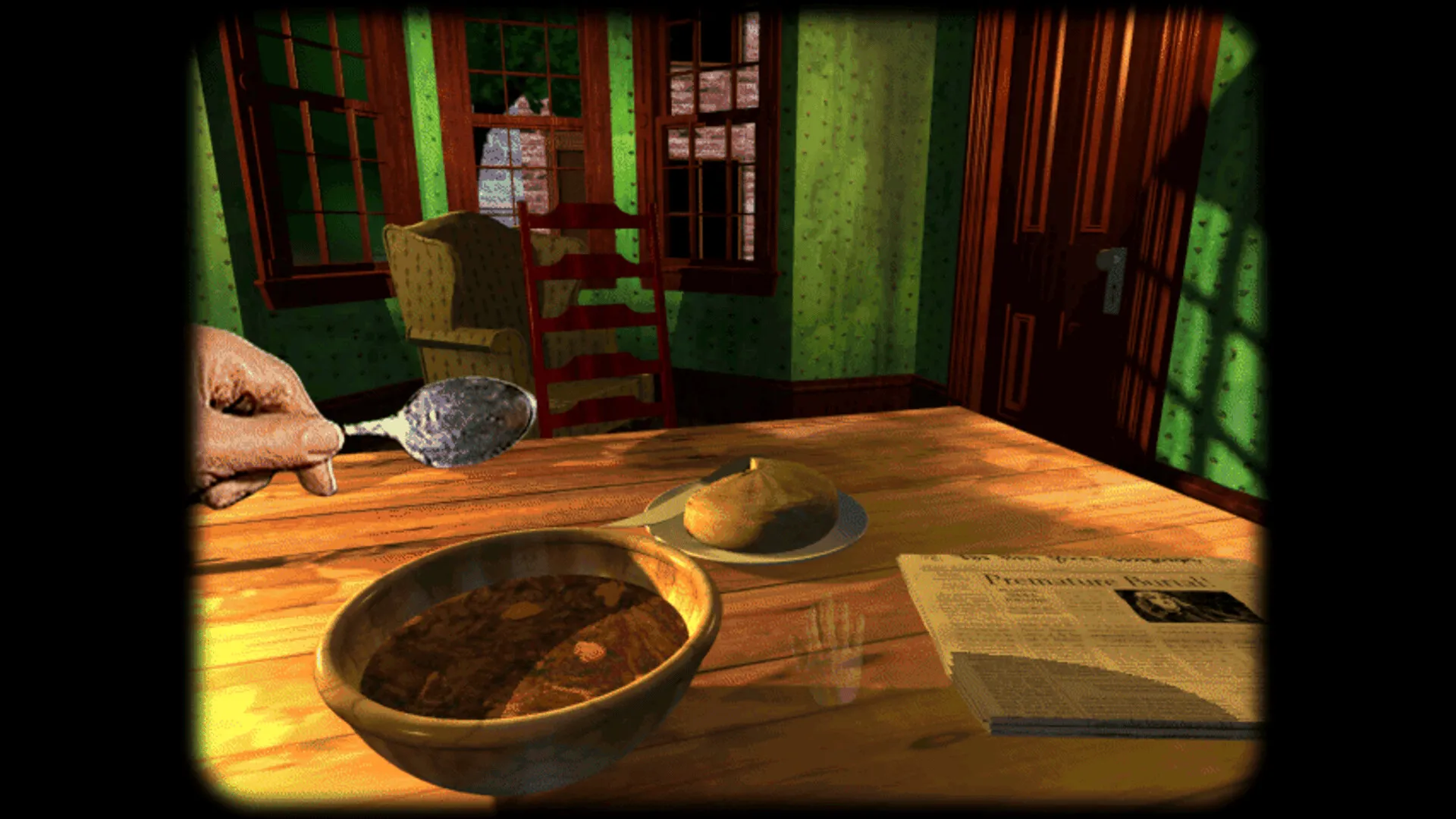
Movement plays out from a first-person perspective, and the structure hinges on transitions between the manor’s “real” space and the “dream” space of the stories. You enter Poe’s tales through specific triggers, like looking into a mirror or touching a painting. The shift feels smooth inside the game’s language, and it reinforces the idea that the house has a kind of life to it, smudging the edges between reality and sanity rather than keeping clean borders.
The standout mechanical idea is the dual-perspective structure. Each major story runs twice, letting you inhabit the murderer’s mind and then the victim’s. That framework puts the machinery of terror under a brighter light. In “Berenice,” the two viewpoints provide very different angles on the obsession powering the plot, so the repetition has a point beyond simple replay value.
That same hook can work against the experience. “The Cask of Amontillado” asks you to play both sides through the same dungeon-like basement, and the second pass carries little meaningful change in gameplay. With the full experience lasting roughly two hours, this repetition can read as padding, especially if you already understood the scene’s beats the first time through.
Direction is another sticking point. Clear objectives and markers are scarce, so progress can turn into wandering the halls and clicking around in hopes of tripping the next story flag. The result can frustrate, even if the confusion matches the intended sensation of confinement inside a deteriorating mind.
The Preservation of a Flawed Legacy
The “1995 Edition” label tells the truth about what GMedia is offering. This is a direct restoration running through the ScummVM emulator, keeping the software exactly as it existed thirty years ago. That fidelity matters for preservation, and it also comes with a modern usability cost.
Quality-of-life updates are absent. Subtitles do not exist here, which stings in a title that leans so heavily on vocal delivery and on the nuances of Burroughs’ performance. Basic options are missing too: no volume sliders, no remappable controls, and no way to shape the experience around the player’s setup.
The lack of a dialogue skip adds another layer of friction. Any technical hiccup can force you through the same slow sequences again, and the pacing suffers because the game offers few ways to regain momentum after a stumble. It feels like a museum piece displayed in a room with a sticky door, and you keep getting asked to re-enter through the same narrow hallway.
Technical stability becomes the biggest obstacle. The save system is famously finicky, relying on a double-tap of the ESC key that often fails to bring up the menu you need. Many players run into a black screen that locks the application and wipes out any progress not saved. These softlocks can hit during chapter transitions or in moments where the game fails to trigger a necessary interaction.
GMedia earns credit for bringing an obscure licensed work back to modern platforms, yet the choice to leave game-breaking issues untouched remains hard to defend. What you buy is a historical artifact, and it behaves with the same fragility it had at release. Access to a brilliant, experimental piece of horror history comes packaged with a technical minefield, and reaching the credits can demand patience that the game rarely repays with smoother function.
The Review
Edgar Allan Poe's Interactive Horror: 1995 Edition
This restoration captures a haunting, experimental moment in horror history. The stop-motion puppets and the voice of William S. Burroughs create a thick, psychological dread that remains effective today. However, the experience is severely hampered by technical instability and a lack of modern accessibility features. Frequent crashes and a precarious save system make it difficult to reach the end. It stands as a fascinating artifact for patient historians, but the bugs make it a gamble for the average player.
PROS
- Atmospheric stop-motion and FMV visuals.
- Exceptional voice work and sound design.
- Innovative dual-perspective storytelling.
- Faithful preservation of a cult classic.
CONS
- Frequent game-breaking crashes and black screens.
- No subtitles or volume controls.
- Unreliable save system.
- Occasional tedious navigation.