












Manon Coubia places her first feature, Forest High, inside the stripped-down ribs of contemporary comfort, then asks the audience to sit with what remains. The Ubine mountain hut, set at the base of Mont Chauffé, functions as a rough sanctuary where the frantic digital rhythm from the lowlands finally loses its grip.
Hot water arrives as a brief privilege. Electricity stays scarce, and the simple act of charging a phone becomes an impossibility that pushes the mind inward. The terrain is shaped by absence, and the film treats that absence as material you can almost touch.
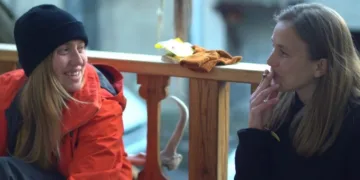
Coubia’s decade as a mountain warden gives the setting a blunt physical truth. Across a turning year, three women take shifts in this isolated post: Anne, Hélène, and Suzanne. They keep house for hikers and weather, and they also keep company with a silence that feels older than the walls.
The film sidesteps conventional sparks of conflict and instead settles into the beautiful, frightening rhythm of being somewhere that does not grant special status to human need. Solitude takes up space like another body in the room. Time slows. The mountain holds its indifferent majesty, and human urgency starts to look fragile.
A Triptych of Seasonal Ghosts
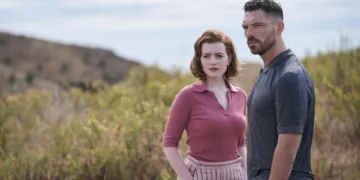
The story moves through three seasonal chapters, each one offering a different angle on identity and endurance. Anne belongs to spring, a season that promises renewal while carrying its own unease. She is local, familiar with the peaks, and that familiarity has curdled into a quiet restlessness. Her stay at the refuge comes with a private deadline: she plans for this to be her last season. Her meetings with Antoine, the birdwatcher, register as a tentative reach toward connection, faint in its force, never fully settling into place.
Summer arrives with Hélène, and her face holds the weight of years spent moving through temporary, menial work. Peak season brings noise, needs, and constant motion. She manages it all with practiced efficiency, and the steadiness in her hands sits beside a deeper exhaustion.
The hut fills with the talk of real hikers, and the atmosphere gains an easy immediacy that blurs fiction and documentary. An impromptu dance party lands like a short flare of rebellion, a momentary refusal of the wilderness pressing in from every window. The thread of missing hikers stays unresolved, hanging in the air as a reminder that the natural world keeps its own logic and its own silences.
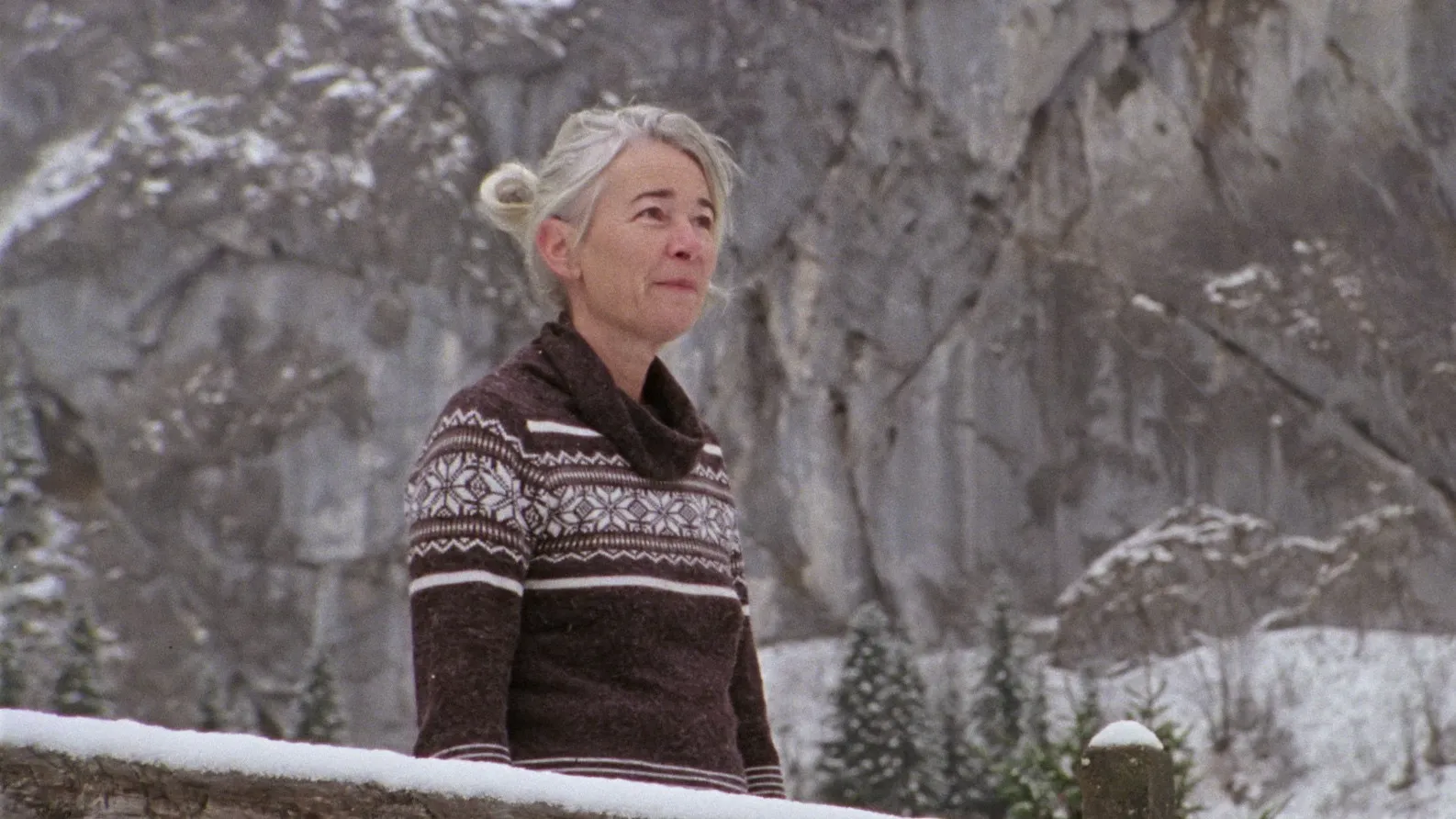
Winter belongs to Suzanne. She is an empty-nester who takes the biting cold as a kind of cleansing. Her isolation is chosen, and it marks a first chance to live by her own terms after a lifetime shaped by other people’s schedules and expectations. She curls into her puffer coat inside the snow-licked hut and finds a form of solitude that feels companionable. This chapter reframes familiar isolation imagery through introspection, letting fear recede so quieter sensations can surface.
A young army deserter comes to the shelter, and Suzanne’s connection with him remains hesitant, almost spectral. The final stretch leans into a more traditionally scripted intimacy, opening space for grief and renewal to be spoken and felt. The shift from the earlier observational texture toward this emotional core plays like a slow thaw, giving viewers a clearer thread of story after the previous chapters’ drifting, indirect movement.
The Grain of Living Light
Robin Fresson photographs this world on 16mm with a strong respect for physical presence. Celluloid gives the images a thick, organic texture, and the frames seem to carry the heft of earth and weather. Solar power cannot support artificial lighting setups, so the interior scenes depend on the dimming slide of twilight and the amber pulse of a wood stove.
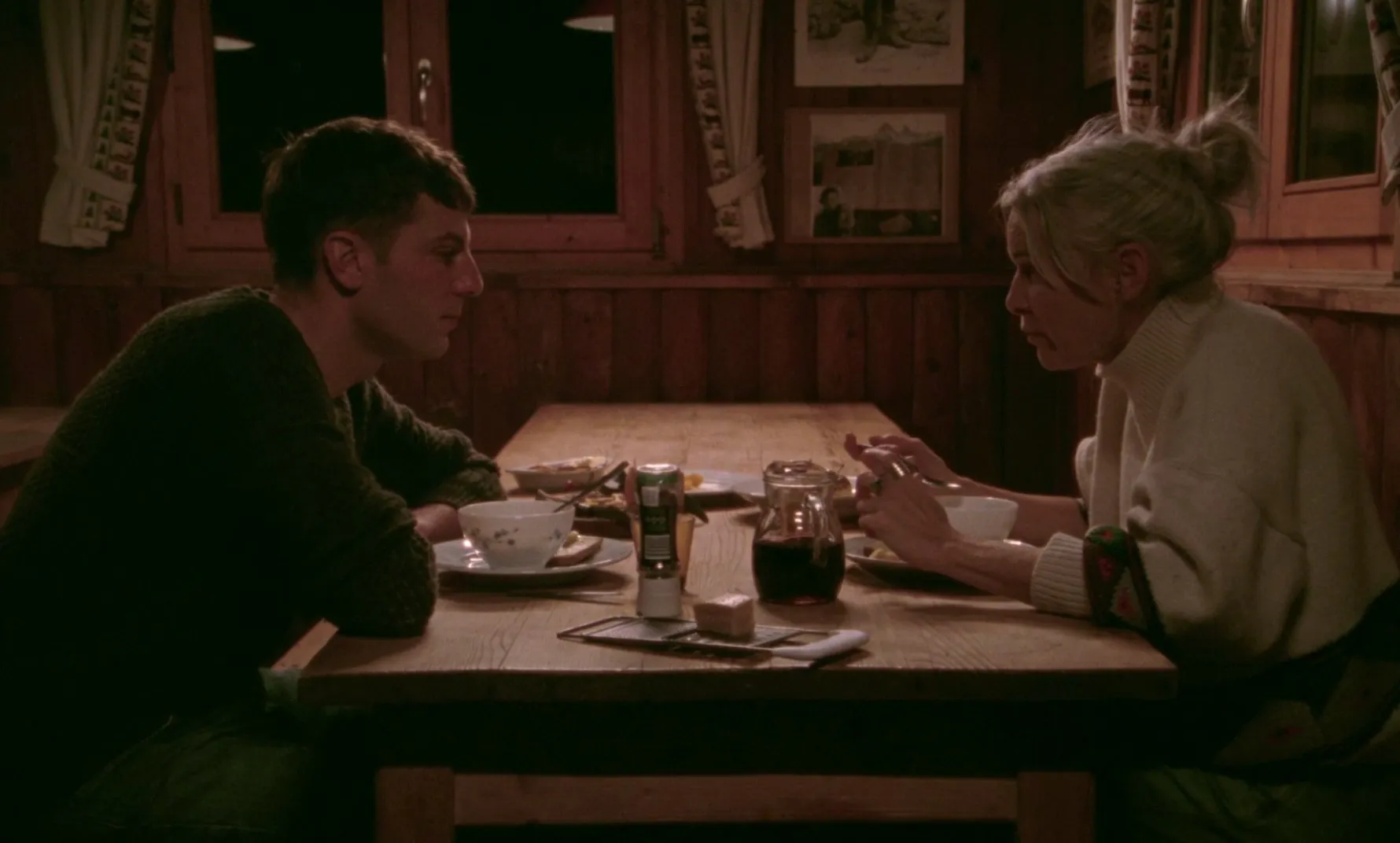
The result is a velvety darkness that swallows edges and forces the eye to hunt for shape, skin, and gesture inside shadow. The silver halides appear to shimmer beside drifting dust motes in the cabin, turning the air itself into something visible.
Sound works with the same density. Bright layers of birdsong meet the persistent moan of wind, and the hut becomes a three-dimensional chamber, beautiful in a way that can feel suffocating. Théophile Gay-Mazas edits with patience, refusing to hurry the viewer through moments that ask for time.
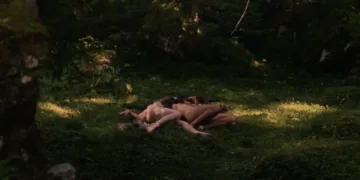
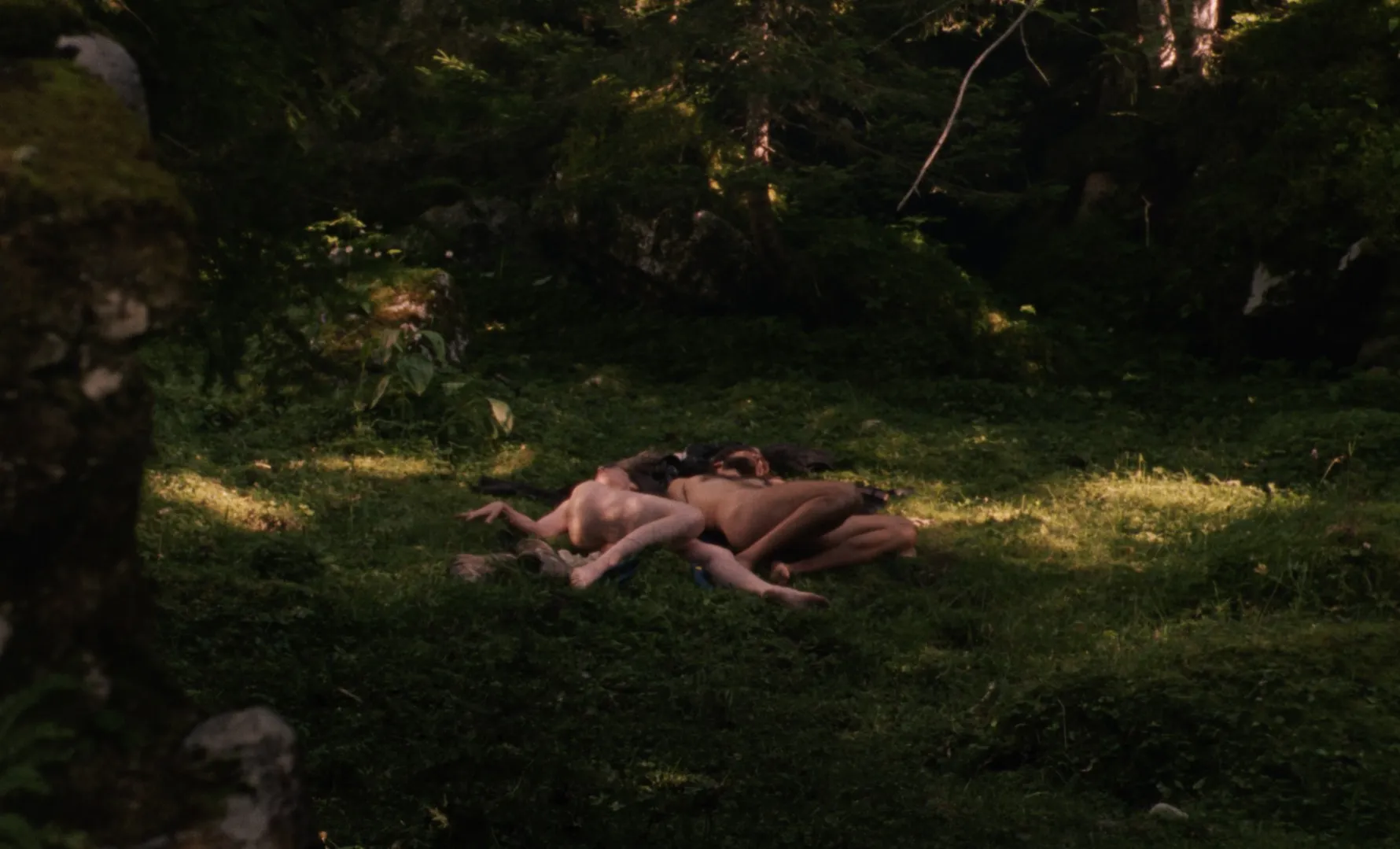
Scenes expand slowly, like a lung filling, and meaning emerges through visual cues that do not rely on explanatory dialogue. Forest glades carry a mossy darkness that feels close enough to brush with your hand. That sensory attention turns watching into a meditative act of endurance. The film asks the audience to inhabit its pace and its silence, to stay present as minutes stretch.
The mountainscapes thrive in this format. The grain echoes the rough surfaces of rock and bark, and the absence of modern lighting preserves a calm, unromantic distance. Atmosphere builds through environmental detail, and the aesthetic reads as a clear declaration of intent, a commitment to a specific look and feel that calls for theatrical exhibition.
Echoes in the Thinning Air
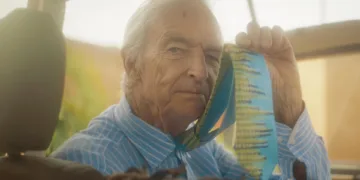
History and ecology linger inside the timber walls. A wandering ornithologist searches for the Capercaillie, a rare bird that has become a quasi-mythic sign of an ecosystem under threat. His description of the bird’s “pure despair,” spoken as if he is naming the last breath of a species, becomes a philosophical anchor for the film. This turkey-like bird, rumored extinct in the region, stands for a vanishing way of life that the mountain has watched recede.
The hut’s human past survives through old visitor books, journals filled with voices from decades earlier, fragments from people who sheltered here and then disappeared back into their lives. An itinerant performance troupe revives these voices inside the small mountain chapel, implying that the building itself carries memory, that it holds traces of everyone who passed through its modest rooms.
Solitude appears here as restoration, a necessary descent into inner life. Natural history sits beside human history, connected through the recurring figure of the vanishing bird. Coubia brings in archival footage of the Capercaillie in a final coda, grounding the film’s questions in harsh material fact. The bird moves like a ghost from an older world, a remnant of a threatened ecosystem, and its presence sharpens the sense of the mountain as a place where disappearance never stops.
The refuge stays unchanged and indifferent to the modern pressures waiting down below. It offers a space where a person can finally hear themselves in the quiet. Isolation and loneliness surface indirectly, carried by images that ask the viewer to do some of the work, to find the connective tissue through attention. The experience lands clean and bracing, like cold water drawn from a mountain spring.
Manon Coubia’s debut feature, Forest High, premiered at the 76th Berlin International Film Festival on February 16, 2026, within the Perspectives section. This meditative drama, a co-production between Belgium and France, explores the interior lives of three women who rotate as wardens in a remote Alpine refuge. As of February 2026, the film is primarily circulating through international film festivals and has been picked up for world sales by Rai Cinema International Distribution. While specific commercial streaming platform dates for regions outside of festival circuits are still being finalized, it remains a high-profile title for art-house audiences following its warm critical reception in Berlin.
Full Credits
Title: Forest High (Forêt Ivre)
Distributor: Rai Cinema International Distribution
Release date: February 16, 2026
Running time: 102 minutes
Director: Manon Coubia
Writers: Manon Coubia
Producers and Executive Producers: Jérémy van der Haegen, Nicolas Rincon Gille, Manon Coubia, Tom Durand-Bonnard, Katia Khazak, Charlotte Vincent
Cast: Salomé Richard, Aurélia Petit, Anne Coesens, Arthur Marbaix, Yoann Zimmer, Alba Rincon Gille, Jean-Claude Duret, Jean-Pierre Jacquier, Michel Besson
Director of Photography (Cinematographer): Robin Fresson
Editors: Théophile Gay-Mazas
Composer: François Chamaraux
The Review
Forest High
Forest High is a haunting, tactile meditation on the necessity of silence. Manon Coubia rejects the hollow noise of traditional drama to find truth in the slow decay of light and the weight of Alpine solitude. While its observational drift may alienate those seeking a driving plot, the film offers a rare, cleansing experience for the patient viewer. It is a work of profound environmental and internal reflection, anchored by a stunning commitment to the textures of the natural world.
PROS
- Tactile, immersive 16mm cinematography.
- Authentic atmosphere born from the director's personal history.
- A nuanced, subversive exploration of female solitude.
- Rich sound design that creates a living, breathing landscape.
CONS
- The deliberate, slow pacing may feel aimless to some.
- The indirect narrative requires significant effort from the audience.
- The shift to a scripted style in the final act creates a slight tonal shift.