


















Director Tony Jones stages a harrowing investigation into the sealed-off world of biomedical research in his documentary Sentient. The film pushes past the public-facing language of “breakthroughs” and “protocols” by entering high-security laboratories, including the University of Washington in Seattle, and treating the spaces as lived environments with their own rituals, silences, and sanctioned harm.
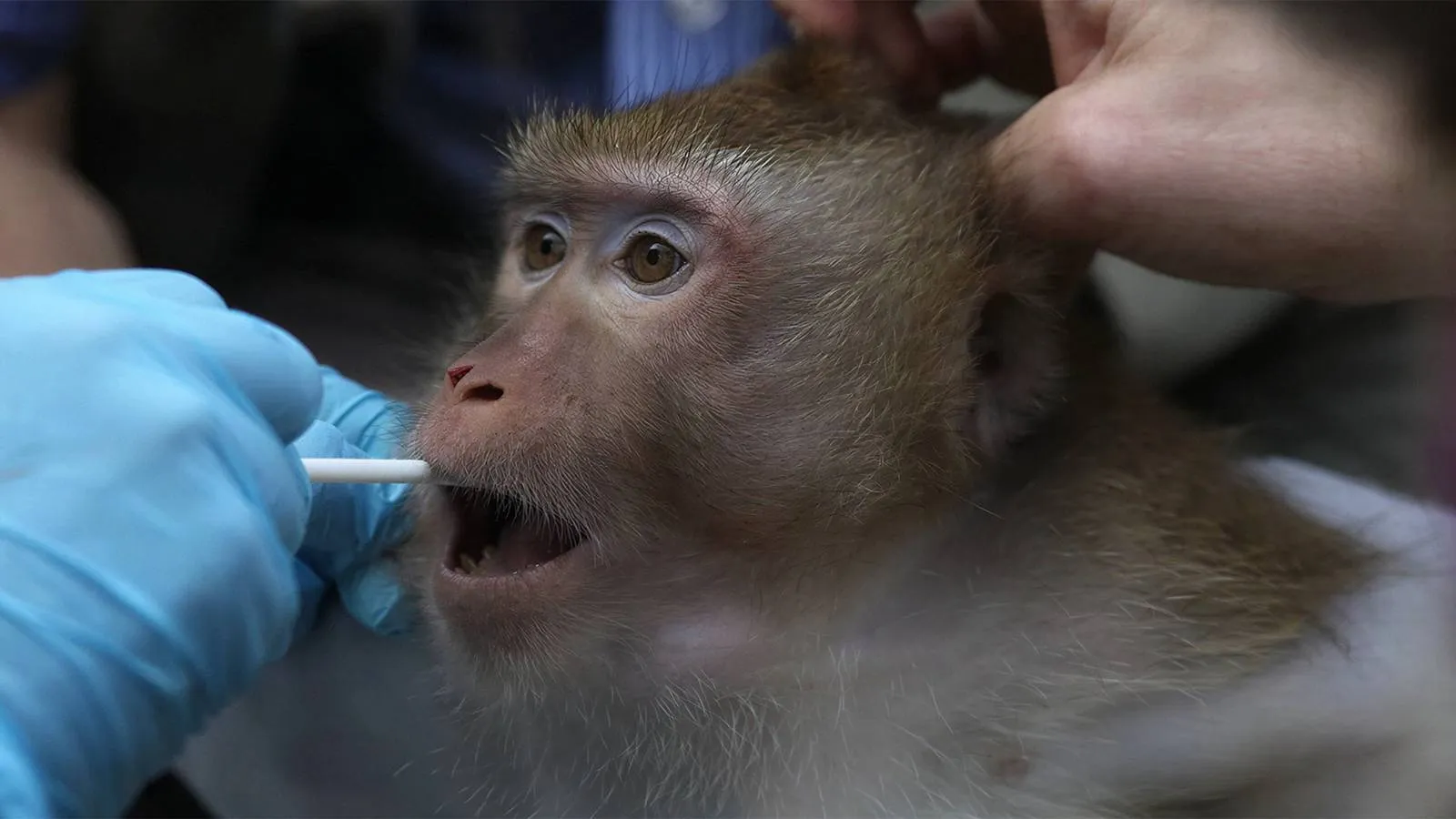
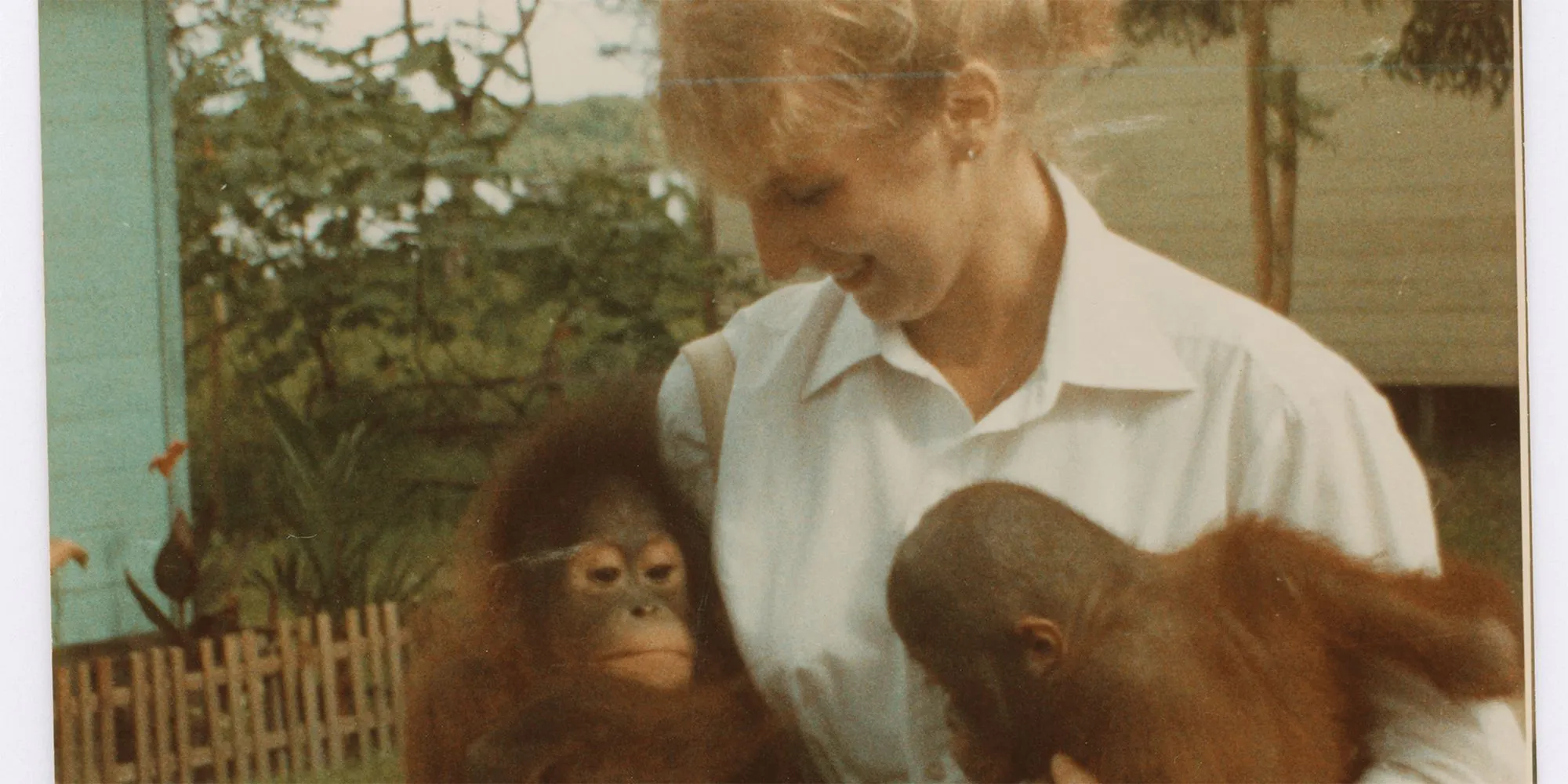
Its attention stays fixed on primates, specifically chimpanzees and macaques, and on the ethical friction created by a field that pursues medical progress while placing animal welfare on a sliding scale. Dr. Lisa Jones-Engel anchors the narrative through her professional transformation, moving from a committed primatologist working inside these facilities to a public advocate for animal rights.
Premiering at the 2026 Sundance Film Festival, Sentient arrives with a somber, weighty presence and frames longevity as a project with a price tag that rarely appears on the bill. Jones avoids familiar activist-cinema shortcuts by dwelling on systems, routines, and the everyday mechanisms that keep research running, pressing the viewer into sustained contact with species kept out of sight beneath scientific ambition.
Shadows Within the Care-Kill Complex
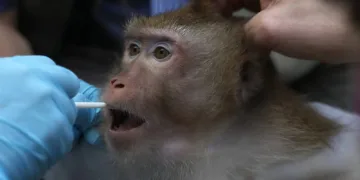
The documentary introduces the concept of the care-kill complex as a name for environments where animals are tended with the explicit expectation of eventual destruction. Much of the film’s force comes from leaked, illegally obtained footage that shows macaques and chimpanzees in visible terror. They appear in cramped, sterile conditions, and their cries register as something deeper than background noise, a sustained distress that refuses to fade into procedure.
Jones intensifies the effect through a heavily emotive musical score and deliberate editing choices, including quick cuts that return again and again to caged bodies. The aesthetic often reads as raw and unvarnished, and the scenes are built with a clear intention to provoke guilt rather than distance.
The film also turns to statistics as a weapon against accepted practice, citing a figure that ninety-five percent of animal trials fail to translate into human success. Jones underlines that claim with an analogy: a pilot attempting to land a plane with a five percent success rate.
It is a blunt rhetorical move, designed to make the continuation of current methods feel irrational on its face. Even so, the documentary’s most damning material comes from its plain recording of laboratory acts. Presented in a matter-of-fact manner, the work allows repetition and routine to speak for themselves, making the mechanical quality of suffering feel like its own accusation.
The Fractured Psyche of the Observer
Sentient shifts from the subjects’ physical pain to the psychological erosion of the humans carrying out the work. Interviews with former technicians describe a condition labeled compassion fatigue, in which the moral dissonance of harming creatures they care about produces lasting trauma.
One scientist recounts a botched attempt to euthanize a lab rat, a moment that caused agonizing suffering for the animal and left permanent emotional scars for the researcher. The film treats these accounts as more than isolated horror stories. They become evidence of a workplace logic that recruits people through affection for animals, then conditions them to perform clinical violence as routine labor.
Dr. Lisa Jones-Engel offers a detailed account of her career at LEMSIP, tracing how early inspiration drawn from figures like Jane Goodall collided with the realities of primate testing. The film places her story alongside commentary from behavioral neuroscientists such as Dr. Garet Lahvis, who suggests the scientific community has become dangerously reliant on these trials while discounting the toll they take on staff mental health. Researchers and technicians appear as casualties of a system that treats empathy as a professional liability and rewards emotional suppression with status and stability.
Bioethical Horizons and Political Shifting
The documentary acknowledges the historical role of animal research in life-saving interventions for polio and COVID-19, and in treatments for pediatric cancer and epilepsy. From there, it presses a central moral question: does human life carry an inherent right to place itself above other sentient beings. The question sharpens when applied to species with close genetic markers to our own, where resemblance complicates easy hierarchy and turns “necessary sacrifice” into a harder claim to defend.
Jones points toward modern alternatives, including organs on a chip and artificial intelligence, as possible routes to a more humane future, while also admitting these technologies remain in their infancy. The film’s political terrain grows messier with the inclusion of Robert F. Kennedy Jr. His efforts to end animal testing receive praise, and his history of spreading medical misinformation remains part of the frame, creating an unstable context in which the documentary seems willing to accept any ally who advances its goal.
Scientists hesitant to abandon traditional models are shown through a narrow set of options: rigidity, or caution rooted in the absence of sustainable replacements. By the time the film reaches its final movements, Sentient has established a bleak proposition in plain sight, that many medical breakthroughs rest on practices society has treated as normal cruelty, and that public scrutiny of that foundation has only begun.
Sentient is a harrowing Australian documentary that had its world premiere at the 2026 Sundance Film Festival in the World Cinema Documentary Competition. Directed by investigative journalist Tony Jones, the film provides a chilling look inside high-security animal testing facilities, particularly the University of Washington’s primate research center. It follows the moral awakening of primatologist Dr. Lisa Jones-Engel as she transitions from a career in laboratory research to animal welfare advocacy. Currently, the film is primarily available through festival screenings and limited digital access provided by the Sundance Institute, with global distribution rights recently acquired to bring its provocative ethical debate to a wider audience later this year.
Full Credits
Title: Sentient
Distributor: Dogwoof, In Films
Release date: January 26, 2026
Running time: 105 minutes
Director: Tony Jones
Writers: Tony Jones, Rachel Grierson-Johns
Producers and Executive Producers: Ivan O’Mahoney, Sarah Ferguson
Cast: Dr. Lisa Jones-Engel, Dr. Sally Thompson-Iritani, Dr. Garet Lahvis, Pete Singer, Robert F. Kennedy Jr.
Director of Photography (Cinematographer): Aaron Smith, Andy Taylor, Vanessa Carr
Editors: Rachel Grierson-Johns, Orly Danon
Composer: Helena Czajka
The Review
Sentient
Sentient is an emotionally punishing yet vital examination of the bioethical cost of human progress. While its rhetorical methods occasionally lean toward manipulation and its political associations are questionable, the documentary succeeds in stripping away the clinical sterility of the laboratory. It forces a necessary confrontation with the "care-kill complex," demanding that we acknowledge the trauma shared by both the observed and the observer. It is less a balanced report and more a haunting, erudite plea for a more humane scientific horizon.
PROS
- Provides a rare, unvarnished look inside high-security research facilities.
- Deeply explores "compassion fatigue" and the psychological toll on scientists.
- Dr. Lisa Jones-Engel’s personal journey provides a strong, credible narrative heart.
- Raises profound questions about the hierarchy of sentience and moral rights.
CONS
- Uses an overly intrusive score and "strawman" statistics to force emotional responses.
- The uncritical inclusion of controversial figures like RFK Jr. muddies the film’s scientific credibility.
- Revolutionary alternatives like "organs on a chip" are treated as footnotes rather than a focal point