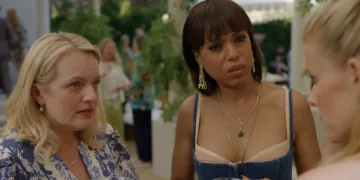































Apple TV’s Imperfect Women adapts Araminta Hall’s novel as an eight-part limited series. The story opens in Los Angeles with sudden loss. Eleanor is called in by authorities to identify the body of Nancy, her closest friend across a lifetime. Nancy’s death jolts a tight social orbit and pulls Mary into the aftermath, completing a trio bound by thirty years of shared history.
From there, the series traces the damage left by the murder and peels back the secrets that shaped their connection. Creator Annie Weisman uses kintsugi as a guiding image, framing these lives through breakage, repair, and the marks left behind. The drama keeps returning to the distance between public success and private pain. Eleanor runs a prominent hunger relief organization.
Nancy carries herself like an ideal socialite beside her wealthy husband. Mary keeps a chaotic home going while raising three children. College tied them together, yet the inquiry into Nancy’s death exposes how little any of them understood about the others. This is a psychological drama centered on interior collapse, with domestic life presented as a place of loyalty, resentment, and betrayal.
A Tripartite Study in Subjectivity
The series takes a bold structural approach by dividing the season into three character-centered movements. Eleanor leads the first three episodes. Nancy steps forward in episodes four and five. Mary holds the final section. That design keeps reshaping the viewer’s sense of what has already happened. Something that appears settled in Eleanor’s version shifts once Nancy or Mary takes control.
The show uses that instability to reveal the limits of intimacy inside a friendship that lasted decades. An eleven-hour countdown to the murder supplies tension and slowly brings the mysterious man in Nancy’s final hours into view. The time shifts work as an emotional timer rooted in character, grief, and dread.
The rotating perspectives require constant reassessment. By the time the eighth episode tries to pull the threads together, the series is still committed to emotional wreckage as much as plot closure. That choice reflects a streaming-era interest in mysteries built around damaged memory and private hurt. The story places fractured recollection where a detective’s certainty might once have stood. Grief and guilt shape the timeline, and each point of view offers another partial answer.
Truth here depends on vantage point, especially inside relationships built on years of selective disclosure. The finale functions as a workable endpoint for those psychological concerns. The show keeps the stakes rooted in personal damage, which gives the mystery a different weight. Its structure speaks to a culture fixated on hidden lives and curated selves. Memory becomes unstable, pliable, and frequently misleading. The audience is asked to assemble a reality from splintered pieces, with the sense that any version of the truth can crack again.
The Architecture of Flawed Ambition
Kerry Washington plays Eleanor as the accomplished head of a hunger relief organization, a woman whose polished authority covers deep emotional disorder. Washington brings control to the part and lets vulnerability surface through Eleanor’s secret relationship with Robert, Nancy’s husband. Kate Mara gives Nancy a delicate presence shaped by wealth, performance, and old pain tied to Bakersfield.
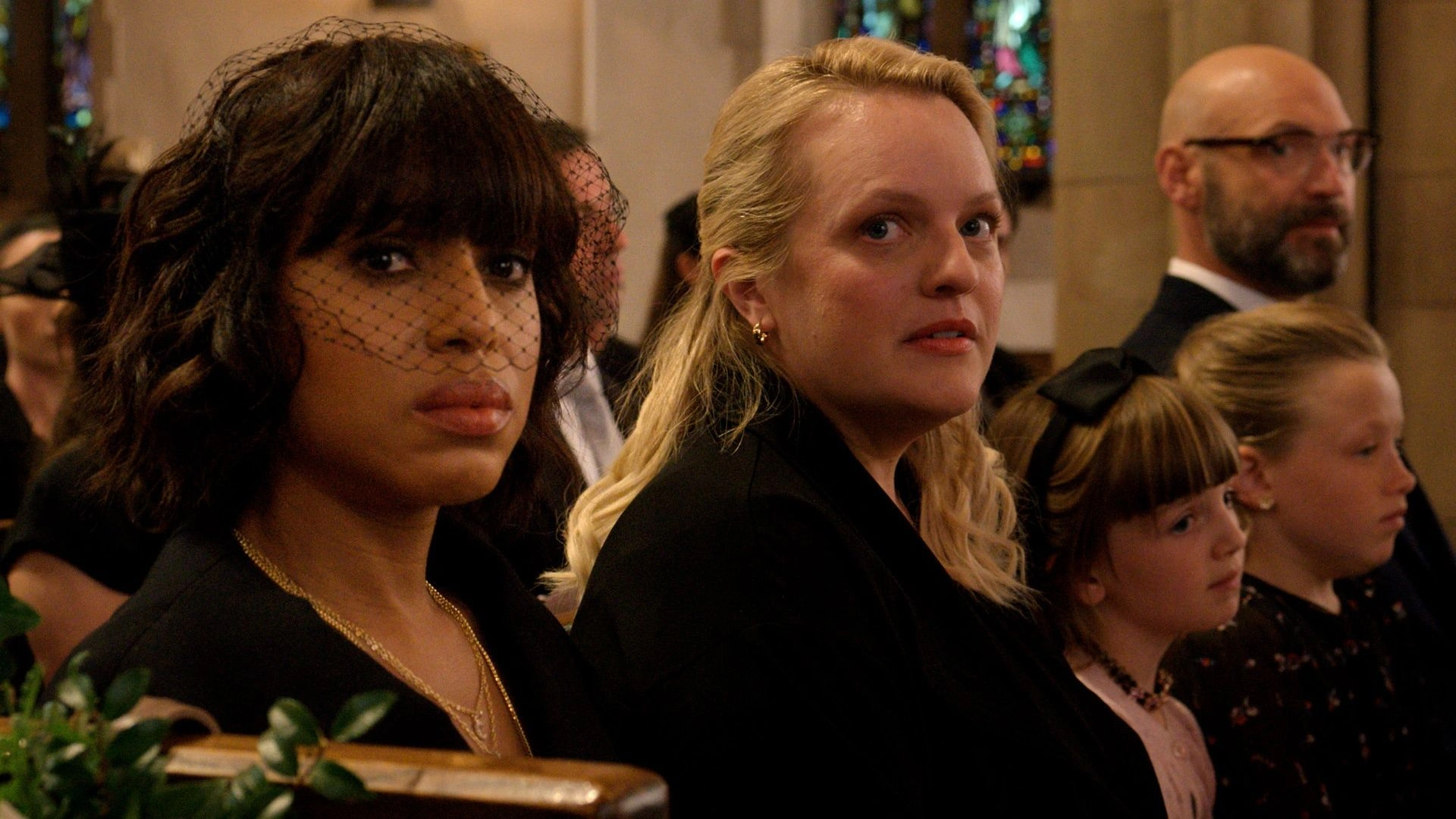
Nancy moves through her life as a prized figure in her marriage while carrying an intense need for connection. That hunger drives her affair and leads her toward disaster. Elisabeth Moss grounds Mary in the hard routines of domestic strain. She captures a stay-at-home mother pressed down by the demands of the household, an Adderall dependency kept out of sight, and financial collapse tied to her husband’s failed career. Moss gives Mary a hard, resourceful instinct for survival.
Joel Kinnaman plays Robert Hennessy with the air of a wounded WASP, embodying a form of male privilege that shelters and constrains at the same time. Leslie Odom Jr. appears as Eleanor’s brother Donovan and brings welcome ease into a story heavy with pain. His scenes offer brief relief without breaking the mood. Corey Stoll plays Howard as a smug, underemployed academic, making him a clear expression of the intellectual vanity circulating through this affluent world.
Sheryl Lee Ralph appears briefly as Eleanor’s mother and lends those scenes the emotional gravity needed for Eleanor’s personal movement. Together, the cast forms a portrait of a class under strain. The performances show several ways wealth and trauma intersect. Each actor exposes weakness beneath social polish, giving the material the texture of failure, self-protection, and quiet panic. The ensemble keeps the series grounded in a social world that feels familiar. These characters live through performance, and the actors capture the exhaustion that comes with maintaining it.
Kintsugi and the Politics of Silence
The opening titles introduce kintsugi as the series’ central image. Broken porcelain is repaired with gold, and the cracks remain visible. That metaphor runs through the drama as each woman faces a life split open by buried pain and long-kept secrets. The show presents honesty as something that emerges after collapse. Class tension drives much of the emotional pressure. Eleanor comes from old Boston privilege.
Nancy and Mary were raised in working-class homes. That gap produces resentment that lingers through their thirty-year friendship, often unspoken and still active. Nancy’s marriage into wealth sharpens that resentment and gives it focus. The series studies the Pasadena elite through parties, homes, and carefully managed surfaces, then looks straight at the decay beneath them. Addiction and financial disaster stain every polished image.
Gender shapes the pain these women carry. The men around them often assume their labor and emotional care will simply be there. That expectation points to a wider misogyny that asks women to absorb damage quietly. The series argues for honesty among women as a condition of survival. It pushes against a culture that feeds rivalry and rewards silence. Shame grows in the dark spaces these characters keep protected.
Those ideas connect with current conversations about the invisibility of domestic labor and the emotional work placed on women. The affluent setting sharpens the critique of material success and its hollowness. Friendship itself comes under pressure in a social order organized around status. Visually, the show keeps stressing fracture, concealment, and strain. Kintsugi holds the argument together. These women carry scars in plain sight, even when their lives are designed to hide them.
The Character Study as a Modern Thriller
The production works best as an intimate character piece. The question of who killed Nancy matters, yet the show gives equal weight to the loneliness that defined her final days. That emphasis reflects a larger move inside prestige television, where psychological inquiry often drives the drama more powerfully than plot mechanics. Los Angeles and Pasadena contribute to the atmosphere, lending the series the feel of a polished confession full of gossip, shame, and withheld truths.
The camera lingers on sleek mansions and hard surfaces, turning architecture into an expression of emotional distance. Cliffhangers help sustain momentum through the eight episodes, especially while the story spends long stretches revisiting the past. The weekly release model may work against a series built around cumulative perspective. Watching the episodes close together makes the three narrative strands feel tighter and more coherent.
The script moves between direct exposition and quieter observational beats. Some scenes lean into soap-opera energy, which helps place the drama inside recognizably strained domestic lives. That tonal mix gives the show its identity. High drama sits beside small humiliations, routine disappointments, and private compromise. The series stays close to the emotional chaos of the survivors, and that choice keeps it from taking on the impersonal chill of a procedural. The thriller framework carries a sharp social reading inside it.
Dialogue often cuts cleanly into the friendships, exposing resentment, vanity, dependence, and pain. The result points toward a future for streaming drama built on hybrid forms, where mystery and literary character work share the same space. Imperfect Women remains engaging while it presses on questions of trust, shame, and perception. It leaves behind a vivid sense of how fragile long relationships can be, especially once violence forces buried truths into the open.
Imperfect Women premiered on March 18, 2026, and is available for streaming on Apple TV+. This series brings the 2020 book by Araminta Hall to the screen, focusing on the cracks in a long friendship. You can find all current episodes on the Apple TV platform, with the story nearing its finale this April. It provides a look into the lives of three friends whose connection breaks after a violent crime and the discovery of hidden lives.
Where to Watch Imperfect Women online


Full Credits
Title: Imperfect Women
Distributor: Apple TV+
Release date: March 18, 2026
Rating: TV-MA
Running time: 45–60 minutes per episode
Director: Lesli Linka Glatter, Nzingha Stewart, Daina Reid, Jet Wilkinson
Writers: Annie Weisman, Aaron Fullerton, Kay Oyegun, Haily Hall, Allison Abner, Kyle Warren, Rance Ward
Producers and Executive Producers: Araminta Hall, Kay Oyegun, Lesli Linka Glatter, Kerry Washington, Pilar Savone, Elisabeth Moss, Lindsey McManus, Annie Weisman
Cast: Elisabeth Moss, Kerry Washington, Kate Mara, Joel Kinnaman, Corey Stoll, Leslie Odom Jr., Ana Ortiz, Rome Flynn, Sherri Saum, Wilson Bethel, Keith Carradine
Director of Photography (Cinematographer): Darran Tiernan, Laura Merians Gonçalves
Editors: Amy E. Duddleston, Cindy Mollo, Peter Forslund
Composer: Siddhartha Khosla
The Review
Imperfect Women
Imperfect Women functions as a psychological autopsy of female friendship. It trades traditional procedural thrills for a meticulous study of class and domestic performance. The mystery resolution feels secondary. However, the powerhouse performances from Washington, Mara, and Moss provide enough friction to keep the narrative from stalling. It captures the quiet violence of secrets kept in the name of social standing. The series serves as a sharp reflection of modern elite anxieties. It succeeds when it stays focused on the internal fractures of its protagonists.
PROS
- Exceptional acting by the central trio that anchors the emotional stakes.
- Effective visual metaphors for psychological healing and the "kintsugi" theme.
- Innovative narrative structure that builds tension through shifting perspectives.
- Meaningful exploration of class-based resentment within affluent circles.
- Sheryl Lee Ralph’s brief but emotionally heavy performance.
CONS
- Transparent plot twists that diminish the mystery elements.
- Uneven focus on supporting cast members who vanish during the later chapters.
- Heavy-handed dialogue in the initial episodes.
- A pacing style that fits a single sitting better than a weekly release.