




























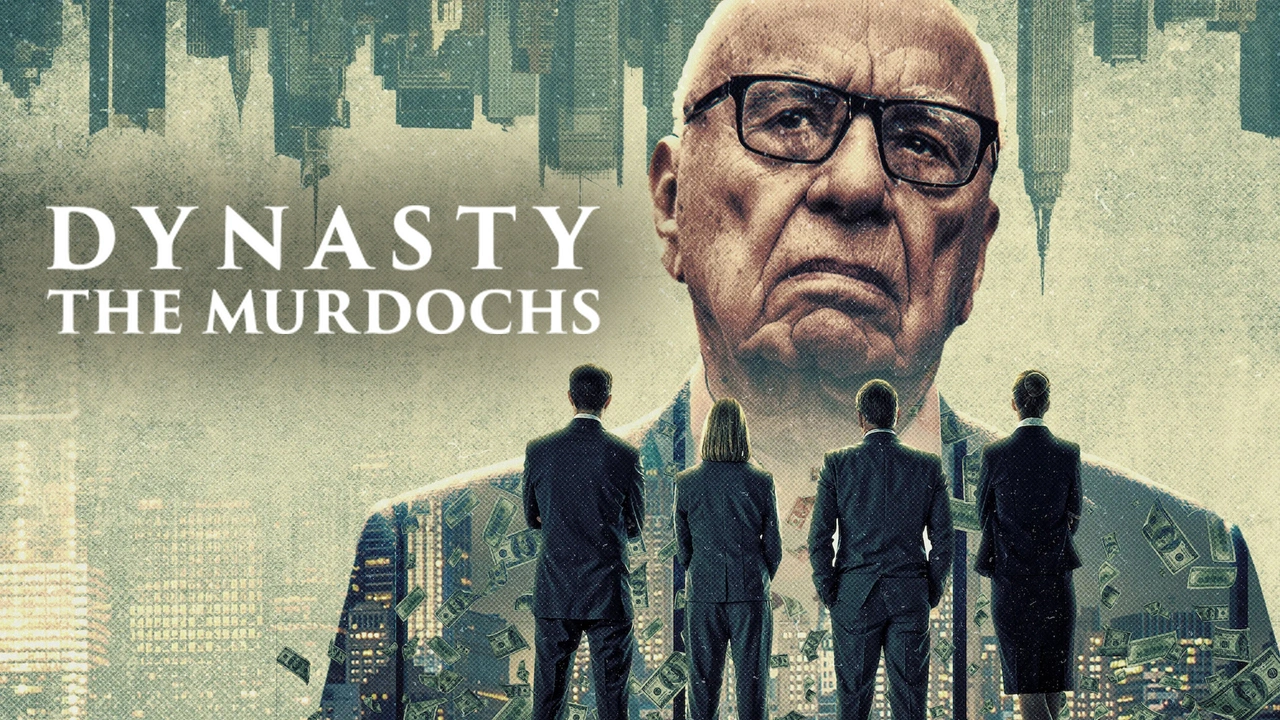

A name can behave like a sealed crypt. Across the four chapters of Dynasty: The Murdochs, the Murdoch name settles over the family like a gilded lid, bright with money and heavy with burial. Liz Garbus shapes the narrative with a gaze closer to laboratory glass than family portraiture.
The series lives through archival footage, through spectral images, and through the testimony of people caught along the outer rings of this gravitational field. It studies a global corporate body that bent political will in Australia, the United Kingdom, and the United States toward its own appetite. The business becomes the stage for a darker contest over dominance, blood, and inheritance.
Power appears here as a parasite feeding on the lineage it claims to preserve. With the family kept outside direct participation, the storytelling gains a cold, unsettling objectivity. Leaked records and expert analysis, sharpened by decades of observation, rebuild the private fractures of a dynasty that resembles a leviathan seen through fog.
The Hunger of the Patriarch
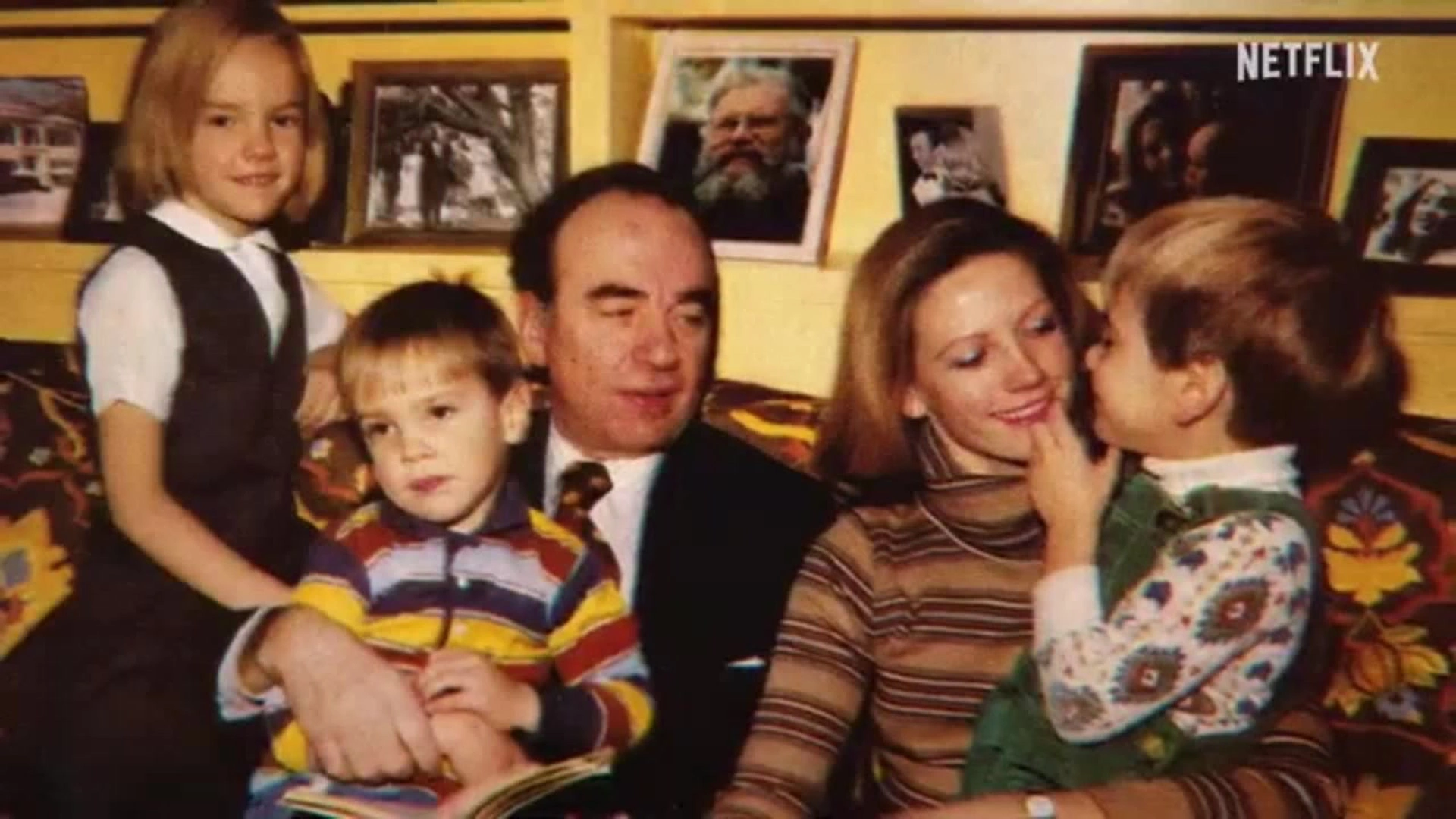
For Rupert Murdoch, existence appears as a sequence of games stripped of mercy. The series finds a psychological signature in his approach to family Monopoly. He reportedly cheated against his own children, a small domestic act that opens into a philosophy of life. The world, in this view, is a zero-sum equation. Loss becomes spiritual extinction. He built an empire by weaponizing the visceral.
His “blood and guts” tabloid philosophy in Australia and the United Kingdom marked a calculated preference for the primal over the intellectual. He understood that shock seizes attention faster than truth. The same instinct guided his career as a political kingmaker. He supported Ronald Reagan to secure the deregulation needed to birth the Fox network, a maneuver that changed the fundamental frequency of modern news.
His relationship with Donald Trump shifted like weather, shaped by the demands of the moment. He created a movement that eventually grew beyond his control. That utilitarian coldness also defined his fatherhood. The series reads his children as cultivated rivals, forced into permanent competition.
They became gladiators in a corporate colosseum, trained to measure affection as a prize. The child who mirrored his ruthlessness most effectively could reach closest to him. This parenting style gave the family business a chance to endure while the family hardened into a company of scarred competitors. He taught them to fear one another with the same intensity they feared him.
Tokens in an Absurdist Theater
The four eldest children exist as echoes of their father’s unrelenting will. Prudence Murdoch holds a place of quiet observation, often framed as the outsider who stepped away from the central carnage of succession. The greater friction lives among the remaining three.
Lachlan Murdoch aligns with the conservative, traditionalist vision of the patriarch. James Murdoch signals a fractured movement toward a liberal sensibility. Garbus uses a physical, animated board game as a visual metaphor to trace the shifting tides of favor. Figurines cross a map of promotions and investigations. The image is elegant and cruel. It reduces the siblings to plastic tokens moved by an unseen hand.
Their agency begins to look like a beautiful fiction, another story told by power to keep the players moving. The 2017 Disney sale becomes the catalyst for a permanent break. The multi-billion dollar transaction reads as an admission that the world had outpaced the empire. It opens a wound with no clean suture.
The siblings must face the reality that their father’s legacy is being liquidated to preserve his control. The business decision exposes the existential dread of their position. They are heirs to a shrinking kingdom, reaching for a crown being sold for parts beneath their hands. The sale reveals the family business as the sole object of Rupert’s love.
The Silence of the Gilded Buyout
The legal endgame reveals the true price of Project Family Harmony. The title sells peace while the plan performs calculated silencing. It was a secret effort by Rupert and Lachlan to alter the family trust and secure a singular, conservative future. The Nevada court battle exposed the raw, jagged edges of the family dynamic. A father fed his legal team aggressive questions to use against his own son.
He asked why James had failed to call him on a milestone birthday. Personal failure becomes legal evidence, a chilling act of corporate cruelty. Here, intimacy turns into ammunition. A life’s private details become tools for destroying a rival. The conflict reached a quiet resolution in September 2025. James, Elisabeth, and Prudence accepted a $3.3 billion buyout to walk away.
They traded voting rights for a mountain of private wealth. Lachlan remained the victor in a field of ghosts. The production deepens this tragedy through suspenseful orchestral music. It leans heavily on the analytical voices of reporters from The New York Times and The Atlantic. A certain emptiness persists.
The younger daughters from a later marriage remain footnotes. The wives become voices lost in the wind. The series presents a ledger of power that accounts for every dollar while failing to calculate the human cost of the transaction. It leaves the viewer with an aging king sitting alone in a room made of gold and static.
The four-part documentary series Dynasty: The Murdochs premiered globally on Netflix on March 13, 2026. Directed by acclaimed filmmaker Liz Garbus, the production serves as a forensic examination of the Murdoch family’s internal succession battle, which famously inspired the fictional drama Succession. Through a combination of archival footage and extensive interviews with prominent journalists and former employees, the series explores the intersection of corporate power and familial duty. As of May 2026, the series remains available for streaming on the Netflix platform, where it has sparked significant discussion regarding the future of the Murdoch media empire and its impact on global politics.
Where to Watch Dynasty: The Murdochs Online


Full Credits
Title: Dynasty: The Murdochs
Distributor: Netflix
Release date: March 13, 2026
Rating: TV-MA
Running time: 47–56 minutes per episode
Director: Liz Garbus, Sara Enright
Writers: Liz Garbus, Sara Enright
Producers and Executive Producers: Dan Cogan, Liz Garbus, Jon Bardin, Mala Chapple, Sara Enright
Cast: Jim Rutenberg, Jonathan Mahler, McKay Coppins, Gabriel Sherman, Hugh Grant, Paul McMullan, David Folkenflik, Kara Swisher, Matthew Belloni, Paul Barry, Richard Cooke, Walter Marsh, Sarah Ellison
Director of Photography (Cinematographer): Jeff Hutchens
Editors: Colin Cosack, Dena Mermelstein
Composer: Ariel Marx
The Review
Dynasty: The Murdochs
Dynasty: The Murdochs serves as a grim ledger of what remains when a family is sacrificed to the altar of an empire. It captures the sterile geometry of greed and the hollow resonance of a throne purchased with silence. While the production occasionally retreats into the safety of visual gimmicks, it successfully maps the landscape of a modern tragedy. We witness the slow erasure of the human spirit in favor of the corporate asset. It is a haunting observation of a dynasty that succeeded in everything except love.
PROS
- Rigorous analysis of leaked documents and public archives that provide a forensic view of power.
- Deep psychological mapping of the siblings and their fractured loyalties.
- Sharp production quality that mirrors the sterile chill of the corporate world.
- Gripping historical context regarding the shifting winds of global politics and media deregulation.
CONS
- Absence of direct family participation creates a cold, detached perspective.
- Physical board game metaphors feel reductive and distract from the gravity of the events.
- Failure to explore the roles of the women and the younger generation of heirs.
- Non-linear narrative choices lead to moments of confusion in the timeline.







