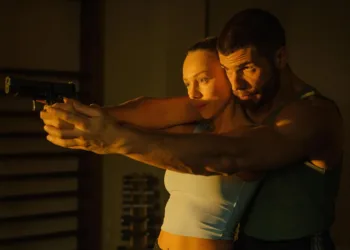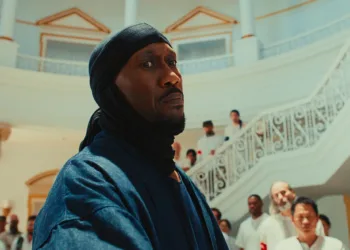























The tenth feature film from director Ira Sachs, co-written with Maurício Zacharias, takes the title The Man I Love and turns mortality and desire into a chamber piece of bruised intimacy. Set in late 1980s New York City, the film concentrates on a domestic space under strain. Jimmy George, played by Rami Malek, anchors that space: an eccentric, deeply self-absorbed downtown theater artist privately living with a terminal illness.
His days move between the chaotic rehearsals of a shambolic Off-Off-Broadway production and a home life already charged with exhaustion, need, and theatrical temperament. His intensely dedicated partner, Dennis, played by Tom Sturridge, has built a quiet routine around care.
That routine fractures after Vincent, a fascinated young British neighbor played by Luther Ford, moves into the building. From this arrangement, Sachs draws an intimate portrait of human connection under pressure. Artistic performance and romantic entanglement become emotional armor, and the apartment, rehearsal room, and club all begin to feel like the same final stage.
Subverting the Melodrama of Historical Trauma
The screenplay for The Man I Love gains force through its reshaping of historical medical tragedy. HIV and AIDS remain unnamed in the dialogue, a silent pressure shaping every exchange from the edges. Sachs keeps the genre’s expected markers, including tearful hospital vigils and stylized physical deterioration, outside the film’s dramatic vocabulary. The medical reality enters through ordinary labor, most clearly through Dennis’s methodical organization of a heavy weekly pill regimen that includes AZT.
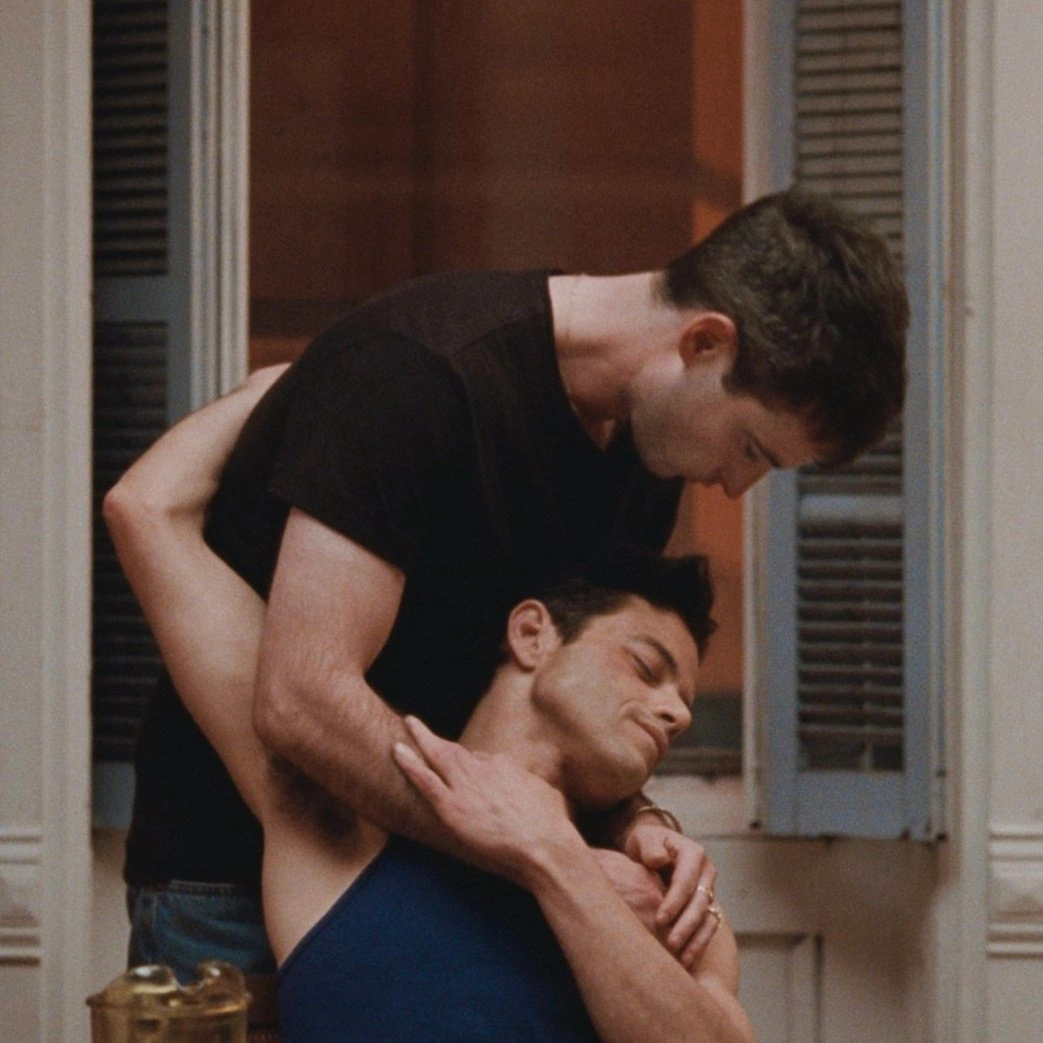
Sachs’s direction has the patience of quiet documentary observation. Characters speak in murmurs, interruptions, and overlapping fragments, giving daily conversation a lived-in instability that polished theatrical speeches would drain away. That naturalism extends through the images created by cinematographer Josée Deshaies and production designer Tommy Love.
Small apartments, dim theaters, and crowded nightclubs press against the characters, creating a thick sense of enclosure. The nightlife scenes carry a midnight-blue glow, sealing Jimmy and those around him inside a city that feels present, near, and strangely unreachable.
Megan Gray’s costume design deepens that realism through discipline. The wardrobe favors authentic, sophisticated metropolitan taste, using tailored pieces such as Jimmy’s clean polo shirts and keeping neon palettes and oversized shoulder pads outside its visual language. That restraint gives the period detail texture and keeps the psychological charge of the era in the foreground.
The Friction of Devotion and Exhibition
Rami Malek plays Jimmy George as morosely charismatic, a man who makes daily life feel like an active exhibition. The performance is intensely controlled, built from tight, deliberate musculoskeletal gestures that suggest a body held together by will, vanity, and fear.
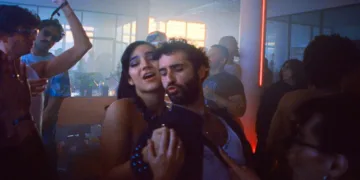
In an early party scene, Jimmy demonstrates a feminine figure-eight body roll for his guests, turning social space into a small theater of calculated self-display. Malek’s externalized style fits a character addicted to performance, even as some moments carry a mannered edge.
Dennis and Vincent define the pressure around Jimmy from opposite emotional angles. Tom Sturridge gives Dennis a taciturn, defensive stillness, the bearing of a partner forced into caretaking while swallowing grief in private. Luther Ford gives Vincent a raw, restless charge. Vincent eagerly appoints himself an indispensable artistic muse and mistakes stubborn youth for maturity.
The domestic strain widens through brief encounters with Jimmy’s family. His sister Brenda, played by Rebecca Hall, leaves a strong emotional mark through an unshowy performance, punctuated by one carefully timed tear. Familial support sits beside credible social discomfort, especially when Jimmy shares explicit details of his past promiscuity with his young nephew. Ebon Moss-Bachrach catches the resulting awkwardness with precision, revealing the uneasy limits of a family trying to absorb a relative’s terminal lifestyle.
Music as an Anatomy of Decline
The theatrical production inside the film, an experimental adaptation of the 1974 Quebecois feature Once Upon a Time in the East, mirrors Jimmy’s internal fragmentation. Its rehearsals for a gender-bending piece about a demanding diva named Carmen remain clunky and disorganized, charged with the nervous energy of art coming apart in real time.
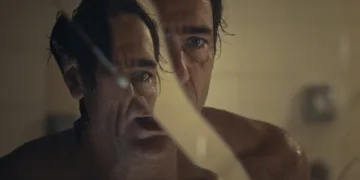
These fractured exercises become a metaphor for Jimmy’s worsening neurological complications. When opening night arrives, the long-awaited performance derails completely, arriving as a distressing physical breakdown that drains the stage of triumph.
The film draws its sharpest emotional observations from live musical numbers, using Malek’s actual singing voice to lend the scenes a plain authenticity. During the Gershwin ballad that gives the film its title, Jimmy sings at a local club as Dennis and Vincent look on, leaving the true object of his affection unresolved.
A different ache rises at his parents’ anniversary party, where Jimmy performs Melanie’s “What Have They Done to My Song Ma.” The scene becomes a bittersweet lament, letting simple lyrics carry the sorrow of a life visibly fading.
The musical fantasy drama film The Man I Love had its world premiere at the 79th Cannes Film Festival on May 20, 2026, where it competed for the prestigious Palme d’Or and the Queer Palm. International sales for the independent feature are handled by MK2 Films, while WME Independent manages the North American distribution rights. As it has only recently debuted on the festival circuit, a wide theatrical or streaming platform release date has not yet been finalized, meaning it is not currently available for general public viewing.
Where to Watch The Man I Love (2026) Online
Full Credits
Title: The Man I Love
Distributor: MK2 Films, WME Independent
Release date: May 20, 2026
Running time: 95 minutes
Director: Ira Sachs
Writers: Ira Sachs, Maurício Zacharias
Producers and Executive Producers: Scott McGehee, David Siegel, Saïd Ben Saïd, Mike Spreter, Myriam Schroeter, Misook Doolittle
Cast: Rami Malek, Tom Sturridge, Luther Ford, Rebecca Hall, Ebon Moss-Bachrach, Amy Carlson, Maisy Stella, Wesley Han
Director of Photography (Cinematographer): Josée Deshaies
Editors: Affonso Gonçalves
Composer: Paul Hsu
The Review
The Man I
The Man I Love succeeds as a challenging, delicate deconstruction of historical trauma, deliberately rejecting genre sentimentality in favor of raw behavioral observation. While the narrative occasionally drifts under the weight of its own fragmented pacing, the production establishes an immersive, claustrophobic atmosphere that honors the specific realities of the era. The heavy friction between exhibitionism and silent devotion provides a compelling intellectual core. Despite structural irregularities and a highly stylized central performance, the film achieves a devastating resonance during its intimate musical sequences, transforming a standard character study into a haunting study of mortality.
PROS
- Subverts standard medical drama tropes by keeping the central illness as an unspoken, haunting presence.
- Naturalistic, observational directorial style that captures authentic human interactions through murmured dialogue.
- Excellent, understated period aesthetic and claustrophobic production design that avoids cliché 1980s imagery.
- Deeply moving live musical performances that serve as the genuine emotional anchors of the narrative.
- A standout, quiet performance by Tom Sturridge as the reactive and fiercely protective partner.
CONS
- Rami Malek’s central performance relies heavily on external acting mannerisms that occasionally distance the viewer.
- Fragmented scene construction and loose pacing create an untethered structure where individual segments outstay their utility.
- The internal meta-theater rehearsals occasionally disrupt the dramatic momentum, resulting in an uneven narrative flow.