







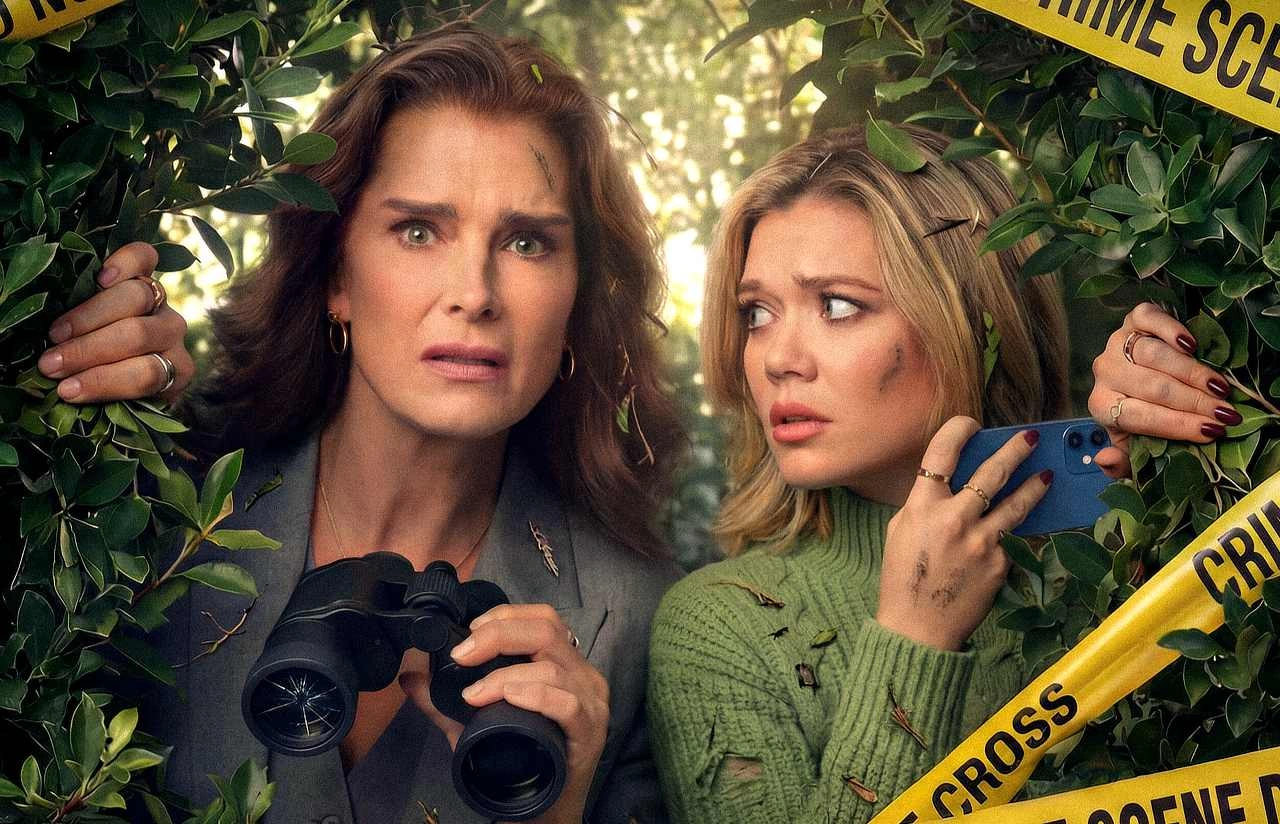

Acorn TV traditionally imports its gentle homicides from the green pastures of the British Isles or the sun-bleached coasts of Australia. With You’re Killing Me, premiered in May 2026, the streaming platform plants its magnifying glass firmly in American soil. Set in the fictional, picture-perfect village of Founders Cove, the six-episode series introduces Allison “Allie” Chandler, a celebrated mystery novelist whose career has hit a plateau.
When a literary critic friend drops dead onto the roof of a parked car, Allie finds herself partnering with Andrea “Andi” Walker, a sharp-tongued Gen Z true-crime podcaster. Created by television veteran Robin Bernheim Burger and executive produced by star Brooke Shields, the production utilizes scenic Nova Scotia locations to capture a classic New England aesthetic.
This positions the program as a calculated shift for Acorn TV. By casting high-profile domestic leads in a traditional amateur sleuth format, the network aims to capture the nostalgic energy of vintage network mystery blocks, offering a cozy sanctuary for viewers who miss the straightforward charms of the weekly puzzle.
Dialectics of the Detectives
The series relies entirely on the friction between its central duo, a classic generational pairing that aims for comedic sparks. Brooke Shields tackles the role of Allie with infectious, physical enthusiasm, portraying a woman caught between professional dignity and structural panic, especially when her agent suggests her traditional formula is losing relevance. Shields leans into a hyper-animated, frantic demeanor during active investigations, tracking clues with an expressive mania that occasionally threatens to unmoor the character from reality.
Amalia Williamson provides an essential anchor as Andi, the cynical podcaster who recently lost the rights to her own digital brand. Williamson plays the role with cool, grounded confidence, keeping her character a believable professional rather than a cartoonish demographic stereotype. Her deadpan delivery serves as vital structural weight against Shields’ high-energy performance.
The mechanical symmetry of their partnership is beautifully clear. Allie brings decades of psychological observation, reading personal details like a seasoned behavioral analyst. Andi supplies the modern toolkit, utilizing digital forensics and internet sleuthing to gather hard evidence. Emotion and science routinely intersect, producing an effective investigative rhythm between the two.
Tom Cavanagh enters this dynamic as Detective Jack Kerrigan, a local cop who brings impish charm to the standard grumpy investigator archetype. Cavanagh plays Kerrigan with dry, raised-eyebrow skepticism, instantly signaling the romantic tension building between the detective and the novelist. His performance prevents the police presence from feeling like a generic narrative roadblock, turning the inevitable civilian-police clashes into a playful dance of wits.
The Self-Aware Looking Glass
The screenplay attempts a tricky tightrope walk through explicit meta-commentary. In the premiere, characters actively mock the exact tropes of the unlikely older female crime solver with a cynical sidekick and a brooding local detective. Acknowledging a cliché does not automatically excuse a writer from executing it. The show falls headfirst into the very patterns it tries to satirize, creating a bizarre tonal disconnection where the series insults the intelligence of the audience while expecting them to enjoy the formula.
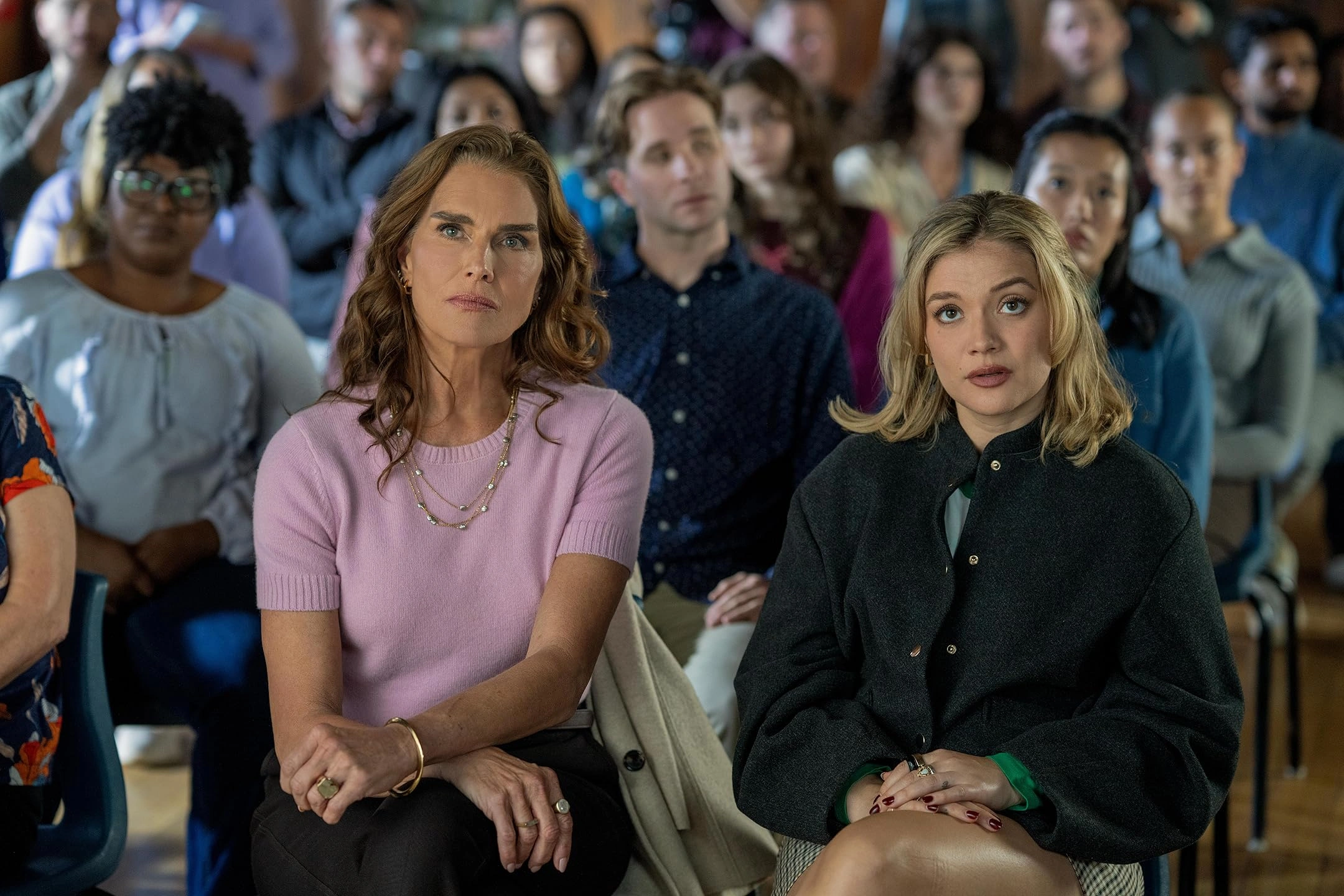
This structural unevenness extends to the generational comedy. The script piles on jokes about Allie’s inability to tap a credit card, her confusion over basic internet vocabulary, and her references to “the Zooms.” These moments offer minor chuckles, yet sixty-year-old professionals in 2026 are rarely this baffled by the basic mechanics of modern life. The sheer volume of these gags slows investigative momentum, transforming a sharp professional woman into an artificial relic for the sake of an easy laugh.
The pacing of the core mysteries suffers from overcrowding. The second episode introduces a dense crowd of groomsmen at a wedding, making it difficult to track suspects or care about the actual victim. The narrative frequently prioritizes rapid-fire banter over clean plot architecture, leaving the mysteries feeling secondary to the conversational fireworks. When the show stops trying to be the Gilmore Girls and lets the characters simply breathe, the true charm of the investigation emerges.
Coastal Postcards and Dark Trunks
Visually, the series successfully manufactures its cozy New England environment. The cinematography utilizes the sweeping coastlines and historic architecture of Nova Scotia to establish an inviting atmosphere. The camera work establishes a stark visual divide between the bright, daylight exterior frames of Founders Cove and the shadowy, atmospheric interiors of local hotels and lake houses. The lighting choices remain warm and accessible, avoiding the harsh realism of modern prestige crime dramas.
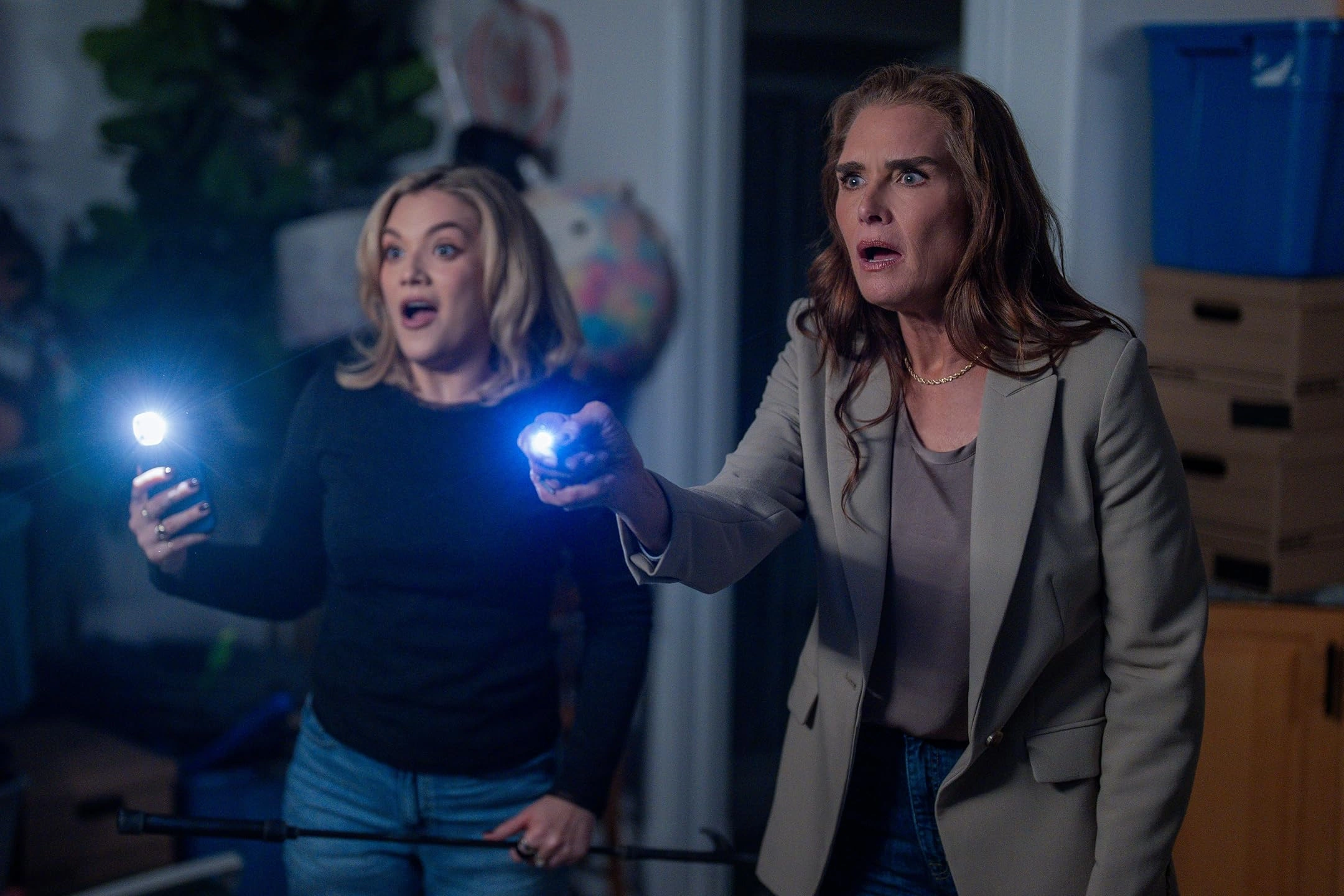
The auditory atmosphere works efficiently to reinforce shifting narrative stakes. The musical score relies on light, whimsical melodies during comedic stakeouts, then shifts toward genuine suspense during darker narrative turns. This auditory weight becomes particularly apparent during a late-season encounter where killer Reed Sterling traps the duo in a car trunk. The sound design underscores their frantic attempts to escape, balancing the terror of the situation against their absurd argument over the correct way to dig a grave.
The animated doodle sequence opening each episode works intentionally to frame the series, setting a playful, non-threatening tone before a single frame of live action appears. The show understands its visual register perfectly, delivering a clean, polished product that prioritizes comforting aesthetics over gritty realism. Can this slick Americanized formula retain the quirky, organic soul that made international cozy mysteries a global streaming phenomenon?
The television series You’re Killing Me premiered on May 18, 2026, dropping fresh episodes weekly on Mondays. Audiences can stream this six-episode debut season exclusively on Acorn TV. Set in a charming coastal New England town but filmed in Nova Scotia, the story offers viewers a relaxing, classic amateur sleuth puzzle that focuses heavily on character banter, comedic generational timing, and picturesque coastal backdrops.
Where to Watch You’re Killing Me Online







Full Credits
Title: You’re Killing Me
Distributor: Acorn TV
Release date: May 18, 2026
Rating: TV-14
Running time: 45 minutes per episode
Director: Robin Bernheim Burger
Writers: Robin Bernheim Burger, Phoef Sutton, Lee Goldberg, Derek Thompson
Producers and Executive Producers: Brooke Shields, Robin Bernheim Burger
Cast: Brooke Shields, Amalia Williamson, Tom Cavanagh, Gabriel Burrafato, Kate Drummond, Laura Kohoot, Jennifer Vallance, Kian Zarkechvari, Matthew MacFadzean, Carlo Rota, Milton Barnes
Director of Photography (Cinematographer): Nova Scotia Production Unit Photographic Group
Editors: Post Production Assembly Team
Composer: Original Series Soundscapes Division
The Review
You're Killing Me
You’re Killing Me is a polished, breezy addition to the cozy mystery genre that relies heavily on the charm of its cast. While the script occasionally gets bogged down in heavy-handed generational jokes and overcrowded plots, the genuine chemistry between Brooke Shields, Amalia Williamson, and Tom Cavanagh keeps the narrative afloat. It does not reinvent the wheel, but it delivers an entertaining, comfort-food viewing experience.
PROS
- Excellent, natural on-screen chemistry between Brooke Shields and Amalia Williamson.
- Tom Cavanagh brings an engaging, witty charm to the standard detective role.
- Beautiful, atmospheric cinematography that successfully captures a cozy New England aesthetic.
- A clever mechanical balance between Allie's psychological intuition and Andi's digital forensic skills.
CONS
- Overreliance on exaggerated, outdated "boomer vs. zoomer" tech clichés.
- Plot architecture can feel convoluted, with too many peripheral characters obscuring the mystery.
- Tonal inconsistency caused by script meta-commentary that mocks the exact tropes the show relies on.