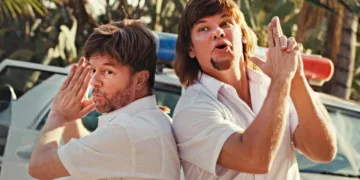


















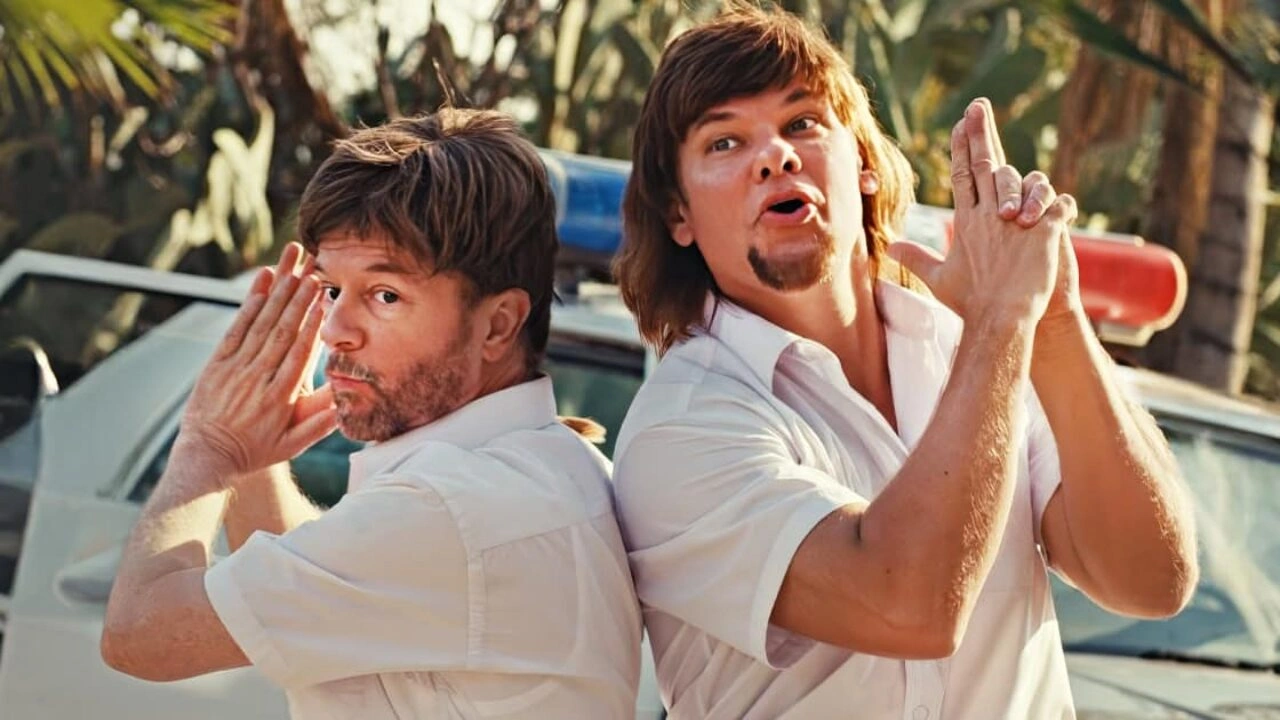

Busboys, directed by Jonah Feingold and co-written by David Spade and Theo Von, positions itself as a loud, unapologetically R-rated buddy comedy. The story revolves around Markie, an older man drifting through life, and Steef, a younger misfit, who form an improbable friendship.
Their shared goal is to rise from busboys to waiters at Open Border Bistro, a Mexican restaurant that treats this modest promotion with outsized significance. The film combines absurd ambition with slapstick chaos, producing a narrative that prizes shock and audacity over subtlety or coherence.
The film deliberately evokes crude comedies from the late 1990s and early 2000s, mixing bodily-function jokes, random slapstick, and deliberately offensive gags with bursts of zany energy. Feingold’s direction leans on anarchic momentum rather than structure, creating an experience that is messy, loud, and often disjointed. Viewers who appreciate intentionally messy, high-energy comedy may find moments of laughter amid the chaos.
The film frequently abandons narrative logic, favoring spectacle, absurdity, and provocative humor over story cohesion. Busboys flirts with silliness that can occasionally land, though uneven timing and a lack of narrative clarity make it difficult for the comedy to sustain itself across the 93-minute runtime.
Story, Structure, and Comic Momentum
The narrative of Busboys is constructed as a series of chaotic vignettes rather than a conventional story arc. The friendship between Markie and Steef begins after a car accident intertwines their lives, which later transitions into work at a sewage company called We Suck.
Markie experiences romantic humiliation involving his girlfriend Pam and a rival waiter, catalyzing their decision to seek employment at Open Border Bistro. This transition sets the stage for the film’s central comedic premise: two underachievers mistaking a minor promotion for a life-defining achievement.
The movie introduces comic opportunities through workplace conflict, eccentric coworkers, and escalating absurdity in their pursuit of waiter positions. However, cause-and-effect logic is largely absent. The duo’s decision to sell cocaine to buy the restaurant introduces further chaos, yet the absurdity rarely translates into escalating comedic tension.
Subplots with DEA involvement, undercover schemes, and sporadic friendship drama appear suddenly and without buildup, leaving the story fragmented. Many sequences function as isolated sketches that rely on visual or verbal shocks rather than narrative cohesion. The closing moments attempt to inject emotional stakes, but these elements feel abruptly imposed on a storyline that has spent much of its runtime avoiding consistent narrative progression.
Performances, Characters, and Comic Chemistry
David Spade’s portrayal of Markie leans on his signature sarcastic, burnt-out persona. Markie is dry, petty, and easily bruised, maintaining a mild defeat that aligns with Spade’s familiar comedic rhythm. While Spade’s timing allows certain lines to hit with a bitter snap, his disengaged performance weakens the film’s emotional anchor.
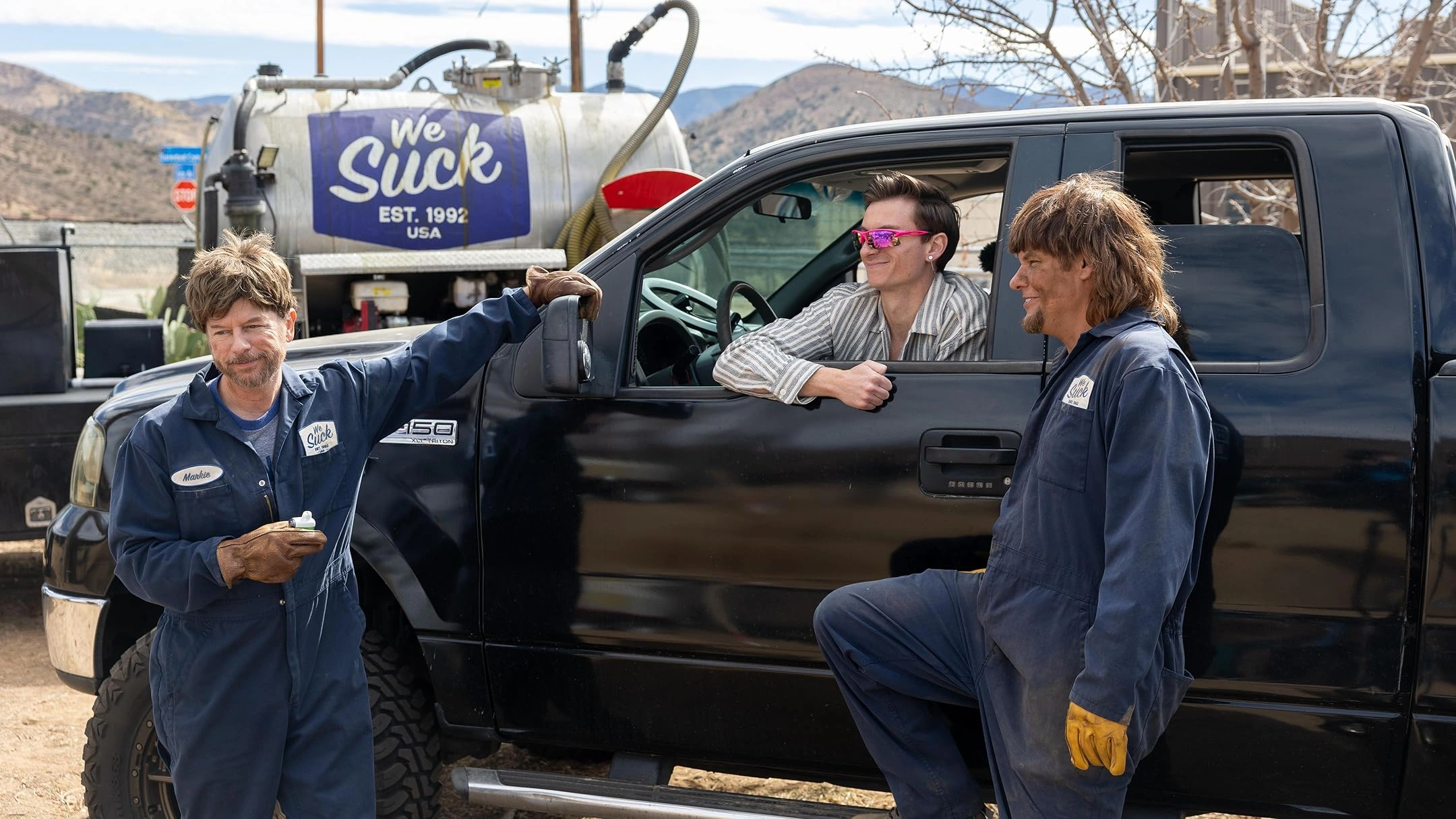
Theo Von’s Steef provides the counterpoint, injecting oddball energy, facial mugging, and a sense of rambling spontaneity. Von’s performance occasionally feels underdeveloped, rendering Steef more as a collection of comic impulses than a fully realized character. The unexplored age gap between the two protagonists adds to the strangeness of their dynamic, but the film offers little insight into why their friendship persists.
The supporting cast contributes in bursts. Tim Dillon embodies abrasive managerial authority, Michelle Ortiz brings sharpness as assistant manager April, and brief appearances by Chris Elliott, Jay Pharoah, and Bobby Lee pepper the film with recognizable faces.
The restaurant staff itself is a gallery of exaggerated archetypes: hostile coworkers, misfits, flirtations, and rivals. While some supporting performances generate quick laughs, many exist primarily to set up crude punchlines, leaving little depth or narrative investment. The ensemble underscores the film’s reliance on archetypal comedy rather than character-driven storytelling.
Humor, Style, and Final Critical Direction
Busboys relies heavily on raunch, offensive gags, bodily-function humor, and slapstick chaos. Notable sequences include Markie’s interactions with a dying dog, sewage company mishaps, mismanaged dinner dates, a malfunctioning car device, CGI rabbits, and a sexually misread job interview. Each moment prioritizes shock and absurdity over precise timing or narrative integration, creating sporadic bursts of humor amid structural incoherence.
The film’s deliberately outdated soundtrack, featuring Kid Rock, Poison, Wall of Voodoo, and Steely Dan, reinforces its out-of-time, anti-modern sensibility. Feingold’s direction struggles to shape the chaotic energy, with editing that often feels abrupt rather than brisk. The comedy thrives in isolated flashes when a gag reaches peak absurdity, but prolonged sequences reveal gaps in rhythm and character logic.
Busboys demonstrates ambition in crafting a high-energy, offensive comedy, yet the combination of disjointed storylines, uneven performances, and erratic pacing prevents the film from sustaining consistent comedic engagement. Its value lies in isolated, audacious humor rather than sustained storytelling or cohesive character arcs.
Busboys is an American buddy comedy film that debuted in theaters nationwide on April 17, 2026. Self-funded and written by its lead stars, the narrative tracks Markie and Steef, a pair of middle-aged, blue-collar friends who decide to upend their stagnant lives by moving across the country. Convinced that securing a job waiting tables will solve their personal and financial problems, they attempt to enter the restaurant industry, only to find themselves starting at the absolute bottom of the workplace hierarchy as bussers. The production features appearances from a variety of popular stand-up comedians and internet personalities, functioning as a deliberate homage to the absurd, lowbrow studio comedies of the late 1990s. Audiences can watch the independent feature by checking out local theatrical listings or looking for its digital distribution on major video-on-demand services later this year.
Where to Watch Busboys (2026) Online






Full Credits
Title: Busboys
Distributor: Busboys Holdings LLC, Mind Blowing Films
Release date: April 17, 2026
Rating: R
Running time: 93 minutes
Director: Jonah Feingold
Writers: David Spade, Theo Von
Producers and Executive Producers: David Spade, Theo Von, Robert Ogden Barnum
Cast: David Spade, Theo Von, Bobby Lee, Tim Dillon, Trevor Wallace, Jay Pharoah, Charlotte McKinney, Chris Elliott
Director of Photography (Cinematographer): Jeff Leeds Cohn
Editors: Nathan Floody
Composer: Chad Courneya, Hari Dafusia
The Review
Busboys
Busboys has a few flashes of reckless comic energy, especially when its stupidity becomes almost surreal. Yet the film keeps mistaking noise for momentum and shock for timing. David Spade and Theo Von have the outline of a workable odd-couple pairing, but the story never gives their friendship enough shape. The result is a crude buddy comedy with scattered laughs, weak structure, and too many gags that land with a thud.
PROS
- Some absurd gags land
- Tim Dillon brings sharp comic bite
- Soundtrack adds personality
- Premise has potential
CONS
- Messy story structure
- Uneven comic timing
- Thin character development
- Too many crude jokes miss
- Emotional beats feel forced