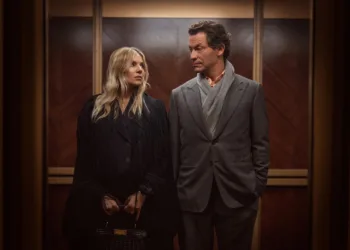


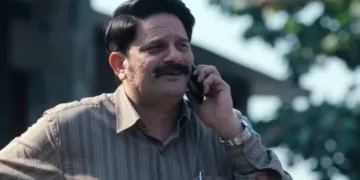













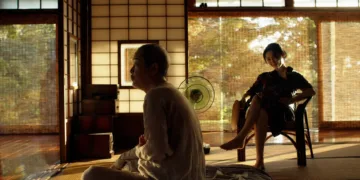


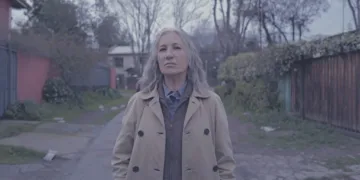









Amid the arid sprawl of Tunisia, where sunlit dust swirls against remnants of revolution, the film introduces itself as a contemplative portrait of fragmented dreams. Against a backdrop marked by recent upheaval and unhealed wounds, the narrative unfurls through the eyes of two companions, Alyssa and Mehdi, whose shared path offers a tentative answer to an unyielding present. Their pursuit of an art contest—a fleeting spark of escape—casts a long shadow over their everyday confinement, evoking a sense of muted urgency as they traverse familiar, battered roads.
The film conjures images that linger like half-remembered verses: fleeting visual interludes that speak to the inner turbulence of a heart heavy with longing, and a soundtrack that murmurs like an elegy for lost futures. This tale of youthful ambition, framed against the complex tapestry of a nation in flux, casts light on the quiet despair behind hopeful eyes.
In its measured cadence, each scene appears as a meditation on existence, on the quiet protest of the human spirit confronted with the stark reality of routine. Here, in this opening act, the weight of responsibility and the delicate thrill of possibility intertwine, setting a stage where every glance and gesture hints at both a fervent desire for change and the burden of existential inertia.
Interlacing Struggles and Moments of Revelation
The film unfolds its narrative with a quiet intensity, beginning in the heart of Tunis where life reveals itself in small, challenging details. We meet Alyssa and Mehdi, whose days are marked by unfulfilled ambitions and the weight of familiar hardships. Their existence is anchored in the mundane yet is punctured by flickers of desire—an invitation found in an art contest that offers a glimpse of escape from their constrained existence. This discovery acts as a spark that ignites a series of unexpected events, leading them to make a bold decision under the pressure of an unforgiving reality.
Their quest is laden with everyday obstacles: scarce resources that force ingenious solutions, moments of reckless defiance exemplified by a daring car theft, and the constant negotiation with a society that measures worth by survival alone. The narrative pays careful attention to the cadence of their progress, oscillating between scenes of brisk movement and periods of introspection where silence speaks volumes. The film captures the pulse of impulsive action along bustling highways and the quiet pauses that allow inner lives to surface.
Certain segments of the movie employ reflective flashbacks and melodic interludes that mirror the characters’ inner turmoil. These sequences, resonating with a somber air, provide rare glimpses into a deeper self-awareness that emerges amid external trials. The interplay between the tangible hardships of their journey and the ephemeral world of imaginative reverie invites the viewer to question the interplay between fate and free will.
Moments of tension—be it the struggle against economic hardship or a societal structure that imposes rigid roles—contrast sharply with fleeting breakthroughs, where unspoken bonds and introspective revelations hint at a possibility for transcendence. Each turning point in the narrative marks a subtle shift in understanding, provoking reflection on the nature of ambition and the elusive search for meaning in a life marked by silent endurance.
Intimate Echoes: Unraveling the Tension of Spirit and Sensitivity
In the film’s unfolding narrative, Alyssa emerges as a force in constant conflict with herself. Her restless defiance is evident in fleeting sequences of imaginative reverie—a cascade of sensory images that capture both her unyielding will and the quiet desperation nestled behind familial burdens.

Every outburst and rebellious gesture hints at a concealed fragility, as she contends with obligations tethered to her past while yearning for an elusive freedom. The way her daydreams intermittently break into the film’s fabric provides glimpses of a soul oscillating between the desire for self-expression and the weight of responsibility.
Mehdi, by contrast, embodies a reflective sensitivity. His reserved demeanor and the thoughtful expression in his art evoke the silent musings of a mind steeped in uncertainty. Shrouded in a subtle timidity, he stands almost as a mirror to Alyssa’s fervor, offering a quiet counterpoint that slowly gathers strength amid his struggle with self-doubt. His internal battle against societal expectations unfolds with a gradual crescendo, where tender moments of self-realization punctuate an otherwise withdrawn temperament.
Their relationship transcends conventional attachments, resembling the intimacy of kinship that eludes the simplicity of romantic confines. In shared pauses, unspoken exchanges, and the charged atmosphere of mutual challenges, the film captures an organic alignment—a proximity of souls fashioned by circumstance and echoing sentiments.
The evolving interplay between Alyssa’s fiery urgency and Mehdi’s subdued introspection creates a dynamic that resists easy categorization. It is in the gentle friction of their differences, and the occasional, unexpected syncopation of their spirits, that the film secures its philosophical inquiry into human vulnerability and the never-ending quest for inner clarity.
Shadows of Society: Reflections on Confinement and Aspiration
The film casts a somber light upon a country still wrestling with the aftermath of radical upheaval, where the sun-drenched streets of Tunisia serve as a stage for stubborn despair and furtive hope. In this setting, economic hardship and narrow prospects are rendered with a raw honesty—a portrayal of scarce work, the weight of generations, and the relentless burden of familial duty. Tunisian youth inhabit a landscape where the promise of escape is as elusive as it is intoxicating, every dream seeming to flicker like a guttering flame against oppressive forces.

A recurring symbol throughout the film is an art contest, which stands as a defiant beacon amid the shadows. This contest is not merely a call to creativity; it acts as a metaphoric key to a different existence, a possible unshackling from the harsh arithmetic of survival. The luminous creativity of youth clashes with the cold arithmetic imposed by economic stagnation, creating a tension that is as palpable as it is heartbreaking.
The narrative scrutinizes the interplay of gender expectations and cultural mores through the eyes of its spirited characters. Alyssa’s fierce refusal to succumb to established gender norms speaks to the quieter revolts simmering beneath every act of defiance—a silent upheaval against inherited misogyny and rigid customs. At the same time, the film casts Mehdi’s introspection as a mirror of internal conflict, reflecting doubts that arise when personal talent is caught in the machinery of societal demands.
Identity here is a fragile construction, one that teeters between the weight of personal history and the desire to redefine oneself. The film’s subtle commentary sketches the condition of a generation caught in a paradoxical dance between the bitter realities of their present and the ephemeral lure of an imagined liberation, leaving an impression of uncertain persistence and melancholy resistance.
Ethereal Visions: Capturing Tunisia’s Dual Reality
In this film, the visual composition unearths a dialogue between the unforgiving geography of Tunisia and the inner sanctums of its youth. The cinematographic style is marked by deliberate framing: characters often reside in the lower segments of the frame, as if compelled to acknowledge the vast, unsaid dreams overhead. The landscapes—an arresting mixture of sun-scorched urban alleys and sprawling natural vistas—imprint a palpable sense of isolation against an ever-present yearning for transcendence.

The interplay of color and light serves as a language of its own. Gritty, raw images of everyday existence are punctuated by luminous bursts that articulate Alyssa’s fleeting visions. These imaginative sequences infuse the narrative with a softness that counterbalances harshness, offering visual respites that hint at internal liberation even within confining surroundings. At times, the screen holds a mirror to the relentless march of mundane life; at others, it transforms reality into a canvas of abstract dreams.
A medley of sounds—from the nostalgic strains of classic Arab melodies to the stirring echoes of modern Tunisian compositions—accentuates these visual contrasts. Music intermingles with the ambient sounds of bustling streets and quiet moments of introspection, constructing a sonic backdrop that mirrors the characters’ internal struggles.
The editing punctuates this contrast further, interweaving brisk travel montages with slow, almost hesitant cuts that capture moments of unplanned beauty. In this, each visual and auditory choice becomes a study in the tension between stark reality and the elusive sanctuary of the human spirit.
A Luminous Synthesis: The Artistic Alchemy of Guellaty
Amel Guellaty, in her inaugural feature, channels a keen photographic sensibility that transforms everyday sceneries into poetic revelations. Her lens captures the rugged textures of Tunisia’s urban decay alongside landscapes that seem to breathe with silent dreams. Figures are often positioned low on the screen against expanses of open sky, an artistic choice that invites a quiet dialogue between the human presence and the vast, unspoken potential overhead.

Her method crafts a rhythm that shifts delicately between the starkness of lived reality and fleeting, almost spectral moments. Musical interludes, fragmented and full of yearning, enrich the narrative with an understated poetry that hints at inner worlds too profound for words. These moments invite the viewer to peer into the hidden recesses of the characters’ souls, revealing truths that flicker in tandem with each carefully composed frame.
The technical execution is meticulous. Cinematic techniques merge with a sensitive editing process that unifies disparate scenes into a coherent, reflective portrait. The interplay of sound and visual cues forms a textured soundscape, one that both underscores the gravity of the characters’ struggles and illuminates their transient escapes into reverie. Shot compositions, marked by deliberate framing and thoughtful pacing, craft a cinematic language that speaks to the human condition—a delicate balance of raw existence and the elusive capacity for wonder.
Full Credits
Director: Amel Guellaty
Writer: Amel Guellaty
Cast: Slim Baccar, Eya Bellagha, Sondos Belhassen, Maya Blouza, Lobna Noomene
Editors: Malek Kammoun, Ghalya Lacroix
Composer: Omar Aloulou
The Review
Where the Wind Comes From
In a rare cinematic evocation of fragile hopes amidst an unyielding reality, this film captures the essence of human struggle and muted yearning. It offers a somber reflection on lives marked by hardship, yet cradles sparks of poetic beauty that kindle a longing for something beyond what is visible. The film's delicate interplay of stark observation and fleeting fantasy invites a thoughtful pause on the complexities of existence.
PROS
- Evocative visuals and innovative cinematography
- Lyrical soundtrack that enhances the emotional atmosphere
- Poetic narrative with philosophical underpinnings
- Insightful commentary on societal challenges
- Strong, nuanced performances from the leads
CONS
- Pacing may fluctuate unexpectedly
- Ambiguities in narrative might challenge some viewers
- Experimental style may not cater to all tastes
- Occasional lapses in clear-cut storytelling