
















A title like Fuck the Polis promises a certain kind of movie. It suggests punk rock energy, a political diatribe, perhaps a Molotov cocktail aimed at the establishment. Rita Azevedo Gomes’s film is not that movie. It is, in fact, almost the exact opposite.
The title, sourced from a bit of graffiti, serves less as a mission statement and more as a piece of wry misdirection. What unfolds is a deeply personal, languidly paced essay film, a visual love letter to the Greek islands that is far more concerned with poetry than protest.
Gomes frames this journey as a personal reflection, using the serene, history-soaked isles of the Aegean not as a backdrop for action, but as a resonant space for meditation. The atmosphere is one of profound calm, a quiet inquiry into the connections between a landscape, an artist’s personal history, and the echo of texts left behind by others who made a similar pilgrimage.
Plotting a Course Through Memory
The film’s narrative engine is a fascinating and deliberately layered construction. It operates on two parallel tracks, separated by seventeen years. The first journey, from 2007, is the story’s emotional genesis, a solo trip undertaken by the director following a grim medical diagnosis.
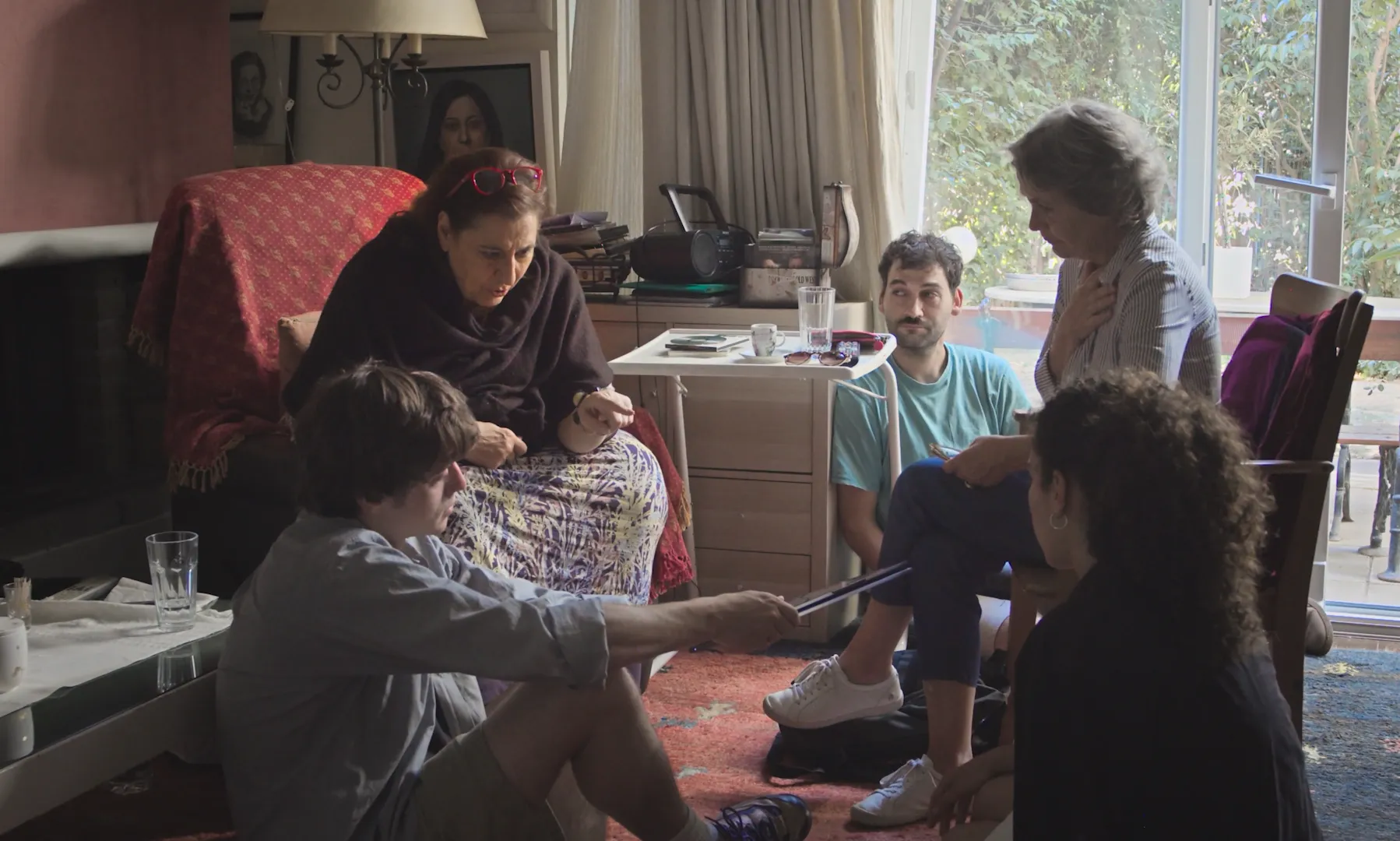
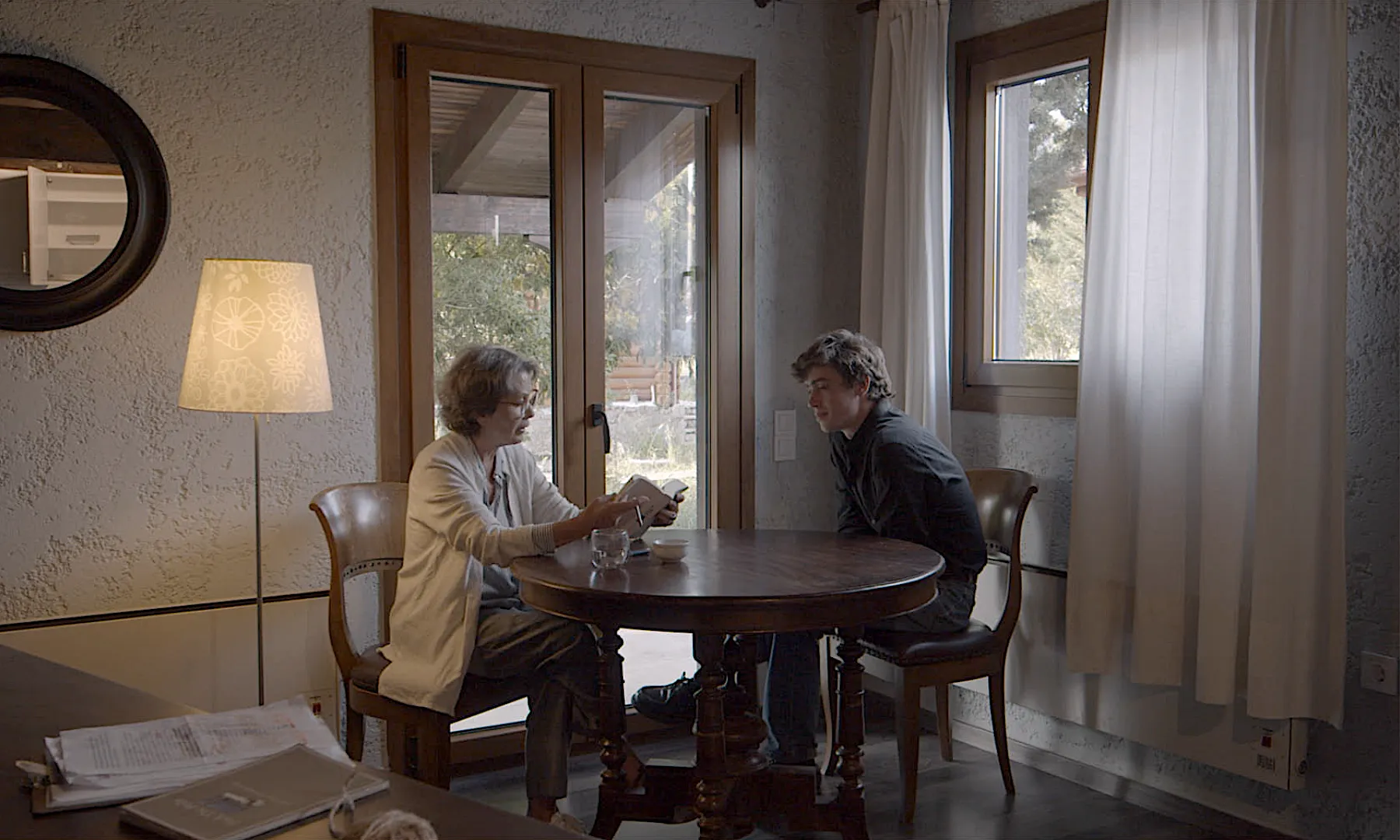
This is a voyage shadowed by mortality. Yet, Gomes denies us a simple flashback. Instead, this past is filtered through another layer of artifice: the recitation of “A Portuguesa,” a fictional short story by João Miguel Fernandes Jorge that recounts Gomes’s own experience. This choice cleverly blurs the line between autobiography and fiction, turning a memory into a text to be interpreted.
The second journey is in the film’s present, as Gomes returns, now healthy and accompanied by a small coterie of friends and fellow artists. This dual structure creates a quiet dialogue across time.
We watch a place remain constant while the traveler is transformed, and a solitary, anxious experience is re-examined through the lens of companionship and survival. The story is not what happens on the islands, but what happens to a person’s perception of them over time.
Assembling the Muses
Gomes builds her film not with a conventional script but with a collage of sensory materials. The visual language is a key part of this construction, deliberately mixing the crispness of HD digital video with the nostalgic grain of Super 8 and the fuzzy textures of SD footage.
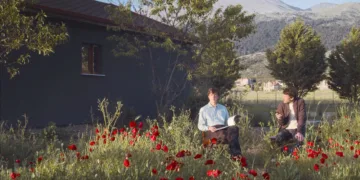
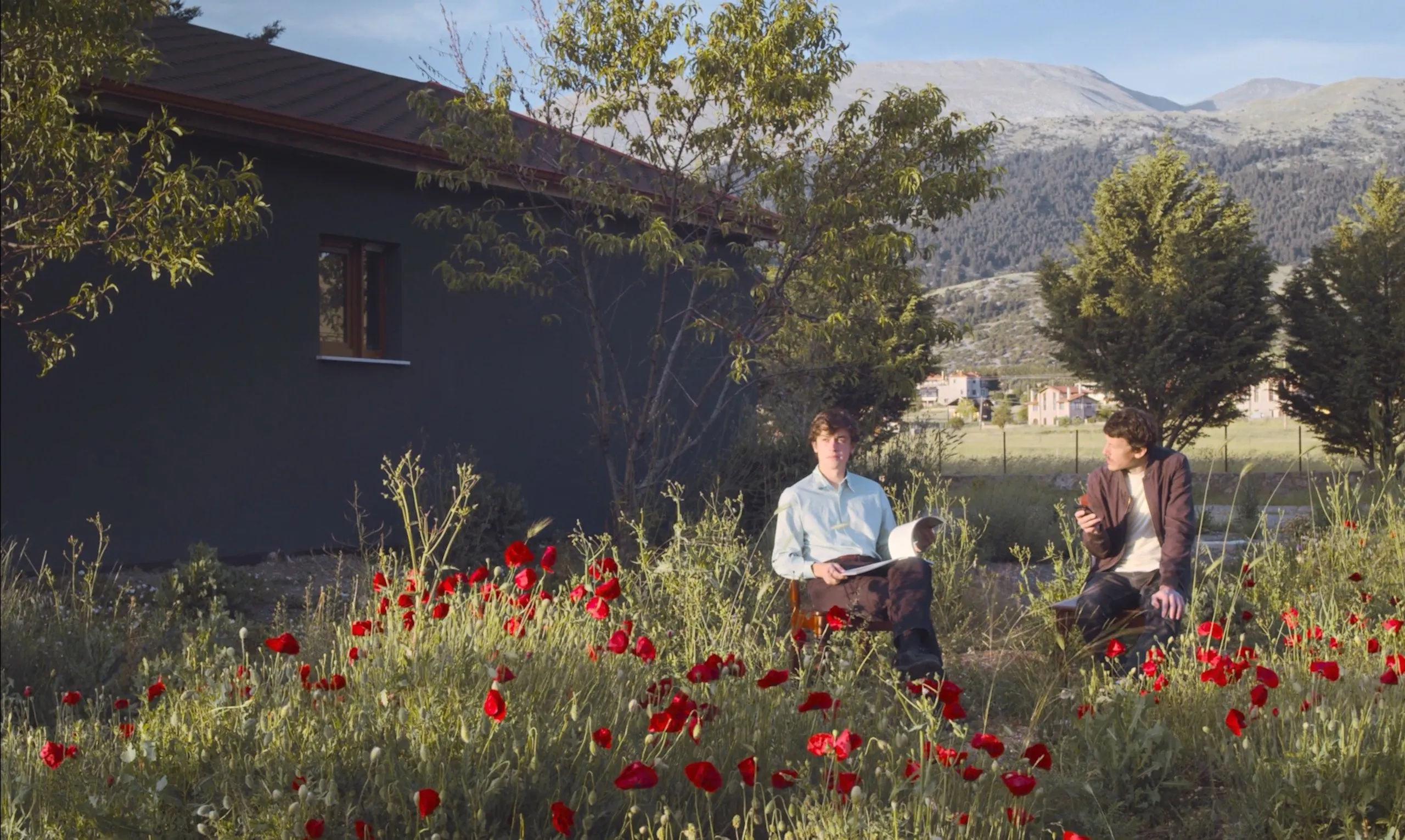
These shifts aren’t arbitrary; they serve as markers for different layers of time and memory, sometimes dissolving a field of poppies into a sea of pure, impressionistic crimson. The camera’s gaze is patient, content to hold on long, static shots of ancient ruins, the wine-dark sea, or the simple act of a person reading a book. Sound, too, is a primary narrative guide.
A central thread is the director’s memory of hearing singer Maria Farantouri on her first trip; the voice becomes a beacon, and the eventual meeting with the performer provides the film with one of its most resonant emotional payoffs.
Woven through it all are the words of others—Keats, Byron, Camus—read aloud by the travelers. This act places their journey within a grand tradition, framing it as one more link in a long chain of artists who came to Greece to find meaning.
Learning to Die in the Aegean
Ultimately, the film uses its Greek setting as a stage for a profound meditation on mortality. Standing amidst the ruins of a civilization that shaped Western thought, the film cannot help but contemplate the ephemeral nature of a single life. It brings to mind the Socratic notion of philosophy as a preparation for death, an idea that feels tangible in these landscapes.
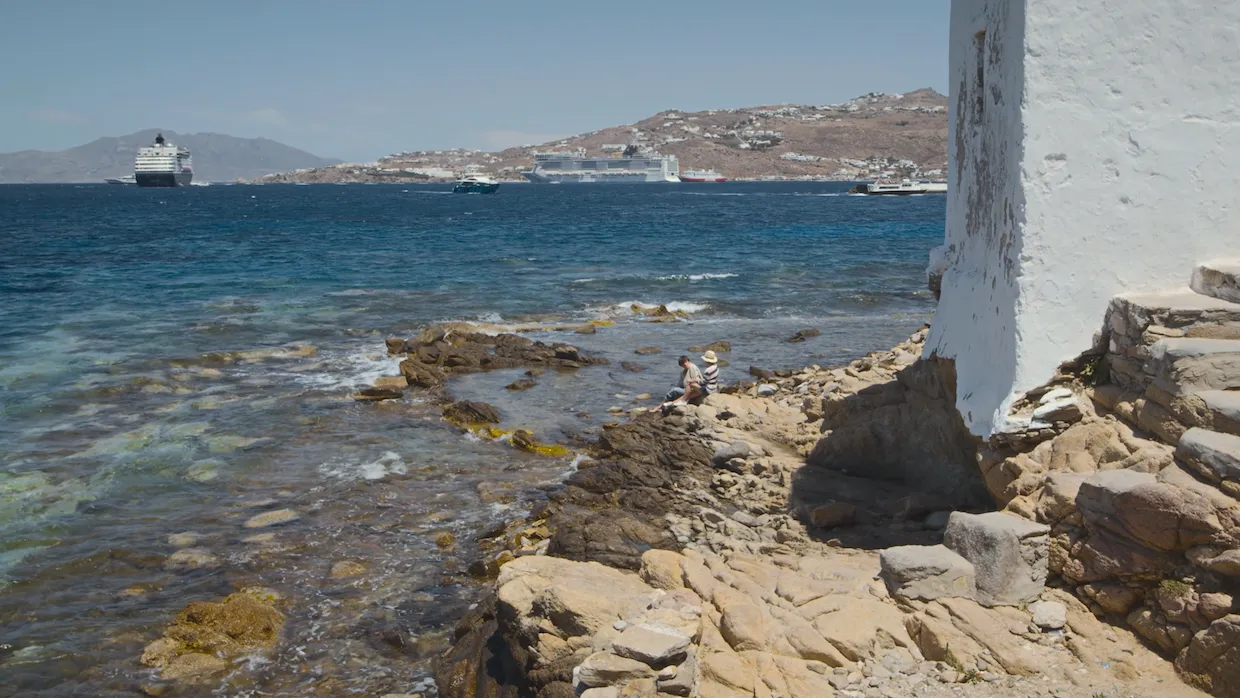
Gomes presents the islands as a form of sanctuary, a quiet refuge from the chaotic pace of the contemporary world where a connection to elemental beauty is still possible. The film offers no easy answers or clear arguments.
It is an open invitation to reflect, piecing together fragments of image, sound, and text. In this light, the title finds its true meaning. It is not an angry shout but a quiet, almost melancholic sigh—a lament for a world that has perhaps forgotten the value of the very things this film so gently and thoughtfully celebrates.
Rita Azevedo Gomes’ Fuck the Polis is a Portuguese film that had its world premiere at FIDMarseille 2025. FIDMarseille is a well-known international film festival. The film was also developed as part of a project with students at Elías Querejeta Zine Eskola in Spain.
Full Credits
Director: Rita Azevedo Gomes
Writers: Rita Azevedo Gomes, Regina Guimarães
Producers: Rita Azevedo Gomes (Basilisco Filmes)
Cast: Bingham Bryant, Mauro Soares, João Sarantopoulos, Maria Novo, Loukianos Moshonas, Maria Farantouri
Director of Photography: Bingham Bryant, Maria Novo, Rita Azevedo Gomes
Editors: Laura Gama Martins, Rita Azevedo Gomes
Composer: Alexander Zekke
The Review
Fuck the Polis
A challenging and deeply personal essay film, Fuck the Polis rewards the patient viewer with a rich, meditative experience. Its brilliance lies in its intricate narrative structure and beautiful, contemplative visuals. While its languid pace and esoteric nature will not be for everyone, it stands as a finely crafted piece of art cinema that thoughtfully explores the weight of time, memory, and the enduring human search for meaning in beauty.
PROS
- An intelligent narrative that layers memory, fiction, and documentary.
- Beautiful, evocative cinematography that mixes different film and video formats effectively.
- A thoughtful meditation on mortality, art, and history.
- Rich use of literature and music that deepens the film's themes.
CONS
- The extremely slow, deliberate pacing may alienate some viewers.
- Its personal and esoteric focus can make the film feel inaccessible.
- The fragmented, non-linear structure requires considerable viewer concentration.
- A provocative title that does not match the film's gentle, reflective tone.