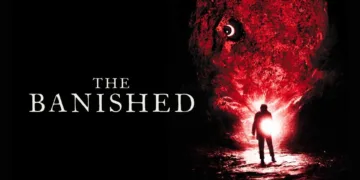





























Joseph Sims-Dennett’s The Banished situates itself within the vast, intimidating Australian wilderness, a landscape that has long served as a potent backdrop for stories of isolation and survival. The film introduces us to Grace, a young woman processing the death of a father with whom she shared a troubled history.
Her grief is complicated by a pressing duty: she must find her estranged brother, David, to deliver the news. This sense of familial obligation, a powerful and universal motivator, propels her toward the remote forest where David was last seen.
We learn he had joined a mysterious commune, one of several unsettling details suggesting that this is a place that swallows people whole. Grace’s personal quest for closure soon becomes a desperate struggle against an unknown, menacing presence, shifting from a somber drama to a tense fight for her life.
A Disorienting Narrative
The film tells its story through a fractured timeline, constantly cutting between Grace’s perilous situation in the present and the past events that led her there. This non-linear approach, when used skillfully in films like Anurag Kashyap’s psychological explorations, can deepen a character’s interior world and reframe the audience’s understanding with each new revelation.
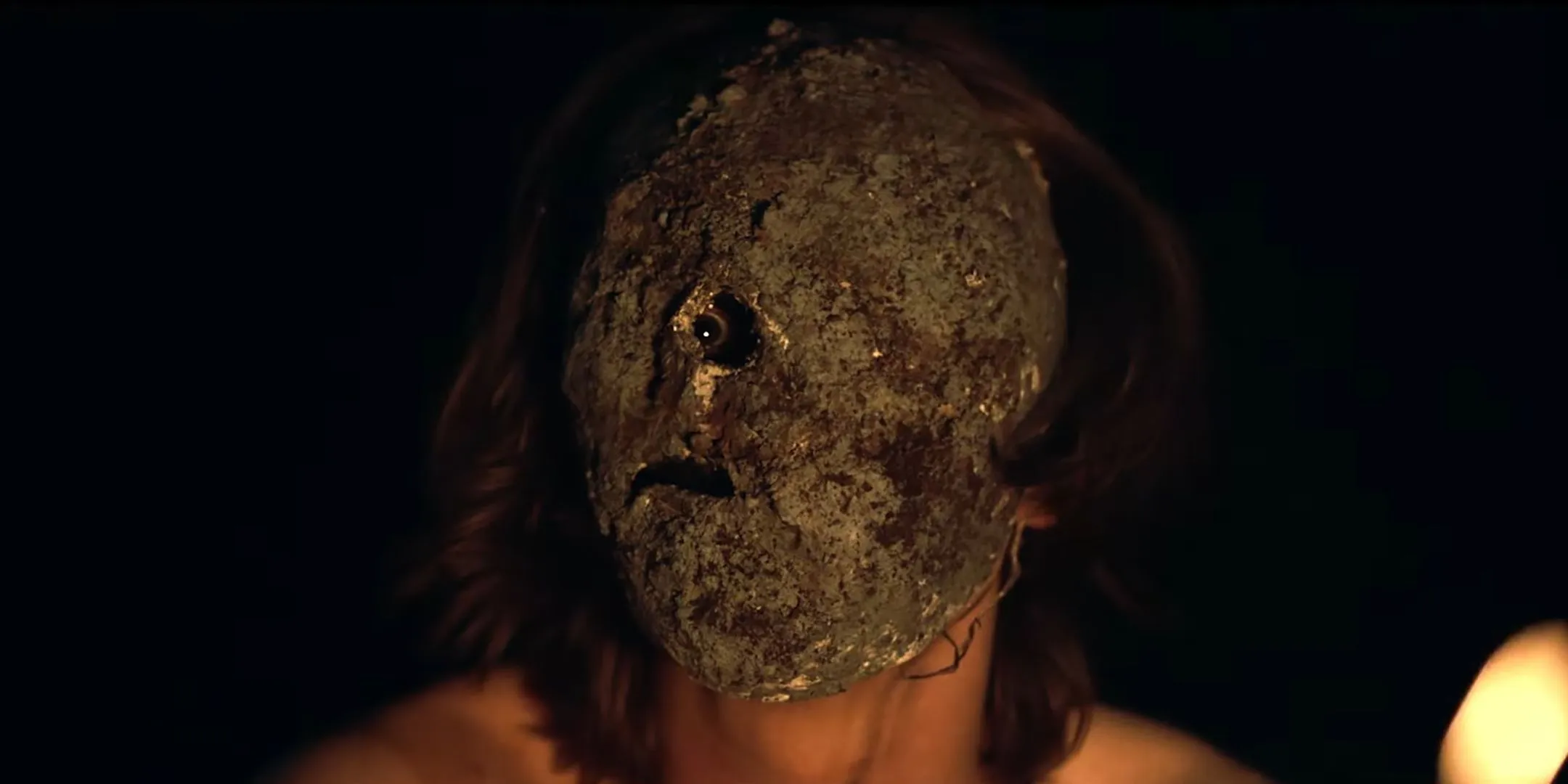
Here, however, the technique serves mainly to muddy the waters. The film abruptly shifts from a tense moment of Grace hiding in her tent to a sun-drenched, mundane conversation from weeks prior, severing any built-up tension and preventing narrative momentum. The director’s intent appears to be mirroring Grace’s disoriented state, but the execution results in persistent confusion rather than effective suspense.
Also Read






The script is built on a foundation of debilitating ambiguity. Key information about the commune’s beliefs, the true nature of the father’s abuse, or David’s own reasons for his flight from society are all kept intentionally vague. This robs the story of its potential power. This lack of clarity creates an unbridgeable distance between the viewer and the protagonist.
Without clear stakes or an understandable world, it becomes difficult to invest emotionally in Grace’s journey. Her decisions sometimes feel arbitrary because we lack the context to understand them. Even as the film approaches its end, its fundamental purpose remains frustratingly out of reach, suggesting the filmmakers valued disorientation over coherence.
Technical Polish and A Commanding Lead
For all its narrative faults, The Banished is held together by its technical craft and a powerful central performance from Meg Clarke. As Grace, Clarke is a compelling anchor, authentically portraying her character’s shift between determined resilience and raw vulnerability.
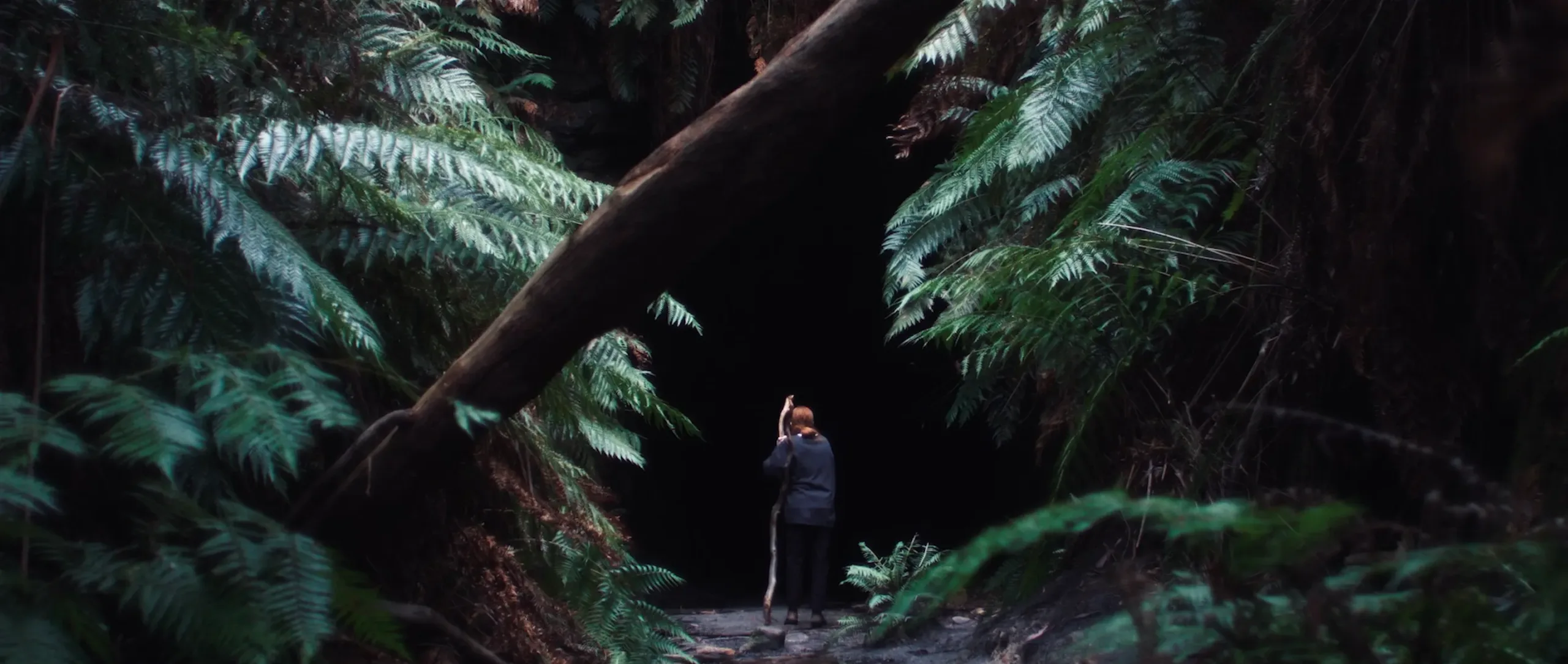
She excels in the quiet moments: a flicker of terror in her eyes as a twig snaps outside her tent, the sheer physical exhaustion etched on her face after a day of fruitless hiking. She carries the film’s emotional weight with a conviction the script does not always earn.
The film is also a visually striking piece of work, thanks to Sam Powyer’s cinematography. The Australian wilderness is captured as a character in its own right—beautiful, expansive, and deeply menacing. The color palette, rich with deep greens and oppressive browns, creates a claustrophobic feeling despite the open space.
This recalls the way nature is used in Indian folk horror like Tumbbad, where the setting is not just a location but an active antagonist, a living entity whose ancient secrets promise ruin. This atmosphere is amplified by the sound design.
Tauese Tofa’s score is less a melody and more a textural soundscape of low drones and sharp, percussive jolts, while the exaggerated crunch of leaves and whispers of wind create a potent sense of paranoia. Even the editing shows moments of great skill, like a dynamic montage intercutting past events with a flickering flame.
Thematic Shortcomings and a Deflating Conclusion
The Banished aims to be part of the global “trauma horror” trend, linking Grace’s ordeal to a dark family history. This is a rich theme, and one that contemporary Indian cinema, from family dramas to thrillers, has explored with increasing nuance.
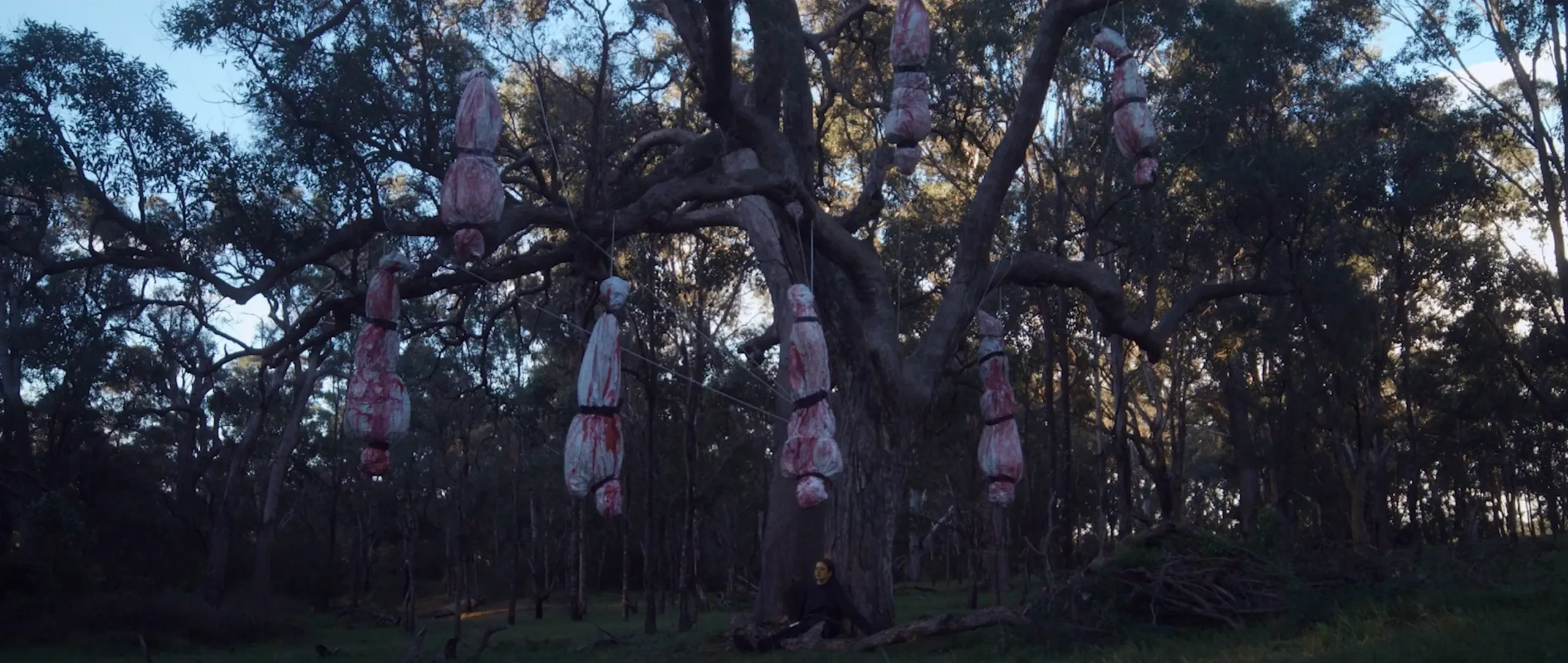
Yet where a film like Kapoor & Sons meticulously builds its drama from the specific, painful details of family dysfunction, The Banished treats its trauma as a generic, mysterious puzzle box. The “abusive father” remains a vague specter, a trope that fails to ground the horror in something psychologically real for Grace.
This superficiality extends to the supporting cast. Grace’s reluctant guide, Mr. Green, is introduced as a cynical and potentially untrustworthy figure, a dynamic that could have created fascinating tension. But the film does nothing with him; his backstory is hinted at with a tilted flask and then abandoned, leaving him a wasted opportunity.
This thin characterization contributes to the film’s collapse in its final act. Instead of offering a meaningful resolution or a powerful climax, the ending doubles down on the same frustrating ambiguity that plagues the entire story.
An oblique ending can be powerful when it encourages contemplation of a film’s ideas. Here, since the ideas themselves were never clear, the ambiguity feels empty and unearned. The viewer is left with a distinct feeling that the journey was pointless, a stylish exercise that mistook confusion for complexity.
The Banished was released on July 18, 2025, as a limited theatrical release in North America and became available on digital platforms on the same day. It was released digitally in the UK, Ireland, and Australia on July 28, 2025.
Full Credits
Director: Joseph Sims-Dennett
Writers: Joseph Sims-Dennett
Producers: Joseph Sims-Dennett, Barbara Ings, Raphael Sikic, Aaron Bush
Cast: Meg Clarke, Leighton Cardno, Gautier de Fontaine (also listed as Gautier Pavlovic-Hobba), Tony Hughes, Di Smith, Rasmus Toyra
Director of Photography: Sam Powyer
Editors: Joseph Sims-Dennett, Andrew Bennett, Leighton Cardno
Composer: Alexander Zekke
The Review
The Banished
While The Banished is a technical achievement, featuring a commanding lead performance from Meg Clarke and stunning, atmospheric cinematography, it cannot overcome its own narrative failings. The intentionally confusing structure and superficial exploration of trauma leave the viewer adrift in a story that values style over substance. It is a visually polished but emotionally hollow experience, a frustrating exercise in ambiguity that ultimately feels pointless. The film's admirable ambitions are sunk by its incoherent execution, making it a difficult recommendation for anyone seeking a satisfying story.
PROS
- A strong and believable lead performance by Meg Clarke.
- Menacing and atmospheric cinematography that makes the wilderness a character.
- An effective sound design and score that builds dread.
- Moments of skilled, dynamic editing.
CONS
- A confusing non-linear narrative that hinders momentum.
- A vague script with underdeveloped character motivations.
- A superficial exploration of its central theme of trauma.
- An unsatisfying and anticlimactic ending.
- Weak and underdeveloped supporting characters.