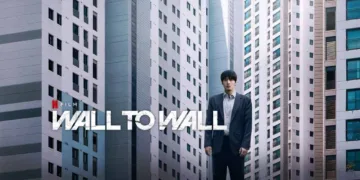




















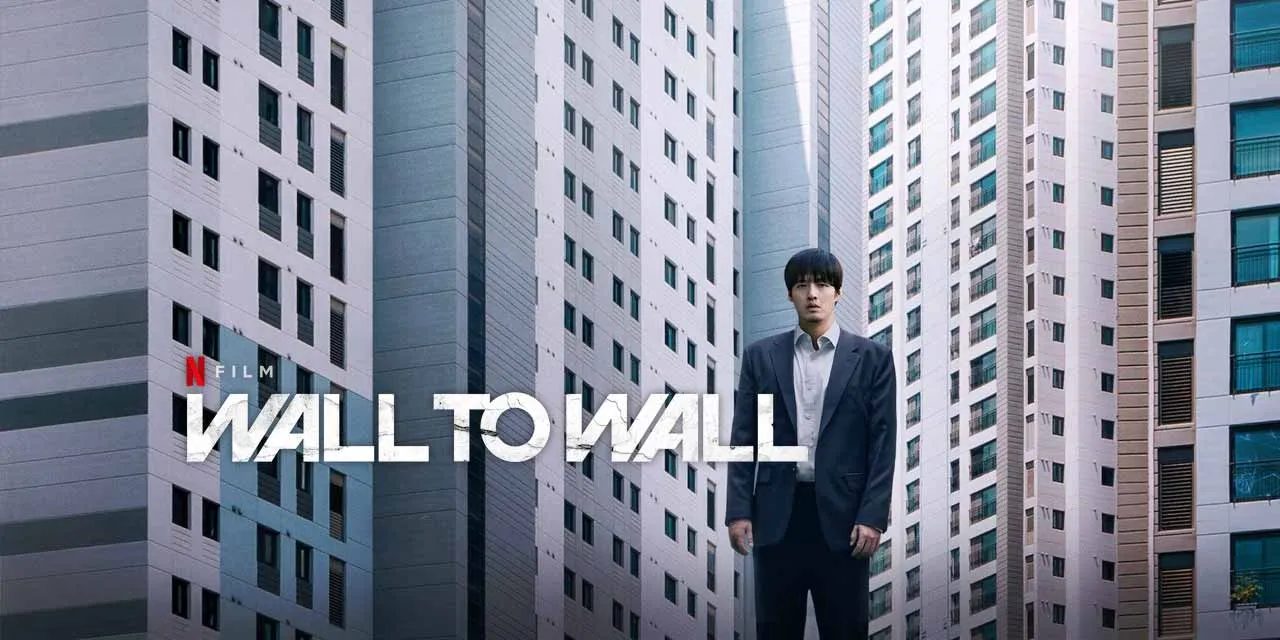

The ambition to own a patch of sky in a city like Seoul is a modern article of faith. In Wall to Wall, this faith is swiftly, brutally dismantled. We meet Woo-sung, a man who performs the sacred ritual of late capitalism: he leverages his future to purchase an 84-square-meter apartment.
He secures the deed. He becomes a homeowner. Three years later, the market has turned, and his sanctuary is a squalid, unlit tomb. He is “house poor,” a condition of ownership so complete it leaves no room for living. His torment is twofold.
There is the slow asphyxiation of debt, a silent pressure on his chest. Then there is the noise. A relentless, inexplicable thump thump bump from somewhere inside the building’s concrete shell. We are not watching a man settle into a home; we are watching him descend into a meticulously constructed hell of his own choosing.
The Architecture of Anxiety
Director Kim Tae-joon is less interested in telling a story than in engineering an atmosphere of sustained dread. The air in Woo-sung’s apartment feels thin, recycled, and dangerously still. Kim’s camera becomes an active participant in this suffocation, frequently locking its subject in claustrophobic close-ups that deny any sense of surrounding space.
The framing is often canted and expressionistic, turning doorframes and hallways into warped, menacing shapes that mirror a fractured mental state. The visual palette deepens this psychological assault. Woo-sung’s world is steeped in a cold, clinical blue, the flat, indifferent light of a morgue where hope has already been pronounced dead.
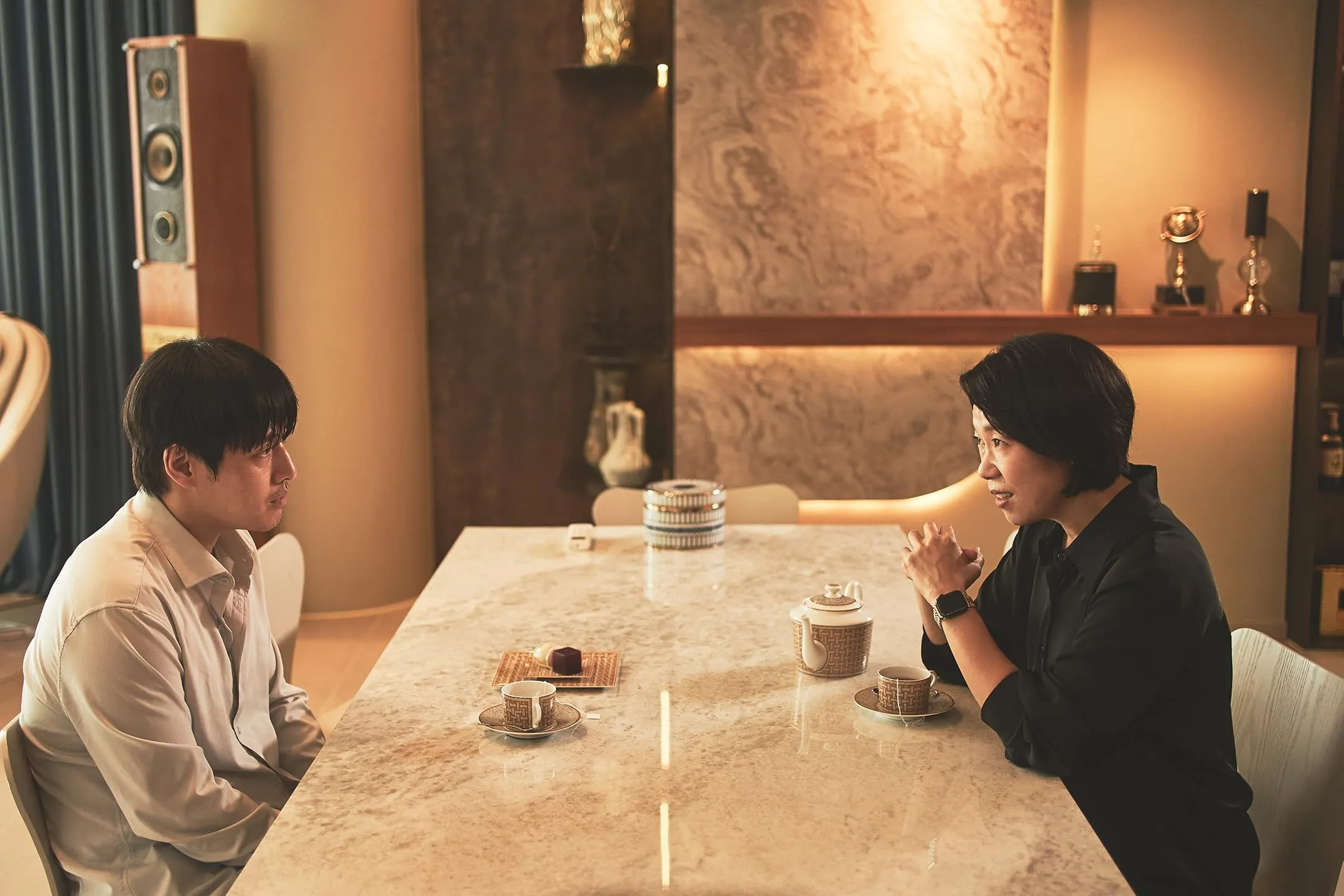
This is set against the deceptive, amber warmth of the penthouse apartment, a place where the light suggests aged whiskey and honey—sweet, decadent, and poisonous. This is a deliberate, almost classical noir technique, using chiaroscuro not just for shadow but to paint entire spaces with moral significance. The film’s primary weapon, however, is sonic.
That incessant, percussive thump is a masterclass in psychological manipulation. Its source is maddeningly ambiguous, a pulse without a heart. Its rhythm is not mechanical; it is organic, erratic, a hideous heartbeat within the walls that blurs the line between objective reality and auditory hallucination. It transforms the building itself from mere setting into a concrete leviathan groaning under the weight of its own flawed design, a malevolent presence actively hostile to its inhabitants.
A Man on the Ledge
Woo-sung’s journey from striving citizen to a paranoid creature is a clinical study in accelerated erosion. We witness his psychic decay in stages: from gnawing anxiety to frantic obsession, from simmering resentment to overt aggression.
Every decision he makes to escape his predicament only pulls him deeper into the mire, raising the classic noir question of whether he is a victim of fate or the willing author of his own ruin. His greed, his desperation—are these personal failings, or are they the only logical responses to a system designed to provoke them?
Kang Ha-neul charts this disintegration with a startling physicality that transcends simple acting. His performance is a ballet of perspiration and panic, a frantic energy that communicates everything words cannot. The slight flinch at a sudden sound, the compulsive checking of a stock price, the sheer weight of exhaustion in his posture—he makes the audience feel the clammy skin and the racing pulse.
The figures around him are less fully-formed people and more instruments in his psychological torture. Eun-hwa, the building representative, embodies the systemic rot with her serene smile and chilling pragmatism; she is the polite, rational face of pure evil.
Across from her is Jin-ho, the tattooed neighbor, a figure of brute force and terrifying unpredictability. He is a vision of the anarchic id, a dark mirror showing Woo-sung the man he might become if he lets go completely. Their presence serves as a constant ethical stress test, twisting the screws on a man already coming apart at the seams.
A House Divided
The film presents a savage critique of an economic system that sells the dream of security while manufacturing widespread precarity; the social contract here is not just broken, it is a work of fiction. Yet, the movie’s own structure performs a similar act of deconstruction.

It cleaves itself in two. Its first half is a finely tuned instrument of paranoia, a tight, controlled descent into one man’s private hell. The audience is trained for this kind of atmospheric, slow-burn experience. Then, at its midpoint, the film shatters its own confinement. It explodes into a sprawling, messy, and brutally violent conspiracy.
The lean psychological thriller gives way to a blood-soaked procedural filled with tangled motives and blunt-force trauma delivered via household tools. This sudden expansion feels almost like a betrayal of its initial promise, trading meticulous tension for something louder and more explicit. Or perhaps the shift is the film’s most cynical point: that contained, personal paranoia is a luxury.
In this world, it must inevitably spill out into wider, messier social violence. The movie refuses any neat resolution or catharsis, denying the audience the comfort of a clear verdict or a final silence. It simply stops, leaving us in the dark with the lingering echo of that damnable, unresolved noise.
Wall to Wall, also known as 84 Jegopmiteo, is a South Korean psychological thriller. It was released globally on Netflix on July 18, 2025. The movie is available on the Netflix platform.
Full Credits
Director: Kim Tae-joon
Writers: Kim Tae-joon
Producers: MIZIFILM
Cast: Kang Ha-neul, Yeom Hye-ran, Seo Hyun-woo, Jeon Jin-oh, Kim Hyun-jeong, Park Seong-il, Kang Ae-sim, Lee Jong-gu, Yoon Jeong-il, Cho Han-joon
The Review
Wall to Wall
An impeccably crafted psychological descent that intentionally fractures itself. The film’s first half is a masterclass in atmospheric dread, powered by a stunning central performance and precise technical skill. It then trades its suffocating suspense for a blunter, more chaotic form of brutality in its second act. The result is a potent, uncomfortable viewing experience that offers no easy answers, only the lingering hum of anxiety. It is a significant, if flawed, piece of work.
PROS
- Masterful creation of a claustrophobic, anxious atmosphere.
- A stunning and physically demanding central performance by Kang Ha-neul.
- Exceptional use of sound design and expressionistic cinematography.
- A sharp, incisive critique of modern economic and social pressures.
CONS
- A jarring narrative structure that splits the film into two distinct parts.
- The second half feels convoluted and loses the focused tension of the first.
- An over-reliance on repetitive violence diminishes its impact.
- Supporting figures function more as symbolic tools than developed individuals.