























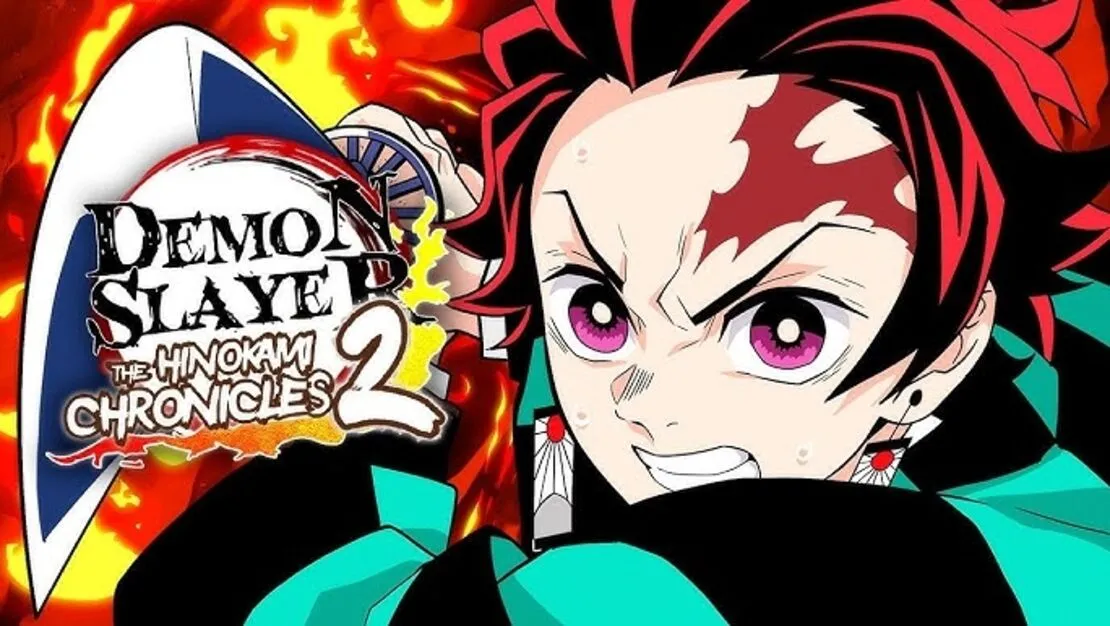

Picking up in the immediate aftermath of the harrowing Mugen Train incident, Demon Slayer -Kimetsu no Yaiba- The Hinokami Chronicles 2 wastes no time thrusting players back into Tanjiro’s quest. This sequel from developer CyberConnect2 is an interactive retelling of the anime’s most recent and explosive sagas, covering the flamboyant Entertainment District, the tense Swordsmith Village, and the preparatory Hashira Training arcs.
At its foundation, the experience remains an action-adventure game built upon the chassis of an arena fighter. It’s a design philosophy that aims to translate the spectacle of a 2D animation into a 3D playable space. This is a game made with an existing familiarity in mind. It serves as a direct continuation for those who played the first installment and a piece of interactive fan service for anyone following the anime, offering a tangible way to relive some of the series’ most striking moments.
The Animated Saga Continues: Story Mode
The greatest strength of the story mode is its profound reverence for the source material. This is not a simple summary of events; it’s a detailed, beat-for-beat recreation that excels at capturing the anime’s specific tonal blend.
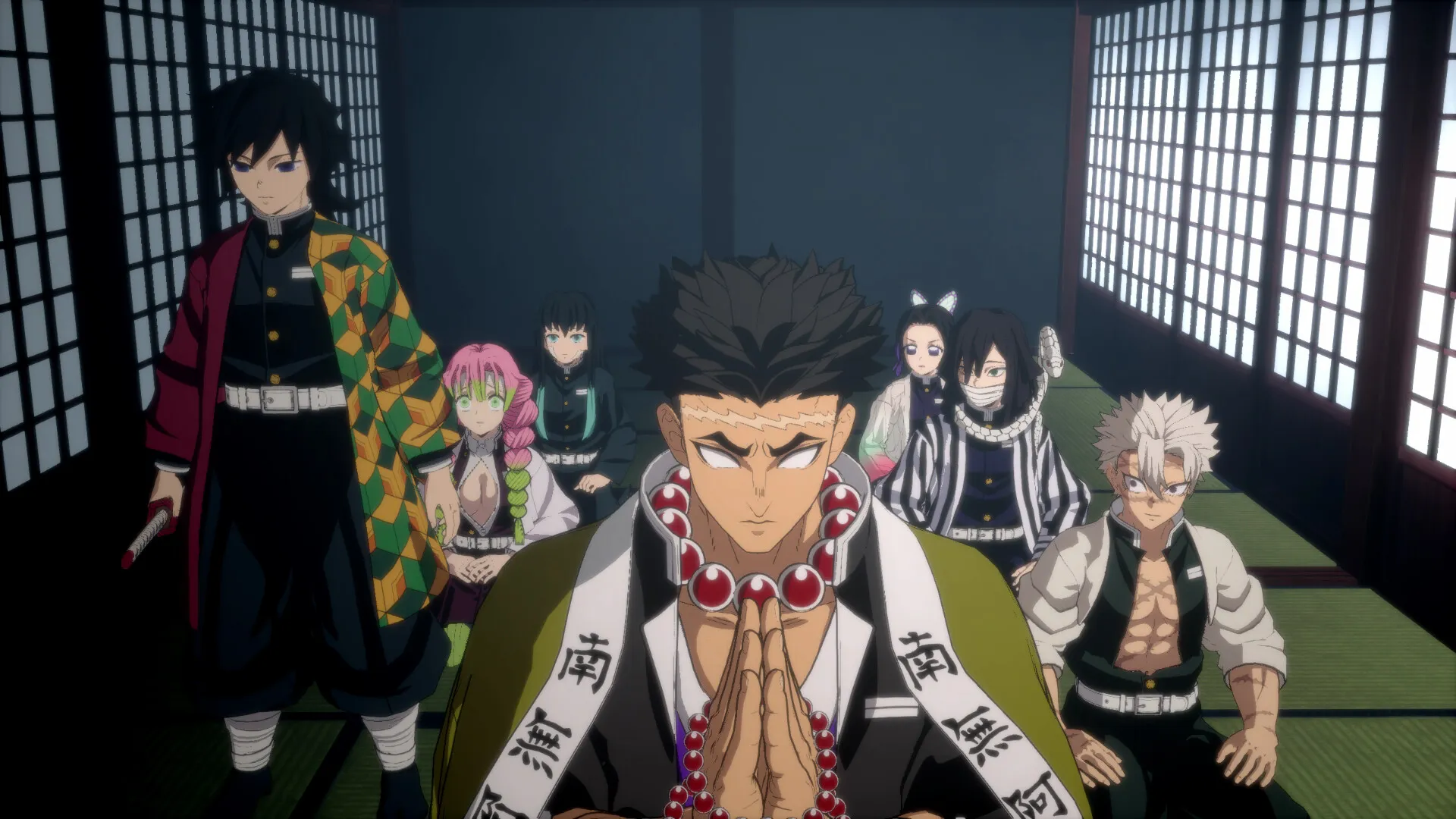
The game accurately translates the pivotal events and emotional undercurrents, from the boisterous humor of Inosuke’s antics to the deeply melancholic backstories that define its villains. It commendably refuses to shy away from the story’s darker, more violent aspects, preserving the stakes that make the narrative so effective. The devastating final moments of the Entertainment District arc, for instance, are presented with their full, tragic weight intact.
There is also a welcome and necessary shift in perspective. While the first game was tightly focused on Tanjiro, Zenitsu, and Inosuke, this sequel expands its view to give the powerful Hashira and the terrifying Upper Rank demons their deserved time in the spotlight. Getting to control the Sound Hashira, Tengen Uzui, provides a completely different feel, his flashy confidence translating directly into his gameplay. This expansion gives the world a richer, more complete feel.
When the action ignites, the game becomes a showcase of cinematic flair. CyberConnect2’s signature animation work brings key battles to life with an energy that few developers can match, turning each major confrontation into a visual feast. Yet, the moments connecting these peaks reveal a persistent pacing problem. The flow between narrative highs is often interrupted by mandatory exploration segments that feel sluggish by comparison.
While these sections are functionally improved over the first game with the ability to run and the inclusion of minor side quests, they often amount to little more than following a glowing trail to the next conversation. The structure feels dated, asking the player to perform rudimentary tasks that bring the story’s momentum to a halt.
The stark contrast between the methodical, slow-paced investigation in the Entertainment District and the explosive, high-speed battle it eventually leads to is jarring. The inclusion of simple minigames, like a surprisingly charming rhythm challenge with Zenitsu, provides some variety, but these are brief distractions in a structure that struggles to make its quiet moments as engaging as its loud ones.
The Art of the Blade: Combat System & Mechanics
The combat in Hinokami Chronicles 2 is built for spectacle, prioritizing cinematic impact over the deep, technical demands of a tournament fighter. Its approachable design, which maps combos and powerful special moves to simple button presses, ensures anyone can create visually impressive sequences that echo the anime’s dynamic choreography.
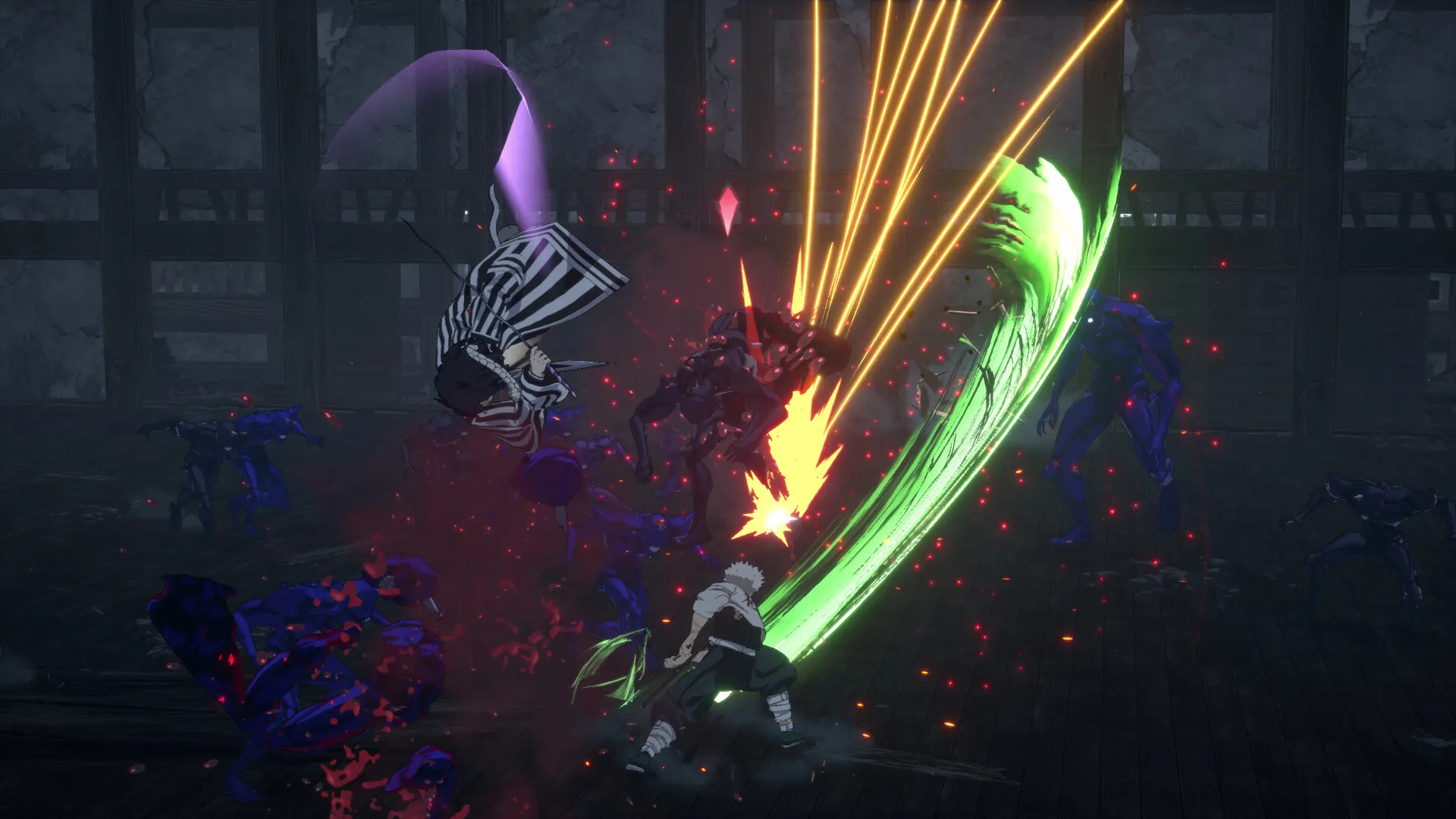
The focus is less on intricate execution and more on the kinetic feel of its fast-paced encounters. It wants you to feel like you are directing a scene from the show. This sequel makes small, intelligent changes that have a large impact on playability. The most notable refinement is moving the heavy attack to a combination of the guard and attack buttons.
This simple adjustment prevents the accidental inputs that plagued the first game, making the controls feel more deliberate and intuitive. It’s a quality-of-life fix that shows the developers are listening, smoothing out a key point of friction and allowing for a more fluid expression of intent.
The two-on-two tag system is where the mechanics best support the story. Calling in a partner for an assist or a last-second save is a staple of the genre, but the introduction of Dual Ultimate Arts adds a special narrative touch. Activating a unique, powerful attack by pairing characters with a deep bond, like Tanjiro and Nezuko, is a fantastic fusion of gameplay and storytelling.
Their shared move is not just mechanically powerful; it is a visual representation of their unbreakable connection. The system is further nuanced by the inclusion of solo-only characters and pre-set duos, which forces some strategic thought about team composition. The boss encounters are the pinnacle of this design philosophy.
They are not simple one-on-one fights; they are multi-stage events with unique mechanics that demand adaptation. The battle against the Upper Rank demon Gyutaro, for example, incorporates a poison effect that drains your health, forcing a more aggressive playstyle that mirrors the desperation Tanjiro feels in the anime. These encounters culminate in “Final Clash” quick-time events, which act as a satisfying cinematic payoff for mastering the fight’s specific challenges.
A Slayer’s Path: Game Modes & Content
Beyond the main campaign, the new Hashira Training mode emerges as the game’s most significant and well-executed addition. This mode provides a compelling experience for solo players through a roguelike progression system. Players guide a team across a game board, with each space presenting a choice: engage in a difficult fight for a powerful temporary buff, take on an easier opponent for a smaller reward, or land on a space to recover health.
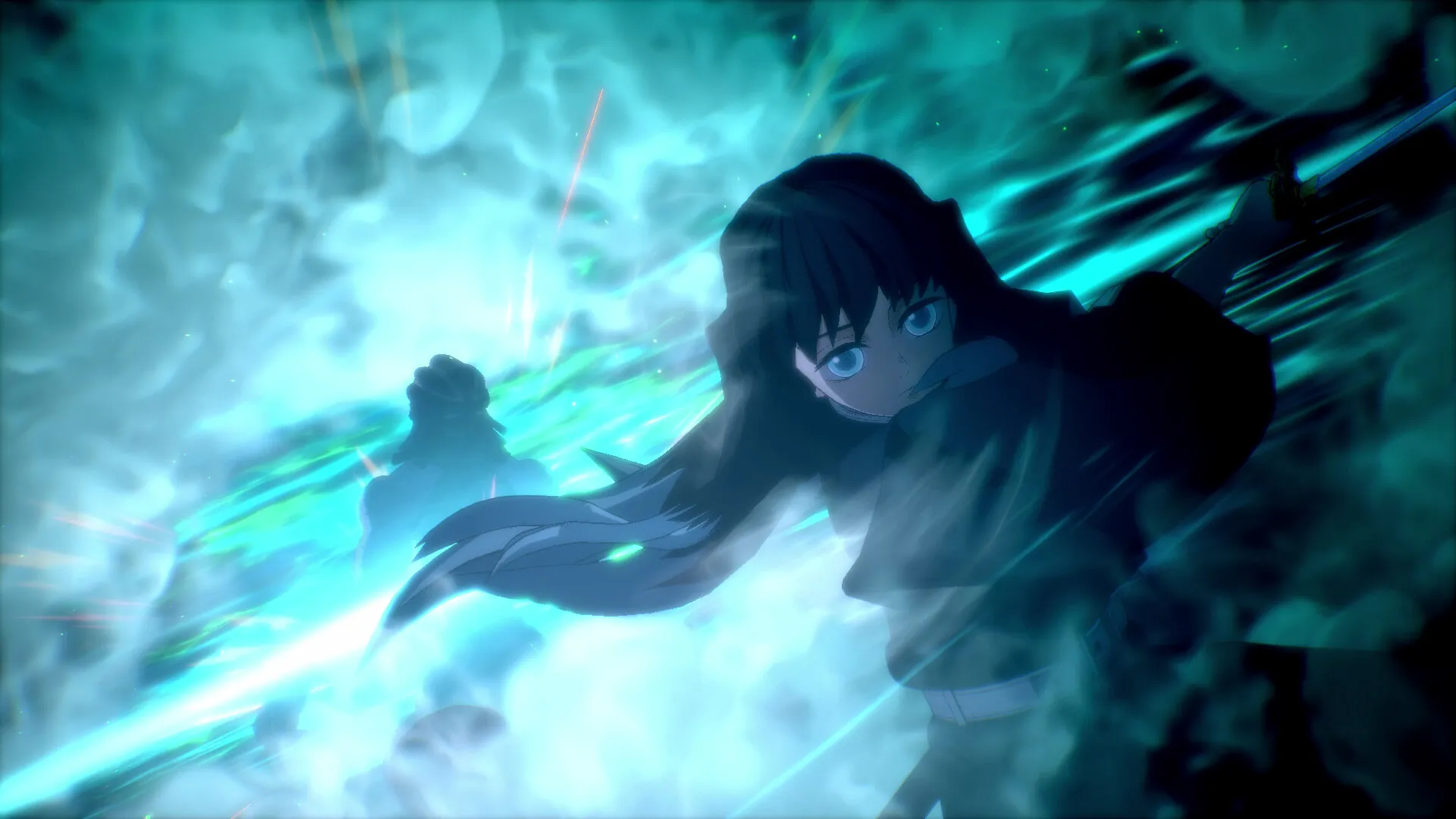
This structure creates a satisfying loop of risk and reward, encouraging strategic thinking and experimentation with the entire roster. It’s a robust and replayable mode that offers a pure, gameplay-focused alternative to the narrative campaign, standing strong as a modern interpretation of a classic arcade ladder.
The standard multiplayer modes, including local and online versus, also benefit greatly from the larger cast of characters, offering more matchup variety than the first game. Unfortunately, the package fumbles its attempt to welcome new players or refresh the memory of returning ones.
The “Path of the Demon Slayer” mode is intended to be a recap of the first game’s story, but it is woefully inadequate. It consists of just a handful of fights stripped of all narrative context. In a series like Demon Slayer, where every fight is the culmination of an emotional arc, this is a critical misstep.
Reducing the poignant battle against Rui or the desperate struggle aboard the Mugen Train to simple versus matches robs them of their power. By presenting these climactic events as context-free skirmishes, the game fails to communicate why these moments mattered, making it an entirely ineffective tool for anyone not already versed in the story. It is a hollow and missed opportunity.
Roster and Replayability
The character roster has expanded considerably, now featuring over 40 playable slots. This larger selection is one of the sequel’s biggest assets, bringing more variety to the fighting with new styles that reflect the diverse abilities of the Demon Slayer Corps and their demonic foes.
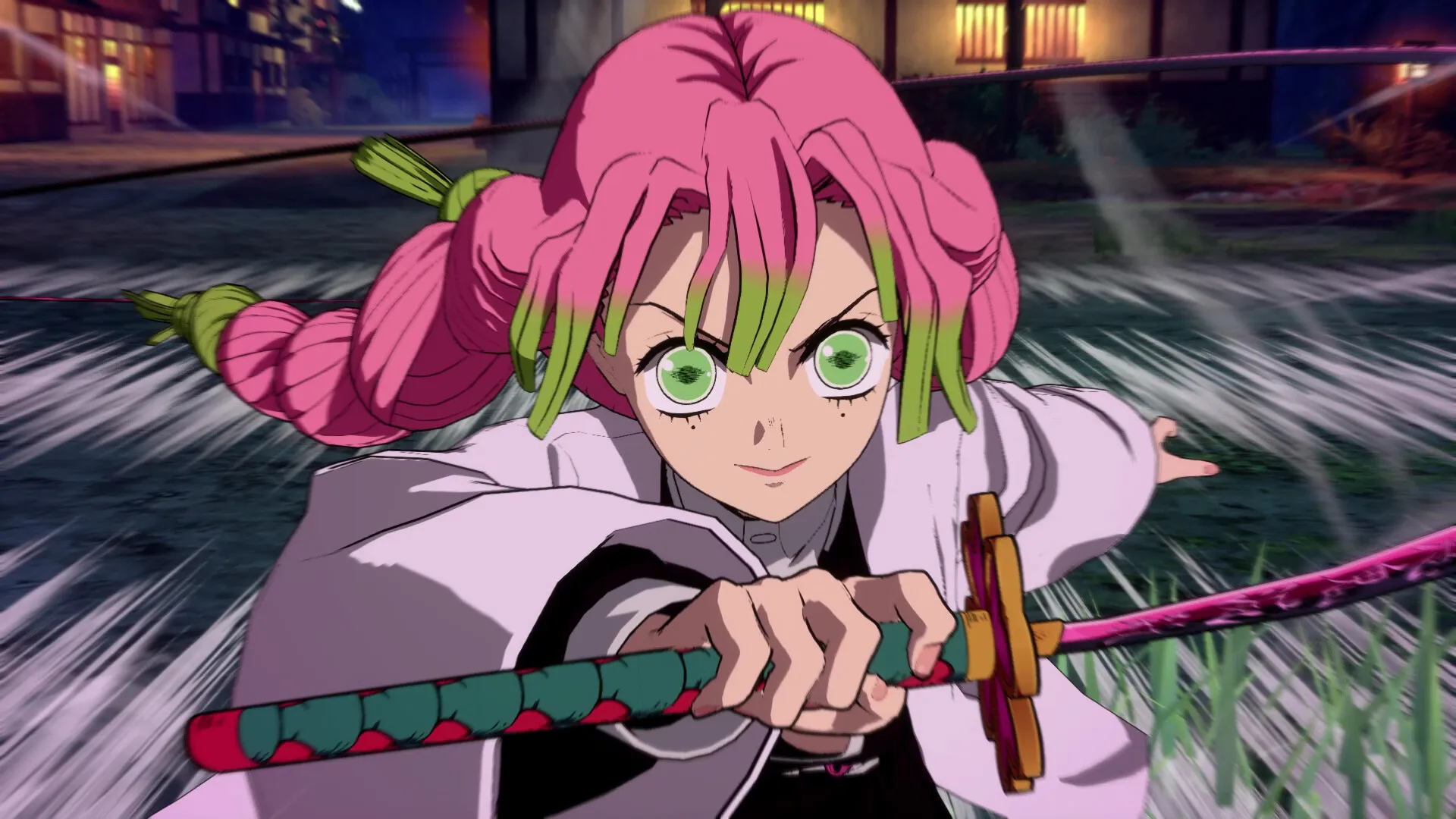
The fluid grace of Shinobu Kocho feels distinctly different from the brute force of Gyomei Himejima. However, the impressive number is somewhat inflated by questionable design choices. Several slots are occupied by “Academy” versions of characters, which are functionally costumes with a different finishing move that offer no substantial gameplay changes.
Likewise, the protagonist Tanjiro has multiple variants that take up their own slots, a practice common in licensed fighters that still feels like padding. One has to question if these slight variations justify their place over other potential characters from the rich source material.
To encourage long-term play, the game uses a familiar system of unlockables tied to Kimetsu Points, which are earned through nearly every activity. These points can be spent in a shop to acquire new characters, costumes, profile customization items, music, and art. An additional Character Mastery system provides another parallel track for earning rewards by repeatedly using a specific fighter.
The loop is functional, but the grind can feel repetitive, turning the act of unlocking content into a checklist rather than a rewarding pursuit. A new Gear system has also been introduced, allowing players to equip items with conditional stat boosts for single-player modes.
While it can be turned off for competitive play, it can disrupt the balance of the campaign, allowing players to overcome difficult encounters with statistics rather than skill. This addition feels superfluous, an unnecessary layer of management in a game that shines brightest when focused on pure action.
Presentation and Performance
Visually, Hinokami Chronicles 2 is a remarkable achievement in art direction. The signature cel-shaded style perfectly captures the aesthetic of the anime, creating a world that feels like a direct, playable extension of the show.
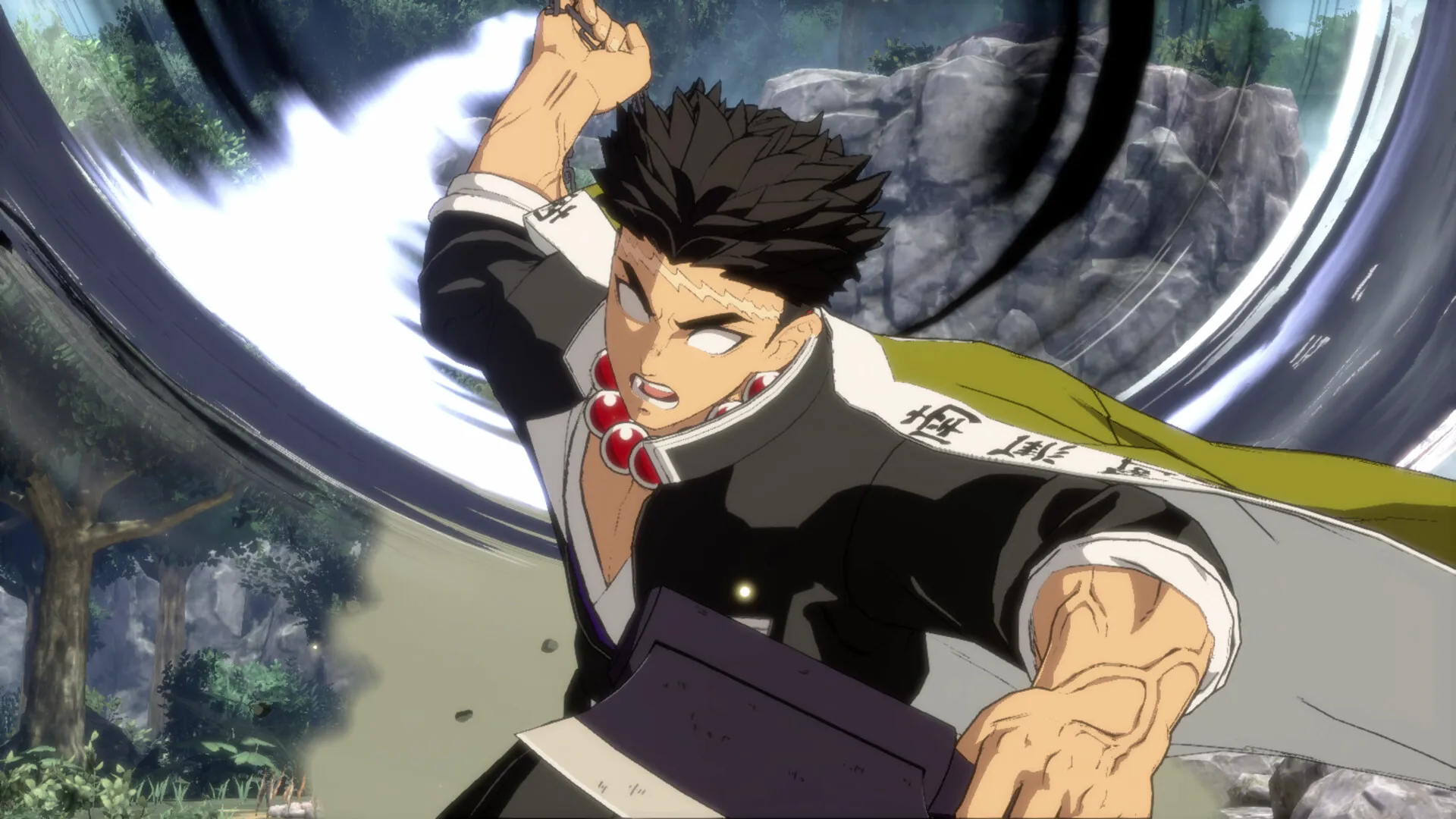
The meticulous recreation of locations, from the vibrant, lantern-lit streets of the Entertainment District to the tranquil setting of the Swordsmith Village, is a testament to the artists’ attention to detail. The animation quality is superb, particularly during the explosive Ultimate Arts that serve as the climax of many combos. Fights are a whirlwind of fluid motion and brilliant particle effects.
There are some minor visual oddities, like stiff turning animations when exploring, but these are small blemishes on an otherwise beautiful presentation. The audio design is equally strong, with excellent performances from both the Japanese and English voice casts that bring authenticity to every scene. The musical score is also noteworthy, skillfully shifting from gentle themes during quiet moments to high-energy tracks that amplify the tension of a major battle.
The game performs well on modern hardware, maintaining a steady 60 frames per second that keeps the fast-paced action feeling smooth and responsive. During the most chaotic battles, the screen can become busy with effects, but the action remains clear and readable for the most part.
A significant and baffling weakness, however, is the lack of a proper, comprehensive tutorial for advanced mechanics. The game provides basic text-based tips but fails to offer a dedicated training space or interactive lesson for more subtle techniques.
Concepts like the parry system or optimal ways to use the combo gauge are left for the player to discover through trial and error or external research. For a game that is otherwise so welcoming to a broad audience, this omission is a major oversight. It creates an unnecessary barrier for players wanting to move beyond a surface-level understanding of the combat, leaving them without the tools to fully appreciate the system’s depth.
The Review
Demon Slayer -Kimetsu no Yaiba- The Hinokami Chronicles 2
Demon Slayer -Kimetsu no Yaiba- The Hinokami Chronicles 2 is a worthy and visually spectacular sequel that excels in motion. Its refined combat and stunning recreation of the anime's best moments are a treat for any fan. The new Hashira Training mode adds much-needed depth for solo players. However, the experience is hampered by sluggish story mode pacing, a padded character roster, and a failure to properly onboard new players. It’s a significant step forward that polishes the core experience, but it doesn't entirely fix the foundation's cracks.
PROS
- Stunning visual presentation that perfectly captures the anime's style.
- Refined and accessible combat system with meaningful improvements.
- Excellent new "Hashira Training" mode adds significant replay value.
- Faithful and cinematic adaptation of key story arcs.
CONS
- Story mode pacing is hurt by slow, repetitive exploration segments.
- Roster feels padded with multiple versions of the same characters.
- "Path of the Demon Slayer" recap mode is inadequate for new players.
- Lacks a comprehensive tutorial for advanced mechanics.