























Abandoned Man introduces its central figure, Baran, as a man whose youth was fundamentally stolen by his own family. Director Çagri Vila Lostuvali frames this somber Turkish drama as an exploration of the crushing weight of familial betrayal and the difficult path to rebuilding a life from ashes.
The premise is stark and unforgiving. Baran is released from a long prison sentence for a crime he did not commit, only to be immediately thrown into a new crisis that is a direct consequence of his family’s past sins.
The sudden responsibility for his young niece, Lidya, forces him to confront a past he wishes to escape and fight for a future he never imagined. The film poses a difficult question: Can a person forge a new identity after being systematically broken by the very people who should have protected him? Its bleak, emotionally charged tone suggests that any hope will be hard-won and fragile.
The Crushing Weight of Familial Debt
The film’s narrative is built on a foundation of profound injustice, one that feels both culturally specific and universally tragic. At fifteen, Baran was coerced by his father to take the fall for his older brother Fatih’s vehicular manslaughter.
This act of familial sacrifice is a trope often seen in mainstream Indian cinema, where a younger sibling’s deference to an elder is frequently glorified as the highest form of family honor. Abandoned Man sharply subverts this tradition. It portrays the sacrifice not as a noble deed but as a destructive, soul-crushing act of betrayal. Baran’s complete abandonment is cemented by the silent complicity of his mother and brother, who stand by as he is offered up to protect the family’s favored son.
The horror is compounded during his fifteen-year incarceration, where self-preservation in a brutal environment leads to an even longer sentence. Upon his release, Baran is a ghost in his own life. The cinematography often isolates him in the frame, emphasizing his alienation from a world that has moved on.
Also Read






His initial encounters with a guilt-ridden Fatih are thick with unspoken history; Fatih’s apologies seem hollow against the sheer scale of Baran’s stolen years. The story then piles on another crisis with the car accident that kills his sister-in-law and leaves Fatih in a coma. Baran is now tethered to the very family that destroyed him, forced to become a reluctant guardian for his niece, Lidya. This new burden is a crucible, testing a resilience that has already been pushed to its limit.
A Fragile Hope in an Orphan’s Eyes
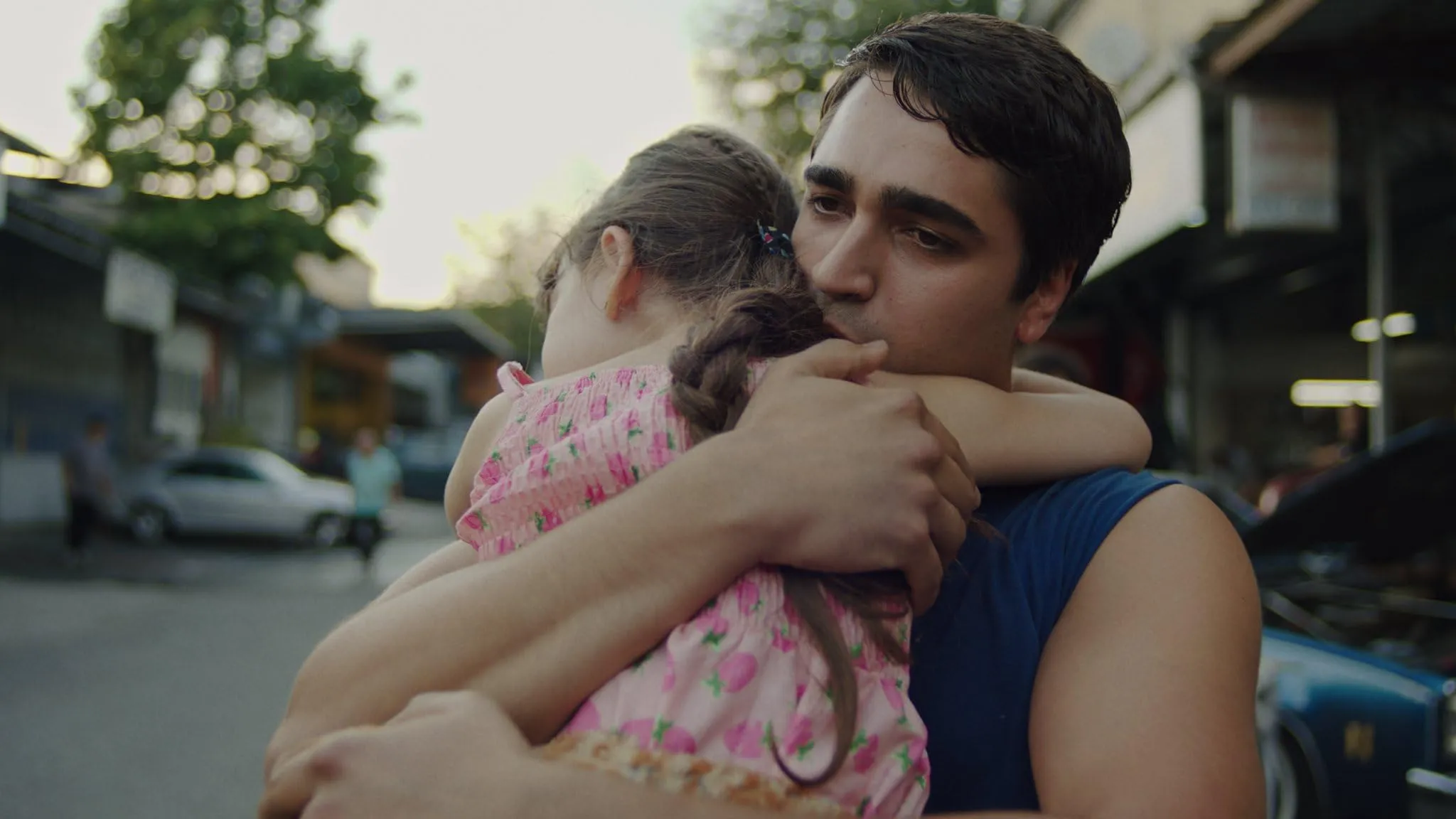
Amidst the grim circumstances, the film finds its emotional heart in the developing relationship between Baran and Lidya. Their bond provides genuine warmth, a necessary counterpoint that keeps the narrative from collapsing into complete despair. Lidya functions as a powerful symbol of innocence and hope.

She represents the childhood Baran was denied, and her presence forces him to engage with the world with a tenderness he had long since buried. Their connection grows organically from his guarded reluctance to a deep, mutual reliance. In her, Baran sees a vulnerable child in need of a protector, an echo of his own younger self who had no one to stand for him. This dynamic gives him a purpose that extends beyond mere survival.
The success of this central relationship rests on the film’s lead performances. Mert Ramazan Demir portrays Baran with a quiet, simmering intensity. His effectiveness lies in his ability to convey a spectrum of pain and rage through his gaze alone, often saying more with silence than the script allows. The true standout is Ada Erma as Lidya.
She brings a natural charisma and earnestness to the role that feels authentic. Her performance avoids the pitfalls of becoming overly sentimental, even when the film’s musical score and direction push it in that direction. Their shared scenes are the movie’s strongest, creating a believable sanctuary of healing that feels earned and essential.
The Undermining Force of Narrative Convenience
The film’s gritty, street-level realism is unfortunately undermined by its reliance on overly convenient plot devices that feel imported from a different, simpler story. The character of Musa, Baran’s eventual employer, exemplifies this problem. He is introduced as a gruff, distrustful figure with his own tragic past, a man seemingly hardened against the world.

Yet, his transformation into a benevolent savior is jarringly abrupt. He becomes a deus ex machina, a narrative tool whose sudden change of heart resolves Baran’s financial and professional struggles with an unbelievable neatness. This makes Baran’s journey feel “too pat” and diminishes the stakes of his struggle.
This tendency toward simple solutions is a hallmark of Turkish dizis and many Indian television serials, where emotional impact often supersedes narrative logic. The film frequently functions as a “tearjerker,” using manipulative techniques like a sentimental score that swells at predictable moments. These choices give the film the feel of a soapy melodrama, sacrificing psychological coherence for weepy sentiment.
A significant missed opportunity is the shallow exploration of its central themes. The story raises profound questions about the toxicity of familial duty but sidesteps a nuanced examination, opting for a simpler motivation for Baran’s actions and missing a chance for greater complexity.
A Resolution Robbed of Its Meaning
The film’s structural weaknesses culminate in a rushed and hollow conclusion that undercuts much of the emotional weight built throughout the story. The primary issue is the resolution of the deep-seated conflict between Baran and his brother, Fatih.
This relationship is the source of the entire narrative’s pain. After Fatih awakens from his coma, the film employs an abrupt six-month time jump. This narrative leap completely bypasses the messy, difficult, and necessary process of confrontation, forgiveness, and healing between the two brothers. By skipping this crucial character work, the film presents an end result, the brothers sharing a meal, without showing the emotional journey required to get there.
This choice is a disservice to the protagonist. It invalidates the fifteen years of suffering that the story has been centered on. The resolution feels unearned and leaves the audience with a sense of incompletion. The final scene, intended to be peaceful, instead feels ambiguous and unsatisfying, suggesting a weary resignation instead of true reconciliation. The film sprints toward a tidy ending at the expense of its own emotional integrity.
Abandoned Man is a Turkish drama film that premiered exclusively on Netflix on August 22, 2025. The movie, which runs for approximately 1 hour and 31 minutes, is a production by OGM Pictures. It tells the story of a man who attempts to rebuild his life after serving time in prison, finding an unexpected bond that reveals a shocking truth. The film is available to stream in over 190 countries worldwide.
Full Credits
Director: Çağrı Vila Lostuvalı
Writers: Deniz Madanoğlu, Murat Uyurkulak
Producers and Executive Producers: Onur Güvenatam
Cast: Mert Ramazan Demir, Ada Erma, Rahimcan Kapkap, Ercan Kesal, Burcu Cavrar, Edip Tepeli
Editors: Mustafa Presheva, Nar Presheva
Composer: Jingle Jungle
The Review
Abandoned Man
Abandoned Man is a film with a genuinely moving emotional core, anchored by the strong chemistry between its leads. The central relationship between uncle and niece provides moments of profound tenderness. Its potential is ultimately squandered by a script that relies on narrative shortcuts, melodramatic manipulation, and a rushed conclusion that bypasses essential character development. The film has a strong heart that is unfortunately let down by a simplistic and convenient story.
PROS
- The touching and well-acted relationship between Baran and Lidya.
- A compelling lead performance that effectively captures the protagonist's pain.
- An emotionally resonant premise about betrayal and the search for hope.
CONS
- Relies on convenient plot devices and unearned resolutions.
- Underdeveloped supporting characters that serve as simple plot functions.
- A rushed ending that skips crucial character reconciliation.
- A tendency toward melodrama that undermines the story's realism.