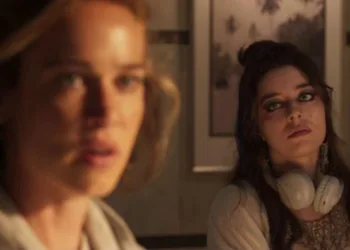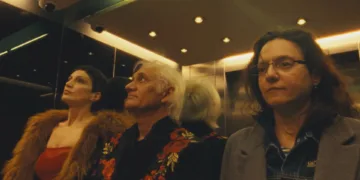














In the cluttered geography of a Timișoara apartment, circa 2008, we meet Stela. The camera finds her adrift in a domestic squalor that mirrors the larger anxieties of a nation perched between the promise of the EU and the maw of financial ruin.
Stela, a woman whose thirties are fading behind her, exists in a state of suspended animation, her life’s rhythm dictated by the demands of a clamorous family and the drone of a textile factory. Her world is a closed circuit of peeling paint and petty grievance. Yet, it is illuminated by a single, unwavering beacon: a lifelong obsession with Boban, a Balkan pop singer whose fame is as frayed as the furniture.
This fixation is not a simple crush; it is her entire existential framework. Ivana Mladenović’s Sorella di Clausura immediately establishes its tone as a brutal, darkly funny anatomy of a psyche, rejecting romance for a raw appraisal of the absurd delusions that keep a person breathing.
An Itinerary of Unraveling
The film’s narrative follows a logic of escalating indignity, a forward momentum built from a series of bad decisions. Stela’s quest to witness her idol begins with an act of domestic betrayal, the theft of her uncle’s pension. This choice precipitates not transcendence but a physical beatdown and the family’s eviction. It’s a bleakly comic transaction.
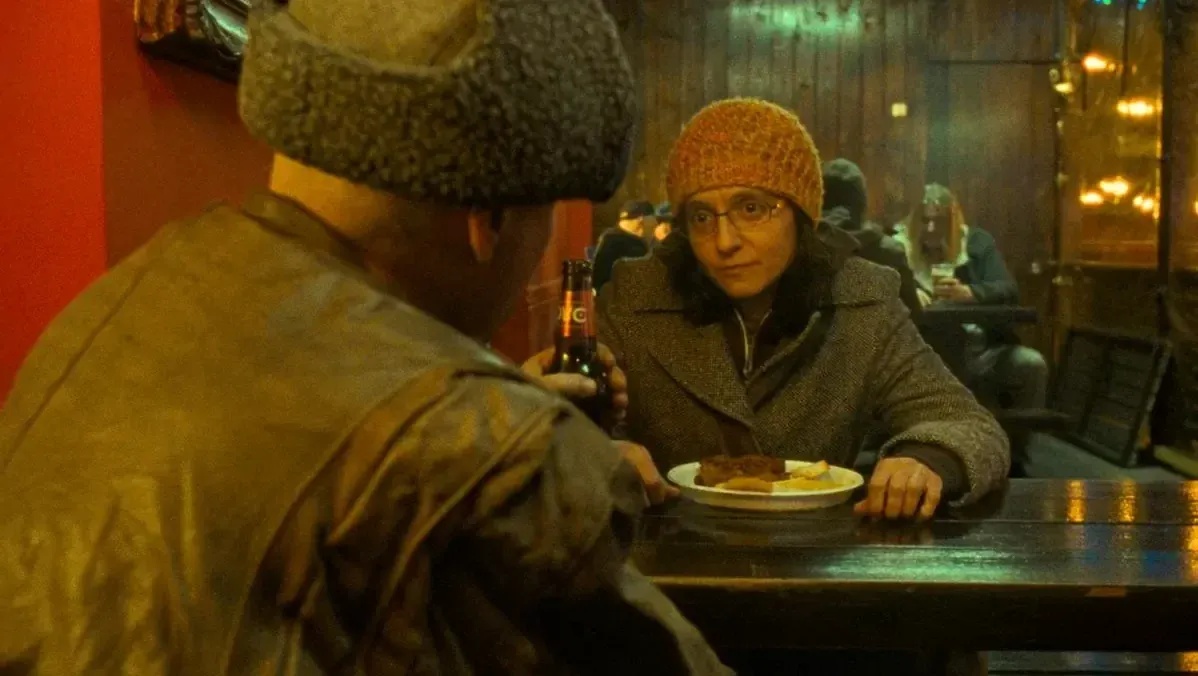
Banished yet paradoxically trapped within the apartment’s shell, she begins a grim audit of the local male population. Her subsequent sexual encounters are less about carnal desire and more a desperate form of alchemy, an attempt to transmute base flesh into an idealized form that resembles Boban by at least “one percent.” The plot pivots sharply with the introduction of Vera Pop, a local media personality and the rumored mistress of Boban.
Stela’s campaign of vitriolic Facebook messages, a modern form of prayer to a hostile god, yields an unexpected result. Instead of a restraining order, she gets a meeting. Vera, a magnificent creature of pure cynical opportunism, sees in Stela’s unhinged prose the glimmer of commercial potential. Their alliance is a perverse symbiosis.
Vera encourages Stela to write a book, pulling her into a chaotic orbit of dubious schemes, including market research for a line of hemp-based erotic novelties. Each attempt to climb out of her hole only digs it deeper.
Anatomy of a Social Carcass
Stela’s private chaos is a direct symptom of a national malaise. Mladenović uses her protagonist’s journey as a diagnostic tool to probe the diseased organs of post-communist society. The film is set against the specific backdrop of Romania’s recent EU entry, a moment pregnant with a potential that would soon prove hollow with the 2008 financial crisis.
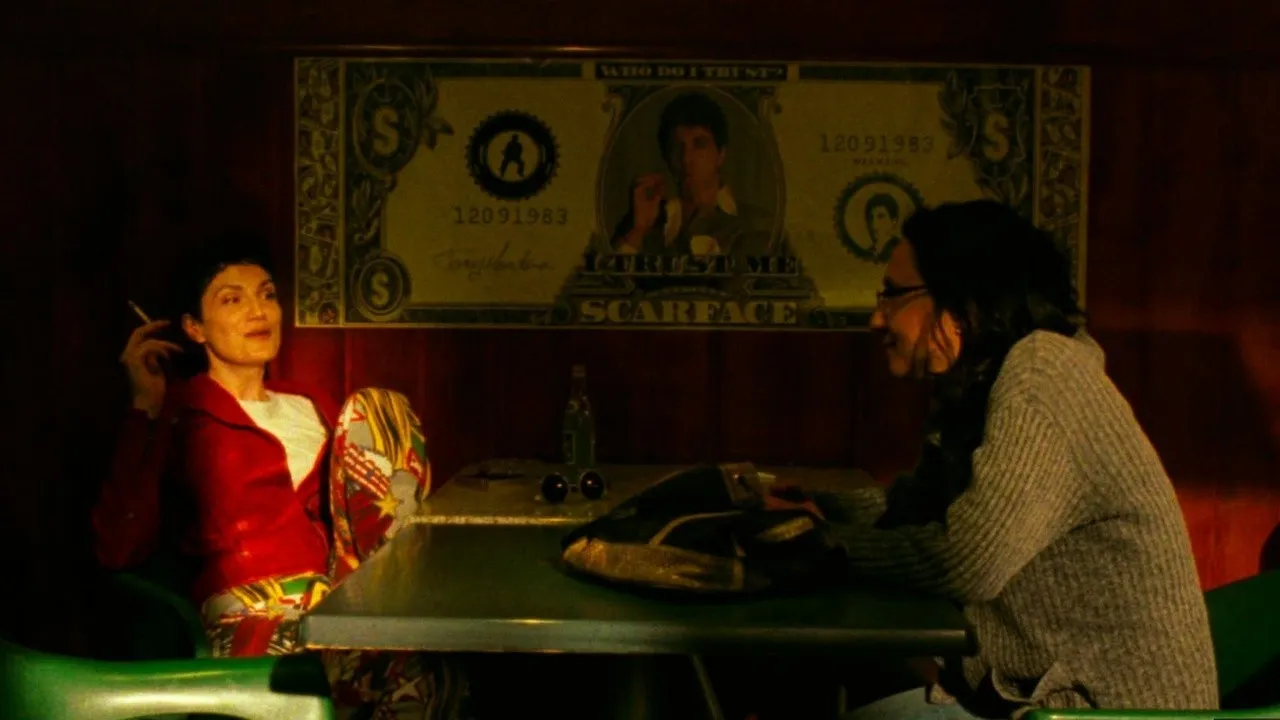
The satire cuts into this veneer of progress, revealing the rot underneath. Celebrity worship is presented as a secular religion for the spiritually bankrupt; Boban, the fading crooner, is an empty icon onto which a desperate populace projects its need for meaning. The film’s primary philosophical inquiry concerns desire itself, which it frames as a destructive, insatiable force.
Every character is propelled by a visceral craving for something more: for sex, for status, for love, for money. Their pursuits are uniformly clumsy and grimly funny. The frank depiction of class dynamics and sexism is woven into the film’s fabric, not presented as a detached lecture.
When a character speaks of the “picturesque chaos of the Balkans,” it is the film’s own moment of wry self-awareness. This is not a world aspiring to neat, Western European order but one that has made a strange peace with its own magnificent dysfunction.
The Aesthetics of Collapse
The film’s structural integrity is anchored by Katia Pascariu’s astounding performance. Her work as Stela is a masterclass in physical and emotional exposure, a complete stripping away of vanity to reveal the raw nerve of human need. She makes Stela’s predicament feel both profoundly strange and unnervingly familiar. The film treats her with a unique form of compassion, laughing with her as often as at her.
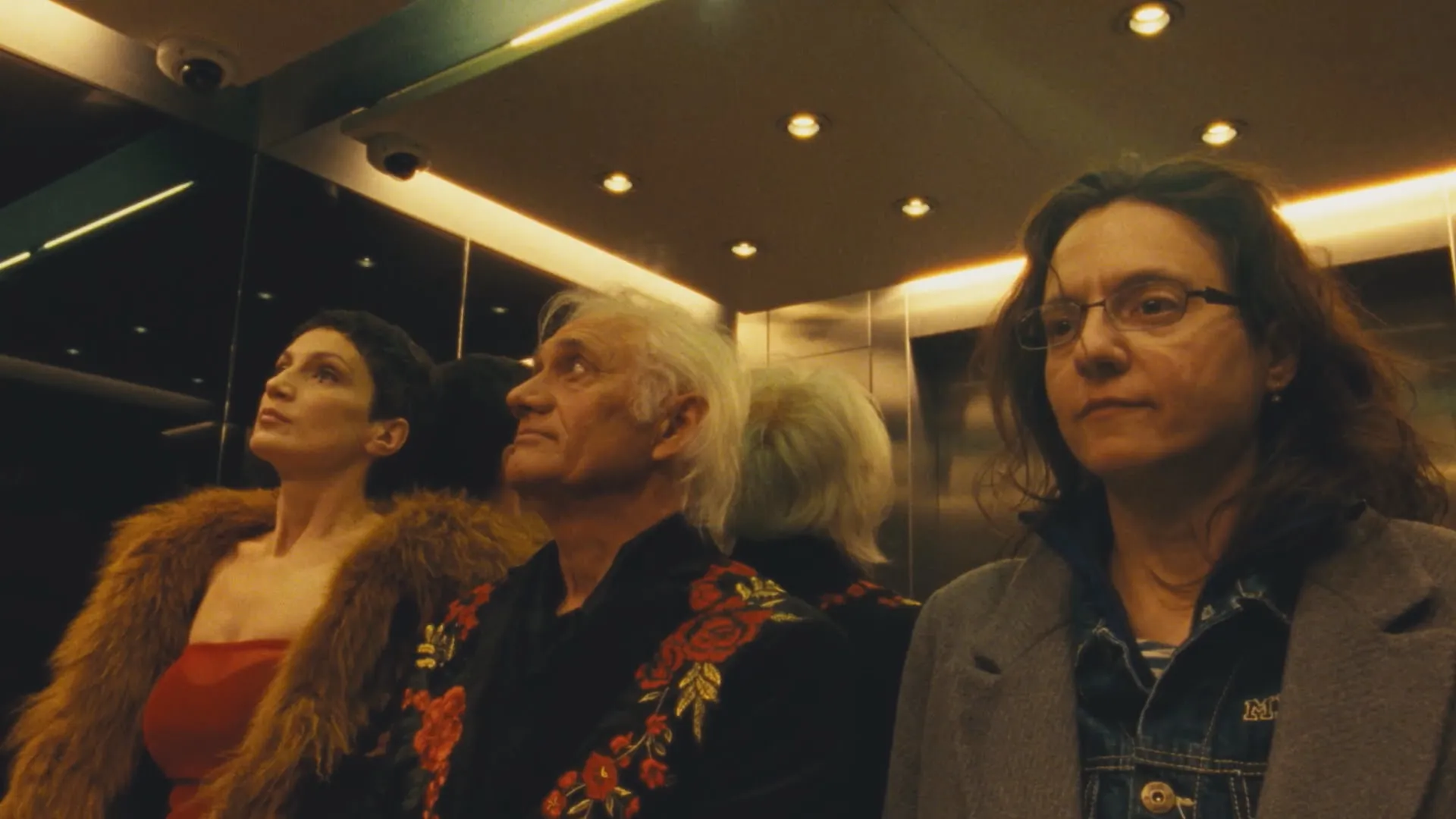
Director Ivana Mladenović’s visual style is a perfect match for the material, favoring a scrappy, unpolished aesthetic that feels like a conscious rejection of prestige filmmaking. This is not poverty porn; it is a visual language born from the world it depicts. Cinematographer Marius Panduru’s camera finds startling, sardonic compositions amid the domestic decay.
High-angle shots flatten Stela into a specimen under a microscope, while the unflattering, often harsh lighting has the quality of a forensic examination. The editing is jarring, with jump cuts that mirror Stela’s fractured mental state and distort the temporal flow of her misadventures. Daubed, crimson chapter headings appear on screen, imposing a mock-literary structure on a life that defiantly resists it. The provocative style is not a flourish; it is the only way to honestly render this particular vision of the world.
Sorella di Clausura is a 2025 romantic dark comedy film directed by Ivana Mladenović, a Romanian-Serbian-Italian-Spanish co-production. It premiered at the 78th Locarno Film Festival on August 13, 2025, and was nominated for the Golden Leopard. It was also shown at the Sarajevo Film Festival a week later.
Full Credits
Director: Ivana Mladenović
Writers: Ivana Mladenović, Adrian Schiop, Momir Milošević
Producers: Ada Solomon, Ivana Mladenović
Executive Producers: Diana Caravia, Marija Lero, Montse Pujol Solà
Cast: Katia Pascariu, Cendana Trifan, Miodrag Mladenović, Arnold Kelsch, Cătălin Dordea, Adrian Radu
Director of Photography (Cinematographer): Marius Panduru
Editors: Vanja Kovačević
Composer: Toni Cutrone, Andrei Dinescu
The Review
Sorella di Clausura
Sorella di Clausura is a brutally funny and unflinching portrait of obsession, functioning as both a sharp social satire and a strangely moving character study. Propelled by Katia Pascariu’s fearless performance and Ivana Mladenović’s deliberately abrasive direction, the film is a vital, chaotic, and unforgettable piece of Balkan cinema. It finds a peculiar grace in the grotesque, making it a challenging yet rewarding watch for those with a taste for the unconventional.
PROS
- A fearless and compelling lead performance from Katia Pascariu.
- Sharp, biting social and political satire.
- An unconventional and confident directorial style.
- A darkly humorous and unpredictable narrative.
CONS
- The intentionally abrasive style may alienate some viewers.
- Its chaotic plot can feel unstructured at times.
- The graphic content and bleak tone could be off-putting.