



























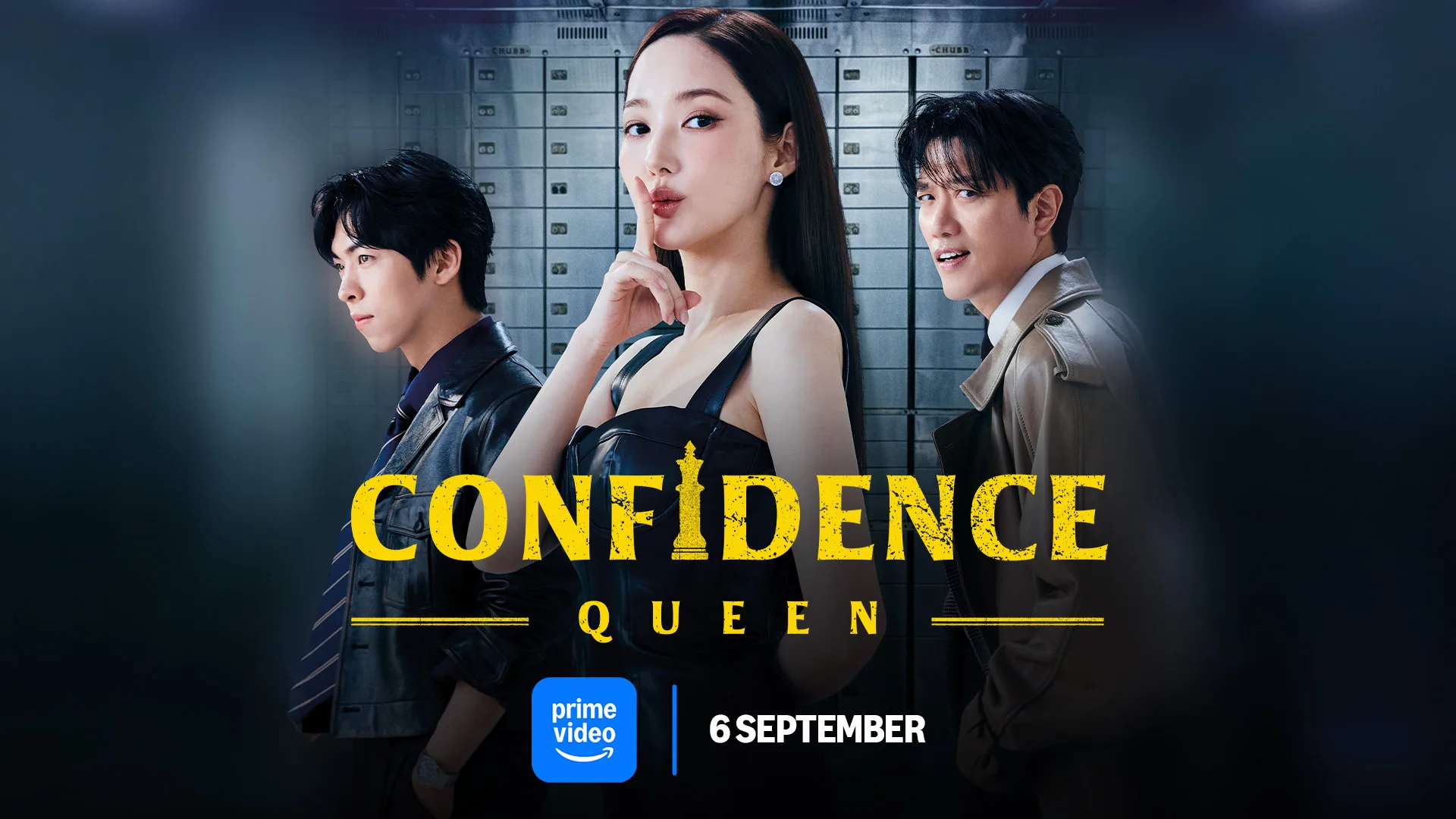

The Korean drama Confidence Queen arrives on streaming platforms as a timely parable for an age defined by profound economic disparity. It presents a team of high-stakes con artists whose mission is a direct response to a world where the wealthy and powerful operate beyond reproach. They do not steal for personal gain.
Instead, they enact a form of vigilante justice against society’s most corrupt figures. The crew’s leader is Yoon Yi-rang, a brilliant strategist who frames her elaborate schemes as a necessary “laundering” of the dirty deeds of the ruling class.
She is joined by James, a veteran master of disguise, and Gu-ho, a rookie whose good heart acts as the group’s anchor. In their world, deception becomes a necessary tool for restitution. Every meticulously planned heist is a piece of theatrical protest, signaling a series that packages its sharp moral indignation within the glossy container of an elaborate caper.
Performance as Protest
Confidence Queen adopts a brisk, high-energy narrative pace that feels perfectly calibrated for the streaming era. The story moves with a relentless momentum that mirrors the dizzying speed of modern news cycles, where one scandal quickly replaces another.
An episodic “con-of-the-week” structure is used to systematically dismantle different pillars of societal rot, offering viewers a satisfying, self-contained arc of retribution that is often absent in reality. This format provides a cathartic release, a fantasy of accountability in an era where consequences for the elite feel increasingly rare. The team first targets a fraudulent shaman, Baek-hwa, before escalating to Jeon Tae-soo, a ruthless loan shark hiding behind a philanthropic facade.
Each scheme is an act of performance art, a piece of protest theater designed for maximum impact. The takedown of Baek-hwa is a masterclass in this philosophy. The construction of an entire fake high-stakes casino serves as a potent metaphor for a financial system many perceive as a rigged game. The layers of deception, including a staged police raid and the final reveal of worthless counterfeit money, are not just for show; they are designed for public humiliation, ensuring the target’s reputation is as bankrupt as her wallet.
Also Read






The mission’s success is defined by the return of funds to her victims, cementing the team’s purpose as redistributive. The larger operation against Tae-soo raises the stakes and broadens the critique. Using a private jet as the stage for the con speaks directly to the global mobility of corrupt capital and the insulated world of the ultra-rich.
Moments like the deployment of a fake “money-sniffing” dog are satirical jabs at the often-performative nature of regulation and law enforcement. The show’s polished, hyper-stylized aesthetic, full of vibrant colors and quick cuts, is a hallmark of global streaming content. This visual language makes its potent social critique both accessible and intensely entertaining, wrapping a bitter pill in a sweet, stylish coating.
The Archetypes of Modern Rebellion
The central trio of Confidence Queen can be read as a collection of archetypes for a new form of social rebellion, each representing a different facet of a modern resistance movement. Yoon Yi-rang is the charismatic female mastermind, a figure whose intelligence and confidence pointedly subvert the male-dominated tropes of the heist genre.
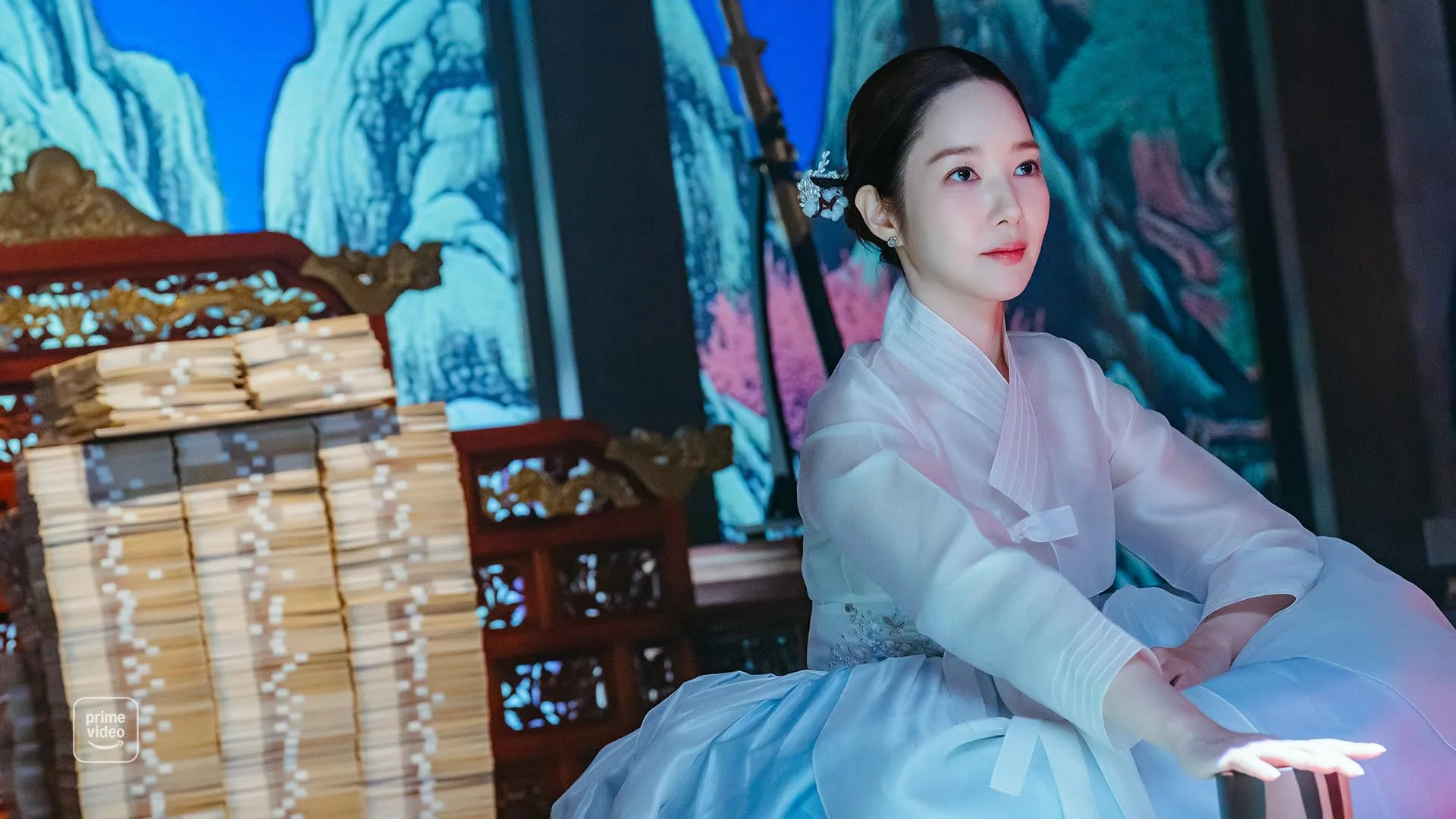
She is not a femme fatale or a sidekick; she is the architect. When she playfully calls herself a “geniopath,” she reclaims a label that might otherwise be used to diminish an ambitious, powerful woman. Park Min-young’s performance is key, conveying the rapid-fire calculations happening behind a disarmingly cheerful facade. She embodies a type of leadership that is strategic yet empathetic, a direct contrast to the brutish, top-down power of her targets.
Myung Gu-ho functions as the story’s conscience and an essential audience surrogate. His desire to escape the con life for a simple existence by the sea is a potent fantasy in a hyper-capitalist society that demands constant striving. His sincerity and moral hesitation ground the series, reminding viewers of the human cost of their dangerous work.
His eventual return to the team is not just an act of loyalty; it signifies a difficult truth that one cannot simply opt out of a corrupt system. His participation is an acknowledgment that neutrality is not an option. James, the seasoned veteran, represents the wisdom of an older generation repurposed for a modern fight. He is the master of appearances and practicalities, providing the tangible skills that make Yi-rang’s grand visions a reality.
The reveal that his brutal beating was staged is a powerful lesson in narrative control, showing how the team seizes the power to define their own reality. Their dynamic is a model of non-hierarchical collaboration, a small coalition where each member’s distinct talent is indispensable, standing in stark opposition to the authoritarian structures they aim to dismantle.
Comedy in the Face of Cruelty
The series demonstrates a remarkable command of tone, shifting between lighthearted absurdity and moments of serious threat. This tonal dexterity reflects a distinctly modern condition, one heavily influenced by online culture where memes about a global crisis can appear next to genuine reports of tragedy. The show’s structure mimics this disorienting but familiar reality.
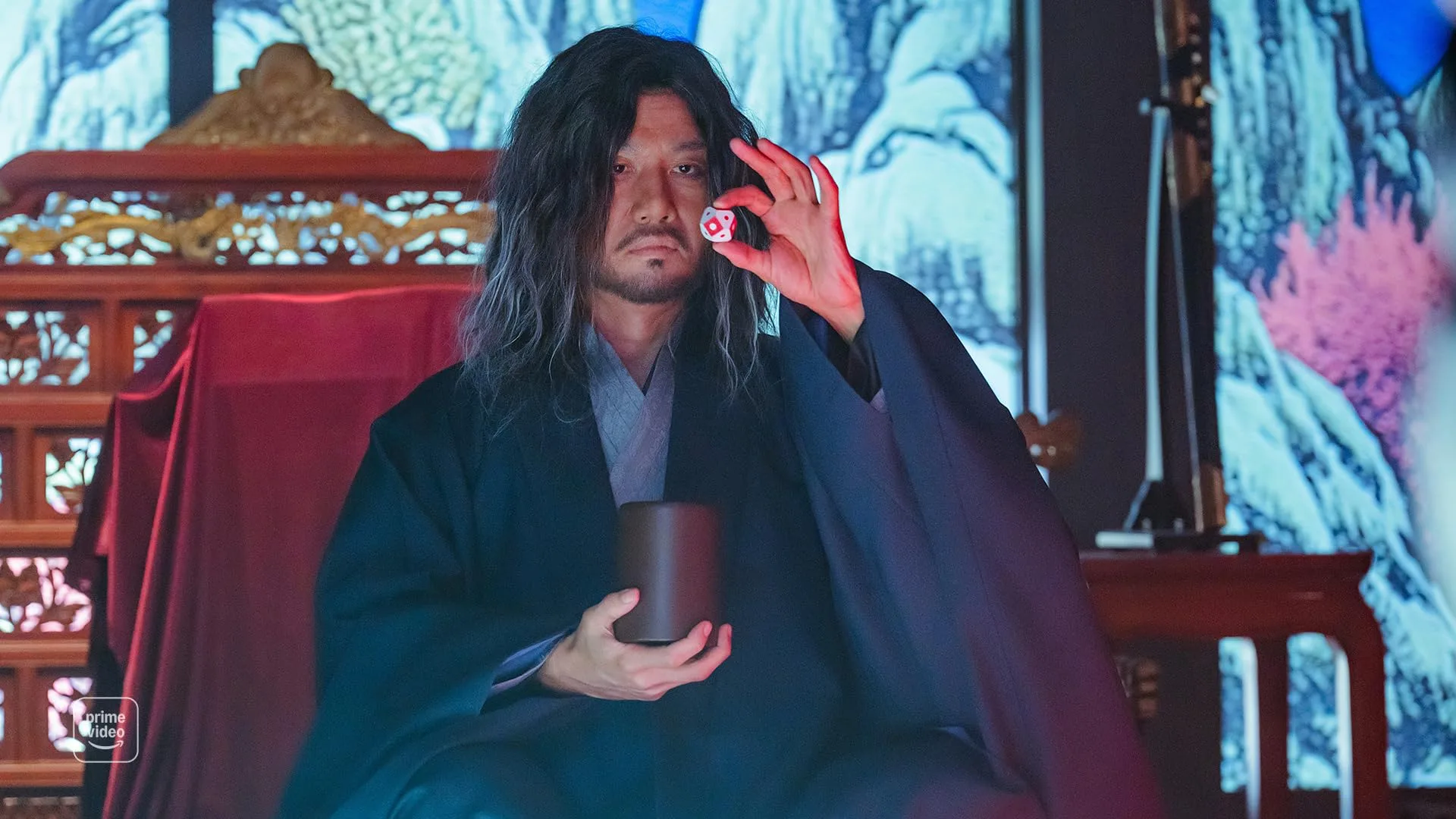
One moment, Yi-rang makes a ridiculously grand entrance by parachuting onto a beach to recruit a reluctant Gu-ho, a scene played for pure fantasy. The next, the show confronts the audience with the chilling violence of Jeon Tae-soo, a man who terrorizes a youth center and has his enemies beaten without a second thought. This sharp pivot from a playful game to a life-or-death struggle prevents the show from becoming a simple escapist fantasy, grounding its stylish antics in real-world stakes.
The antagonists are drawn with broad, almost satirical strokes, a choice that serves the show’s moral clarity. Tae-soo is a “dark godfather,” a figure of such unambiguous evil that the audience can root for his downfall without reservation. This approach can be seen as a form of hyperreality, where representations of greed and cruelty are amplified to cut through the noise of a saturated media landscape.
This makes his eventual defeat a more spectacular and cathartic event for viewers. A scene in a nightclub perfectly captures this tonal blend: the glamorous setting is abruptly punctured by raw menace when Tae-soo pulls a gun on Gu-ho. The sudden intrusion of brutality highlights the real danger lurking just beneath the show’s stylish surface, using humor and absurdity not to dilute the stakes, but to make the moments of genuine peril land with greater impact.
Personal Trauma as Political Catalyst
The show’s ethical framework is crystallized in Yi-rang’s philosophy of the “laundry bill.” This is more than a clever catchphrase; it is a direct rejection of trickle-down logic, proposing a model of “trickle-up” justice where wealth is actively reclaimed and redistributed. When Yi-rang secretly returns money to the shaman’s victims, she reframes a criminal act as one of social restitution.

This ethos positions the team as heroes operating in a moral gray zone, arguing that their illegal methods are a necessary response to a system that legally protects its worst actors. This is a potent political statement for a mainstream entertainment product, challenging viewers to consider where true morality lies.
The narrative deepens this premise by linking the team’s mission to Yi-rang’s personal history. The brief, cryptic flashbacks to a childhood filled with manipulative games played by masked figures suggest her crusade is fueled by a foundational trauma. This is a significant trend in contemporary television, which increasingly grounds large-scale social critiques in specific, personal experiences. The final reveal of her conspiracy board, with a young Gu-ho placed at its center, confirms that her mission is not random.
It is a calculated, long-term plan born from a grievance. This connection between individual suffering and a broader fight for justice elevates the series beyond simple procedural storytelling. It implies that systemic corruption is not an abstract force but a destructive machine that creates victims, and that those victims can, in turn, become powerful agents of change. The show thus sets a course to explore whether a single, personal quest for vengeance can transform into a full-scale movement.
Confidence Queen is a South Korean television series that premiered on September 6, 2025. It is a remake of the Japanese drama The Confidence Man JP and follows a trio of con artists who work to take down corrupt villains. The series airs on TV Chosun and is available for streaming exclusively on Prime Video globally, with new episodes releasing every Saturday and Sunday.
Full Credits
Director: Nam Ki-hoon
Writers: Hong Seung-hyun, Kim Da-hye
Producers and Executive Producers: TME Group
Cast: Park Min-young, Park Hee-soon, Joo Jong-hyuk, Hyun Bong-sik, Jung Woong-in, Song Ji-hyo, Lee Bong-ryun, Lee Yi-kyung, Rowoon
The Review
Confidence Queen
Confidence Queen repurposes the heist genre as a vessel for sharp social commentary, delivering a stylish and intelligent critique of wealth inequality. With a charismatic trio of modern-day Robin Hoods and a narrative that expertly balances high-gloss entertainment with genuine stakes, the series is a cathartic and timely fantasy of accountability. It's a slick, thoughtfully constructed drama that uses performance as protest, making it a standout in the global streaming landscape.
PROS
- Intelligent script with relevant social commentary on economic justice.
- Highly stylized visuals and a fast-paced, engaging narrative.
- Strong chemistry between the three lead actors.
- Effective tonal blend of high-stakes tension and witty comedy.
- An underlying personal mystery that adds depth to the main plot.
CONS
- Antagonists are intentionally one-dimensional, which may not appeal to viewers seeking moral nuance.
- The elaborate schemes often require a significant suspension of disbelief.
- Its rapid pace can occasionally move past moments that could benefit from deeper emotional exploration.