









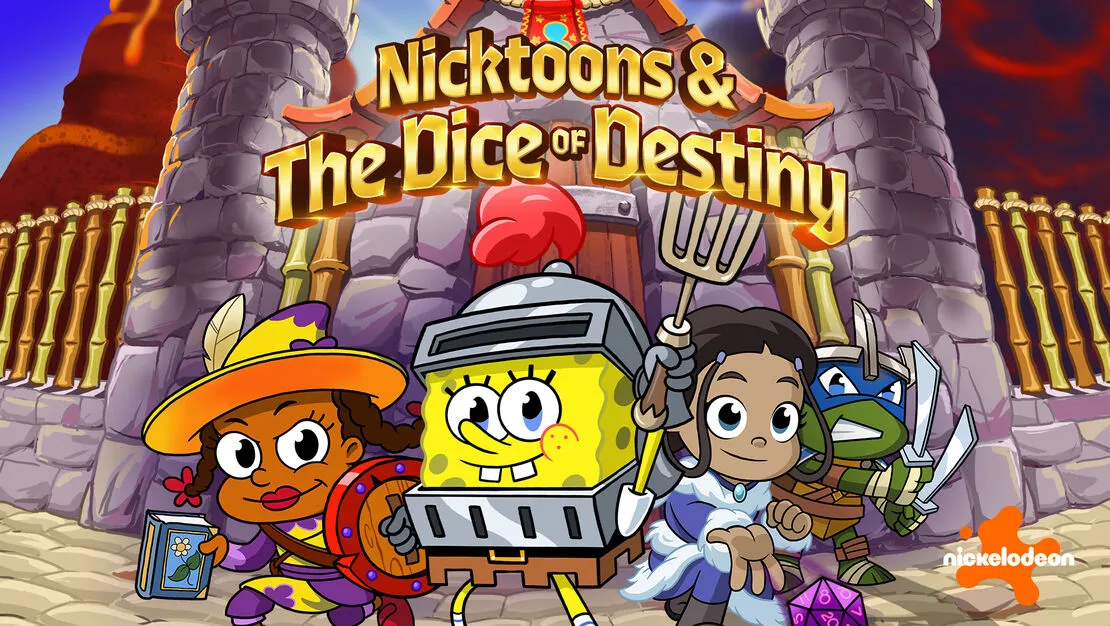

Nicktoons & The Dice of Destiny arrives as the first significant Nickelodeon crossover action game in recent memory, developed by Petit Fabrik and Fair Play Labs and published by GameMill. The premise takes a creative swing: Timmy Turner from Fairly OddParents wishes to experience his favorite tabletop RPG in real life, and his fairy godparents grant it with predictable chaos.
Magical dice scatter across dimensions, yanking characters from eight different Nickelodeon shows and transforming their worlds into fantasy realms. SpongeBob becomes a knight, Timmy a wizard, Sandy a barbarian.
The setup reimagines familiar faces from the 1990s through 2010s as RPG archetypes, blending shows like Avatar: The Last Airbender, Teenage Mutant Ninja Turtles, Rugrats, My Life as a Teenage Robot, and Jimmy Neutron into one cohesive adventure. This real-time action RPG with beat-em-up combat centers around The Tangle, a hub world where players pick up quests, switch characters, and watch the world gradually populate with NPCs from across Nickelodeon’s history.
Combat Mechanics and Character Systems
The gameplay follows a straightforward beat-em-up structure through linear, isometric stages. Players string together combos, block incoming attacks, dodge roll away from danger, and unleash special abilities tied to each character’s unique identity.
Each hero has four different attacks mapped to face and shoulder buttons, creating variety in how you approach encounters. The special moves stand out as the highlight: Jimmy Neutron deploys multiple cannons for overwhelming firepower, Jenny Wakeman from My Life as a Teenage Robot unleashes her full robotic arsenal, and each character’s abilities reflect their show’s personality and mechanics.
The problem becomes apparent during extended play sessions. Basic attacks handle most standard enemies efficiently, which leads to repetitive button-mashing through waves of fodder. The combat system feels serviceable when you remember to incorporate special moves, but many encounters devolve into autopilot territory.
Then the game throws a curveball in the latter half with boss fights that spike dramatically in difficulty. Battles against villains like Plankton, Azula, and Karai suddenly demand attention to patterns and positioning, except those patterns often feel random rather than learnable. These bosses transform from pushovers into surprisingly challenging encounters that force experimentation with different characters.
The roster includes nine playable characters spanning Nickelodeon’s catalog, each filling distinct RPG roles. SpongeBob serves as the knight with balanced melee and ranged options, Timmy brings magical attacks as a wizard, Sandy bulldozes through enemies as a barbarian, Leonardo fulfills the samurai role, and others fill out rogue and healer archetypes.
The catch is that you can only select one character per level, eliminating any party dynamics or character banter during missions. This limitation stings because hearing these personalities bounce dialogue off each other would have elevated the experience significantly.
Character choice largely comes down to personal preference since the straightforward design rarely demands specific approaches. Ranged characters like Timmy offer tactical advantages, letting you target multiple enemies from safety, but melee fighters work just as well for most content. The bigger issue emerges with the progression system. Experience points unlock new abilities and strengthen your chosen hero, while loot drops include weapons, armor, talismans, and consumables. Here’s where the design stumbles: gear is character-specific, meaning every new hero starts underpowered until you either grind earlier levels for equipment or purchase upgrades from shops in The Tangle.
The loot system itself feels unnecessarily complex for what this game aims to accomplish. RNG determines what drops from chests, challenge pillars, and boss defeats, with minimal stat differences between items making the whole affair feel inconsequential.
Money drops constantly throughout levels, yet it serves little purpose since healing potions also drop liberally, rendering purchases mostly pointless except for buying the most powerful weapons. The game clearly wants players to engage with this RPG loop of fight, loot, upgrade, and return, but the execution lacks the depth to make it compelling. For a title aimed at younger audiences and nostalgic adults seeking comfort food gaming, the loot complexity adds friction without meaningful reward.
Visual Design and Technical Stumbles
The Tangle functions as your central hub, gradually populating with NPCs who dish out sidequests as you progress. Each area beyond the hub represents a Nick world filtered through a fantasy lens: Bikini Bottom transforms into a medieval town complete with castle architecture, the Fire Nation maintains its distinctive aesthetic while embracing dungeon crawler vibes, and Amity Park becomes a haunted quest location. The transformation works conceptually, allowing different shows to coexist in one setting without feeling forced.

Level design keeps things brief, with most stages lasting only a few minutes. This structure suits quick play sessions perfectly, letting you knock out a level before school or between other activities. Linearity dominates the design philosophy, though occasional side paths reward exploration with treasure or challenge areas where you face specific combat trials.
The final world breaks from this pattern, increasing both length and difficulty, but these variations arrive too late to change the experience. After several hours, the medieval aesthetic grows stale. The fantasy theme fits the tabletop RPG concept, yet it causes every area to blend together with only light flourishes distinguishing one location from another. Portal puzzles and winding paths appear rarely enough to feel like exceptions rather than design pillars.
The visual presentation splits between colorful 3D environments and character models that range from charming to problematic. Seeing these iconic characters dressed in RPG class outfits delivers exactly the kind of novelty you’d hope for from this premise. The art style blends different Nicktoons reasonably well, creating cohesion across disparate sources.
However, character models appear desaturated compared to their show counterparts. Katara looks noticeably pale, lacking the warm skin tones that define her appearance in Avatar. Environments maintain more vibrant colors than the characters themselves, creating an odd imbalance where the world feels more alive than the heroes exploring it.
Technical issues compound the visual inconsistencies. Testing on Switch 1 hardware running on Switch 2 revealed performance problems that detract from the experience. Cutscenes glitch frequently, with frames jumping back and forth and overlaying on each other in ways that hurt to watch. Characters occasionally get stuck while moving through levels, forcing resets or awkward workarounds. The mixing of 2D sprites and 3D environments creates an uncanny valley effect where characters appear tilted or improperly grounded on surfaces. Special effects sometimes look like PNG overlays floating above the action rather than integrated visual elements. These problems aren’t game-breaking, but they chip away at immersion and polish.
The voice acting provides one of the game’s strongest elements. All dialogue receives full voice treatment, mixing original actors like Tom Kenny as SpongeBob and Cree Summer as Susie from Rugrats with soundalikes filling gaps in the cast. The performances capture character personalities authentically, which matters tremendously when so much of the appeal hinges on nostalgia and familiarity.
Hearing Carl Wheezer or other side characters appear voiced by their original actors adds legitimacy to the celebration of Nickelodeon history. Some performances could use more energy, and certain soundalikes don’t quite nail their targets, but the effort shows respect for the source material.
Dialogue leans heavily into callbacks, referencing classic episodes, movies, and even the old Nicktoons Unite games directly. The game wears its spiritual connection to those PS2-era crossovers proudly, acknowledging that lineage through in-universe jokes and nods. References span both vintage and modern episodes, attempting to satisfy multiple generations of Nick fans simultaneously.
Occasionally, this approach backfires when internet meme references get shoehorned into conversations, creating jarring tonal shifts that break immersion. The story itself remains straightforward and aimed squarely at younger audiences, featuring humor drawn from the various shows without attempting narrative depth. You can follow along easily, and the genuine affection for these properties shines through even when the writing doesn’t reach great heights.
Cooperative Play and Lasting Value
Local co-op accommodates up to four players sharing one screen, tackling levels and bosses together in the classic couch multiplayer tradition. The absence of online multiplayer stands out as a puzzling omission for a 2025 release, especially when many families and friend groups no longer live in the same physical space.
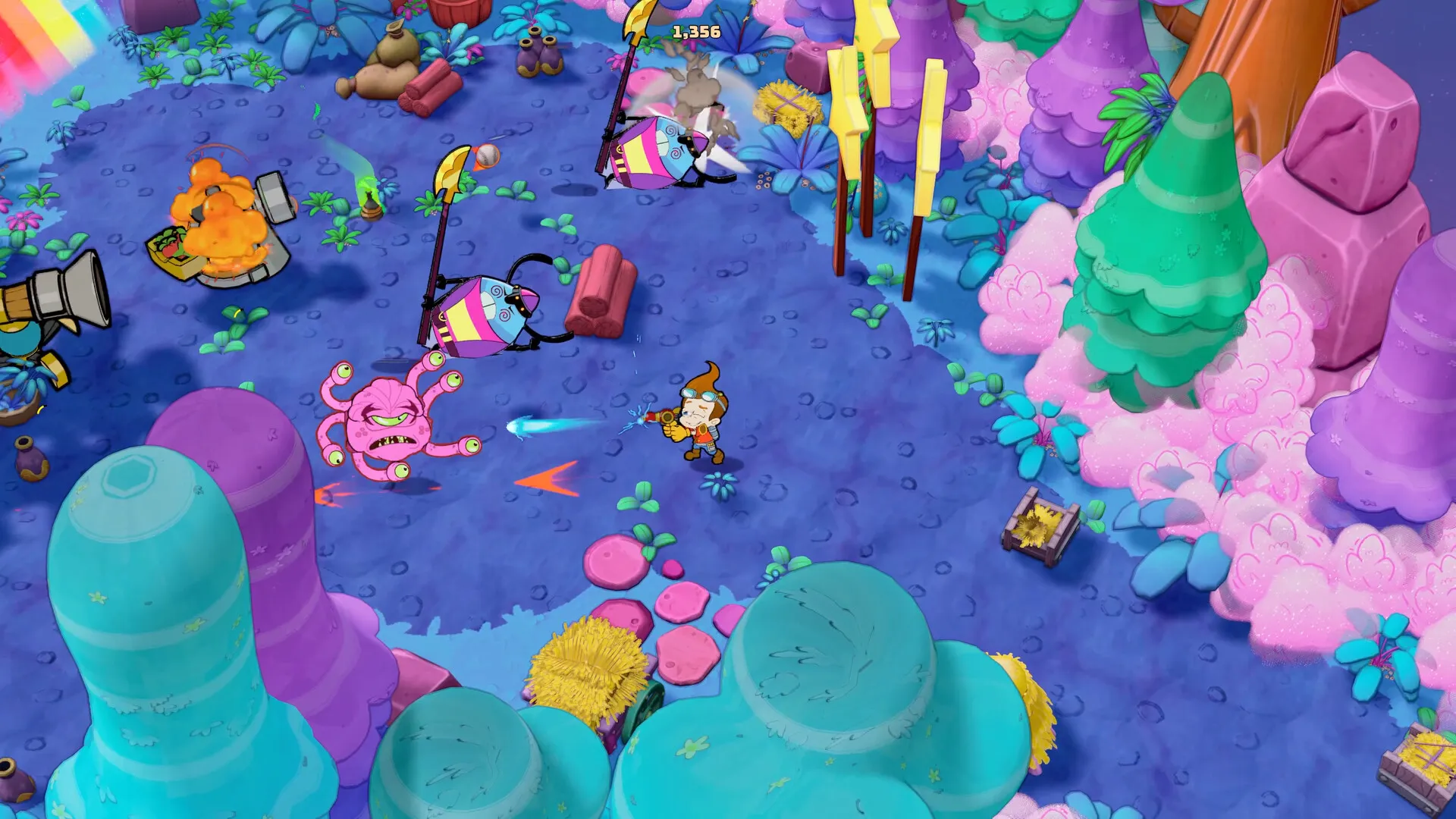
That said, the local focus makes sense for the target demographic. This game thrives when you hand a controller to your kid, younger sibling, or friend and bash through stages together, shouting about who stole the health pickup or coordinating special attacks against tough bosses. For families seeking cooperative experiences that bridge age gaps, this design choice works despite the missed opportunity for broader accessibility.
Side content arrives through NPCs scattered around The Tangle. These characters offer quests that typically involve replaying earlier stages with specific objectives: find the Crimson Chin’s lost comic books, gather herbs so Sokka can brew potions, defeat certain enemy types, or locate hidden items. The tasks themselves break no new ground in quest design, but they succeed as fun diversions accompanied by banter between playable characters and quest givers. These interactions provide better incentive for replaying levels than the loot system ever manages, injecting personality into what would otherwise feel like busy work.
Replayability concerns loom once you finish the campaign. The game lacks randomized loot or deep skill trees that would encourage multiple playthroughs. Your motivation to return depends heavily on how distinct each character feels and whether higher difficulties provide enough challenge to justify the time investment. For players seeking long-term engagement, Dice of Destiny comes up short. The experience feels designed for a single playthrough with your favorite character, maybe a second run in co-op with family or friends, but not much beyond that.
This game succeeds where many licensed titles fail by taking its premise seriously. The developers reimagined beloved characters in a fresh context rather than recycling familiar settings and hoping nostalgia carries the weight. The authentic voice work and character-appropriate special abilities demonstrate respect for the source material that elevates the experience beyond cash-grab territory. You can feel the genuine affection for these shows in how abilities reference deep cuts from various episodes and how NPCs get moments to shine.
The limitations remain impossible to ignore. Combat grows repetitive outside of special move usage. Level design stays basic throughout most of the runtime. Technical problems on Switch hardware hurt the presentation. The loot system adds unnecessary complexity without meaningful depth. Missing online play feels like an oversight. The difficulty imbalance creates inconsistent pacing that struggles to find its rhythm.
Younger players will find the experience approachable and entertaining, particularly if they love these characters. Nostalgic adults might appreciate how the game treats these childhood icons while wishing the gameplay offered more substance. Families looking for cooperative adventures will extract value from couch co-op sessions. Hardcore RPG enthusiasts should look elsewhere since this lacks the mechanical depth and polish that genre demands.
Nicktoons & The Dice of Destiny works best as a nostalgic trip for parents playing alongside their kids or for younger audiences who adore these characters. If you’re seeking deep RPG mechanics or polished gameplay experiences, temper your expectations significantly. The game shows effort and charm, but execution remains uneven across the board. It stands as a decent licensed game that respects its sources while delivering a functional, if unremarkable, action RPG experience. This is a loving tribute to Nickelodeon’s legacy that never quite escapes the shadow of its own basic design choices and technical shortcomings.
The Review
Nicktoons & The Dice of Destiny
Nicktoons & The Dice of Destiny delivers authentic character portrayals and genuine affection for Nickelodeon's history, making it a charming tribute for fans. The fantasy RPG premise shows creativity, and the voice acting captures these beloved personalities well. However, repetitive combat, basic level design, technical glitches, and an unnecessarily complex loot system hold it back from greatness. The difficulty spikes feel random, and missing online play limits accessibility. Young audiences and families seeking couch co-op fun will enjoy this nostalgic adventure, but those wanting polished RPG depth should look elsewhere.
PROS
- Authentic voice acting with original actors
- Creative fantasy reimagining of Nick characters
- Character-specific special abilities feel personalized
- Perfect for family co-op sessions
- Short levels suit quick play sessions
CONS
- Repetitive button-mashing combat
- Technical issues and visual glitches
- Unnecessary loot complexity
- No online multiplayer
- Difficulty spikes feel unbalanced
- Levels become visually repetitive