



























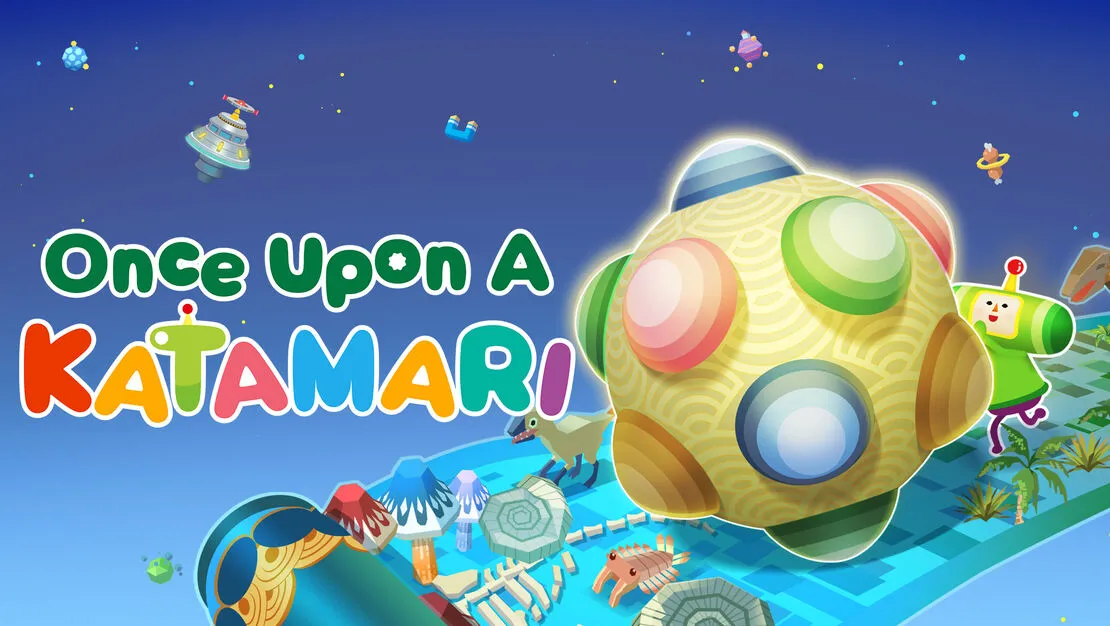

Once Upon a Katamari returns with the series’ energetic spark intact. The premise stays gloriously absurd: a typically self-absorbed mistake by the King of All Cosmos, who destroys the stars with a powerful, carelessly juggled scroll, sends his diminutive son, The Prince, back to work. The mission is simple and gleeful. Travel to Earth and roll up everything in sight.
This action-puzzle format asks the player to steer a katamari to absorb any object smaller than itself, creating a satisfying swell in scale from matchstick to city devourer. The presentation radiates charm, with a lo-fi-meets-4K psychedelic look and an unflaggingly whimsical sense of humor. The familiar joyful, frantic energy remains, and a time-travel theme supplies a fresh stage for the core loop.
Roll Mechanics: Precision in Clumsiness
Control sits at the center of the design. Satisfaction comes from mastering deliberate awkwardness. The ball demands constant input from both analog sticks, and the scheme leans into clunkiness and chaos. That choice turns every clean thread through a tight alley or dense field of trinkets into a small triumph. The loop clicks with arcade clarity.
Players scan bright, low-poly spaces, read object sizes at a glance, and prioritize targets that will stick while avoiding those that knock the katamari back and waste precious seconds. The system plays like a rapid assessment puzzle shaped by physics. As scale increases, the world reconfigures. The Prince can swing back through earlier spaces to claim obstacles that previously blocked the path.
This release layers in restrained updates. A clearer score readout improves transparency for newcomers. A small bump in fine-control responsiveness at tiny sizes stands out. The series once favored looser handling, and the tweak sharpens the sensation of growth when the ball becomes unruly at giant scale. Freebies introduce short, tactical tools. A magnet, a stopwatch, sonar, and rockets give quick, situational advantages. Rockets, for example, help cut through wind storms to snag a few tricky items. These tools add light strategy without rewriting the roll.
Time Travel and Level Design: A Thematic Leap
Time travel frames the campaign through The Prince’s ship, the S.S. Prince, and opens nine distinct historical eras. The device suits Katamari. It justifies new object sets, locations, and mission rules, and it gives each run a distinct texture. The approach scales up the series’ playkit with a tidy narrative hook.
Also Read





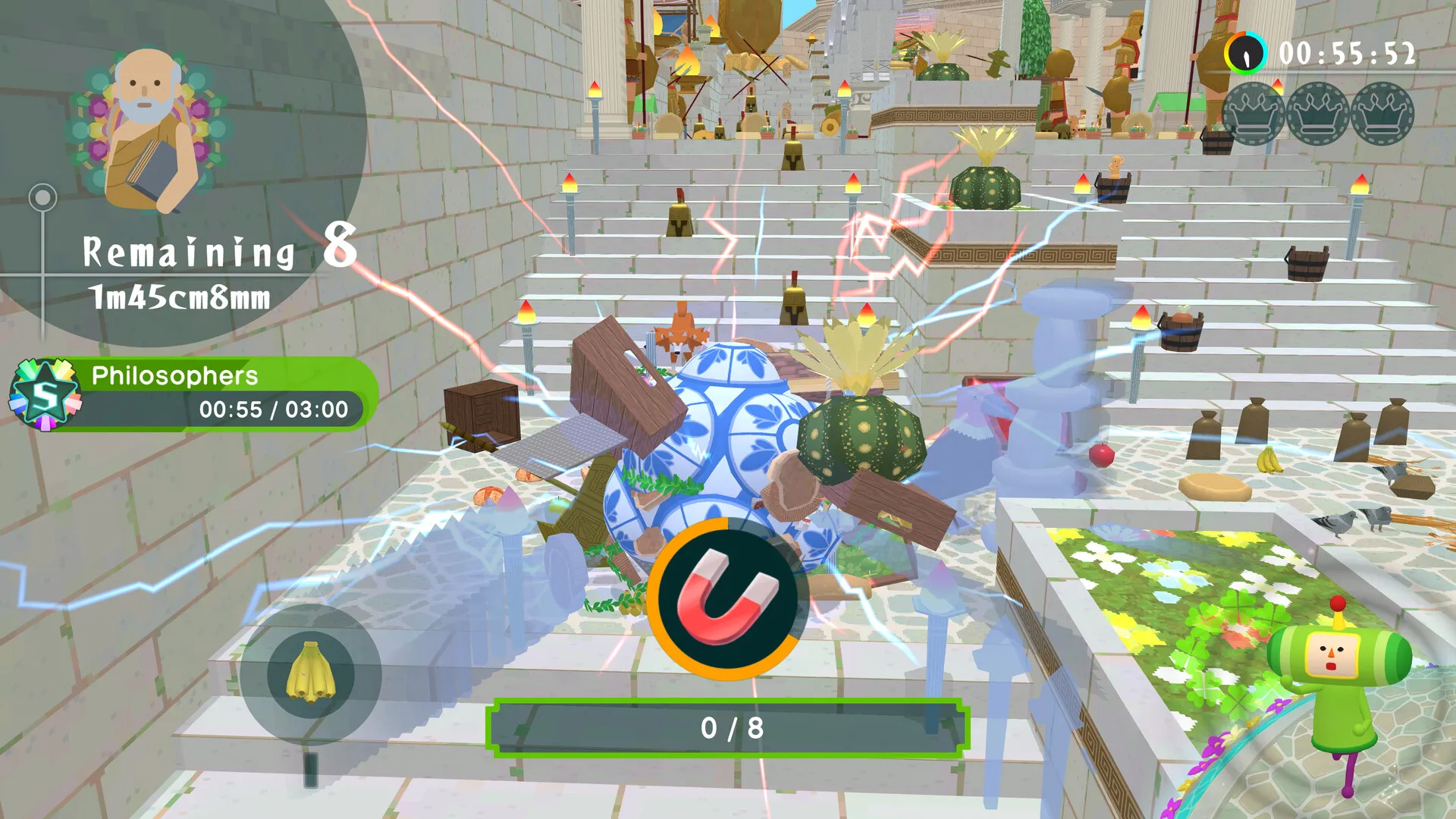
Historical backdrops fuel inventive set pieces that push past simple size targets. The game shines in these sequences. The Philosopher Hunt in Ancient Greece asks you to collect specific thinkers, and their famous quotes briefly fill the screen when you roll them up, a clean alignment of idea and mechanic.
The Night Parade of 100 Demons, or hyakki yako, plays out in darkness and asks The Prince to gather eerie blue lights to light the map. Levels that stick to a basic reach this size in eight minutes goal feel plain after the high points.
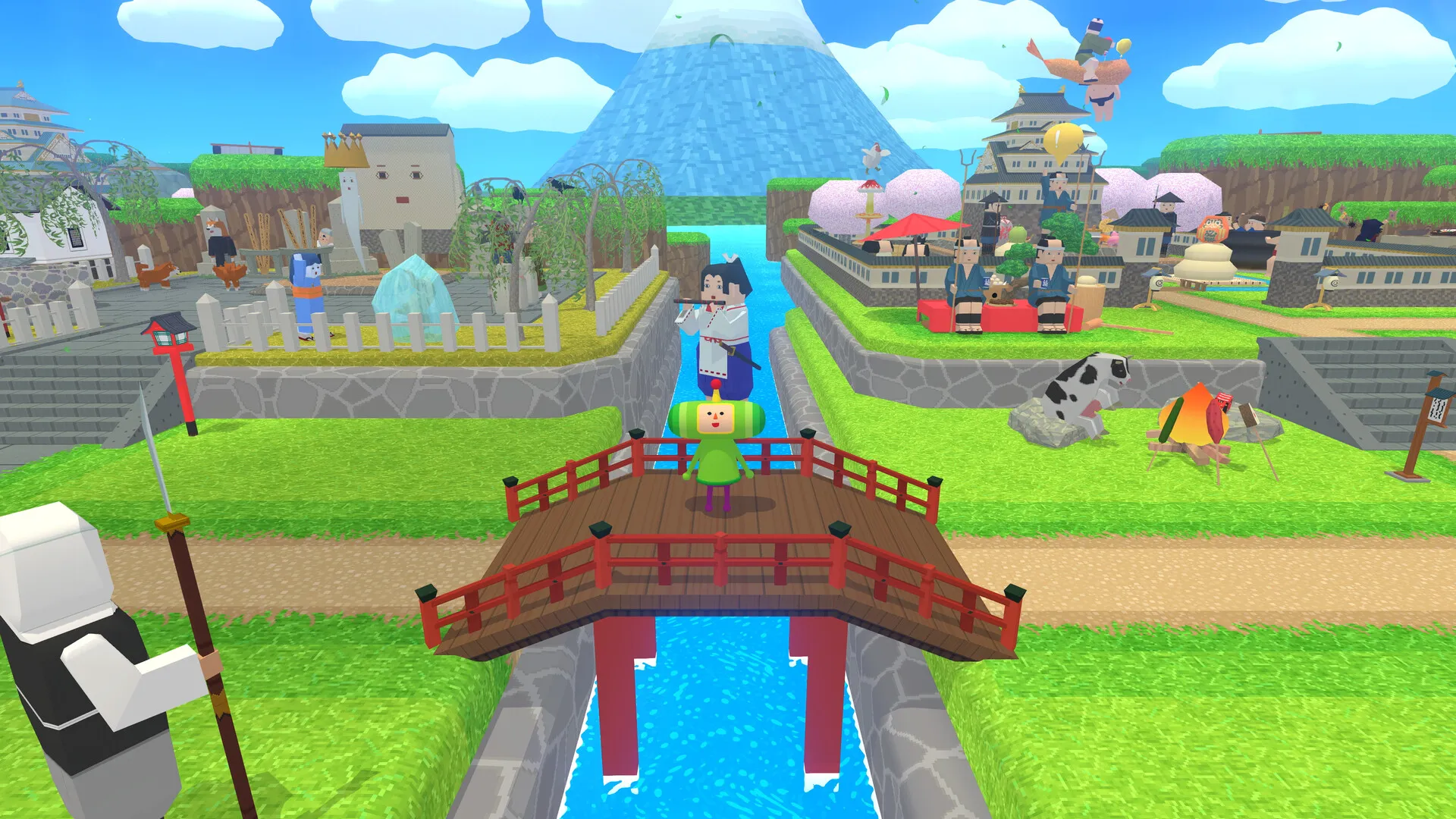
The arrangement of content tilts toward Edo Japan, which carries a noticeably larger share of stages than the other eras. The S.S. Prince serves as an overworld hub that functions like a main menu. Players select stages there, manage found curios, and customize The Prince and his cousins.
The Heart of the Cosmos: Humor and Narrative
Humor and framing carry the identity of the game. The King of All Cosmos remains a knockout creation, flamboyant, self-impressed, and benevolent, punctuated by a sassy, record-scratch delivery. His monologues land laughs while setting up each level’s objective with crisp comedic writing and localization. The tone stays playful without tipping into loud self-awareness.
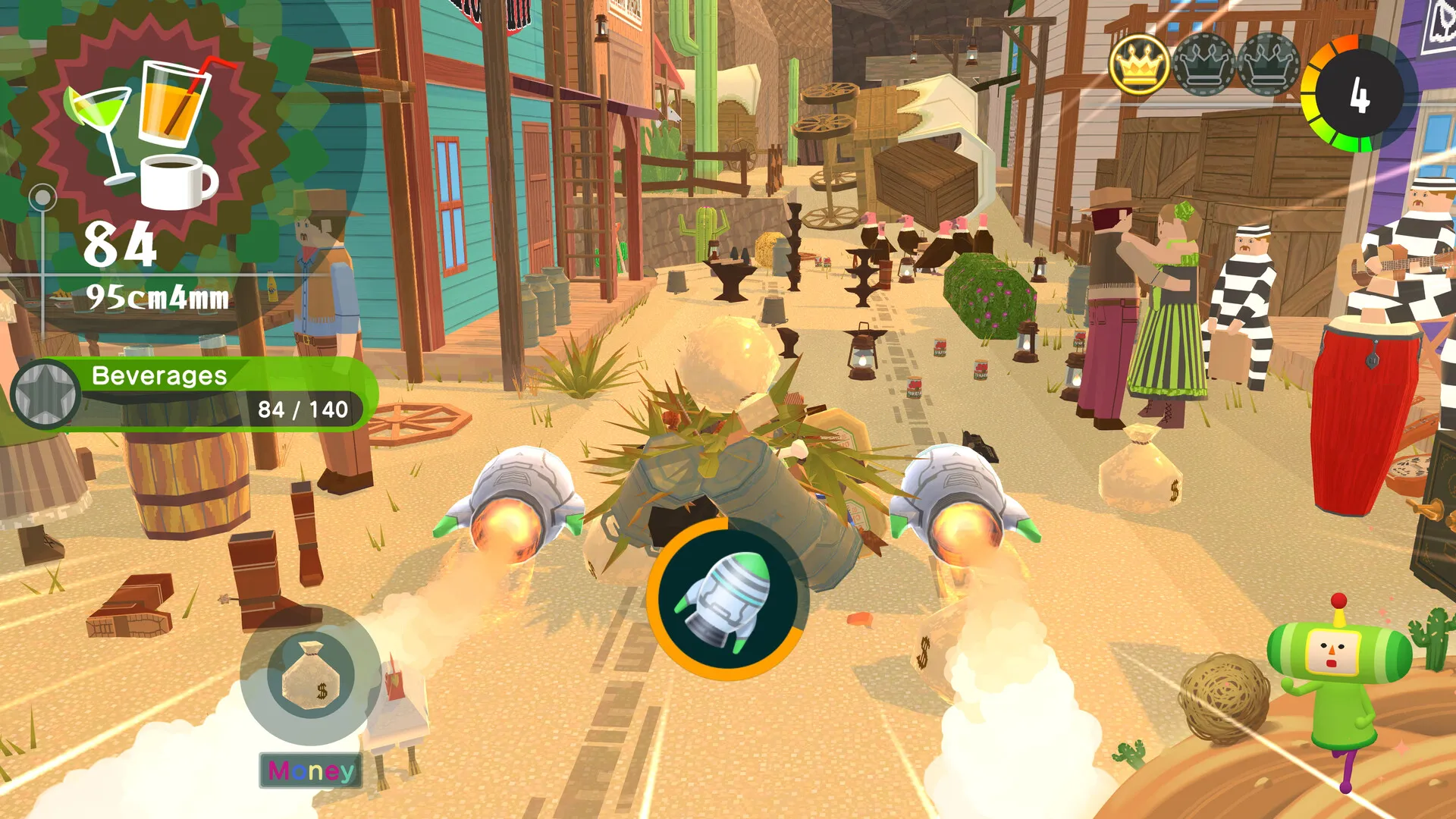
The framing of The Prince cleaning up the King’s endless mistakes across time stays tight, punctuated by brief, funny cinematics, such as the King snagging a giant crab. Gags live inside the levels as well. The low-poly dioramas invite Where’s Waldo-style scanning, packed with staged figures and sly anachronisms, like a cow warming its hooves beside a human campfire. Object placement serves mechanical flow or punchline. Cowboys chase tumbleweeds in loops. Soy sauce bottles line up like pins for a rapid, rhythmic pick-up run.
Auditory Delights and Sonic Legacy
Sound design grabs attention immediately. A maximalist field of effects answers the roll’s calming hum with exuberance. Items latch onto the katamari with a crisp zhoop. Certain objects add signature noises, like a wailing cat, so the ball grows into a chaotic chorus.
The soundtrack sits comfortably beside the series’ high points and works as a strong album on its own. It draws from Shibuya-kei J-Pop spirit and bounces across styles, from kinetic techno-rap to funk-jazz-fusion. The return of the series’ subtle, memorable melodic riff ties the new set to the franchise’s history. The Music Selection feature opens access to nearly every track from the past 21 years.
Players can build custom playlists or loop a single song across any level. Organization hiccups exist, including odd clumping of games into broad eras, and shuffle can restart a track when a new stage loads. The sheer depth of the library outweighs those quirks.
Longevity and Competitive Chaos
Solo players get solid volume. A first pass through the main stages lands around the 10-hour mark. Collectibles feed replay. Crowns, three hidden per level, Cousins, which expand the playable roster, and Gifts, which add customization, keep finished stages worth revisiting. Hitting set totals of Crowns or Cousins unlocks entirely new stages, so hunting them fuels clear progression.
KatamariBall reshapes multiplayer. The mode abandons the simple biggest ball wins target and pivots to a risk-reward loop built on banking. You collect items, then deposit them in a UFO to turn them into points. This structure gives the power-ups sharper purpose.
The match ends with a Mario Party-style bonus tally that hands out extra points for behaviors like frequent power-up use or rolling up rivals. The finale adds swing and surprise, and the format gives multiplayer more bite than earlier offerings.
The Review
Once Upon a Katamari
Once Upon a Katamari successfully refines a beloved formula. The time-travel conceit unlocks a wealth of inventive, thematic stages that beautifully integrate the game's absurd charm with its mechanical loop. While some basic levels feel less exciting next to the brilliant set pieces, the experience is bolstered by a stellar, diverse soundtrack and significant replay value through collectibles and an engaging multiplayer mode. It is a triumphant, hilarious, and visually dazzling return for The Prince, marking the series' best entry in years.
PROS
- The core two-stick rolling action is deeply satisfying and consistently rewarding.
- Masterclass comedic writing and localization elevates the experience.
- The soundtrack is stellar, diverse, and offers comprehensive music selection features.
- Inventive, set-piece level designs brilliantly utilize the time-travel themes.
- Excellent replayability features, including hidden Crowns and collectible Cousins.
- The KatamariBall PvP mode is a substantial and engaging multiplayer addition.
CONS
- Level distribution across the nine eras is notably lopsided, focusing heavily on Edo Japan.
- Basic "get big" levels feel simplistic compared to the highly thematic missions.
- New Freebie power-ups are only supplemental, offering little mechanical revolution.