
























![Kingdom Hearts Collection [I-III] Review](https://gazettely.com/wp-content/uploads/2026/10/Kingdom-Hearts-Collection-I-III-1-360x180.webp "Kingdom Hearts Collection [I-III] Review: KHII Holds Steady as Newer Entries Fluctuate 37")



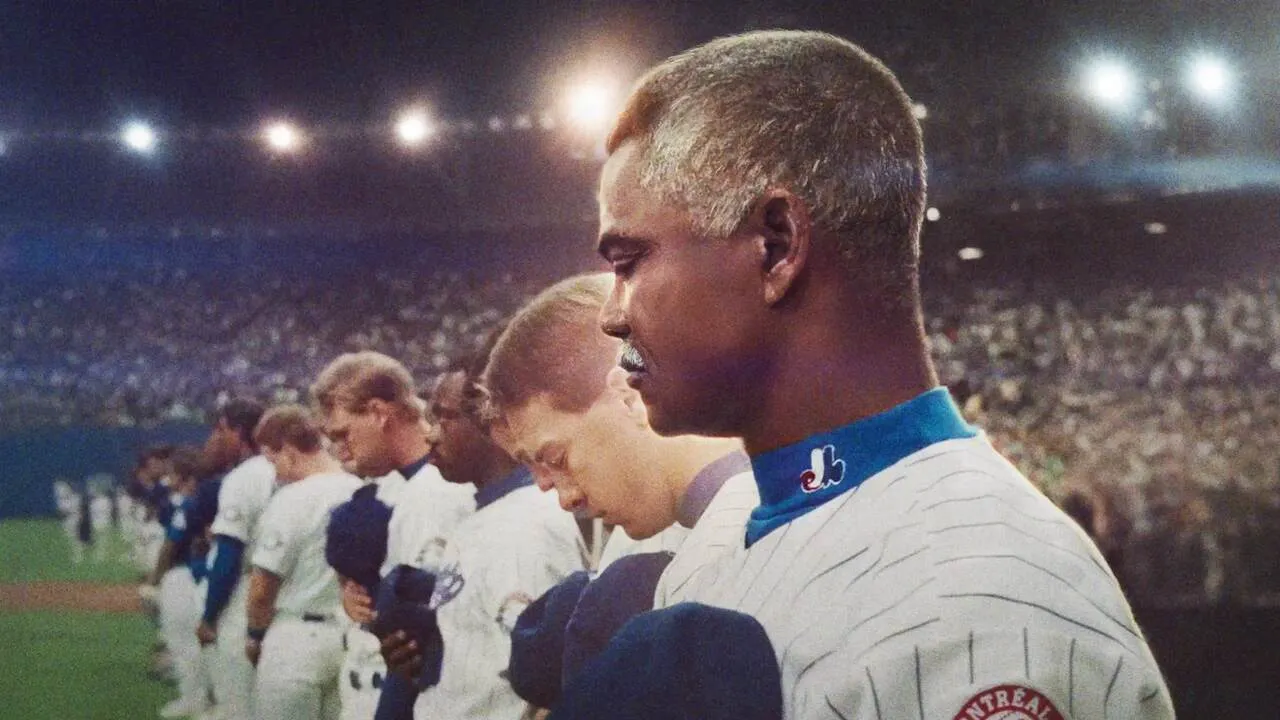

On a bright day in 1994, the Montreal Expos owned the best record in baseball, a rush of young talent primed for October. Ten years later the uniforms, the name, and the noise were gone, leaving a civic silence where a contender once played. Director Jean-François Poisson’s feature-length documentary, Who Killed the Montreal Expos?, frames the story as a cold case, a forensic whodunit that tracks the demise of Major League Baseball’s first international franchise.
The film gathers the necessary witnesses and principals to examine the scene: former stars Pedro Martinez and Larry Walker, local journalists, team employees, and boardroom figures such as former owner Claude Brochu and the combative David Samson. Across interviews and archival material, the movie parses intertwined mistakes and conditions that ended with relocation.
The Zenith and the Rupture
Montreal’s relationship with baseball begins well before the franchise’s 1969 debut. The city supported the sport in the early twentieth century and offered a receptive setting for Black players before major league integration.
That history marks Montreal as a genuine baseball market with the passion and credibility that justify a team. The cultural and competitive summit arrives in the early 1990s under manager Felipe Alou. Future Hall of Famers fill the roster, and the 1994 season becomes the apex, with the Expos holding the best mark in the majors.
The arc fractures with the 1994 players’ strike. Cancellation erases a World Series bid and triggers a dismantling of the roster as stars are moved out. Attendance spirit sinks, and the organization loses its balance, a slide that prepares the final fall.
A Murder of Many Suspects
Financial and managerial strain press on the franchise year after year. Revenues arrive in a weak Canadian dollar, while salaries must be paid in US currency, a constant drag on operations. The market ranks among the league’s smallest media footprints, limiting the kind of local income that stabilizes payroll and facilities.
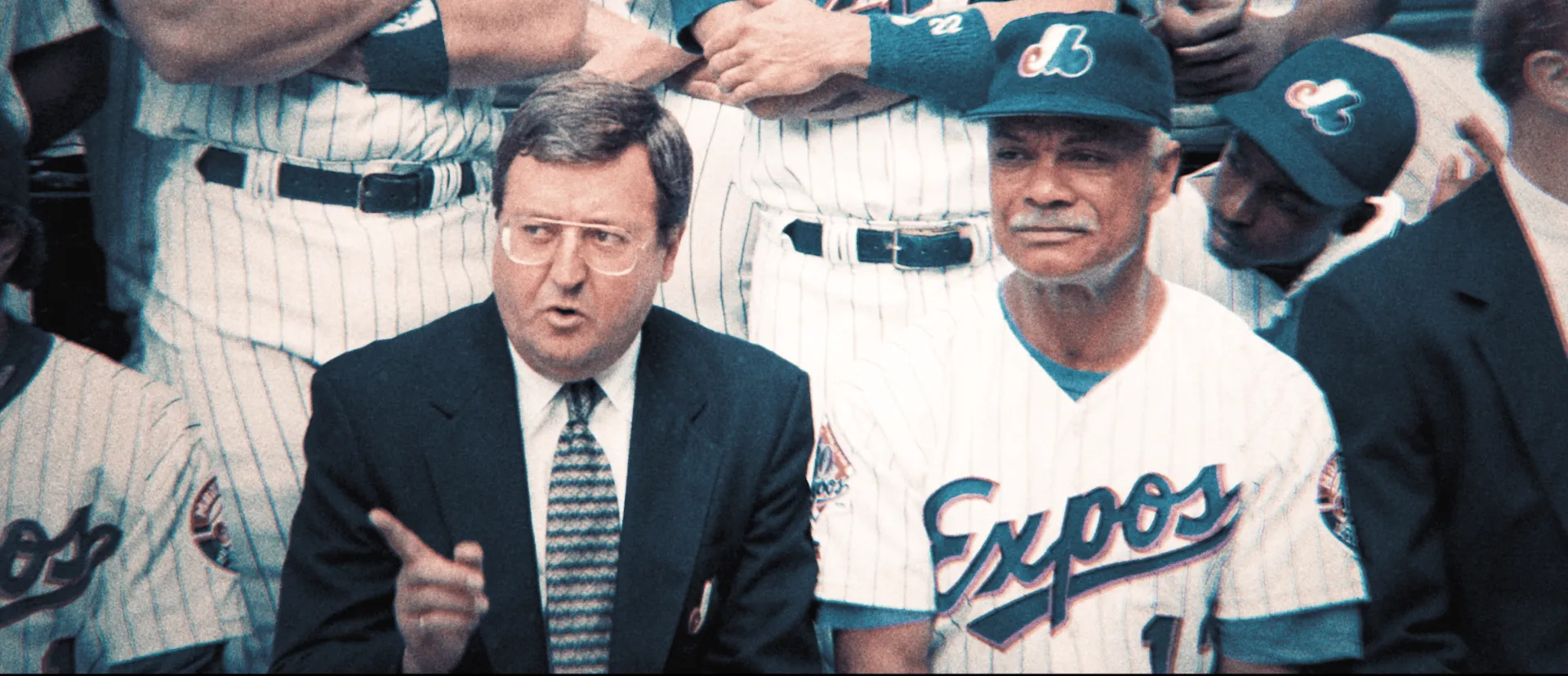
Olympic Stadium becomes an albatross, aging poorly and misaligned with a modern baseball experience. Efforts to secure a publicly funded replacement fizzle. Premier Lucien Bouchard refuses to elevate stadium spending over social services, and the proposed fix never materializes.
Ownership receives a direct audit. Under Claude Brochu, the Canadian consortium frays, with disputes and fragmented leadership. The arrival of American owner Jeffrey Loria with his stepson David Samson deepens turbulence inside the club.
Samson dominates the screen, delivering interviews with a self-satisfied composure that plays like an antagonist’s calling card. He identifies entrenched dysfunction and claims he inherited a poisoned atmosphere. The portrait points to culpability dispersed among many hands, with Samson visible on the surface while older toxins persist underneath.
The Elegy of a Lost Team
Poisson cuts the material with a non-linear rhythm, a whiplash timeline that hops across years to emphasize the weight of specific moments. The structure gives emotional charge to the historical record and turns facts into scenes that feel immediate.
The movie’s force rests on plainspoken feeling. Cameras linger on fans and reporters in tears during the final home game in 2004, a clear measure of civic grief. Former players and devoted supporters speak through memory and ache, and the film listens without ornament. Loss and heartbreak form the true subject, shaped through personal testimony and the sound of a crowd saying goodbye.
The Expos’ story reads as corporate anatomy as much as sports chronicle. Billion-dollar business practices and boardroom calculations overwhelm community identity and the everyday pleasure of watching a home team. Currency gaps, media limitations, and stadium politics combine into a machinery that treats a franchise like an asset class.
The movie treats that machinery as the central instrument of the crime, an ensemble of forces that narrows choices until only departure remains. Even so, the closing images allow a thread of hope. The wish for a return survives, faint and steady, carried by those who still speak the team’s name.
Who Killed the Montreal Expos? is a feature-length documentary that investigates the complex set of financial, political, and corporate factors leading to the relocation of the Montreal Expos baseball team in 2004. Released globally on Netflix on October 21, 2025, the film poses as a whodunit, using a compelling mix of archival footage and new interviews with former players, managers, journalists, and key management figures. The 90-minute film goes beyond standard sports history to serve as a potent critique of modern professional sports, where the business model often overrides fan loyalty and city identity.
Credits
Title: Who Killed the Montreal Expos?
Distributor: Netflix
Release date: October 21, 2025
Rating: PG-13
Running time: 90 minutes
Director: Jean-François Poisson
Writers: Jean-François Poisson
Producers and Executive Producers: Stéphanie Thibault, Richard Speer, Marie-Christine Pouliot, Nick Trotta
Cast: Pedro Martínez, Vladimir Guerrero, Larry Walker, Felipe Alou, David Samson, Claude Brochu, Dennis Martínez, Orlando Cabrera, Jean-Simon Bibeau, Tom Verducci, Jeremy Filosa, Marc Griffin, Serge Touchette, Pierre Arsenault
Director of Photography (Cinematographer): Hugo Généreux
Composer: Philippe Brault
The Review
Who Killed the Montreal Expos?
The documentary excels as a thoughtful cultural critique, effectively using the Expos' failure to explore the modern corporatization of professional sports. It moves past a simple narrative of blame, presenting a complex system of economic forces and managerial errors. While the non-linear structure can feel rushed, the emotional weight, particularly the fans' palpable grief, gives the film profound resonance. This is an essential elegy for any fan who understands that sports transcend mere pastime.
PROS
- Provides a deep, complex analysis of the financial and managerial failures.
- Captures the profound emotional weight of the loss through fan and player testimony.
- Features compelling, honest, and sometimes abrasive interviews with key management figures like David Samson.
- Thematically resonant as a critique of modern billion-dollar sports business models.
CONS
- The time-jumping, non-linear structure can feel overly rushed in sections.
- The focus is heavily on the business side, providing less depth on the baseball operations or minor league success.
- The arrogant presence of certain management figures can feel dominant in the narrative.







