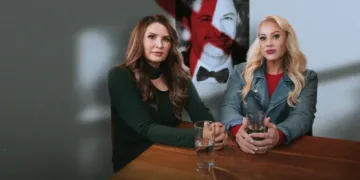























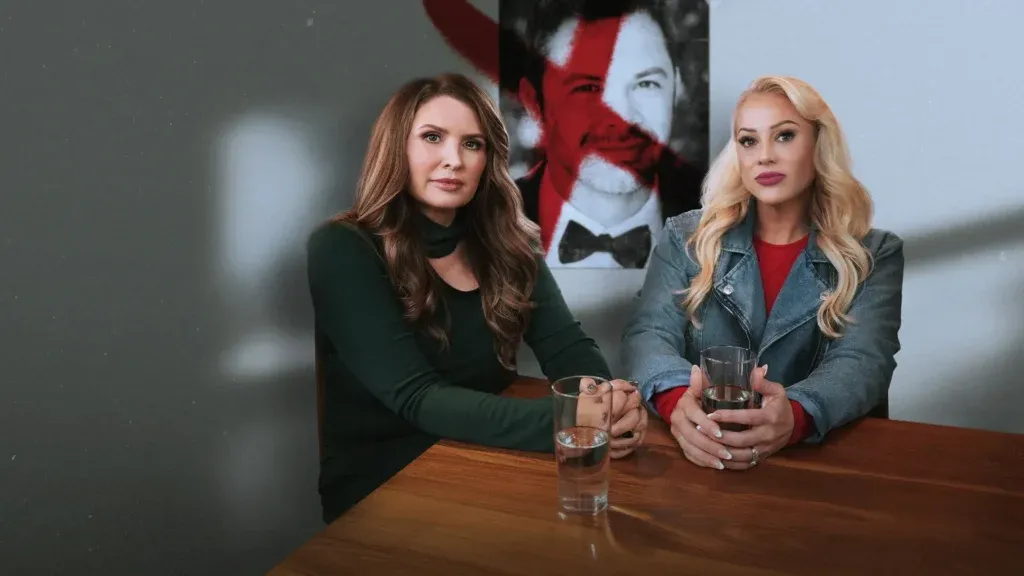

The three-part docuseries Don’t Date Brandon, directed by Grace Chapman, opens with a home video that plays like an everyday moment and sets up a classic true-crime frame. The subject is Brandon Johnson, whose alleged deception and manipulation harmed multiple women. The series follows his two ex-wives, Amber Rasmussen and Athena Klingerman, as they recount lies, emotional abuse, and fraud during their marriages.
The title signals the mission behind Ex-Wives Undercover, the podcast the women launched to warn others. The premise points to a procedural chase, then the narrative pivots. First, the episodes track the mechanics of the deceit. Then the story turns to the women’s joint effort to pursue awareness and justice. The central thread traces two women who were initially positioned against each other and who chose to align against their alleged abuser. The opening movement grabs attention and holds it.
The Scripter of Fake Realities
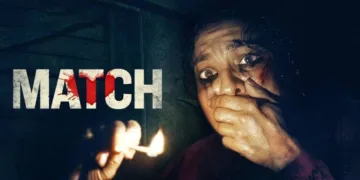
The structure introduces Amber’s arc first, beginning with her 2013 Tinder match with Johnson. The relationship moved at speed. He proposed within six weeks, and she relocated from Portland to Seattle. Early warning signs surfaced, including a photo of him on a Match profile, which he explained away. The series details a method of isolation and confusion that shaped his partners’ experiences.
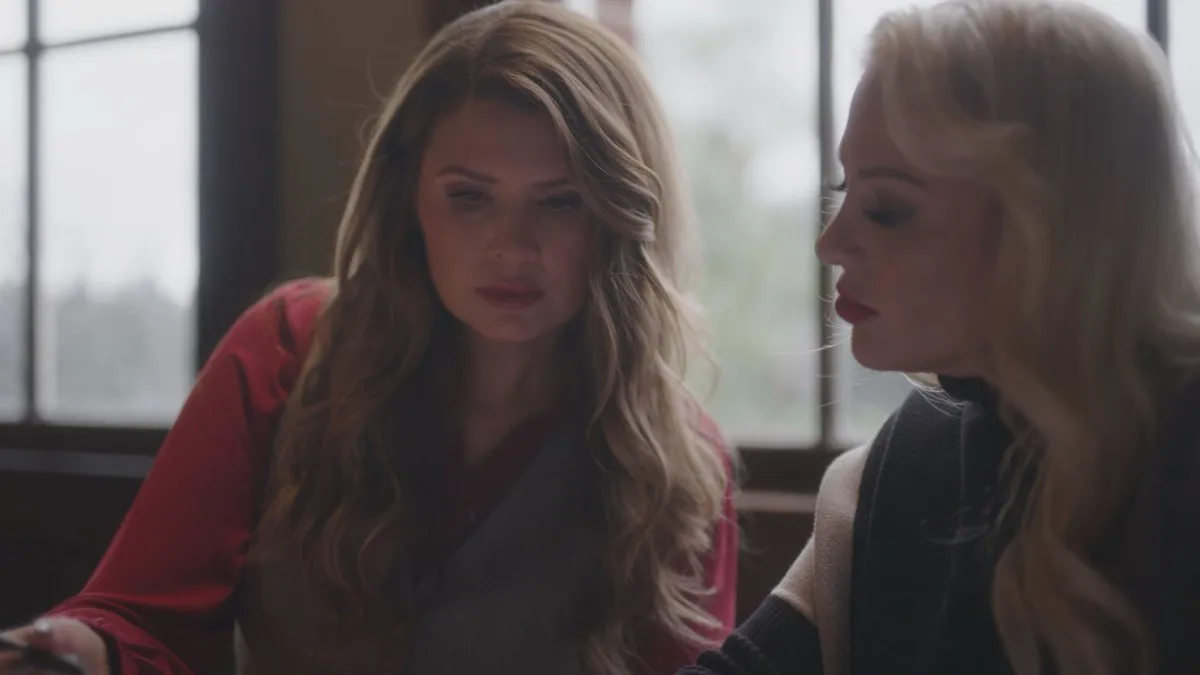
He allegedly crafted a story about his first ex-wife, Athena, casting her as a “crazy ex” and claiming she stalked him. The episodes map out the mind games. He allegedly manipulated messages on a court-ordered parenting app, sending hostile notes while posing as Athena to convince Amber that Athena was unhinged. The lies escalate. He allegedly reported multiple cancers to different women, telling Amber he had leukemia and telling Athena he had lung cancer.
He boasted about a glamorous Nike career and private jets. The alleged schemes reached his workplace, where he was accused of altering contract banking details for personal gain. The toolkit the show presents includes fabricated text chains, falsified medical documents, and stolen online photos to sell himself as a victim. Editing favors momentum, and the pace rarely eases.
Also Read






Sisterhood Defies the Narrative
The most charged beat arrives when Amber and Athena finally speak directly. After exhausting exchanges through the shared parenting app, Amber contacted Athena. That call reframed the situation. Each recognized a common pattern with the same man.
They dropped the script that pits exes against each other and built a platform for action. Their next step turned into the series’ second act: They launched the Ex-Wives Undercover podcast to share their experiences and warn others. Their candor anchors the show’s emotional core. The women’s collective work tracks a path from harm toward accountability and healing.
The episodes follow that effort through legal consequences. The behavior described allegedly escalated to a disturbing incident at another woman’s home, which led to Johnson’s arrest and incarceration. He denies many claims, even after a plea deal. The frame shifts from “victim” to “survivor,” and the episodes keep that emphasis steady.
Direction and Cultural Resonance
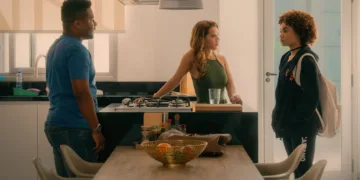
Grace Chapman’s direction keeps the tempo brisk and the presentation grounded. The production avoids the genre’s usual melodramatic reenactments and leans on real artifacts: text messages, personal videos, and interviews. This approach creates a raw atmosphere and keeps attention on the survivors’ voices and emotional truth.
The camera often sits close, which suits testimony over spectacle. A few mid-section lulls and a handful of reenactments land less cleanly, but they pass quickly. The series draws strength from its focus on recovery and on the women taking control of their narratives. The docuseries reads as commentary on online dating culture, where image can swamp reality.
The message is blunt: trust can turn dangerous, while community and awareness give people tools to protect themselves. The show argues for attention, for shared information, and for responsibility. The final feeling offers relief for Amber and Athena, then leaves a quiet alarm: how many other “Brandons” remain out there, moving through the digital crowd?
Don’t Date Brandon is a three-part true-crime docuseries that tells the story of two of Brandon Johnson’s ex-wives, Amber Rasmussen and Athena Klingerman, who discovered they were victims of the same manipulative man. The women united to expose his lies and fraudulent behavior by starting a viral podcast titled Ex-Wives Undercover, which encouraged other women to come forward. The series premiered on Tuesday, October 28, 2025, with all three episodes dropping on the streaming platform Paramount+. It is rated TV-MA for its mature themes, including psychological abuse, online deception, and relationship trauma.
Credits
Title: Don’t Date Brandon
Distributor: Paramount+, Fremantle
Release date: October 28, 2025
Rating: TV-MA
Running time: Three episodes, 45-57 minutes per episode (Total running time approximately 159 minutes)
Director: Grace Chapman
Producers and Executive Producers: Susan Zirinsky, Terence Wrong, Steven Green, Eliya Aman, Aysu Saliba, Cara Tortora
Cast: Amber Rasmussen, Athena Klingerman, Brandon Johnson, Lexus
The Review
Don’t Date Brandon
This docuseries successfully elevates beyond standard true crime by focusing entirely on the survivors' collective strength. Grace Chapman's brisk direction uses copious amounts of real-life evidence to create a raw, urgent narrative. The shift from individual betrayal to shared empowerment is both profound and rare for the genre. It serves as a necessary social commentary on trust in the digital age. This is a worthwhile watch for anyone interested in stories of genuine resilience and community action.
PROS
- Avoids sensationalism, maintaining a raw, authentic feel through real-life evidence.
- The emotional core rests squarely on Amber and Athena, highlighting their healing and proactive response.
- The initial episode effectively builds tension by starting with Amber's perspective before the lies surface.
- Functions as a cautionary tale relevant to contemporary online dating culture.
- Successfully showcases women defying expectations by uniting against the alleged abuser.
CONS
- Occasional use of reenactments feels unnecessary and slightly undercuts the seriousness of the genuine moments.