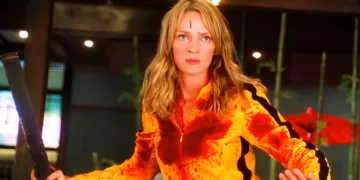


























Kill Bill: The Whole Bloody Affair presents Quentin Tarantino’s preferred unified cut as a single, monolithic canvas that frames The Bride (Uma Thurman) in an unrelenting nightmare. It functions as an epic of primal retribution across roughly four punishing hours. We meet the Black Mamba, an assassin who wakes from a four-year coma and focuses on erasing the four former colleagues and the maestro, Bill (David Carradine), who abandoned her at her wedding rehearsal.
The film borrows openly from martial arts cinema, Spaghetti Westerns, and grindhouse energy while forging a maximalist aesthetic that has left a permanent imprint on its generation. This restored edition, with its reworked assembly and re-edited footage, compels the audience to follow the full arc of a soul consumed by a ledger of blood.
The Cartography of Retribution
Seeing the story as one continuous work intensifies a sense of fatalistic momentum. The single assembly lets the narrative find a steady rhythm of suffering, converting an episodic framing into a sustained, relentless odyssey. The structure moves with a forward pressure that carries the viewer from the opening frame to the final one. The experience registers as inexorable, like a vast, bloody poem recited without interruption.
A formal 15-minute intermission divides the film at its midpoint and provides a physical pause for the audience while remaining an integral structural element. The interval does not dissipate tension. The film shifts from kinetic global vengeance in the first half to a more measured, psychological drama in the second half, and the flow between those tones demonstrates precise control of pace. This long-form presentation lets the accumulation of the Bride’s acts register across time without artificial relief.
Removing the Volume 1 cliffhanger that revealed the daughter alters the architecture of the story in a decisive way. With that information withheld until later, the final confrontation acquires greater dramatic force. The revelation becomes a shared discovery for character and viewer, and the closing encounter with Bill rests on a fraught emotional terrain of love and betrayal instead of functioning as a stripped plot device. That late disclosure sharpens the tragic dimension of the finale.
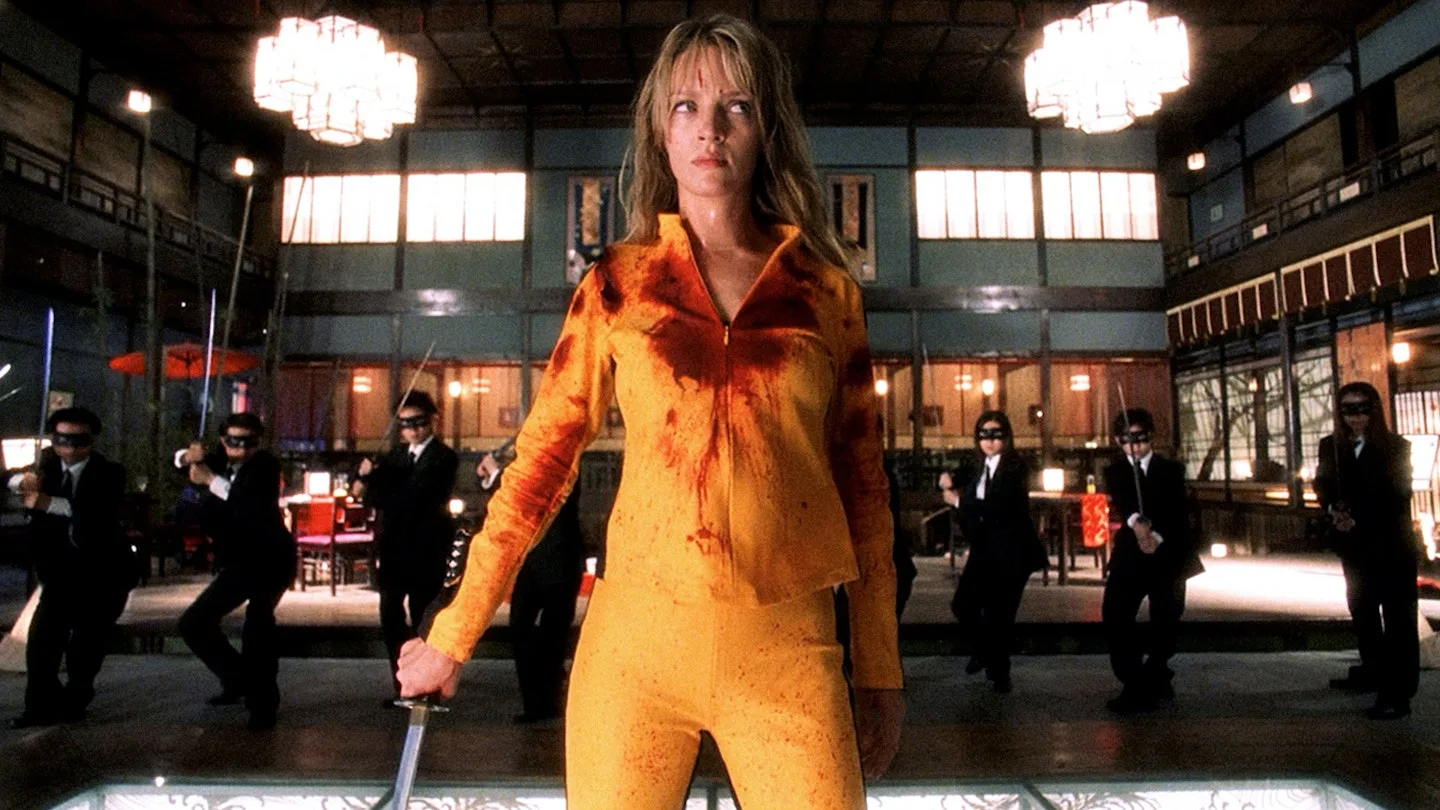
Trimming the Bride’s direct-address recap, a device that bridged the original six-month gap, preserves continuous flow and keeps momentum intact. Presenting the House of Blue Leaves sequence in full color rather than shifting to black-and-white when the violence intensifies is an expressive decision. The sequence’s cartoonish brutality reads as surreal and hyper-real when the blood appears in radiant red. The visual excess organizes the sequence into a kind of choreographed havoc that registers as theatrical spectacle.
Also Read




The film negotiates a difficult tonal transition with notable finesse. The first half runs as a furious sprint shaped by Yakuza and martial arts impulses. The second half offers slower, more reflective scenes with a Western-tinged aesthetic that traces the psychic exhaustion following extreme violence. The first portion propels through rage; the latter portion moves toward a complex reckoning. Together they form a structural study of vengeance as psychological descent. The single long-form presentation confirms the director’s instinct to have the story accepted in one sitting so that its weight may build without release.
The Archaeology of Excess
Restored material often enlarges style rather than the structural spine of the plot. These elements underline the director’s taste for detail while occasionally remaining tangential to the story’s emotional core.
The Expanded Origin of O-Ren Ishii, animated by Production I.G., offers an opulent visual account of O-Ren’s past and her vengeful pursuit of Pretty Riki. This animated sequence intensifies mythic contours and grants O-Ren a more elaborate backstory than other targets on the Bride’s list. The segment reads as concentrated visual poetry about transformation from child to avenger. It is beautiful and possesses a nasty delight, yet it functions primarily as an ornamental expansion on material already suggested elsewhere. The restored animation sometimes registers at odds with the surrounding footage in resolution and finish.
Extra shots and additional moments of dismemberment in the Crazy 88s sequence push the carnage further into absurdity and reinforce the film’s maximalist intentions. The fight, already a cinematic apex of stylized chaos, acquires a more exhaustive sense of destruction through these additions. These small insertions operate like final brushstrokes on a violent mural.
The post-credits animated short about Gogo Yubari’s sister stands apart as a piece of extraneous canon in an unexpectedly jolting style. The short about Yuki’s revenge reads as a stylistic footnote and a curiosity for dedicated viewers. It does not deepen the main narrative’s emotional or thematic core and sits comfortably outside the film when experienced after the credits. In sum, the restorations deliver a fuller, occasionally overloaded vision that privileges completeness over strict narrative compression.
The Unbearable Lightness of Being a Viper
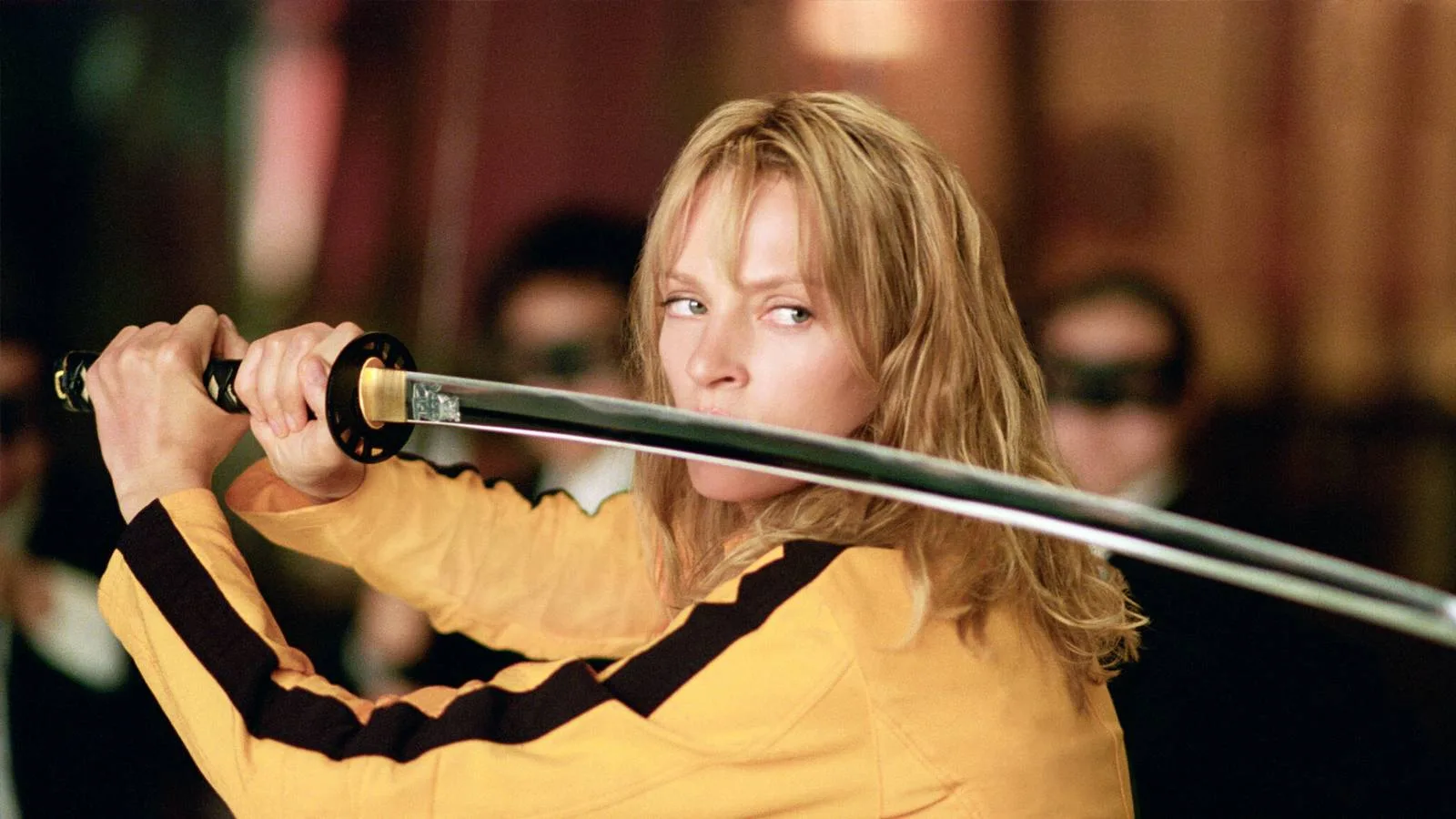
The extended runtime allows Uma Thurman’s performance to reach a wrenching potential. Her Bride balances ruthless athleticism with a palpable, lacerating vulnerability. The physical feats register as total commitment, while the emotional wreckage endures beyond the blade. The character’s arc is anchored in motherhood, both lost and partially reclaimed, which gives the revenge plot a human center. Maternal rage supplies a motive that elevates the role above a montage of influences. The unified presentation enables the audience to inhabit the aggregate sorrow and fury that accumulate through the film, securing the performance as a major achievement.

The ensemble benefits from the expanded orientation. Michael Madsen’s Budd gains particular weight as a weary assassin whose resignation adds a quietly affecting texture to villainy. Vivica A. Fox’s Vernita Green foregrounds domestic rhythms and forces a question about escaping a violent past. David Carradine’s Bill exerts a strange charisma and an unsettling humor that humanizes the figure behind betrayal. Bill functions as the origin point for both the Bride’s love and her devastation. The tangled relationship between them becomes the painful pulse of the film, an attachment built from exploitation and lingering entanglement.
The final confrontation refuses the anticipated physical climax and turns instead into a devastating exchange of words. The scene depends on the audience’s investment in shared history and on the finality of the conversation. It demonstrates that speech can inflict wounds equal in force to any blade.
The film examines how domestic spaces and violence overlap in unsettling ways. Acts of revenge begin and end in surprisingly ordinary places: kitchens, backyards, bathrooms. Violence originates in a homeward context, at the chapel massacre and within the fractured domestic unit of the Deadly Vipers. The film stages a study of female power and trauma by treating the Deadly Vipers primarily as warriors whose capability eclipses gendered expectation. The characters are allowed a full range of rage and resilience that complicates simple revenge tropes.
A Synthesis of Shadows and Sound
Tarantino assembles broad cinematic influences into a cohesive visual structure that often astonishes. The film moves between clean anime lines, aggressive split-screen compositions, and shifts in palette from bright hues to somber black-and-white. That stylistic audacity acts as a defining feature.
The soundtrack plays an active role. Selections include original contributions credited to The Rza and Robert Rodriguez alongside obscure deep cuts and tracks drawn from other films. Music frequently cues the genre or emotional tone of a scene ahead of dialogue and functions as a layered commentary on the action.
The film’s debts to sources such as Shaw Brothers kung fu and Spaghetti Westerns remain visible, yet the director integrates those borrowings so thoroughly that they become inseparable from Kill Bill’s own identity. The film now occupies a place as a self-referential point of reference, having absorbed and transformed its antecedents. The Whole Bloody Affair’s release reinforces the title’s standing as a widely entertaining and influential work from the past quarter-century, a work built on blood and broken hearts.
Kill Bill: The Whole Bloody Affair is the definitive, uncut version of Quentin Tarantino’s fourth film, originally released in two parts (Volume 1 in 2003 and Volume 2 in 2004). This version combines the two volumes into a single, cohesive four-hour-plus narrative, including an extended anime sequence and the removal of the original cliffhanger ending and recap scenes. The complete film premiered at the Cannes Film Festival in 2006 but has largely been confined to rare screenings, often at Tarantino’s New Beverly Cinema. Based on the information available and the context of your request, Kill Bill: The Whole Bloody Affair was released for its wide theatrical re-release on Friday, December 5, 2025.
Full Credits
Title: Kill Bill: The Whole Bloody Affair
Distributor: Lionsgate
Release date: December 5, 2025 (Wide Theatrical Re-release)
Rating: Unrated / 18 (UK Classification)
Running time: Approximately 4 hours and 35 minutes (275 minutes)
Director: Quentin Tarantino
Writers: Quentin Tarantino, Uma Thurman
Producers and Executive Producers: Lawrence Bender, Bob Weinstein, Harvey Weinstein, E. Bennett Walsh
Cast: Uma Thurman, Lucy Liu, Vivica A. Fox, Michael Madsen, Daryl Hannah, David Carradine, Sonny Chiba, Chiaki Kuriyama, Gordon Liu, Michael Parks, Julie Dreyfus
Director of Photography (Cinematographer): Robert Richardson
Editors: Sally Menke
Composer: Robert Rodriguez, RZA
The Review
Kill Bill: The Whole Bloody Affair
Kill Bill: The Whole Bloody Affair is the definitive cinematic statement of a director at his most ambitious and masterful. The unified narrative intensifies the emotional core of the revenge saga, allowing Uma Thurman’s performance to resonate with maximal psychological depth. While slightly overstuffed with non-essential lore, it remains a singular, highly influential spectacle—a breathtaking, bloody fusion of genre that transcends simple homage to become its own myth.
PROS
- Unified Narrative provides superior pacing and thematic cohesion.
- Uma Thurman’s Performance is elevated, showcasing immense physical and emotional depth.
- Masterful Genre Fusion (Western, Kung Fu, Yakuza, Grindhouse).
- Structural editing (removing the cliffhanger) strengthens the final emotional impact.
- Stellar direction, cinematography, and iconic soundtrack.
CONS
- Extended Lore (e.g., O-Ren's origin) sometimes feels non-essential.
- Post-Credits Content is extraneous and stylistically jarring.
- Restored animated footage can suffer from visual quality issues (resolution).