
























The war here does not open with a sonic boom or a TARDIS landing, but with an administrative mistake that spirals out of control. The War Between the Land and the Sea, the latest series from showrunner Russell T Davies, keeps the Time Lord offstage and hands the spotlight to Earth’s last line of defense, the Unified Intelligence Taskforce (UNIT). The focus sits on diplomacy and negotiation rather than dizzying chase scenes.
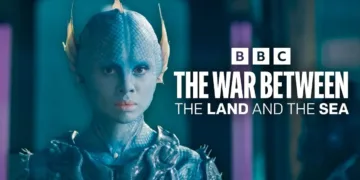
A long-dormant aquatic species, the Sea Devils, resurfaces. Renamed Homo Aqua, these ancient inhabitants of the planet return for repossession, demanding their world back after millennia of human pollution. The result is a drama about a political crisis that swells into an existential confrontation for both species.
The Morality of Stewardship and Failure of Authority
The series uses its science fiction hook to spark a direct, unavoidable discussion about the climate crisis and ocean pollution. The conflict never plays as a simple invasion tale, because the script frames it as a moral reckoning with humanity’s disastrous tenancy of Earth. That argument lands with force because it grows out of pointed, dramatic incidents rather than abstract lectures.
Salt’s first move is a viciously effective piece of theatre. She presents the human delegation with a parcel containing her dead young, casualties of humanity’s waste. The environmental theme gains weight through this intimate tragedy, which recasts the Sea Devils’ campaign as righteous vengeance instead of simple aggression. The show stays away from pure sermonizing by leaning on images like this. A later scene in which Salt orders Barclay to drink polluted river water is especially chilling. That blunt, visual challenge communicates complicity and consequence with far greater force than any speech.
Davies builds the alien conflict into a broad critique of human power structures. Career politicians, military brass and seasoned diplomats appear as ineffective figures whose priority lies in protecting existing economies rather than the fragile ecologies that sustain life. The show treats these leaders as often ineffectual or corrupt. The Homo Aqua decision to appoint Barclay, a decent, low-ranking everyman, as the sole human negotiator becomes a vital device. It works as a rejection of institutional politics and suggests that the honest instincts of an untested outsider carry more value than the practiced rhetoric of a world leader.
Kate Lethbridge-Stewart stands at the fault line of these systems. She reacts with visible frustration to political constraints and briefly views the crisis as a rare chance to “build a better world.” That hopeful impulse runs headlong into bureaucracy and routine manoeuvring. The show keeps its focus on heavy questions of stewardship, responsibility and power. The title The War Between the Land and the Sea hints at vast spectacle and battlefield chaos, yet the reality on screen is an intense chamber piece built on arguments and negotiations. That concentration on discussion strips the conflict down to its real stakes: a struggle of ideas and survival claims rather than a contest of weapons.
Also Read






A Tense Two-Hander: Performance and Persona
The series lives or dies on its central pair of performances, and they provide enough texture to sustain a script loaded with dialogue. Russell Tovey leans fully into the everyman energy, playing Barclay as a man hilariously out of his depth. His progress up the UNIT hierarchy feels like a long chain of administrative mishaps that suddenly make him indispensable.
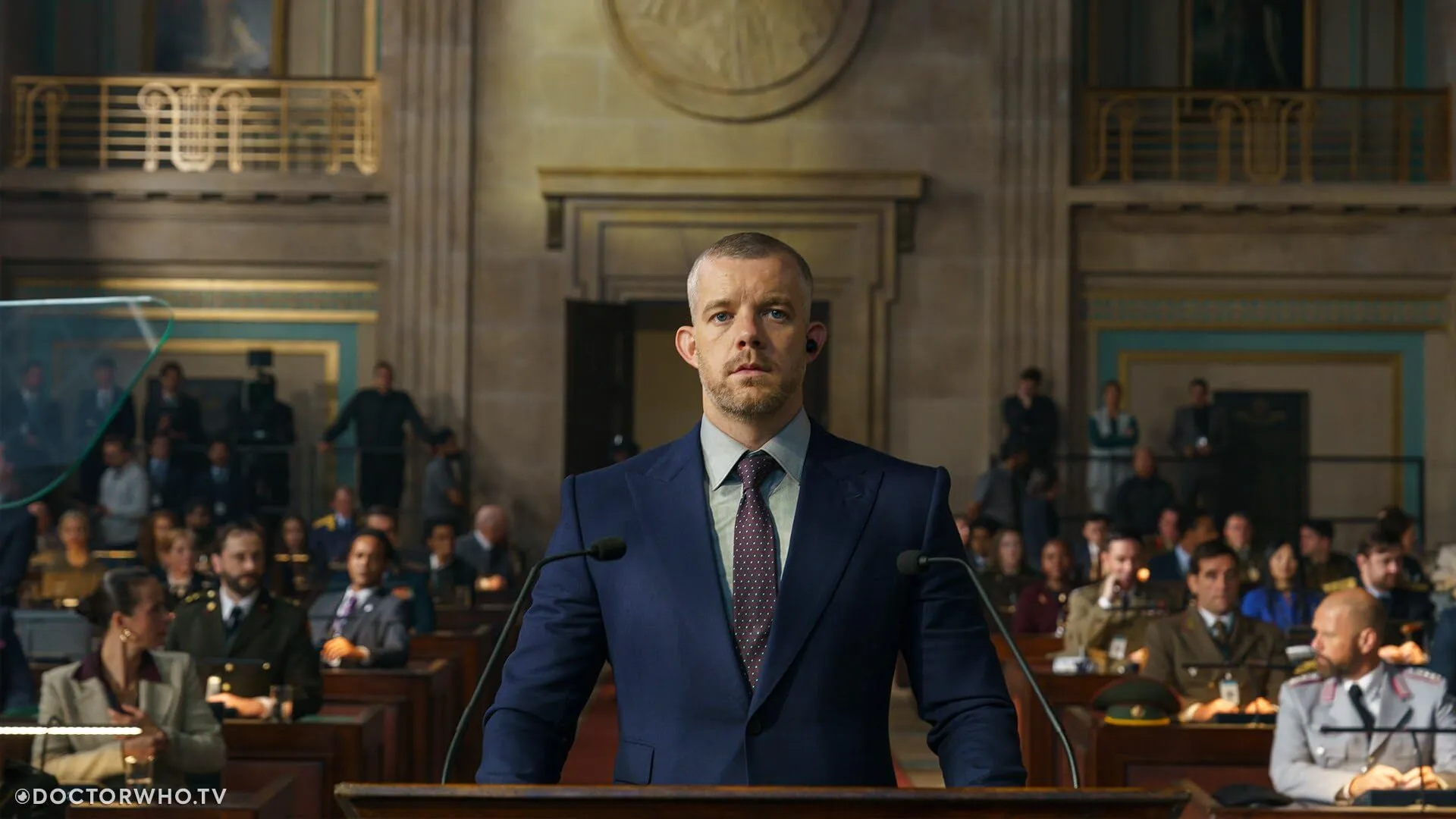
Tovey’s physical comedy keeps the character sharp: the jittery body language, the frantic eyes, the occasional panicked squeak in his voice. He anchors the high-concept set-up in recognisable, everyday fear. His work stops Barclay from slipping into pure joke territory. Beneath the flustered exterior sits a sincere kindness and empathy, a quality Salt identifies and uses. The clash between his lack of experience and his basic decency gives him an oddly convincing heroic profile.
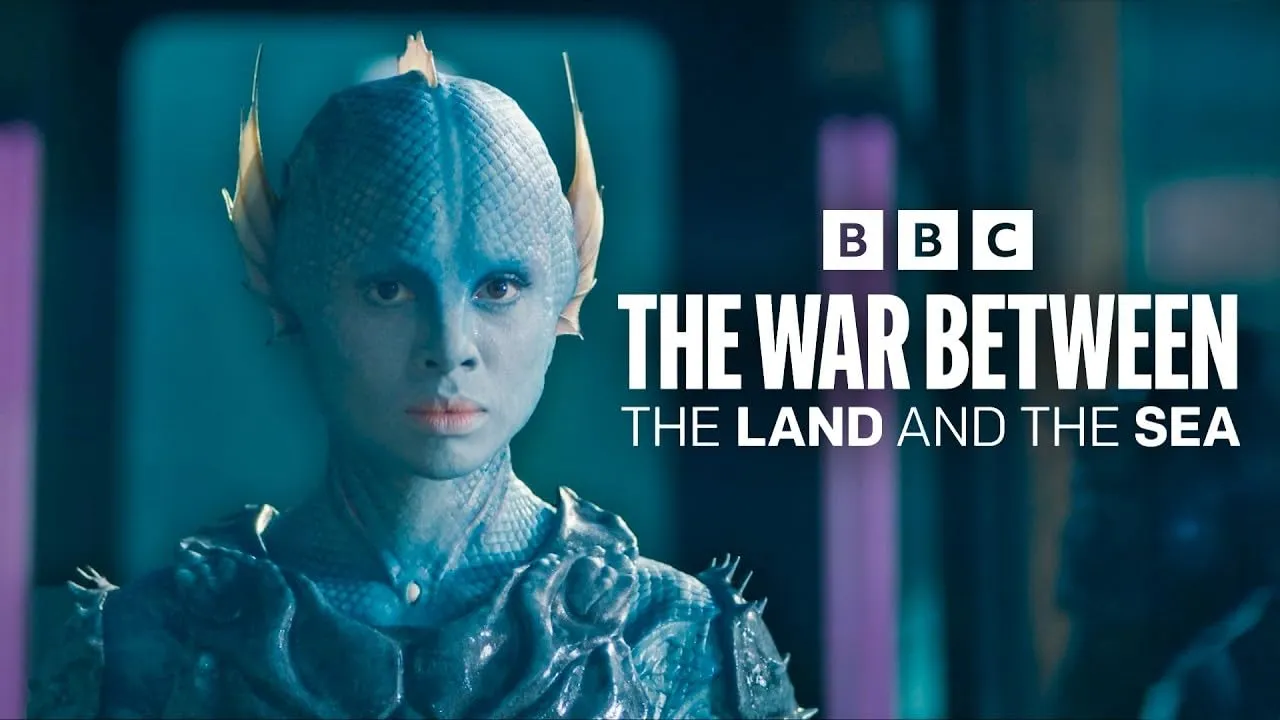
Facing him is Gugu Mbatha-Raw as Salt, delivering a performance built on discipline and poise. Layers of elaborate prosthetics turn her into an imposing, regal presence, often compared to an Avatar-style transformation, yet she commands the frame through precision in movement and voice. Mbatha-Raw meets the challenge of playing a complex, non-human amphibian monarch. Salt speaks with icy clarity and never wavers in her demands. She channels the environmental anger of the series into a single figure, a force of nature with a crown. Her work raises the Homo Aqua from simple monster-of-the-week creatures into intricate antagonists with a clear case.
The push and pull between Barclay and Salt sustains the show. Their confrontations function as more than tense bargaining sessions. Each exchange acts as a pressure test for the themes in play. Barclay’s kindness meets Salt’s iron will, and the tension between them carries a charge that edges toward an emotional connection that might “evolve beyond diplomatic parameters,” a dynamic that invites comparisons to the tender fantasy of The Shape of Water. That suggestion injects an offbeat spark into the stalemate. Barclay, physically placed between opposing forces, has to pick his way through this diplomatic minefield guided by personal ethics rather than institutional rule books.
The surrounding ensemble provides stability. Jemma Redgrave’s return as Kate Lethbridge-Stewart matters a great deal. Her steady, professional presence keeps the escalating events grounded. Familiar UNIT figures such as Ruth Madeley’s Shirley help frame the crisis inside a recognisable, if rapidly overwhelmed, operational backdrop.
A Darker Tone and a Budgetary Boost
The War Between the Land and the Sea stamps out a clear visual and tonal personality. Production values sit at a high level, with a noticeable lift in spending. The so-called “Disney Plus budget” shows up in expansive sets, sleek Homo Aqua designs and well-realised CGI flourishes. Standout images include earth turning to treacherous bog under soldiers’ feet and a worldwide communication hijack delivered through jagged rocky outcrops. The “Plastic Apocalypse” sequence in episode two stands out in particular, presenting environmental devastation with shocking, spectacular force.
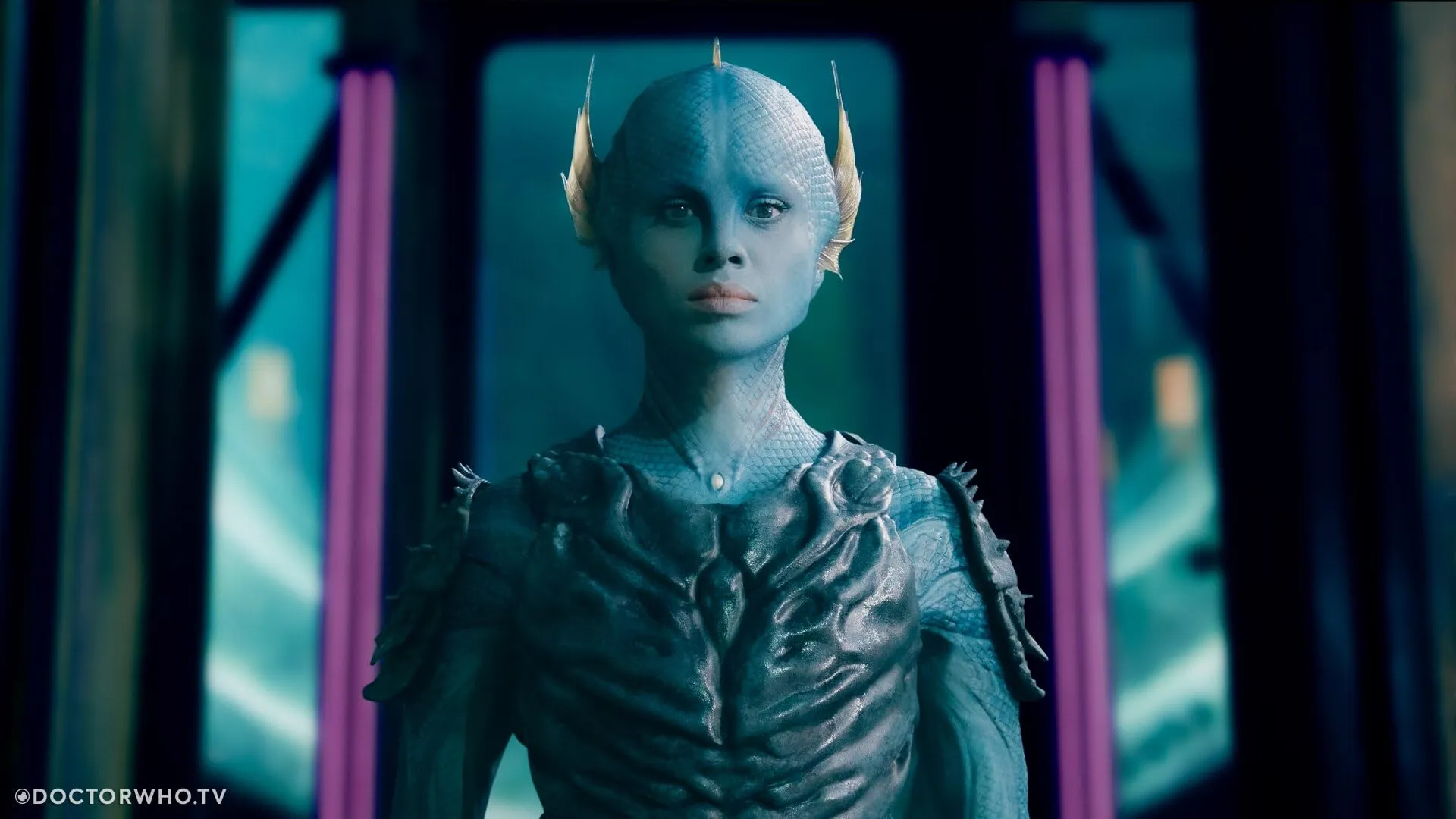
The tone leans darker and grimmer than recent Doctor Who runs, which places the show closer to a straight-faced science fiction drama. At the same time, it still aims for a family audience and keeps a level of accessibility, a clear point of difference from the often harrowing atmosphere of Torchwood.
The measured pacing feels deliberate and gives space to the psychological stress and political friction of a courtroom-style set-up. Some critics have flagged a possible “crisis of tone” for viewers who crave constant action, since the series rarely rushes toward set pieces. Yet that change of rhythm away from high-octane spectacle forms a key part of what makes it “pleasingly different to Who itself.”
The War Between the Land and the Sea sits firmly inside the Whoniverse but works hard to stand as its own thing. It acts as a kind of “spiritual successor” to Torchwood through its UNIT focus and its adult subject matter, and filters those elements through a wider, more inclusive lens.
The decision to bring back a classic monster, the Sea Devils, makes practical and thematic sense, while the rebranding to “Homo Aqua” lands as awkward and faintly absurd. That misstep does not upset the central idea. The show poses a clear challenge to the audience: can a Doctor Who story function without the Doctor? By emphasising UNIT’s practical strengths and Barclay’s emotional turmoil, the series argues that this corner of the franchise can support serious drama on its own terms.
Davies’ Narrative Structure and Future Promise
The writing here feels like a confident return to familiar Davies strengths. The ordinary hero who stumbles into history, the sly quips and observational gags, the heavy layer of socio-political commentary, all feel instantly recognisable. Occasional clunky lines crop up and a few exchanges drift into outright cringe, yet the scripts still register as a clear return to form. The story tends to unfold through dramatic situations instead of heavy-handed exposition, which keeps the themes readable without constant explanation.
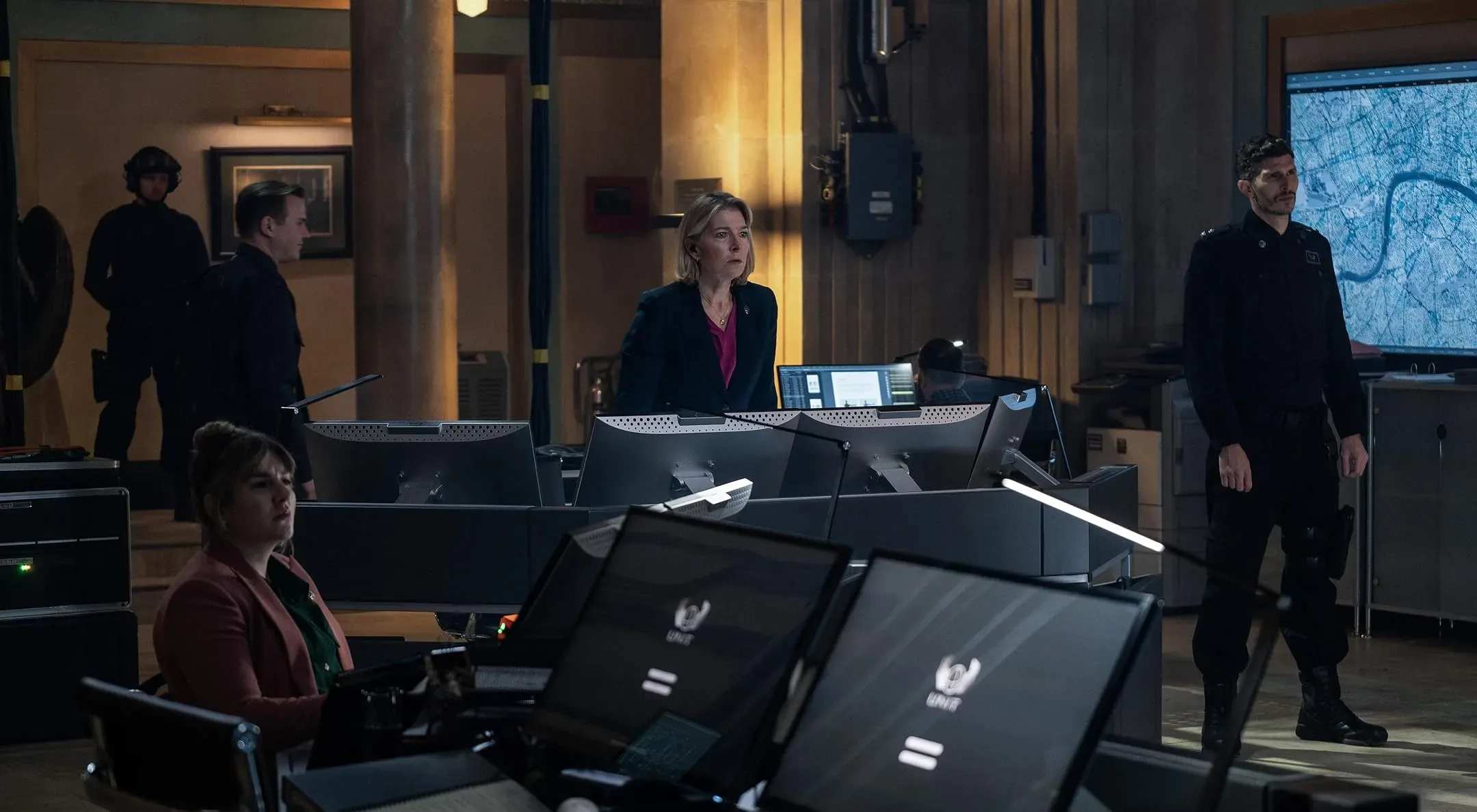
The series runs its story across a five-episode arc, giving one extended case plenty of space. That structure gives character work and plot mechanics room to settle and keeps the narrative from buckling under its own ambitions. Early moves such as the wildly convoluted bureaucratic glitch that elevates Barclay might prompt skepticism, but the show quickly compensates by pouring attention into character. Barclay and Salt arrive on screen with fully realised personalities, which encourages viewers to care about both sides from the outset.
The opening two-parter builds the titular war with care, locking in high stakes and murky morality. There is a clear sense of gathering momentum that suggests the show intends to keep “swim off into pleasantly odd waters.” The set-up so far has created a credible emotional and planetary threat. The question that lingers is simple enough: will The War Between the Land and the Sea pay off that threat with a truly “deadly blow,” a consequence sharp enough to match the horrors it has placed on the table?
The War Between the Land and the Sea is a five-part science fiction miniseries created by Russell T Davies as part of the Whoniverse franchise. It premiered in the UK on Sunday, December 7, 2025, with a double bill, and is available to watch on BBC One and stream in its entirety on BBC iPlayer shortly after the initial broadcast. International viewers will be able to watch the series exclusively on Disney+ sometime in 2026. The series focuses on the Unified Intelligence Taskforce (UNIT) as humanity faces a diplomatic crisis triggered by the emergence of the Homo Aqua, an ancient aquatic species who demand control of the planet.
Full Credits
Title: The War Between the Land and the Sea
Distributor: BBC One, BBC iPlayer (UK), Disney+ (International)
Release date: December 7, 2025 (UK Premiere)
Rating: TV-14
Running time: 43–53 minutes per episode (5 episodes total)
Director: Dylan Holmes Williams
Writers: Russell T Davies, Pete McTighe
Producers and Executive Producers: Joel Collins, Pete McTighe, Russell T Davies, Julie Gardner, Jane Tranter, Edoardo Ferretti (Producer)
Cast: Russell Tovey, Gugu Mbatha-Raw, Jemma Redgrave, Ruth Madeley, Alexander Devrient, Colin McFarlane, Adrian Lukis, Patrick Baladi
Composer: Lorne Balfe
The Review
The War Between the Land and the Sea
This ambitious spin-off successfully trades the Doctor’s sci-fi spectacle for tense political commentary and sharp character drama. While the narrative is slow and dialogue-driven, Russell T Davies delivers a compelling environmental morality tale, powered by the excellent central dynamic between Tovey’s everyman and Mbatha-Raw’s commanding aquatic monarch. It is a thoughtful, visually polished addition to the Whoniverse that confidently establishes its own identity. A necessary, darker return to form.
PROS
- Focus on dialogue and diplomatic tension is a refreshing change of pace.
- Addresses the climate crisis with powerful, dramatic symbolism.
- Russell Tovey and Gugu Mbatha-Raw have an excellent, engaging central dynamic.
- High production values and impressive special effects for the aquatic creatures.
- Successfully proves the UNIT framework can sustain a compelling stand-alone drama.
CONS
- The series is slow-moving, which may frustrate viewers seeking traditional action.
- The socio-political commentary sometimes veers toward the overly direct or obvious.
- A few instances of cringey or clumsy dialogue detract from the seriousness.
- The choice to rename the Sea Devils "Homo Aqua" is awkward and feels unnecessary.