


















A berry comb should not be the most thrilling object on television, yet here we are. Will Longley dragging a handmade tool across bushes to strip fruit by the handful is exactly the kind of small, practical revelation that keeps Alone alive after thirteen seasons.
The show can call this new run a “World Championship” all it wants. The real championship is still a person alone in the mud, realizing that a clever stick might be the difference between dinner and a long night of thinking about dinner.
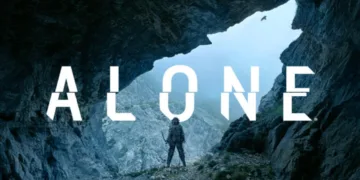
Season 13 sends ten survivalists from seven countries into the Canadian Arctic Circle, 125 miles north into land that looks wet before it looks cold, then cold before it looks survivable. They carry their chosen ten items, required camera gear, and whatever confidence got them through casting.
Then the helicopters leave, the boats disappear, and each contestant learns the same brutal lesson: the wilderness does not care how good your audition tape sounded. That is the show. That has always been the show. The new passport spread gives the season a fresh label, but the old machinery still bites.
The World Championship Label Works Best When It Shuts Up
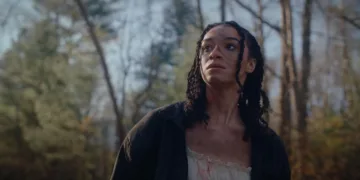
The international cast gives Season 13 a useful charge. Clementino Pedrosa arrives from Portugal with patience, traps, and a habit of narrating his ego management like he is leading a corporate retreat for one. Nero Buys from Australia makes an immediate impression through passive food systems, setting traps that can work while he preserves energy. Jacks Genega, the lone woman in the group, hits the landscape with a visible emotional openness that the edit wastes no time amplifying.

The “World Championship” branding is a little funny, because the format has not meaningfully changed. This is still Alone: ten people, ten items, no crew, no outside help, one satellite phone waiting like a tiny plastic devil. The show has a clean structure that rarely needs decoration. Person meets land. Land wins slowly. Sometimes person wins slower.
That said, the one-woman cast is hard to ignore. For a season selling global reach, the gender balance feels oddly narrow. It is a casting choice that makes the big banner sound smaller, especially in a series where endurance has never belonged to one body type or one kind of bravado.
Alone has shown that plenty of people can swing an axe. Far fewer can sit in silence without the silence swinging back. The show’s smartest move is letting the location do the promotion. The Arctic needs no tagline. It has mud.
The Arctic Gives The Premiere Its Best Television
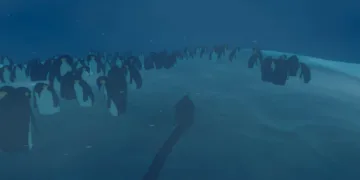
Season 13 looks terrific in the way Alone looks terrific when the camera is too tired to be pretty. The wide shots make people seem hilariously misplaced, like someone dropped a survivalist into a nature documentary and forgot to tell the bears. Rivers, thick brush, low light, soft ground, and cold air give the premiere a sharp physical texture. You can almost hear socks becoming damp.
The early abundance matters. Rabbits, squirrels, hares, duck, and other small game appear quickly enough to suggest this season may become a contest of skill rather than a slow calorie funeral. Pedrosa’s early catches give him food and a dangerous little gift: confidence.
Nero’s squirrel liver meal is gross television in the useful way, reminding us that survival nutrients rarely arrive plated. Will’s shelter and berry comb show a mind working in systems, one problem feeding into the next. That is the good stuff.
The found-object moments add another pleasure. A glass bottle becomes a water container. Rusty nails pulled from driftwood can become part of a food-gathering setup. Alone is at its best when the land appears hostile, then accidentally leaves a tool lying around like a sarcastic apology.
There is a harder edge to the animal footage this time. The premiere lingers on kills with a bluntness that may test some viewers. Hunting is part of the show’s contract, yet editing can turn necessity into spectacle if it holds too long. A missed arrow tells the same story with cleaner force: hunger now, fewer chances later, and a contestant staring into brush like the forest just stole his wallet.
Skill Gets You Dropped Off. The Mind Decides The Rest
The season’s first major tap-out is a reminder that Alone is never simply a bushcraft exam. David Young arrives as a bowyer with young children at home, misses shots, loses arrows, says he is not someone who quits, then leaves in roughly two days. The edit is merciless. Reality television does love irony, and here it practically builds a shelter out of it.
The easy couch reaction is to scoff. A harsher version says he took a slot from someone else. Both reactions make sense, up to a point. Still, David’s exit lands because it exposes the show’s nastiest truth: preparation for the land does not equal preparation for absence. You can know bows, knots, traps, and fire. Then night comes, your family is far away, and the money starts sounding stupid.
Jacks gives the premiere a different kind of stress signal. Her early struggles with mud, a soaked sleeping bag, lost gear, and visible panic are messy, loud, and uncomfortable to watch. They are also specific. A wet sleeping bag in cold conditions is not a minor inconvenience; it is the kind of practical failure that can turn emotional fast because the body knows what the brain is trying to deny. Her self-talk after the worst moments gives her arc a pulse. The edit may be setting her up as chaos, but chaos sometimes learns.
Pedrosa may be the funniest early contradiction. He talks about fighting ego, then does log squats and flexes mid-build, which is either mental conditioning or the wilderness equivalent of checking your reflection in a frozen pond. Will, calmer and craftier, looks like the premiere’s cleanest contender, though his family longing has already entered the chat.
That is why this show still works. It drops capable people into a place where capability gets stripped for parts. The knife matters. The trapline matters. The satellite phone waits for the part nobody packed.
The reality survival series Alone: World Championship premiered its thirteenth season on June 17, 2026, bringing an international spin to the competition. Ten seasoned survivalists from seven different countries are dropped inside the Arctic Circle along the Richardson Mountains of Canada’s Northwest Territories, filming their own isolation as they fight to outlast each other for a $500,000 prize. Viewers can watch new weekly episodes live on The History Channel or stream them via history.com, the official History Channel app, and various live-TV streaming platforms such as Philo, Sling TV, and StackTV.
Where to Watch Alone Season 13 Online










Full Credits
Title: Alone Season 13
Distributor: The History Channel
Release date: June 17, 2026
Rating: TV-14
Running time: 60–90 minutes
Director: Self-directed by participants
Producers and Executive Producers: Shawn Witt, Ryan Pender, Rafael Monserrate, Zachary G. Behr, Alex Hicks
Cast: Aaron Barnard, Dave Booth, Nero Buys, Jacks Genega, Will Longley, Žiga Ogorelec, Clementino Pedrosa, Andrew Price, Poldi Waldmann-Moloney, David Young
Director of Photography (Cinematographer): Self-shot by participants
Editors: Leftfield Pictures Editing Team
Composer: Leftfield Pictures Music Production Team
The Review
Alone Season 13
Alone Season 13 proves the series still has teeth, even under a shiny “World Championship” banner it barely needs. The Arctic location gives the premiere mud, menace, and scale, while early standouts like Will, Pedrosa, Nero, and Jacks keep the human stakes sharp. The fast tap-out frustrates, the animal footage sometimes lingers too long, and the one-woman cast weakens the global pitch. Still, few reality shows can turn a berry comb, a lost arrow, and a damp sleeping bag into genuine suspense.
PROS
- Brutal Arctic setting
- Strong early contenders
- Will’s berry-comb ingenuity
- Sharp mental-game tension
- Better sense of survival detail
CONS
- Thin “World Championship” twist
- One-woman cast feels limiting
- Early tap-out frustrates
- Animal footage can overstay