




























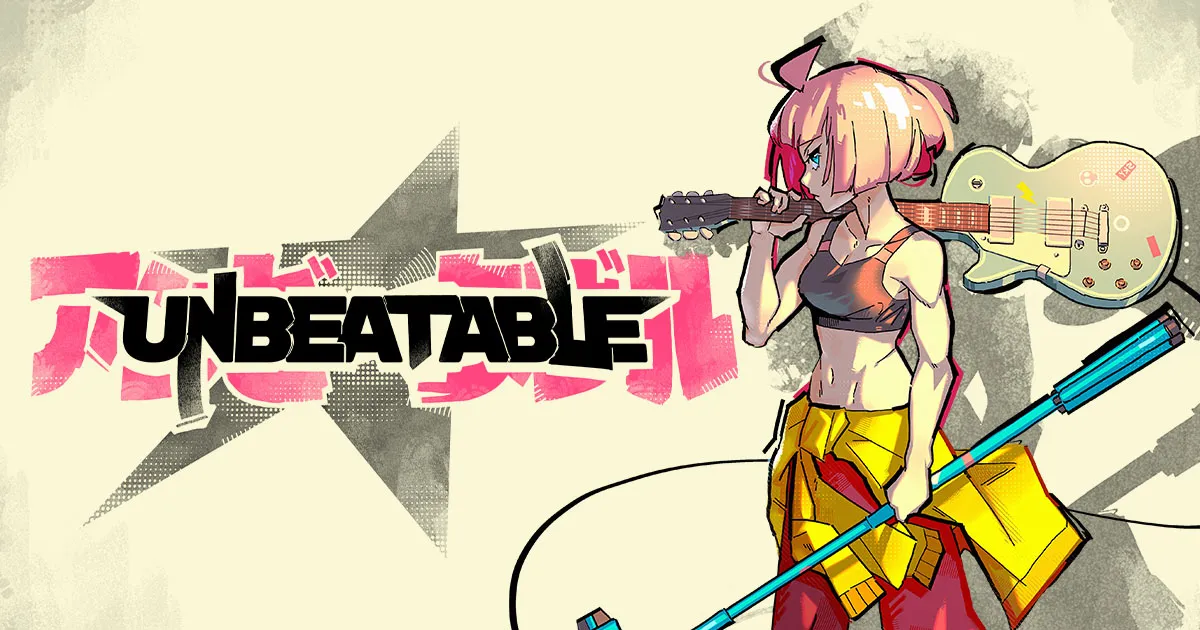

The first rule of Unbeatable’s world is enforced silence. Sound carries real danger here. Certain frequencies call The Silence, huge figures that wipe out humanity with brutal speed. That threat turns every riff into a gamble and every show into a flashpoint. You play as Beat, a pink-haired vocalist with no memory and a taste for trouble, pulled into a punk uprising. She teams up with a crew of misfits to push back against H.A.R.M., the police force assigned to keep the “safety of silence” intact.
That setup hits with sharp, hostile momentum. The game leans on the visual defiance of 90s street culture and the scuffed, garage-ready attitude of early 2000s indie rock. The stakes land fast. Art in this place counts as a crime. Beat and her band are not chasing fame. They are chasing the right to exist at full volume. It drops you into a stylized revolt where picking up an instrument functions like a weapon aimed at a rigid, drained-out system.
The Mechanics of Chaos
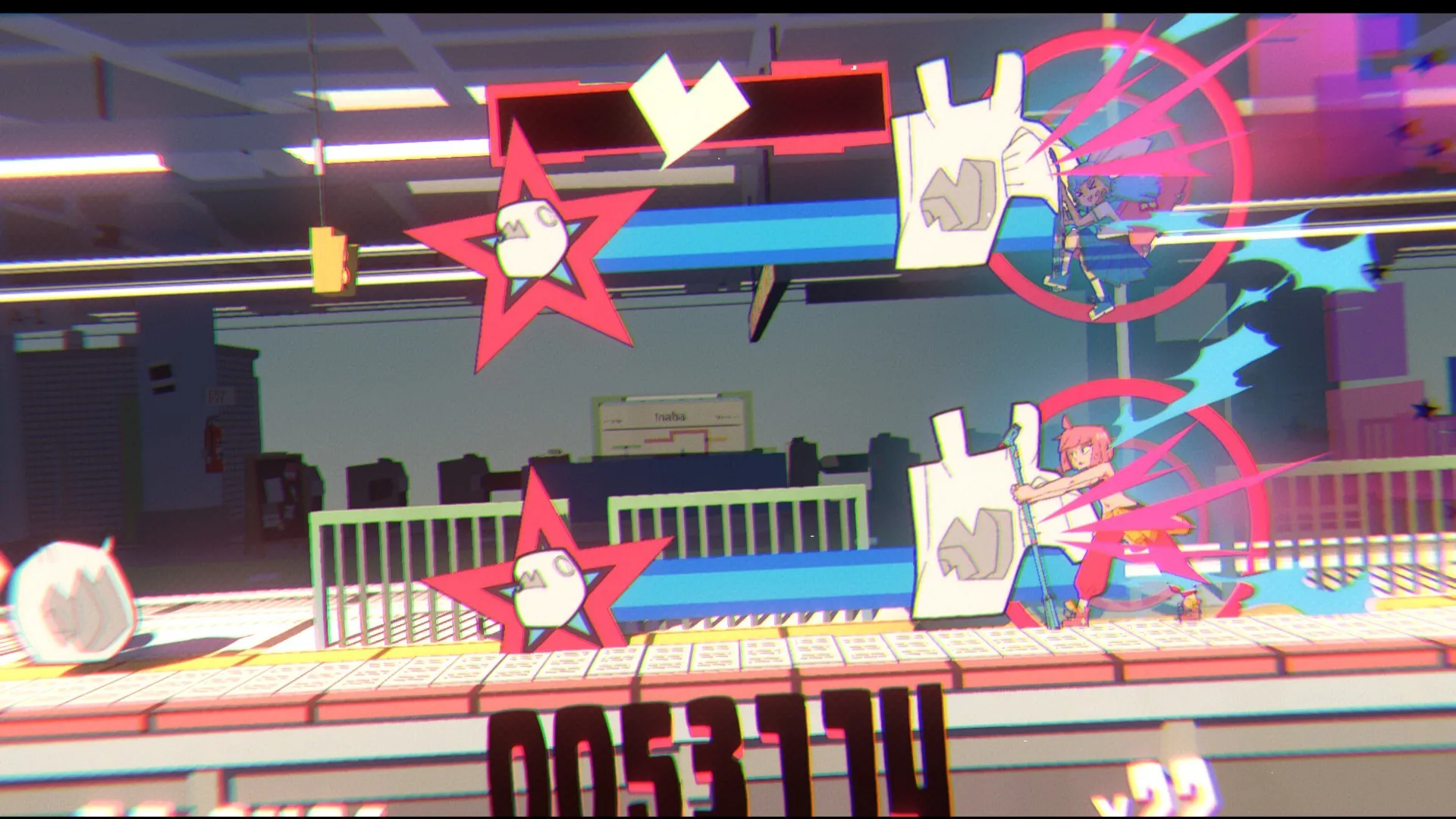
Unbeatable’s rhythm engine runs on clean, almost austere design. Everything funnels into two lanes. Notes stream in from the right toward an upper track and a lower track, and you hit the matching input on the beat. The pitch is friendly. There’s none of the multi-lane sprawl you get in a piano-style chart, and it skips the wide, peripheral coordination some drumming-focused games demand. Two inputs. One song. A simple contract.
Play turns that simplicity into a trapdoor. The charts mix sustained holds, rapid mash prompts, and spiked obstacles that ask for a dodge input. The way these note types collide creates a frantic grammar you have to internalize. Push into higher difficulties and the density starts to click into real flow, the kind that can stand beside the strongest rhythm games in the space. You hit that tunnel-vision state where your hands respond before your brain finishes narrating what’s happening.
The default controls interrupt that feeling. The upper and lower lanes map to the left and right sides of a controller or keyboard out of the box, which forces your eyes to read vertical movement while your hands answer with horizontal motion. High-speed charts become harder to parse, and the margin for error shrinks. Remapping turns into basic survival. Shifting inputs to shoulder buttons or triggers creates a clearer relationship between fingers and lanes. The strange part is how little the game nudges you toward that solution.
Once you move beyond “Normal,” readability becomes the real opponent. The presentation favors attitude over legibility. The camera keeps moving, zooming, panning, and jolting with the beat like a handheld clip shot in the middle of a basement set. A persistent VHS filter adds grain, chromatic aberration, and distortion. It looks fantastic in a still image. In motion, it can bury the notes under visual clutter. The screen can get so busy that the information you need to play slips out of focus. The accessibility menu offers switches to reduce camera motion and cut certain effects, and many players will lean on those settings to keep the charts readable.
The Long Walk Between Songs
Unbeatable positions itself as an adventure first, rhythm game second, and Story Mode is built around that priority. You don’t hop from track to track. You live in the space between them. Most of your time goes to moving through 3D areas, talking to NPCs, and handling story tasks. The walking-to-music ratio tilts hard toward walking. Long stretches can pass before a major rhythm battle shows up. Anyone expecting constant musical play may spend a lot of time in train stations and factories waiting for the next song to finally kick in.
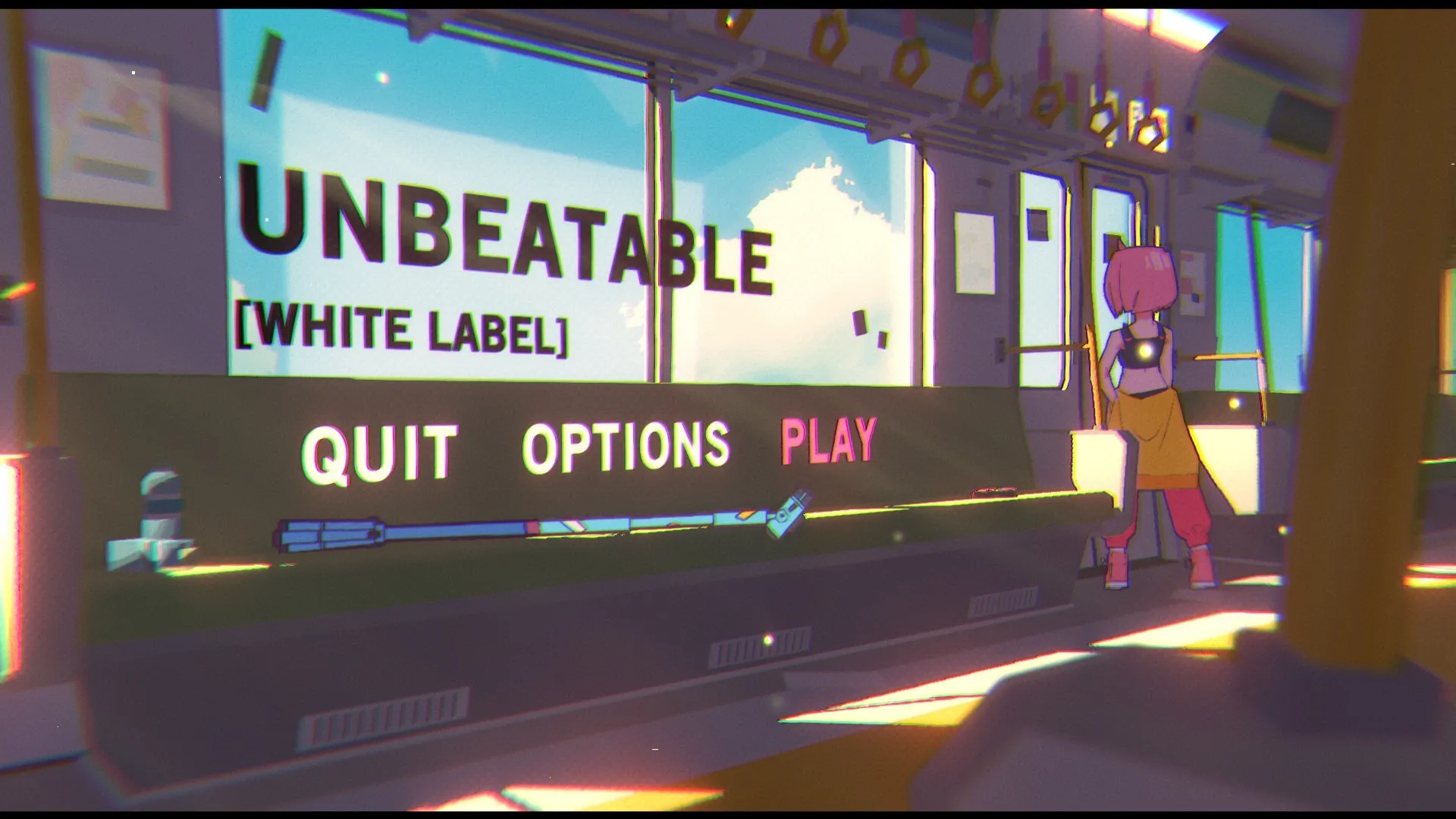
The game tries to occupy those quiet gaps with minigames. You mix drinks behind a bar, poke through environmental puzzles in a sewer, swing at baseballs in a batting cage, and check serial numbers during a bomb disposal task. These bits don’t match the rhythm engine’s finish.
The batting cage is the clearest example. The timing lands loose and erratic, and it feels detached from the beat the world claims to run on. The result is friction with the inputs where you want groove. The sewer puzzle leans on back-and-forth valve running while bandmates reopen what you just closed, a gag that burns through its goodwill well before the segment ends.
Pacing problems weigh on the first half. After a strong, linear opening, the story drops Beat into a “prison arc” that slows everything down. You spend a chunk of time doing repetitive chores for guards. It plays like padding, delaying the payoff of band-driven play and locking you into a dull loop. The intent may be to mirror the grind of incarceration, and the effect is player disengagement.
Story editing adds another layer of frustration. Scenes often jump between locations with no connective tissue. You can finish a conversation in a prison cell and then snap straight to a cafeteria or a surreal dream sequence without an establishing beat. It reads like missing material rather than a deliberate rhythm. Threads loosen. Some cutscenes or dialogue repeats word for word, leaving you guessing about a bug versus a script loop. The campaign’s eight-hour run ends up feeling fragmented, with the world’s geography and sense of time rarely settling into place.
Discord Logs and Tonal Whiplash
The script stays focused on Beat’s band dynamics. The group lines up with familiar anime-style roles: Beat as the sarcastic reluctant hero, Quaver as the hyperactive innocent, Treble carrying anxious awkwardness, Clef as the loud, aggressive foil. Their back-and-forth drives the story, delivered in the rapid, chaotic cadence of a teenage Discord server. It’s a nonstop stream of non-sequiturs, internet slang, and inside jokes.

That voice will split players. Some will read it as a sharp capture of online friendship and youth culture. Others will find it exhausting. A lot of the humor leans on “randomness” standing in for wit. Conversations spin around small talk for long stretches, with little attention paid to the lethal danger the setting keeps advertising. The dialogue swings between charming and grating, and it struggles to land in a space where the cast feels like people instead of text-to-speech machines firing off bits.
There’s also a major tonal clash baked into the premise. The setting points toward censorship, state oppression, and the commodification of art. The Silence and the H.A.R.M. police suggest high stakes. The script repeatedly undercuts that weight with meme-driven jokes. The villains come off like irritating hall monitors, not frightening agents of a totalitarian system. The lack of menace makes it harder to emotionally buy into the rebellion. Scene after scene plays tug-of-war between sincere drama about creativity’s cost and the energy of a shitpost.
Late in the game, the story steadies. The final act comes together with sincerity and real emotional punch. The ending lands a clear message about connection and the urge to create, tying the chaos together in a way that feels earned through the force of the music and visuals. Worldbuilding stays messy through the credits. The origin of The Silence and the details of Beat’s past often contradict each other or go unexplained. The game leans on mood and emotional impact, asking you to ride the feeling without interrogating every detail.
The Pure Experience
Arcade Mode functions like relief for anyone who bounced off Story Mode. It cuts the walking, chatter, and errands and presents the design in its cleanest form. Pick a track, pick a difficulty, play. The rhythm systems get room to breathe, and the flow stays intact. The loop of selecting a song, learning its chart, and chasing a higher score makes the strength of the gameplay design obvious.
Arcade Mode also comes loaded with content: global leaderboards, a wide set of modifiers to tune challenge, and a big library of songs. Progression is handled through a “Challenge Board.” You unlock tracks, skins, and titles by clearing specific objectives. The idea adds motivation, and the execution stumbles. Many challenges read like riddles. A task might say “find the blue feeling” and leave the concrete goal unstated, which can block access to content. Time goes into searching for answers online instead of playing.
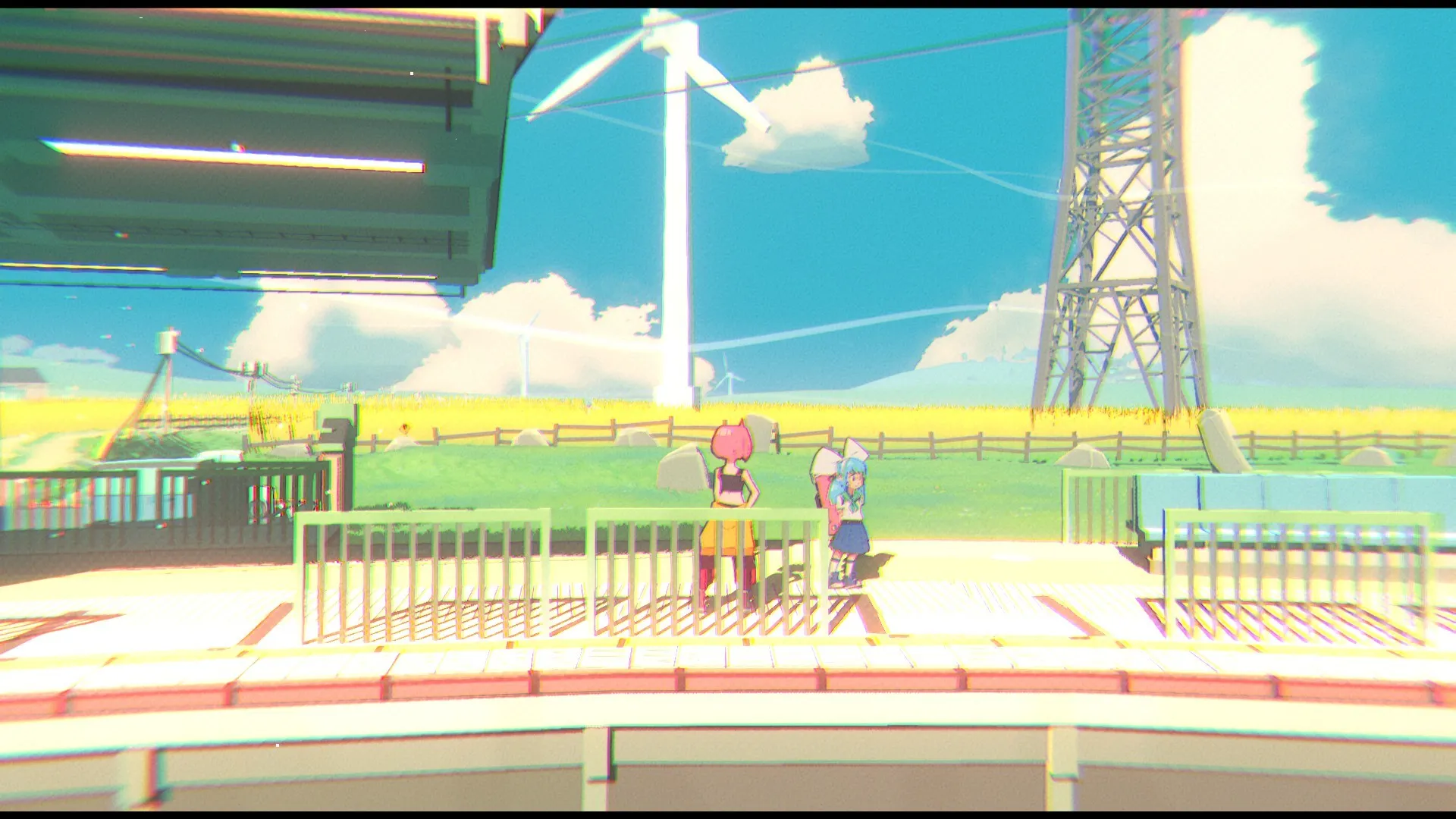
Extended time in Arcade Mode exposes another limitation: the visuals repeat. Story Mode moves you through varied spaces, including bright beaches and industrial factories. Arcade Mode stays tied to one main backdrop, a rural Japanese train station. High-energy punk and somber electronic tracks play out against the same platform again and again. It feels like a missed chance to reuse campaign locations and keep the presentation fresh.
Visual Noise and Sonic Fury
Unbeatable locks in its look from the opening frame. The art uses a paper-cutout approach, dropping 2D hand-drawn character sprites into fully 3D spaces. The contrast gives the scenes depth and texture, and the lighting does serious work. Late-day sun throws long shadows, neon signs shine across wet pavement, and the palette hits hard with high-contrast pinks, cyans, and deep blacks. It reads like a punk zine brought to life.
That ambition runs into rough technical edges. Polish is inconsistent. Sprites clip into 3D geometry. Exploration camera angles can get stuck, blocking your view or hiding interactable objects behind walls. Softlocks show up often enough to sting. You can end up trapped in a dialogue box that won’t advance, forcing a restart. The game keeps reminding you it’s a small indie project stretching its limits.
Music holds the package together. The soundtrack is the clear highlight, spanning garage rock, breakbeat, jungle, and ambient electronica. The original songs performed by the in-game band have raw, contagious drive, and they land like real tracks rather than filler. The audio direction makes the rebellion feel physical. Some songs sit behind DLC, and the base game still offers a generous selection. Sound effects punch in sync with the visuals, giving hits and chords weight.
The best moment-to-moment payoff comes from how music ties into combat animation. Strong play triggers fluid, stylish attacks. Beat swings her microphone stand like a weapon, enemies snap back on the drums, and your timing translates straight into on-screen impact. When the chart, the controls, and the presentation line up, it’s pure kinetic satisfaction.
Unbeatable is built around contradictions. It’s a rhythm game that can make you wait hours before it lets you really play music. It tells a story about oppression through internet jokes. It aims for visual brilliance and regularly breaks the illusion with jank.
Arcade Mode delivers a tight, addictive rhythm experience that can hang with the best of the genre. Story Mode struggles under pacing issues and scattered focus. Players who push through the messy structure and technical snags will find real joy inside the rebellious energy, with music loud enough to carry a lot of the weight if you’re willing to stick with it.
The Review
Unbeatable
Unbeatable is a stylish, sonic powerhouse hamstrung by its own ambition. The core rhythm gameplay is electrifying—a kinetic fusion of garage rock energy and deceptively simple mechanics that truly sings in Arcade Mode. However, the Story Mode drags the experience down with severe pacing issues, disjointed editing, and tonal whiplash that undercuts its rebellious themes. While the audio-visual presentation is a triumph of anime aesthetics and indie spirit, the narrative "adventure" often feels like filler between the hits. It is a game you play for the music, despite the noise surrounding it.
PROS
- An incredible mix of garage rock, breakbeat, and jungle that drives the entire experience.
- The "paper-cutout" aesthetic with 2D sprites in 3D worlds creates a stunning, unique look.
- A polished, high-replayability mode with deep leaderboards and challenge systems.
- Crucial toggles for camera shake and control remapping help mitigate visual chaos.
CONS
- The story mode is filled with menial tasks, backtracking, and long stretches without gameplay.
- The script oscillates awkwardly between serious dystopian themes and exhausting internet humor.
- Frequent issues with softlocks, camera obstruction, and erratic minigame controls.
- The default input mapping is unintuitive and actively hinders high-level play.