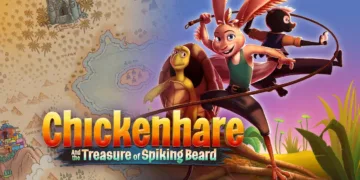


















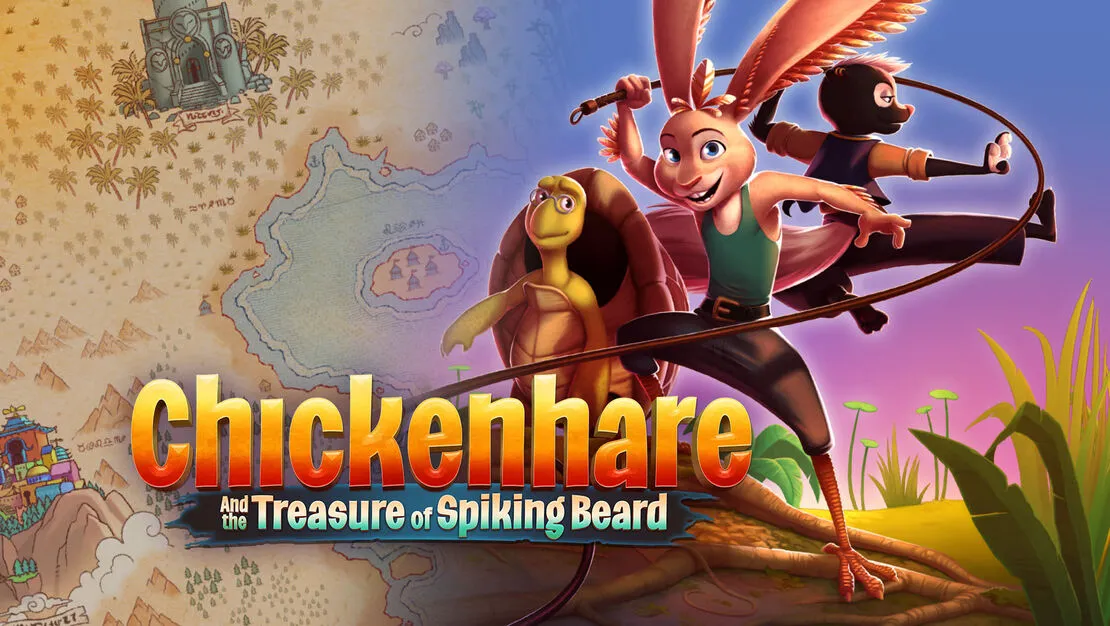

Chickenhare and the Treasure of Spiking-Beard is a 3D action-platformer from developer N-Zone built for an all-ages audience. Its look and cast come from the Chickenhare graphic novel series by Chris Grine, and it echoes the style of the animated films, including Chickenhare and the Hamster of Darkness.
The central quest is a race against the clock. Chickenhare (Hopper), Abe the nervous turtle, and Meg the martial arts expert skunk work together to retrieve the seven lost crystals of the magical golden feather before the pirate Spiking-Beard can claim them and doom the Kingdoms. The adventure plays as a breezy, direct entry point for young players into the franchise’s world.
The Dynamics of Tri-Character Switching
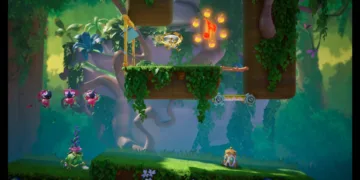
Chickenhare rests on familiar 3D platforming fundamentals: jumping, basic puzzle-solving, and staged progression through varied locations that range from cities in the sky to forests and volcano interiors. Its defining system is instant swapping between the three heroes. Progress depends on that swap, since level layouts and puzzles regularly call for one specific skill at a time.
The game frames the trio as a team, and the swap mechanic keeps that idea active from obstacle to obstacle. The design also compartmentalizes abilities. Levels and puzzles tend to demand the specialized tool of a single hero at a given moment, which turns the swap into a required step and leaves little room for improvisation in teamwork.
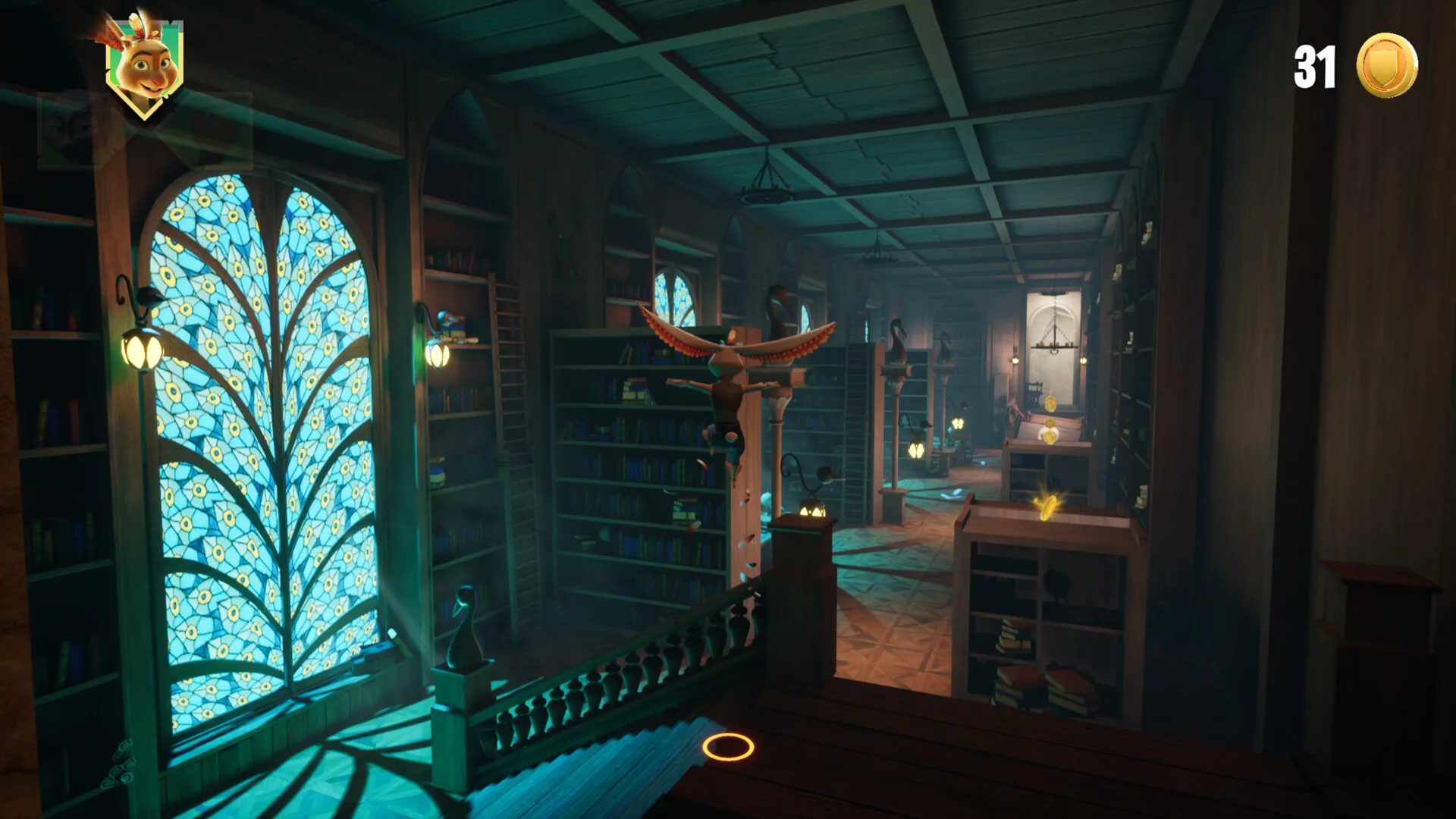
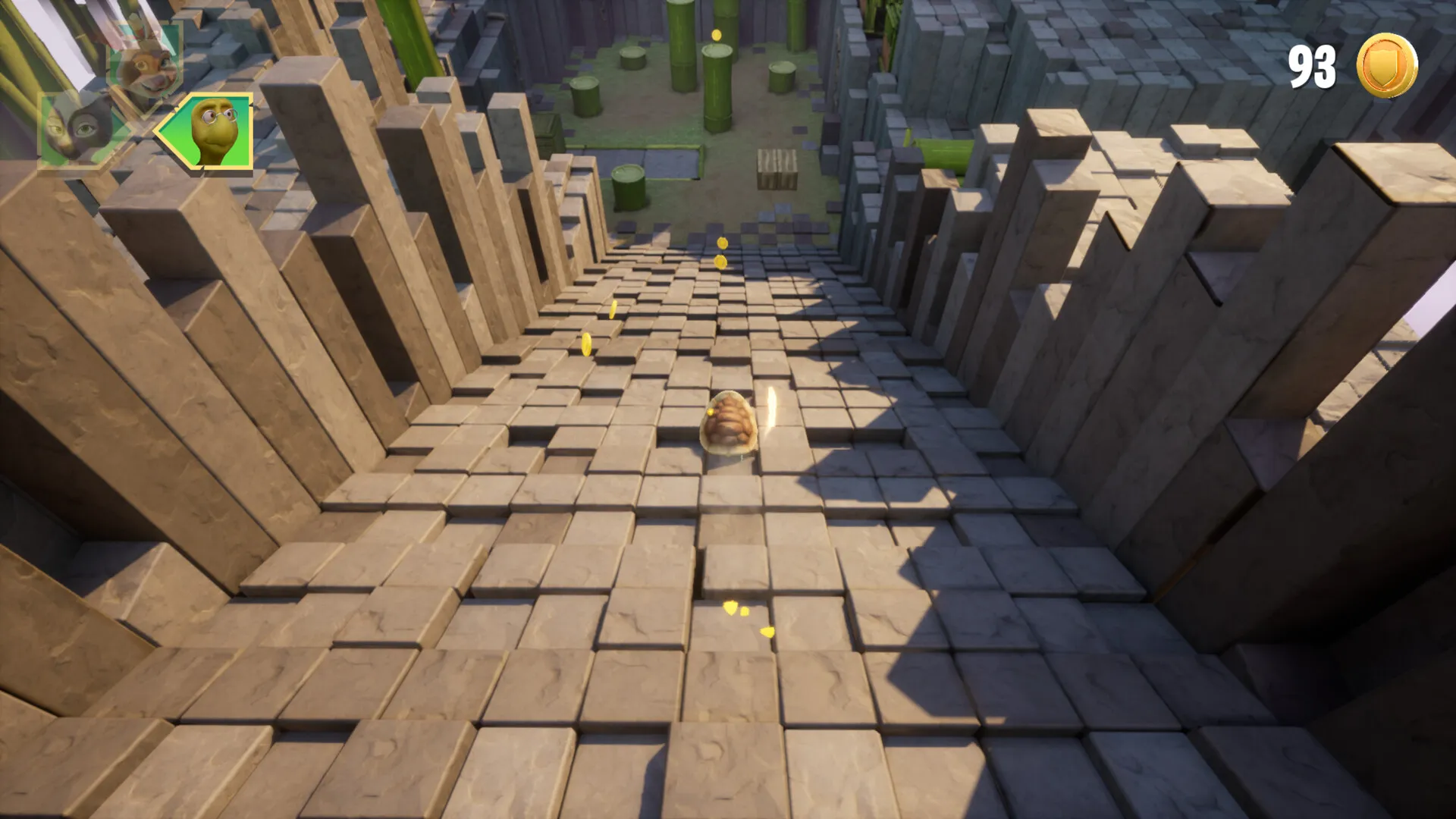
Chickenhare carries most of the exploration flow. After a jump, he can hover or glide by using his large ears to stay in the air longer, and that extra airtime becomes a constant tool for traversal. His whip covers several interaction beats: breaking obstacles, hitting switches, and swinging across gaps. Abe shifts the pace toward defense and brute force. He can tuck into his shell to smash through barriers or slide down ramps, and the shell also shields him from hazards such as fire. Abe’s shell stomp (jump + Square) matters for destroying specific platforms, and his shell form doubles as a way to power through set pieces that would stop the other two.
Combat leans toward Meg. She fights with punches and kicks, and she has an area-of-effect special move that builds by charging a gas cloud to clear multiple enemies. World structure stays straightforward. Each world splits into three stages and ends with a boss battle. The difficulty aims squarely at younger players, so boss encounters keep their demands simple and readable. Some fights hinge on a story beat where a technically allied character has been tricked by the villain, which matches the game’s tone.
Visual Inconsistency and Audio Deficits
Chickenhare’s visuals swing in quality from scene to scene. The game reaches for the look of the animated films, and the graphical fidelity wavers. Some environments look appealing, water sections in particular. Other stretches land with a dated feel that recalls the PlayStation 2 or early PlayStation 3 era. Technical issues sharpen that inconsistency. Low-quality textures show up often, and they sometimes fail to load correctly at the start of a level or during transitions. Graphical glitches can pull the player out of a scene, like the antagonist briefly appearing to float over a pier in a cutscene.
Sound struggles in similar ways. The soundtrack repeats heavily and often feels mismatched to the environment the player is exploring. Track overlap adds another annoyance, with level music bleeding into the menu theme after a stage ends. Voice acting plays a small role. Character voices sit at low volume and appear mainly in specific cutscenes, leaving much of the dialogue to silent text boxes.
Technical stability becomes a bigger obstacle than any enemy. Players can hit freezing, extreme frame rate drops in certain zones, and input recognition failures. One example is the whip prompt to swing repeatedly failing to appear, which turns a basic traversal action into guesswork. The camera offers one of the steadier elements. Its mostly fixed framing avoids the disorientation common in 3D platformers. Jump landings still take judgment even with the aiming indicator.
Shallow Narrative Arc and Limited Replayability
The story uses a classic McGuffin chase. The trio hops between worlds in pursuit of Spiking-Beard, and the writing keeps the beats light and straightforward. That simplicity avoids complex storytelling, and it leaves little room for character depth.
Background details for the protagonists stay thin, so the game never explains how they became friends or captures the charm suggested by the source material. Lighthearted banter shows up along the way, and the emotional impact stays low. The ending is predictable in the way many children’s stories are, and the final cutscene feels abrupt, coming in under 30 seconds.
The short runtime shapes the replay loop. A main playthrough sits at about four hours, so the pursuit of 100% completion carries most of the staying power. The game includes a full set of trophies and achievements tied to a five-star rating system for each stage. Five stars ask for collecting all coins and treasure or finishing a level without taking damage.
Those targets can satisfy completion-minded players by pushing cleaner routes and tighter execution. They do not change the brevity of the core experience. The design favors accessibility for a young audience, offering a functional, easy platforming experience.
The Review
Chickenhare and the Treasure of Spiking-Beard
Chickenhare and the Treasure of Spiking-Beard is a functional, if technically inconsistent, 3D platformer designed for a very young audience. While the character-swapping mechanic provides some variety, the overall level design is shallow, rarely pushing the heroes' abilities. The short playtime, simplistic narrative, and pervasive technical issues, from poor texture loading to frame rate drops, detract significantly from the experience. It serves as a brief, easy entry for fans of the source material but offers little to compete with other platformers on the market.
PROS
- Functional core 3D platforming
- Instant Character Swap mechanic
- Accessible for a young audience
- Full achievement/trophy list for completionists
CONS
- Technical Inconsistencies (bugs, freezing, texture issues)
- Shallow Narrative and minimal character depth
- Very Short playtime (approx. 4 hours)
- Repetitive and low-quality audio/soundtrack