






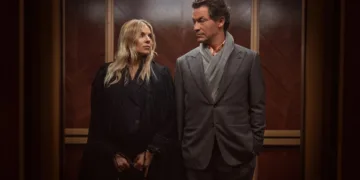
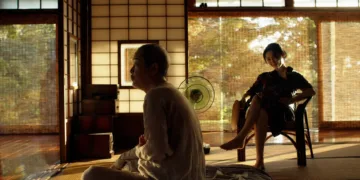








The BBC ghost-story tradition gets a cold, clinical recharging in this adaptation of E.F. Benson’s prose. Mark Gatiss loosens the production from its Edwardian moorings and plants it in the jagged anxiety of the 1940s. Roger Winstanley crouches in a tube station while the concrete shudders with the impact of distant explosives. It is a framing device that nails psychological placement in the first minutes.
The Blitz supplies a plain reason for a man to confess to a stranger. Roger meets Verity, whose calm presence becomes the channel for his admission. He describes a nightmare that has stalked him since school days, a vision that refuses to fade with morning.
That wartime setting lets the film study how easily the psyche fractures under pressure. The movement between soot-stained London and the sterile terror of the dream world goes by without a seam showing. The supernatural reads like a persistent frequency under the noise of history, audible if you stop pretending you cannot hear it. Premonition hangs over everything, along with the ugly prospect that lives run on tracks laid by forces outside our control. Gatiss keeps holiday nostalgia out of the room and commits to a sharp, expressionistic portrait of a man trapped by his own past.
Predestination and the Clockwork Nightmare
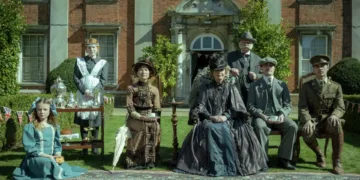
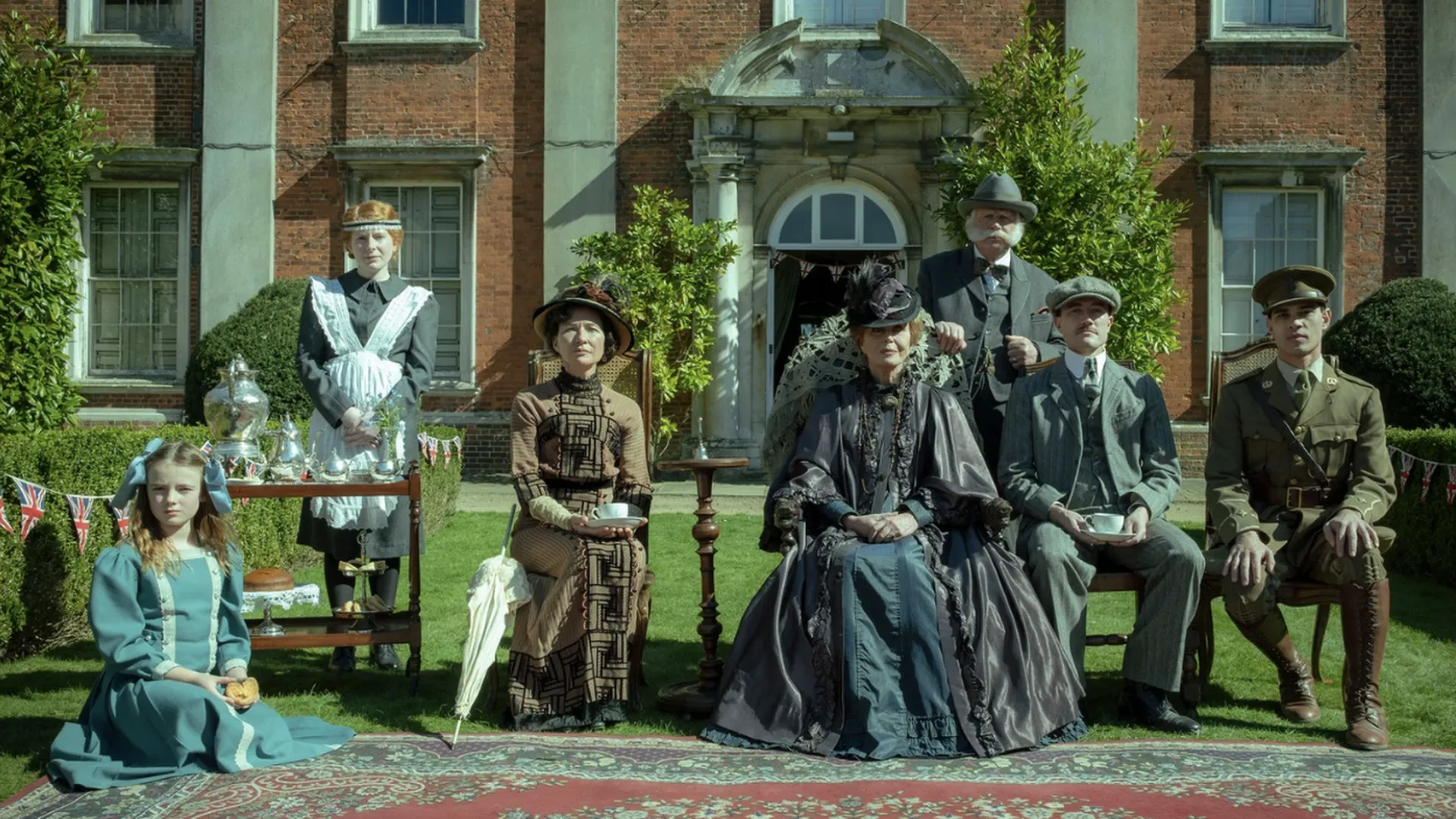
The narrative uses a nesting-doll structure that echoes trauma’s recursive logic. Roger’s dream plays as a sequence that resets, then tightens, then resets again, each visit turning the screw. He arrives at a grand Tudor house and meets a family posed in terrifying stillness on a manicured lawn.
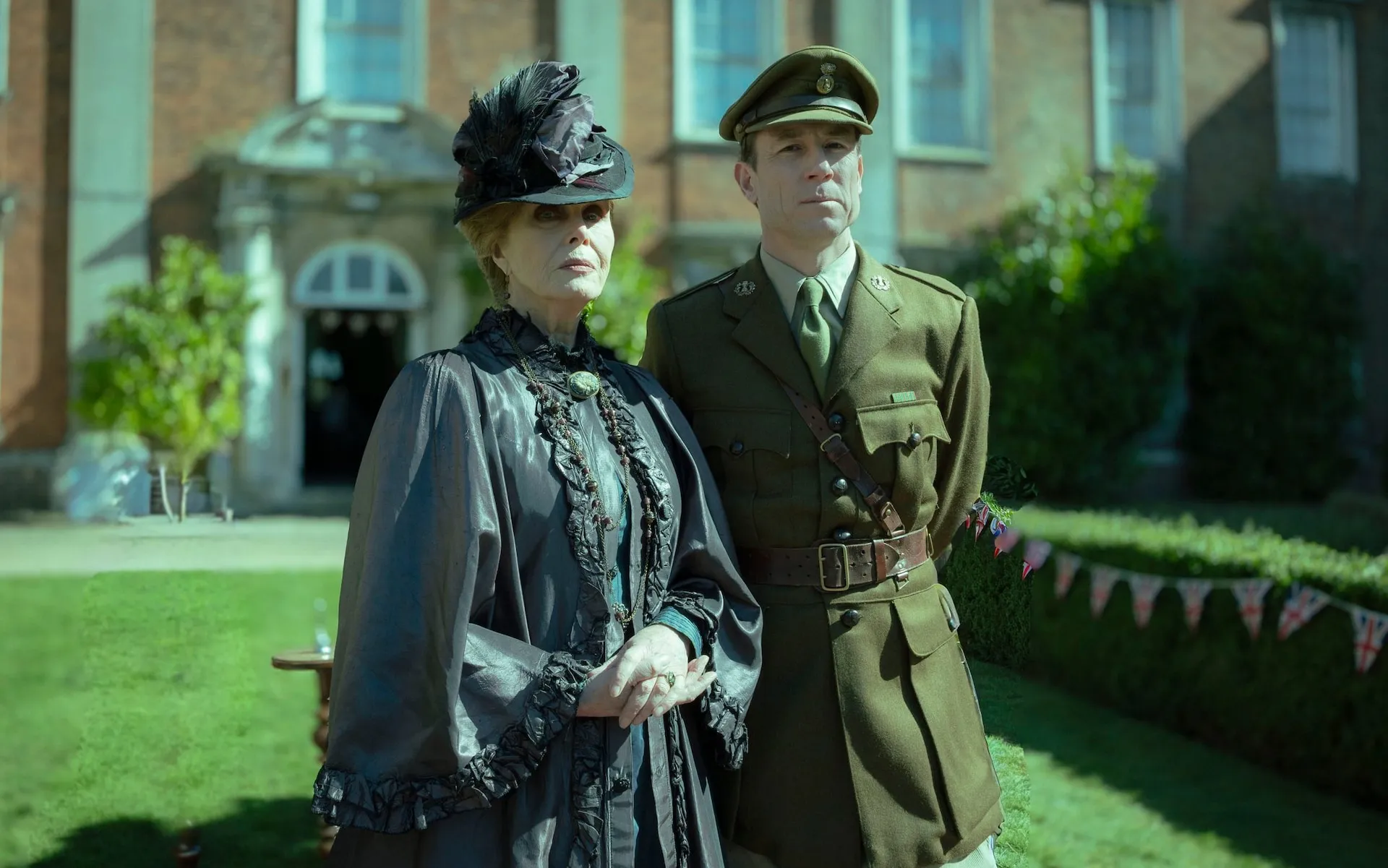
They register as silent, judgmental statues with good posture and bad intentions. Julia Stone, the matriarch, speaks where the rest do not. Her instruction lands like a linguistic blade: “Jack will show you to your room. I’ve given you the room in the tower.” The line functions as a mechanical trigger, a spoken cue that starts the machine. Roger never agrees to the terms, yet the terms keep getting enforced.
Reality clicks into place when Roger meets his friend John Clinton. The recognition that John is the “Jack” from the nightmare turns the world into a prison with excellent period décor. The house stops feeling like imagination and starts reading as destination, stubborn and physical. The film presses on the philosophical weight of fate from there. A dream that maps reality with surgical precision makes free will look like a vanity project.
Roger moves like a cog in machinery built decades earlier. The script meets that revelation with dry, fatalistic humor, the kind that suggests we are all waiting for the moment our private ghosts step into the light and announce themselves with formal manners. The pacing stays deliberate, giving dread time to sink into the viewer’s bones.
Steely Matriarchs and the Architecture of Silence
Performance styles create a tight tension between understatement and the grotesque. Tobias Menzies plays Roger with a particular strain of whispered dread, the sound of someone trying to stay quiet so fate cannot locate him. His face carries the weary expectation of a man who has already seen too much and suspects the next thing will be worse. Roger Winstanley wears the weight of a Great War veteran, his internal world treated as a battlefield. Menzies works with precision; each flinch feels earned, measured, almost calibrated.
Nancy Carroll, as Verity, provides a grounded counterpoint. She brings a wartime pluck that reads true to the period, and her pragmatic responses to Roger’s fantastic claims keep the story tethered to recognisable reality. Then Joanna Lumley arrives and takes possession of the air in the room. Draped in black mourning weeds, she plays Julia Stone as pure Victorian gothic menace, frigid and terrifyingly alive in the same breath.
Her delivery of the “room in the tower” line carries lethal intent without raising her voice, as if volume would be vulgar. The supporting cast as the Stone family hold themselves in motionless grim disapproval, like figures in a period photograph drained of blood and warmth. Their silence lands louder than any scream, building an uncanny atmosphere where each small gesture reads as threat.
Acid-Bath Greens and the Geometry of the Uncanny
Gatiss rejects the expected visual palette of period horror. The dream sequences arrive soaked in an acid-bath green tint that feels poisoned and artificial, a sickly wash that makes the world look clinically wrong. That choice pushes the film into expressionistic territory, with a nod to classic noir’s high-contrast lighting and its taste for shadows that behave like moral arguments.
Distorting lenses make the house’s architecture feel unstable. Rooms stretch, then contract, in step with Roger’s psychological unraveling. The spiral staircase returns as a motif, a vertical cage that draws him toward an inevitable confrontation. The camera follows his ascent with predatory focus, patient and hungry.
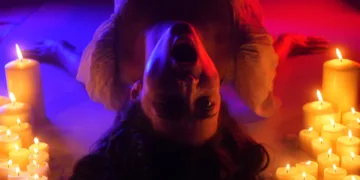
Visual storytelling hits its sharpest point through black-and-white superimpositions. Those ghostly layers suggest the supernatural sits on top of the everyday world, a veil that can be tugged aside at any moment. Lighting digs deep wells of chiaroscuro and keeps the ghost’s face withheld until the final, shocking reveal.
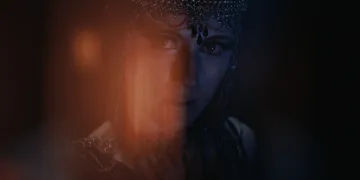
The Goya-esque self-portrait of Julia Stone on the bedroom wall stands out as a production-design triumph, a visual precursor to the ghoul’s eventual manifestation. The painting seems to glow with malevolent intelligence, watching Roger while he tries to find rest. The final moments commit to visual impact, leaning on practical makeup to create a face that lodges in the mind long after the screen goes dark.
This short film premiered yesterday, December 24, 2025, on BBC Two at 10:00 PM as the latest installment in the long-running “A Ghost Story for Christmas” anthology series. Directed and adapted by Mark Gatiss from the 1912 short story by E.F. Benson, the production is currently available for streaming on BBC iPlayer. Set during the London Blitz, it follows a man whose lifelong recurring nightmare of a mysterious house and a “room in the tower” suddenly begins to manifest in his waking reality.
Full Credits
Title: The Room in the Tower: A Ghost Story for Christmas
Distributor: BBC Two, BBC iPlayer
Release date: December 24, 2025
Rating: TV-14
Running time: 30 minutes
Director: Mark Gatiss
Writers: Mark Gatiss, E.F. Benson
Producers and Executive Producers: Isibéal Ballance, Mark Bell
Cast: Tobias Menzies, Joanna Lumley, Nancy Carroll, Ben Mansfield, Polly Walker
Director of Photography (Cinematographer): Kieran McGuigan
Editors: Eve Doherty
Composer: Blair Mowat
The Review
The Room in the Tower: A Ghost Story for Christmas Review
The production is a masterclass in atmospheric economy. It eschews modern jump scares for a persistent, psychological rot that feels entirely earned. By merging E.F. Benson's nightmare logic with the historical trauma of the Blitz, the film creates a chilling parallel between personal and national dread. Tobias Menzies provides a hauntingly fragile core, while Joanna Lumley is a revelation of gothic malice. While the final reveal is brief, the visual journey through acid-green dreams and distorted hallways is unforgettable. It is a precise, unsettling exercise in fate.
PROS
- Exceptional performances by Menzies and Lumley.
- Striking, expressionistic visual style.
- Clever historical framing of the source material.
CONS
- The thirty-minute runtime feels slightly rushed.
- The final reveal might be too brief for some.
- Some viewers may find the ambiguity frustrating.