








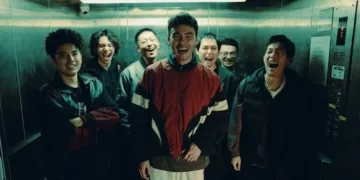
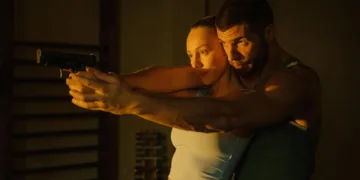
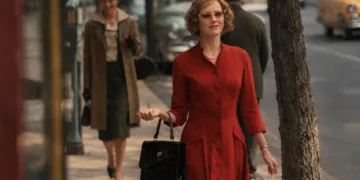



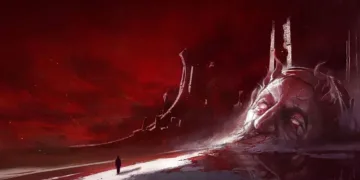




Television asks for attention all the time. Wolf asks for stamina. Adapted from Mo Hayder’s novel, it comes out swinging, with an opening so ferocious it feels calibrated to test the stomach before it tests the mind. The familiar comfort of a police procedural gets stripped away in favor of something chaotic and blood-soaked, a genre collision that treats “tone” like a dare.
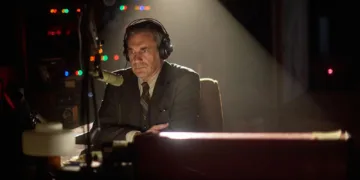
The series runs on two parallel tracks that hold their distance until the final moments. One follows DI Jack Caffery, shaped by a thirty-year-old trauma linked to his missing brother. He keeps watch on his neighbor, Ivan Penderecki, convinced the man is responsible, while pushing to reopen a Monmouthshire cold case known as the “Donkey Pitch” murders.
The other track seals the wealthy Anchor-Ferrers family inside a large, isolated country house. Their return to Wales turns into a siege after two men, Honey and Molina, enter under false pretenses and take control. Together, these two narratives form a dual engine of anxiety. The show demands tolerance for the grotesque and the absurd in equal measure, and it expects the viewer to submit to that tension right away.
The Theatre of Cruelty
The atmosphere in Wolf comes at you aggressively. It pins the viewer in a space where extreme violence and bizarre comedy share the same oxygen, and the combination aims for a kind of deliberate nausea. The horror plays graphic and immediate. Intestines hang around a garden like festive decorations. Torture arrives with a level of detail that feels uncomfortably attentive. Then the captors start performing.
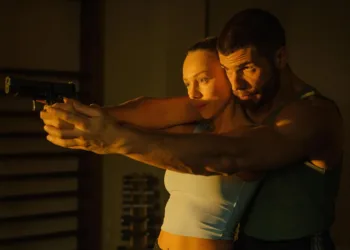
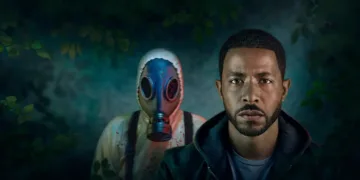
Honey and Molina bring a theatrical energy that changes the texture of the violence. They talk. They veer into erratic little riffs. They treat the home invasion like a stage, cracking jokes, referencing pop culture, and inflicting profound pain without shifting out of their routine. That friction, gore pressed up against banter, lands at a specific frequency. Anxiety spikes, then mutates into a laugh that feels wrong in your mouth.
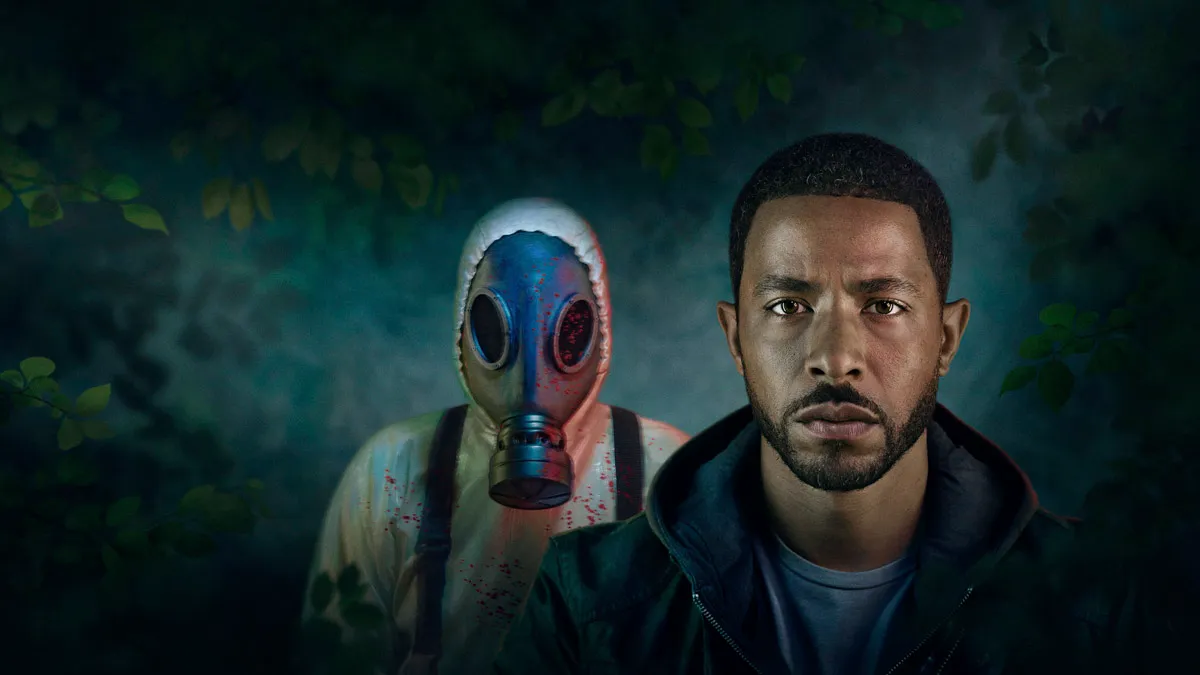
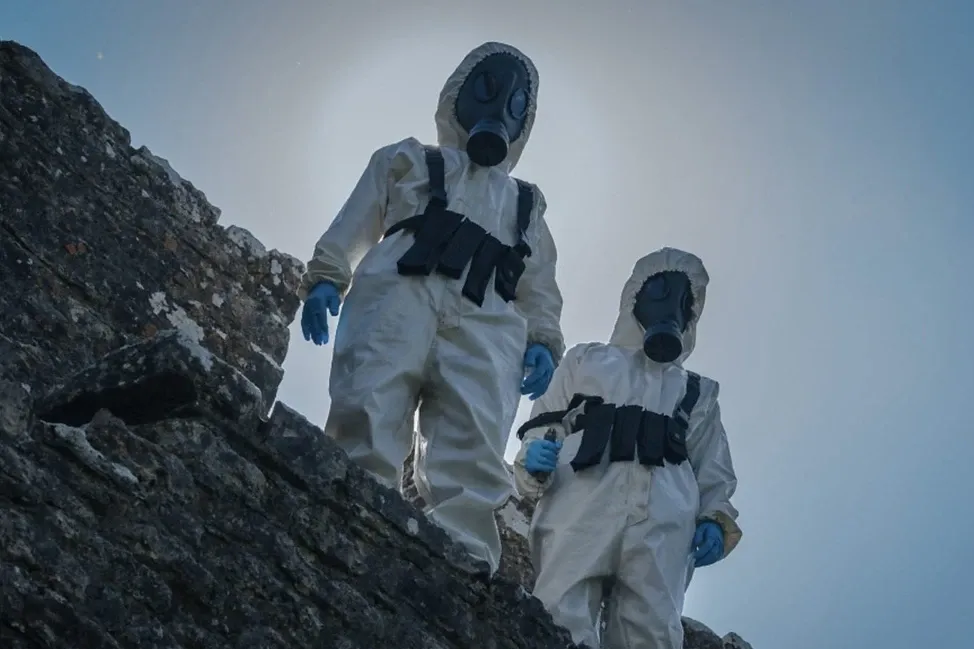
The show’s method echoes the alienation of Haneke’s Funny Games and the stylized ultra-violence of A Clockwork Orange. The production design leans into the absurdity, using the claustrophobia of the house to intensify the strange energy in every room. The attackers’ hazmat suits become a visual signature: impersonal and terrifying, with a ridiculous edge in a domestic setting. Wolf commits to the dissonance as a governing principle. It invites the audience to recoil or to laugh, then turns either reaction into part of the discomfort.
Even language becomes part of the destabilization. The recurring phrase “Donkey Pitch” returns unexplained, a blunt little marker that keeps echoing through a script that thrives on knocking the viewer off-balance. The show builds a world where the usual rules of behavior feel dissolved, leaving raw, unpredictable threat in their place. That choice keeps the experience unsettled and denies the soothing rhythm people expect from standard crime drama. It also feels very current: a series tuned to an era where shock and irony sit side by side in the feed, and the line between horror and punchline keeps getting tested.
Anchors and Anarchists
The cast carries material that could easily collapse under its own tonal weight. Performances split between grounded realism and heightened theatricality, and that separation functions like structural support.
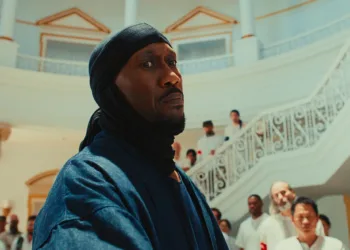
Ukweli Roach holds the series steady as DI Jack Caffery. He plays Caffery with intense interiority, bringing gravity to scenes that might otherwise float off into chaos. His seriousness suggests a man operating by the laws of physics and human emotion, even when the case details flirt with madness.
He treats the “Donkey Pitch” investigation with grim determination, like someone racing an invisible clock, and that conviction gives the procedural track credibility even while the other storyline escalates into feverish spectacle. He avoids any wink toward the audience, which matters here, because a knowing performance would turn the grotesque into a joke the show already knows how to make on its own.
Across from him, Iwan Rheon and Sacha Dhawan play the villains as a double act, feeding manic energy back and forth. Their work is loud, theatrical, and sharply timed, leaning into the camp potential while sustaining menace. They understand the mechanics of this brand of horror: threat has to feel absurd and lethal at once, because the series keeps shifting the viewer’s footing. Their vibe brushes up against a diet version of comic book supervillains, all quips and volatility, with danger sitting right behind the punchlines.
Juliet Stevenson, playing Matilda Anchor-Ferrers, connects these modes. She plays terror with absolute sincerity, and her fear keeps the stakes tangible inside a scenario that keeps curdling into performative cruelty. The casting choices land with precision. This ensemble commitment makes the tonal swings workable, keeping horror, comedy, and procedural drama in play at the same time. There’s also an industry irony embedded in the balance: the show builds its endurance test on actors doing careful calibration work, so the chaos reads as controlled rather than accidental.
The Rush to the Exit
The narrative mechanics lean on relentless pacing, and that speed helps cover logical stress points. Editing cuts between the cold case investigation and the hostage situation at critical moments, sustaining high energy through the first five episodes. The structure behaves like a pressure system: when the detective work threatens to slow, the home invasion surges; when the siege risks settling, the investigation jolts forward.
That rhythm blocks boredom and recreates the sensation of a binge-watch, even within a weekly broadcast frame. It’s a telling choice for television shaped by streaming habits, where propulsion and cliff-edge momentum often function as the real contract between show and audience.
Twists do a lot of the heavy lifting. The script keeps yanking certainty away, replacing it with a new explanation that often skews stranger than the one before. Each pivot preserves disorientation as a guiding experience, reinforcing the series’ larger impulse to deny comfort and keep the viewer reactive.
The resolution, though, struggles with the weight of what the show sets up. The final act works to bring the two storylines together, and the convergence plays hurried. The build-up stretches across hours of tense, agonizing suspense, then the payoff arrives with a speed that drains some impact from what came before. Answers come, yet the delivery lacks the heft that the earlier mystery spent so long earning. The momentum shifts into a “rush to the finish” feeling, as if tying off loose ends matters more than letting the finale’s implications sit in the air.
That choice leaves a strange aftertaste. The writing takes big swings, and the series keeps challenging the audience to keep up, even as the landing loses some of the setup’s grace. Satisfaction with the solution bumps up against the jarring pace of its revelation. The result is breathlessness that comes less from thrill than from the sudden stop at the end of a chaotic sprint.
Wolf is a six-part British crime thriller series that premiered on BBC One and BBC iPlayer on July 31, 2023. Adapted from Mo Hayder’s acclaimed Jack Caffery novels, the series was produced by Hartswood Films and APC Studios. The show is currently available for streaming in the United Kingdom on BBC iPlayer, offering viewers a mix of grisly horror and dark comedy set against the backdrop of Monmouthshire, Wales.
Full Credits
Title: Wolf
Distributor: BBC One, BBC iPlayer
Release date: July 31, 2023
Rating: TV-MA (US), 15 (UK)
Running time: 60 minutes
Director: Kristoffer Nyholm, Lee Haven Jones
Writers: Megan Gallagher
Producers and Executive Producers: Nikki Wilson, Elaine Cameron, Laurent Boissel, Ben Irving
Cast: Ukweli Roach, Iwan Rheon, Sacha Dhawan, Juliet Stevenson, Owen Teale, Sian Reese-Williams, Annes Elwy, Ciarán Joyce
Director of Photography (Cinematographer): Rasmus Arrildt, Sam Heasman
Editors: David Fisher, Joel Skinner
Composer: Chris Roe
The Review
Wolf
Wolf stands as a daring experiment in genre collision. It succeeds in generating genuine unease through aggressive atmosphere and committed performances, particularly from Roach and the villainous duo. However, jarring tonal shifts and a hurried finale prevent it from achieving greatness. It remains memorable for its audacity but risks alienating viewers seeking a traditional narrative.
PROS
- Ukweli Roach delivers a grounded and intense performance that anchors the story.
- The chemistry between Iwan Rheon and Sacha Dhawan creates a memorable, terrifying villain dynamic.
- The atmosphere is relentlessly tense and visually distinct.
- It takes bold risks with genre, refusing to be a standard police procedural.
CONS
- The extreme shifts between horror and comedy can feel jarring and unearned.
- The final resolution feels rushed compared to the patient build-up of the season.
- Graphic violence and torture may be too intense for some viewers.
- The plot relies heavily on coincidences and bizarre twists that strain credibility.