
















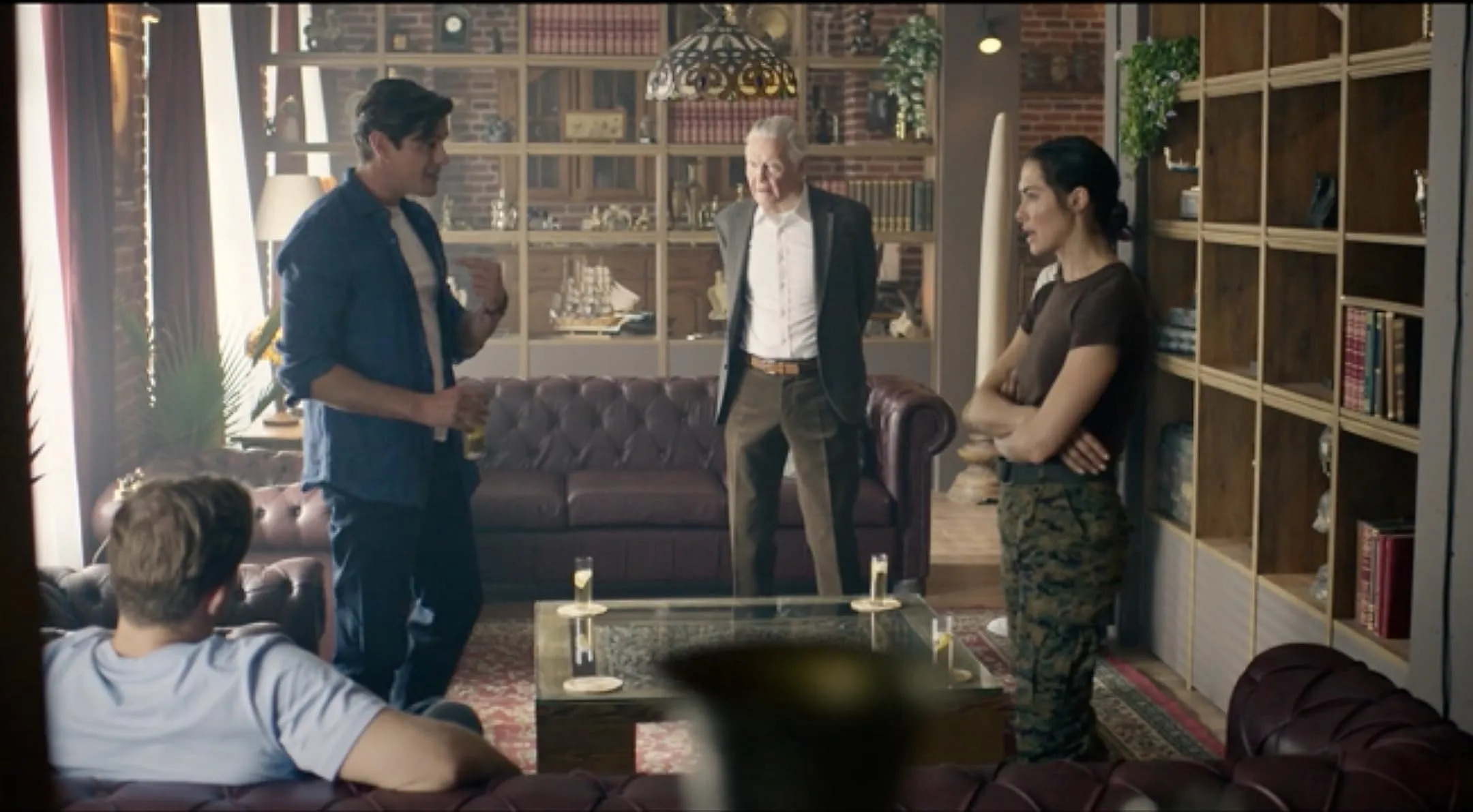

Director James Bamford teams with writer Steven Paul for The Last Gunfight, a high-stakes tour through lethal competition. The story hinges on a world-class death tournament called “The Competition,” where entrants barter their lives for a $25 million prize. That bargain takes shape through Will Griffin, whose death at the hands of organizer Anton Skoll ignites a revenge plan with a wide reach.
Nathaniel Griffin, portrayed by veteran Jon Voight, pulls his family into the next event, stepping inside the machine with the aim of tearing down Skoll’s empire from within. Bamford frames the bloodletting through a cynical reality-show broadcast lens, a formal choice that treats murder as programming and cash as the cleanest religion.
The idea is blunt, and that bluntness reads like intent: violence turns into mass entertainment, and the crowd keeps watching. Voight shares the arena with action regulars Daniel Bernhardt and Shaina West, filling out a landscape where survival functions as the only spendable coin. The framework lands on familiar ground, and the film commits to its brutal rules with a steady stare.
Archetypes of the Heist
The film slides away from a straight tournament track and reconfigures itself into a coordinated, heist-shaped revenge story. That shift lets the Griffin family operate like a single instrument, slipping into a corrupt system as participants and saboteurs at once. Nathaniel Griffin plays the cold strategist, and Voight carries the part with weathered gravity, the sort that suggests he has read the rulebook and already found the loopholes.
Bernhardt appears as a “killer priest,” a figure pitched at the junction of divine judgment and physical lethality, equal parts sermon and execution. Sam Symons’ Jimmy gets the most pleasing recalibration: he arrives with a “dork” surface, then reveals a savage streak that snaps the character into a different silhouette. West supplies raw force as a defining trait. Charlotte Vega serves as the emotional anchor, keeping the carnage tethered to a sense of human cost.
The dialogue favors stripped-down utility. Some viewers will tag it as cheesy; I read it as self-deprecating charm, a small grin toward its own genre DNA. At 89 minutes, the film keeps its spine tight. It moves through combat rounds with predatory efficiency, leaving little spare space. These figures register as archetypes, and they still function cleanly as parts in the mechanism of vengeance.
Also Read




The Mechanics of Carnage
Bamford’s stunt background shows up where it counts: in choreography that values legibility and impact. The martial-arts exchanges land with clarity and force, and the camera does not spiral into the frantic shakiness that so often muddies modern action. Movement stays readable. Hits arrive, bodies fall, and the film wants you to register the physical consequence of both. The “gun round” stands as a clear peak, pushing the tempo into a higher gear and adding a splash of visual flair that punctuates the structure.
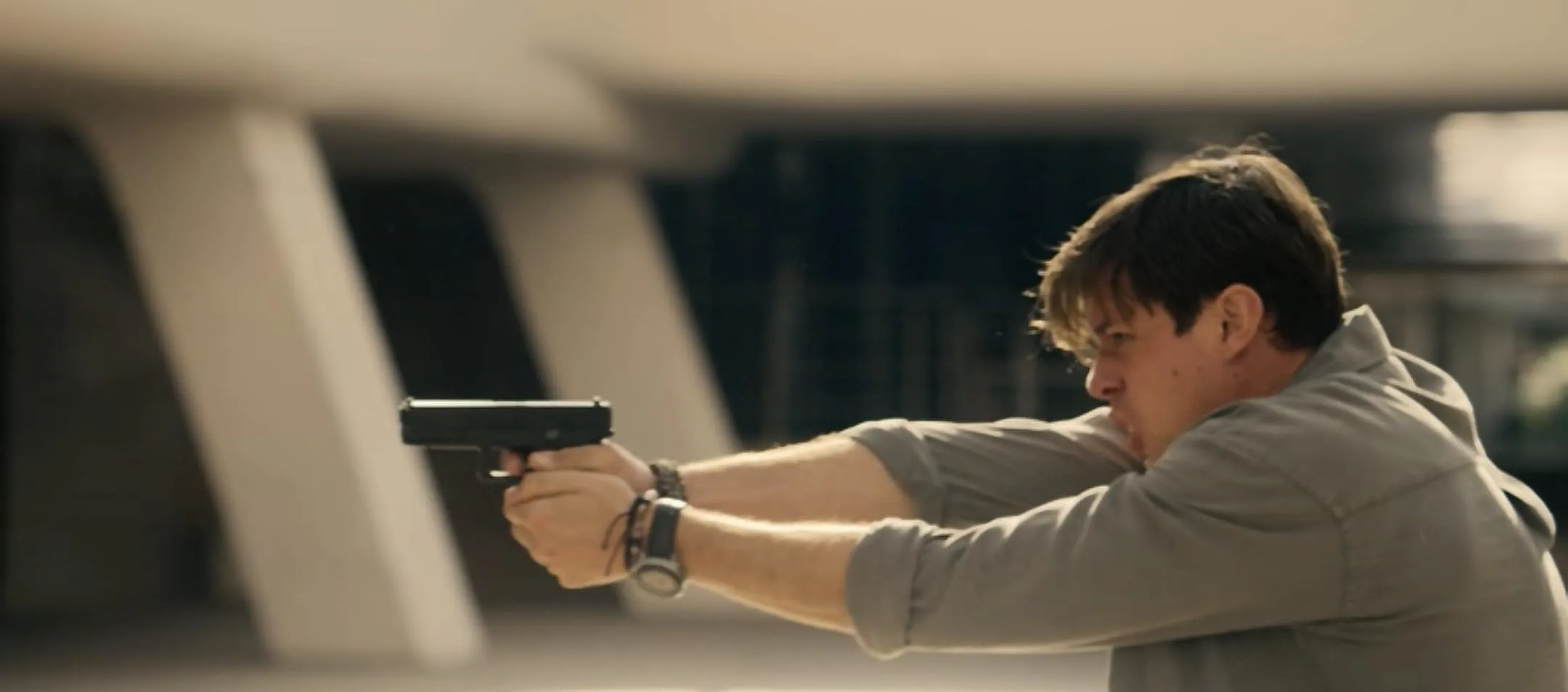
The production sometimes tips its hand about a modest budget. Reused locations and digital muzzle flashes signal lean resources. The blood effects, though, look surprisingly fluid, offering a visceral counterpoint to color grading that can feel clunky.
Each round arrives with a defined theme, and the intensity climbs in measured steps as the finale nears. The film keeps a steady relationship between hand-to-hand sequences and high-octane shooting. Bamford understands the physics of a punch and translates that weight to the screen through clean execution. The technique chooses clarity over abstraction. You see the hit. You register the impact of the fall.
Rituals of the Arena
The Last Gunfight sits firmly in tournament-cinema tradition, echoing the dystopian satire of The Running Man while borrowing sleek lethality from John Wick. “The Competition” runs on an explicit code, and those rules matter. They supply the frame that gives the surrounding violence narrative weight; without them, the carnage would drift into noise. The finale introduces twists tied to the Griffin family hierarchy, and betrayals complicate the route toward payback, even when the broader direction stays easy to follow.
The film bills itself as a “Game of Millions,” and it plays to spectacle and momentum over dense philosophical inquiry. Realistic physics does not sit high on its list of priorities. Internal arena logic does. For viewers hunting a gritty brawler, the entertainment value lands high because the film respects what its genre demands. The choreography carries more force than the script. It plays as a lean, violent diversion that understands its market position and operates accordingly.
The Last Gunfight premiered on May 27, 2025, and was primarily released across major video-on-demand (VOD) and digital platforms. As of today, January 4, 2026, viewers can stream the film on Paramount+ or purchase/rent it through services such as Amazon Video, Apple TV, and Fandango at Home. The movie delivers a high-octane narrative centered on a lethal tournament of assassins, blending intricate martial arts choreography with a gritty revenge plot.
Full Credits
Title: The Last Gunfight
Distributor: Paramount Global Content Distribution, Paramount Pictures
Release date: May 27, 2025
Rating: R
Running time: 98 minutes
Director: James Bamford
Writers: Steven Paul, J.D. Zeik
Producers and Executive Producers: Steven Paul
Cast: Jon Voight, Adam Woodward, Charlotte Vega, Daniel Bernhardt, Shaina West, Brock Pierce, Rade Sherbedgia, Eloise Lovell Anderson, Alix Villaret, Skyler Shaye
Director of Photography (Cinematographer): Ivan Vatsov
Editors: Tony Dean Smith
Composer: Rich Walters
The Review
The Last GunFight
The Last Gunfight provides a visceral, fast-paced dive into the mechanics of a lethal game. While the narrative depth remains shallow, the execution of its action sequences reveals a high level of technical proficiency. It functions as a lean brawler that respects its own brutal internal logic. The commitment to clear choreography outweighs the limitations of its budget and script. It remains a solid choice for fans of the tournament genre who prioritize momentum over complex storytelling.
PROS
- Powerful fight choreography led by James Bamford.
- Fast pacing that maintains high tension throughout.
- Engaging action performances from Daniel Bernhardt and Shaina West.
- Clear visual storytelling during the "gun round" sequences.
CONS
- Thin character development and archetypal dialogue.
- Low production values in set design and digital effects.
- Derivative plot elements borrowed from similar tournament films.
- Inconsistent lighting and color grading in several scenes.