

























State of Statelessness arrives as an anthology from the Drung Tibetan Filmmakers’ Collective, created by artists working inside a far-reaching diaspora. The film looks at a community held together by culture even as geography breaks it into separate lives. Statelessness appears here as an emotional fact that shapes daily living, with legal status pushed to the side.
Exile reads as a continuing psychological condition, a wound carried forward across generations. Across four narratives set in Vietnam, India, and the United States, the project builds a mosaic of endurance. Motifs of flowing water and sudden loss recur, giving the stories a shared philosophical temperature.
The tone stays quiet and restrained, steering clear of the loud dramatics common to political cinema. It watches people scattered across borders who remain spiritually tied to a common heritage. This collection studies how identity holds when homeland shifts from a place you can touch into memories and rituals you keep repeating.
Four Portraits of Dislocation
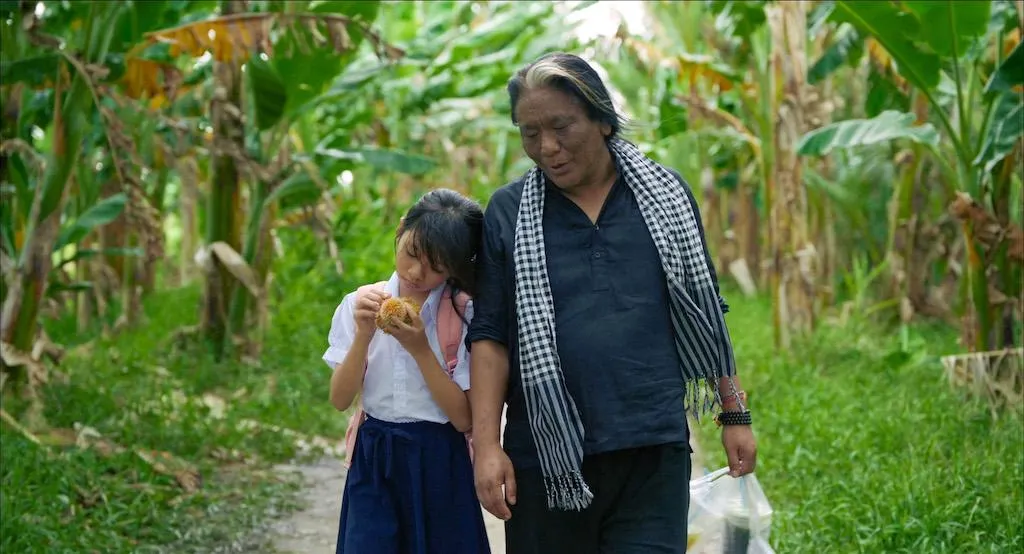
The opening chapter is Tsering Tashi Gyalthang’s “Where the River Ends,” set in Vietnam. Tenzin and his daughter Pema travel the Mekong River, and Tenzin treats the waterway as an artery that links them back to Tibet. The story tracks two different relationships to place: Tenzin carries a mournful attachment to what has been lost, and Pema moves through their current home with lively attention. Political reality enters through conversations about upstream Chinese dams that restrict the river’s flow, turning water into a sign of geopolitical pressure that reaches into ordinary life.
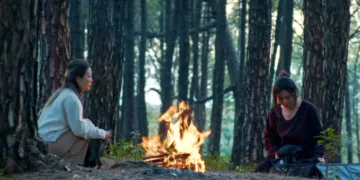
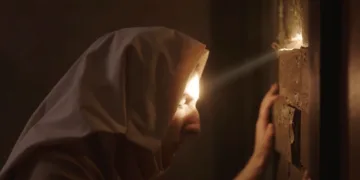
Sonam Tseten’s “Bardo: In-Between” shifts to India for a funeral. Sisters Yangchen and Bhuti prepare for their mother’s cremation, and grief pulls buried resentments into the open. The segment examines how migration fractures family units, with tension rising where rigid traditional rituals meet the practical demands of living abroad. A candlelit scene becomes a visual anchor for that friction, holding the characters in a small pool of light as their obligations and emotions press in.
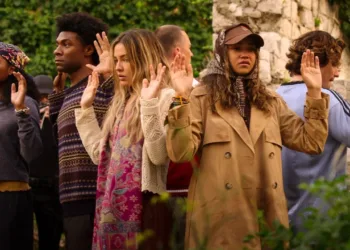
The third segment, “Little Cloud,” directed by Tenzing Sonam and Ritu Sarin, takes place in Dharamshala. Sonam and Kesang mourn their child, and their private sorrow sits inside a public setting shaped by movement and departure. Jigdal arrives as a boastful friend from America, and his presence disrupts local habits of idealizing emigrants. His brashness pushes the couple to look hard at their own desire to leave or stay, and the question lands as a lived dilemma rather than an abstract debate about opportunity.
Also Read





Tenzin Tsetan Choklay’s “At the End the Rain Stops” follows a young man named Tenzin returning from Wisconsin to India. He scatters his father’s ashes and uncovers a family secret that complicates how he understands himself. A growing friendship with a local man named Norbu sharpens his sense of distance, as if he is watching his own culture through glass. Taken together, the four stories map how life changes when home stays unfixed, shaping choices, grief, and self-perception across different countries.
The Aesthetic of Patient Observation
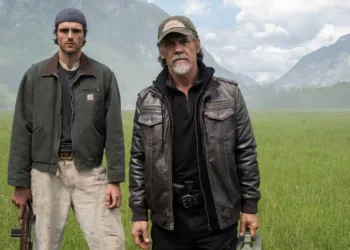
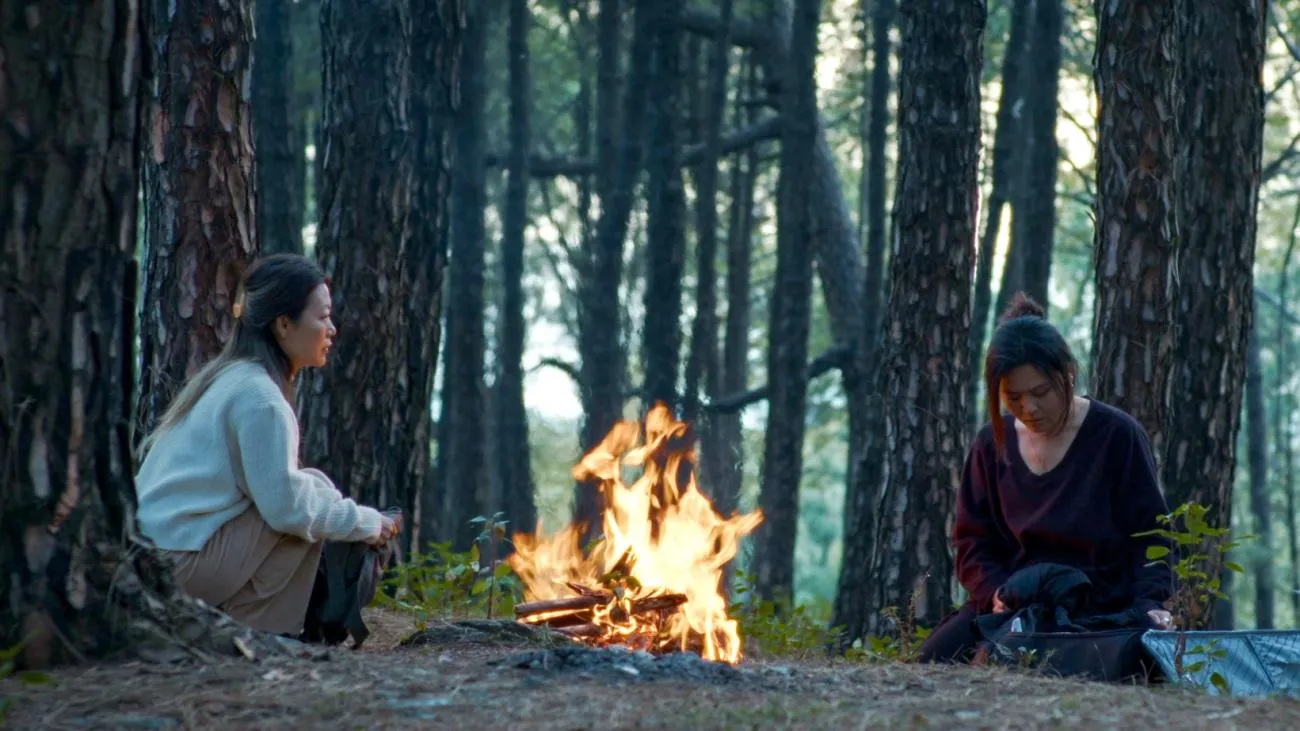
The anthology’s visual language favors patient observation, leaning on natural light and unhurried compositions. Frames often place people against expansive backdrops, including the rolling hills of Dharamshala and the wide Mekong delta. The image-making stresses scale, letting landscapes dwarf human figures and echoing the characters’ sense of smallness inside forces they cannot control.
Across all segments, the acting carries a grounded modesty. Performances stay restrained, so the emotions register as lived experience instead of scripted drama. The final chapter’s two young men bring a chemistry that stands out for its naturalism, giving the friendship a calm credibility that fits the film’s tone.
Sound helps hold the project together. Tibetan ritual music recurs, creating a consistent cultural register across international settings. Dialogue moves among Tibetan, Vietnamese, Hindi, and English, capturing the polyglot reality of lives shaped by multiple borders and daily translation. Five directors share the anthology, and the film still maintains cohesion through a shared spiritual frequency that suggests a unified vision within the Drung Collective. The aesthetics mirror an interior stillness that sustains people living in limbo, where the outer world keeps shifting and the inner work of endurance never stops.
Reimagining Belonging Beyond Borders
The film treats belonging as memory and perseverance. Its characters live in a liminal condition, suspended between a homeland they cannot reach and a future that remains unresolved. Identity becomes survival work, carried through the stories people tell and the languages they speak in foreign places. The narrative turns toward a question about dreams: is a stateless person allowed to dream? The film leaves that question open, pressing the audience to sit with uncertainty as a defining feature of the Tibetan plight.
State of Statelessness functions as a document of contemporary Tibetan cinema, arguing for the endurance of a national cinema without a sovereign territory. It shows artistic traditions adapting to modern global realities while holding on to cultural soul. The film presents a people building lives inside the constraints of exile, bound together by remembrance and ritual across far-flung settings. Borders divide bodies across geography, and shared remembering creates a space that power cannot seize.
State of Statelessness is the first ever Tibetan language anthology feature film, premiering globally at the Busan International Film Festival in late 2024 before making its way to international markets. The film consists of four short segments directed by filmmakers from the Tibetan diaspora living in India, the United States, and Vietnam. Each story explores the profound emotional and social realities of migration and life in exile, capturing the poignant experiences of a scattered people through themes of family, ritual, and identity. In the United Kingdom, the film began its theatrical run on January 16, 2026, and is available for viewing at select independent cinemas such as the National Science and Media Museum and the Garden Cinema.
Full Credits
Title: State of Statelessness
Distributor: Day for Night, White Crane Films, Drung Tibetan Filmmakers’ Collective
Release date: October 2024 (World Premiere), January 16, 2026 (UK Theatrical Release)
Rating: 12A
Running time: 106 minutes
Director: Tenzing Sonam, Ritu Sarin, Tsering Tashi Gyalthang, Sonam Tseten, Tenzin Tsetan Choklay
Writers: Tenzing Sonam, Tenzin Tsetan Choklay, Tsering Tashi Gyalthang, Sonam Tseten, Tenzin Kalden
Producers and Executive Producers: Tenzin Tsetan Choklay, Yodon Thonden, Sonam Tseten, Tenzin Kalden
Cast: Tenzin Tseten, Thupten Dhargay, Kalsang Dolma, Tenzin Choegyal, Phuong Linh Nguyen, Kieu Oanh, Tenzin Pema, Tenzin Phuntsok, Thi Phi Phung Nguyen, Tenor Sharlo
Director of Photography (Cinematographer): Tenzin Kalden, Anand Bansal, Ray Lavers
Editors: Tenzing Sonam, Tenzin Tsetan Choklay, Tsering Tashi Gyalthang, Sonam Tseten, Tenzin Kalden
Composer: Tenzin Choegyal, Jampa Tsering, Michael Montes, James Forest, Yehezkel Raz
The Review
State of Statelessness
State of Statelessness is a thoughtful, evocative meditation on the Tibetan diaspora. By favoring quiet observation over political grandstanding, it captures the psychological weight of exile with remarkable grace. While the pacing varies and some segments offer more conviction than others, the anthology remains a cohesive and vital work of art. It succeeds in making the abstract concept of a "lost home" feel deeply personal and immediate.
PROS
- Stunning, naturalistic cinematography across all four segments.
- Rich integration of ritual music and polyglot dialogue.
- Avoids clichés by focusing on the internal, lived reality of displacement.
CONS
- Certain performances lack the conviction found in the stronger chapters.
- Short runtimes leave some complex conflicts feeling slightly unresolved.
- Small moments in the second segment lean toward a traditional melodrama.