



























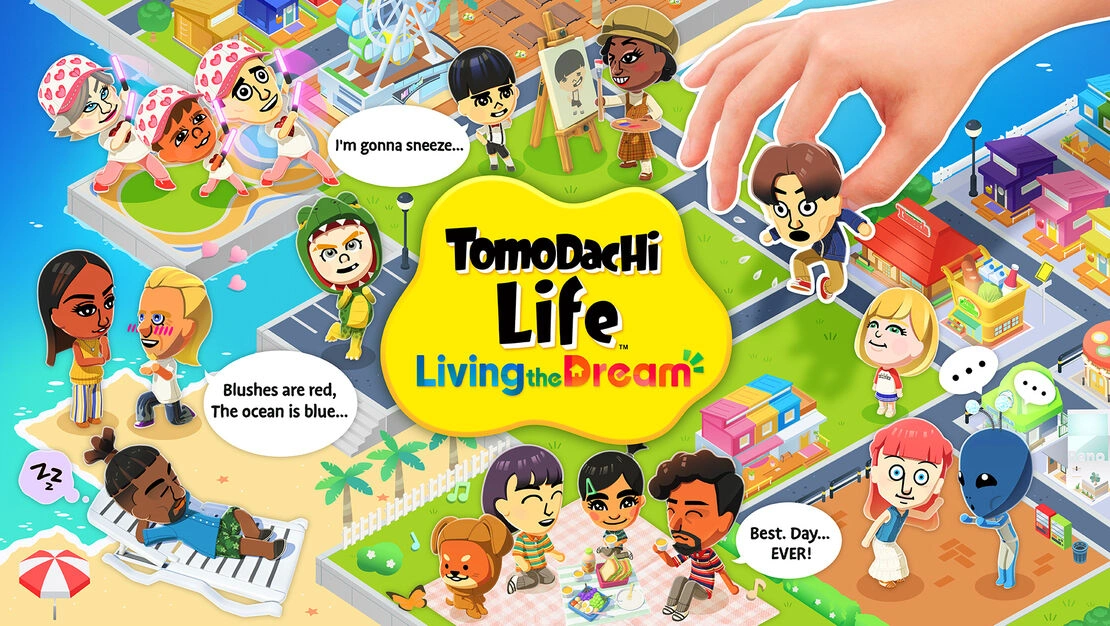

Tomodachi Life: Living the Dream brings the series’ odd social simulation into a new hardware era with a much broader sense of space. The first game leaned on static menus to stand in for its world. This follow-up turns the island into one connected landmass where residents move through linked areas.
Your role is part caretaker, part spectator, guiding a population of Mii characters that can include family members or celebrities. The move to high definition sharpens the visuals and keeps the plastic, toy-box look intact. The result feels like a digital dollhouse built for watching tiny lives play out inside a carefully arranged space.
The game takes a very different approach from the goal-driven design of The Sims. It focuses on observation and small nudges instead of constant direction. Much of the appeal comes from watching your creations interact inside a snow globe version of society. Moving to Switch hardware cuts out the stop-and-start feel that came with loading separate locations, so the island holds together as a single place.
Anyone hoping for a dense management game may find it light next to Pokopia. Its strength comes from the strange social energy that grows once the Miis start bouncing off each other. You spend long stretches watching them build a tiny civilization shaped by your own jokes, preferences, and sense of chaos. The island works as a playground for that kind of authorship.
The Mechanics of Personality and Identity
Character creation sits at the base of the entire experience. The revised Mii Maker includes options missing from earlier Nintendo systems. Hair customization now lets you combine different styles for bangs and the back section, which opens the door to much closer recreations. Secondary hair colors and detailed eye pupils push that accuracy even further.
The addition of ears gives the models a finished look that the 3DS versions never had. Past appearance choices, the personality system uses five sliders to shape each resident, and those settings feed into one of sixteen personality types.
Also Read






A Mii can land in categories such as Perfectionist or Trailblazer depending on how you set traits like social energy and logic. The game also updates its approach to identity through selectable pronouns and dating preferences for each character. That adds an inclusive layer the series was missing ten years ago.
The creation suite gives players plenty of room to fine-tune who lives on the island, yet sharing those creations has become much harder. Nintendo cut the QR code system, leaving local wireless as the only way to trade Miis. Another player has to be in the same room to receive your work. That choice shrinks the social side of the game and leaves people recreating detailed characters by hand if they cannot meet up. Without an online gallery, the whole setup feels cut off from a larger player base.
Social Chaos and the Comedy of Repetition
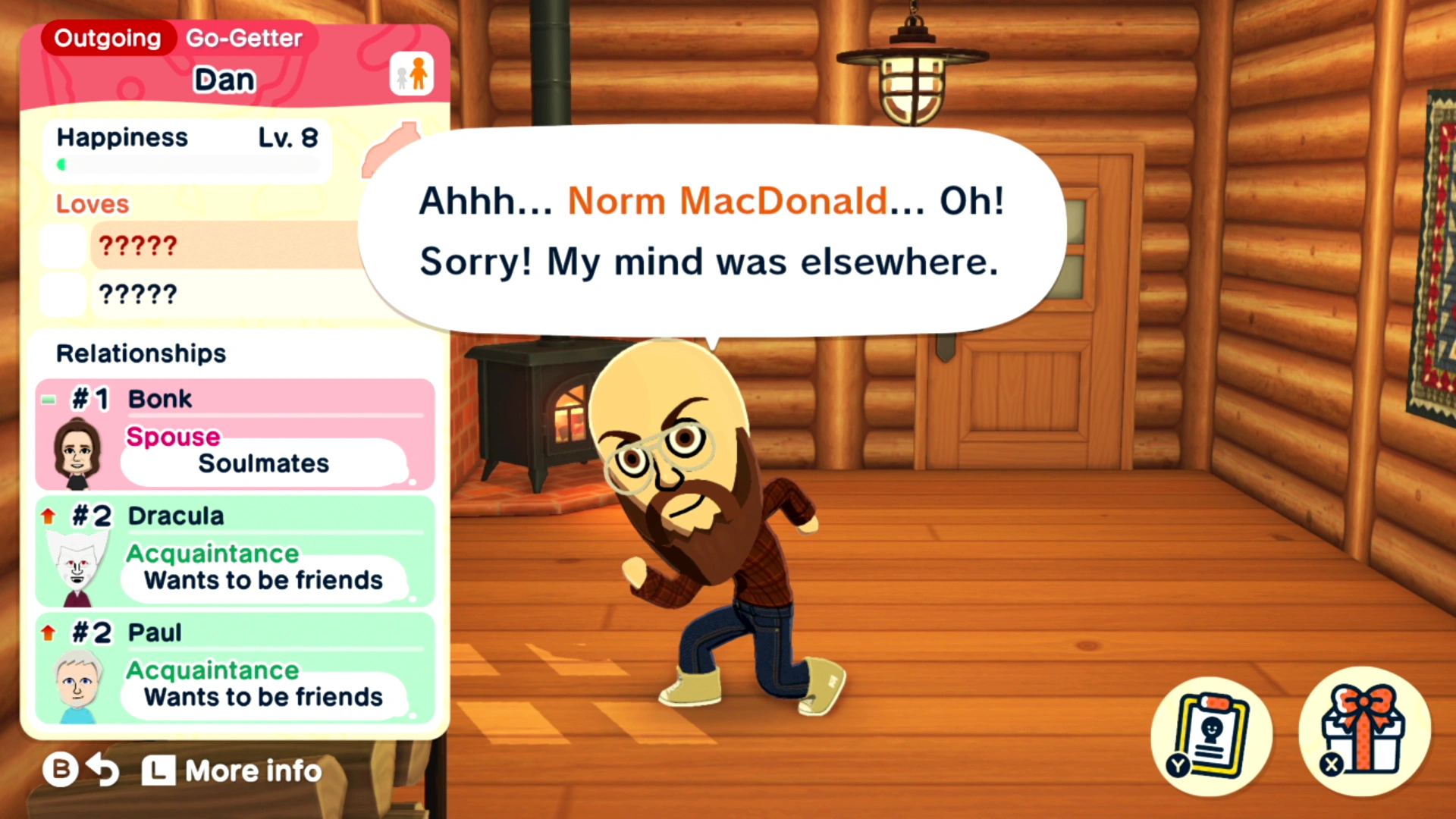
Daily play centers on keeping residents happy. You hand out food and clothes to earn warm fuzzies, a currency that functions like experience points for each Mii and for the island itself. High happiness leads to rewards that let you shape behavior in small but funny ways, from custom catchphrases to movement quirks such as hopping or bounding. A single gift can reshape a character’s room routines too. Give someone a workout DVD, and that resident may start lifting weights at home.
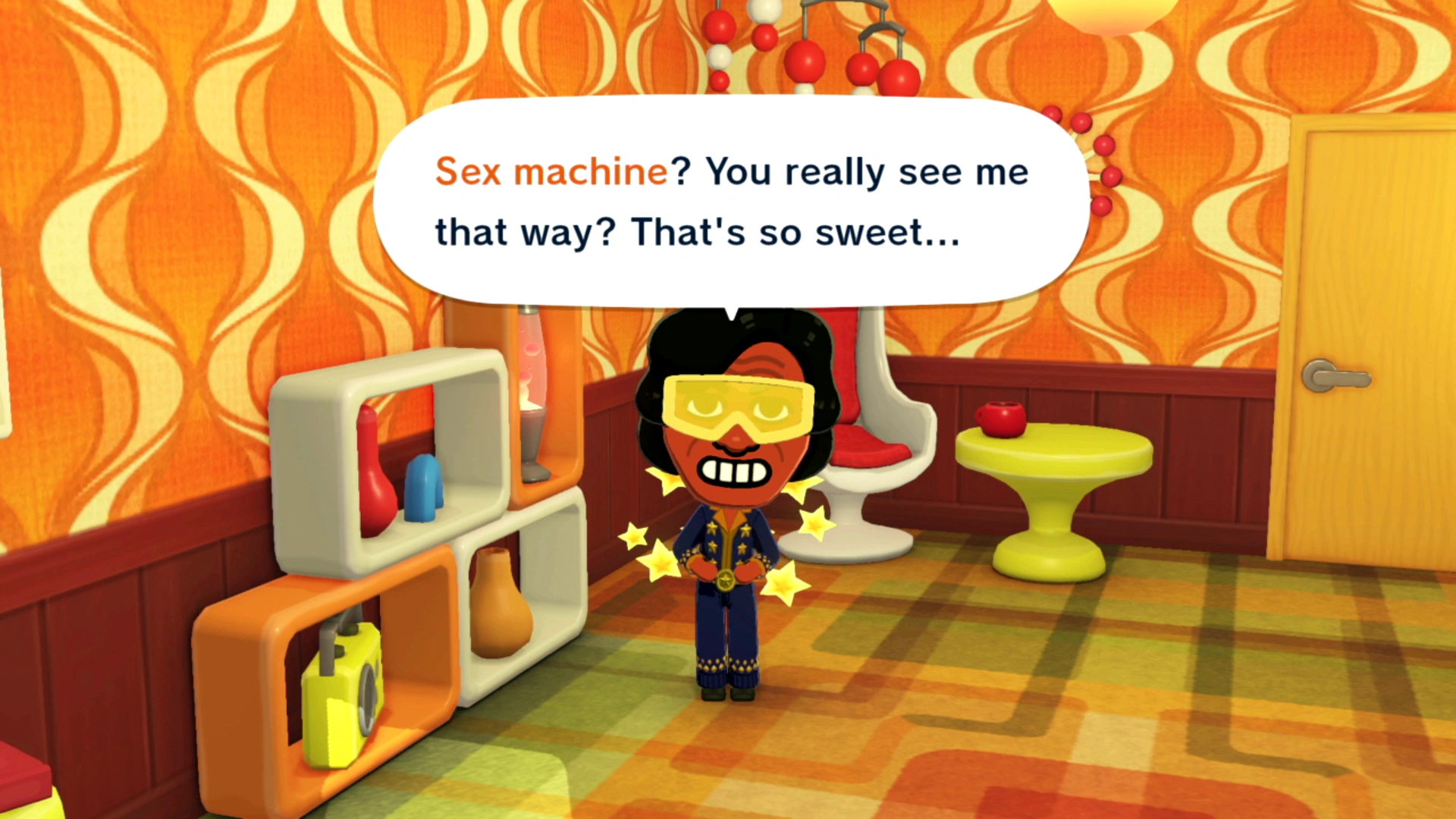
A lot of the comedy comes from the text-to-speech system and the game’s strange script. Two residents might end up in a heated fight over a reality show. Someone else might pull on a chicken suit in an attempt to patch things up with a friend.
Dream scenes drift into nonsense with sharks, odd ceremonies, and other surreal images. These short scenes give the game its absurd rhythm. Relationships also grow on their own. Miis fall in love, move into shared apartments, get married, and settle into domestic life while you watch the whole thing unfold.
That said, the systems do not have much depth. Several minigames repeat too often, and activities like guessing food from a silhouette or bowling with Miis lose their pull fairly fast. Social events start cycling through familiar material after a few hours.
The same friend-making conversations come back again and again. A lot of the humor depends on how much of your own personality you pour into the setup. Players who enjoy feeding the game personal jokes will get stronger results from it. Players who leave that work untouched may see the AI’s charm wear thin much sooner. It plays best in short visits, where the repetition has less time to settle in.
Construction Tools and Hardware Efficiency
For players who want deeper customization, the Palette House opens up a stronger set of building tools. This workshop lets you create items from the ground up, including food, clothing, and pet versions of real animals for your residents. The editor has enough flexibility to reproduce famous outfits or build highly specific interior designs. You can even define a spicy flavor profile for a custom food item. It is a detailed system that supports a lot of playful experimentation.
The Island Builder works alongside it by letting you reshape the island itself. Vending machines can be placed wherever you want, and houses can be moved around with only a few button presses. Most environmental edits cost nothing, which makes experimentation easy.
A grassy field can become a sandy beach, and a plain area can gain sidewalks in a matter of moments. On the technical side, the game holds steady performance and reaches 1080p in handheld mode on Switch 2. That higher resolution keeps text clear and character models crisp on the smaller screen.
The Palette House editor does lose some ease from the lack of mouse support, especially compared with the feel of using a stylus on 3DS. Showing off what you make turns into another frustration. Nintendo blocks direct image and video uploads to social media, and screenshots cannot be sent to a smartphone. If you want to share a custom shirt, the process runs through a USB cable and a PC. For a 2026 release, that setup feels old-fashioned. It puts distance between the player’s creations and the community that would likely enjoy them.
The Review
Tomodachi Life: Living the Dream
Tomodachi Life: Living the Dream delivers a comical look at social dynamics through a sharp lens. The deep customization and inclusive options offer a strong foundation for player expression. The lack of online sharing remains a significant hurdle for people who prefer community engagement. The gameplay loop feels familiar after several hours. Still, the bizarre interactions provide amusement. It serves as a solid evolution for fans of the genre.
PROS
- Advanced Mii customization tools
- Inclusive pronoun and dating options
- Hilarious AI behavior
- Sharp 1080p handheld performance on Switch 2
CONS
- No online Mii or item sharing
- Repetitive minigames
- Media sharing requires external hardware