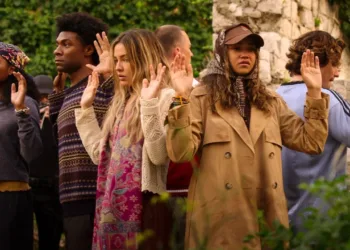
















Hartley High now stands like the bones of a sanctuary after the miracle has expired. Two months after the inferno, its physical ruin becomes an architectural diagram of the graduating class’s inner weather: charred, unstable, still trying to pass inspection.
The students return to a campus under reconstruction, though the scaffolding has the aura of permanence. The look stays loud, maximalist, almost combative in its refusal to behave. A heavier gravity has entered the frame. A specific species of teenage invincibility is dying here.
Graduation hangs over them like a guillotine disguised as a milestone. The mood has moved from the frantic spark of sexual discovery to a cramped awareness of the adult world, that great paperwork monster demanding confession, payment, and accountability. The botched Muck Day celebration becomes the event that burns off the glitter and exposes the weak beams holding up their futures.
The Bureaucracy of Being and the Great Divide
The student body has split into a hierarchy of “future-seekers,” with each path shaped by class, capability, and the old machinery of access. Amerie lives in constant self-correction. She tries to handle a new romance with Noah while staying trapped in reputational cleanup mode. Her past “dumb decisions” follow her like a shadow with administrative privileges. She performs a daily internal audit, trying to prove she can stop being the villain in her own story. Moral repair becomes one of the season’s most tiring rituals.
Quinni has become school captain, using the role to push institutional progress through a sensory room. That change feels genuine, rare, and hard-won. Her pursuit of a veterinary scholarship then places her against a professional world that views her autistic traits with cold, clinical suspicion. Her arc exposes the “empathy gap” that often hides inside meritocratic spaces. Her intelligence is accepted. Her humanity keeps getting treated as a variable for management.
Darren and Ca$h create a delicate kind of stability, a small domestic rhythm that makes everyone else’s volatility seem louder. Sasha, Missy, and Spider begin to come apart as an alliance. Spider becomes a sharp study in modern masculinity. He carries little personal ambition, circling Missy’s athletic drive like a moon around a planet with better cardio. He seems content as a footnote in her success, which feels progressive in one glance and faintly tragic in the next. Call it beta-chivalry, maybe. Sweet, sincere, and oddly hollow.
Also Read






The economic divide cuts through the group with a serrated edge. Harper’s struggle lands with the harshest force. She represents the playground precariat, balancing two jobs against a failing academic record. Her life is made of hard trade-offs that peers dreaming about multi-million-dollar podcasts can barely understand. Ca$h also looks toward a tattooing apprenticeship as a practical escape hatch. His motivation mixes personal desire with fear of his grandmother’s formidable, “curb-stomping” wrath. These futures carry little grandeur. They are survival plans.
Malakai’s return from Geneva brings unresolved tension back into the circuitry. He is a ghost in the machine, carrying an unread letter and a history of unspoken truths. His presence makes Amerie face the “what ifs” of her past as she tries to steady herself in the present. Taz, Woodsy’s niece, enters as pure disruption. She forces the group to reassess its own private rankings and loyalties. She is the wild card in a deck already being reshuffled by the end of school.
The Gravity of a Falling Saint: A Study in Consequence
The main narrative arc moves from high-spirited prank to possible legal catastrophe with the slow logic of a trap closing. The rivalry with St Bruno’s has the old shape of class warfare, the “povvo” kids set against the “snobs.” Amerie’s decision to steal a religious bust from the rival school comes from a desperate attempt to manufacture joy for Harper. It is trauma-bonding via felony, which sounds ridiculous until the police become involved. Operation Headjob becomes the pivot where the show leaves the school yard’s safety behind.
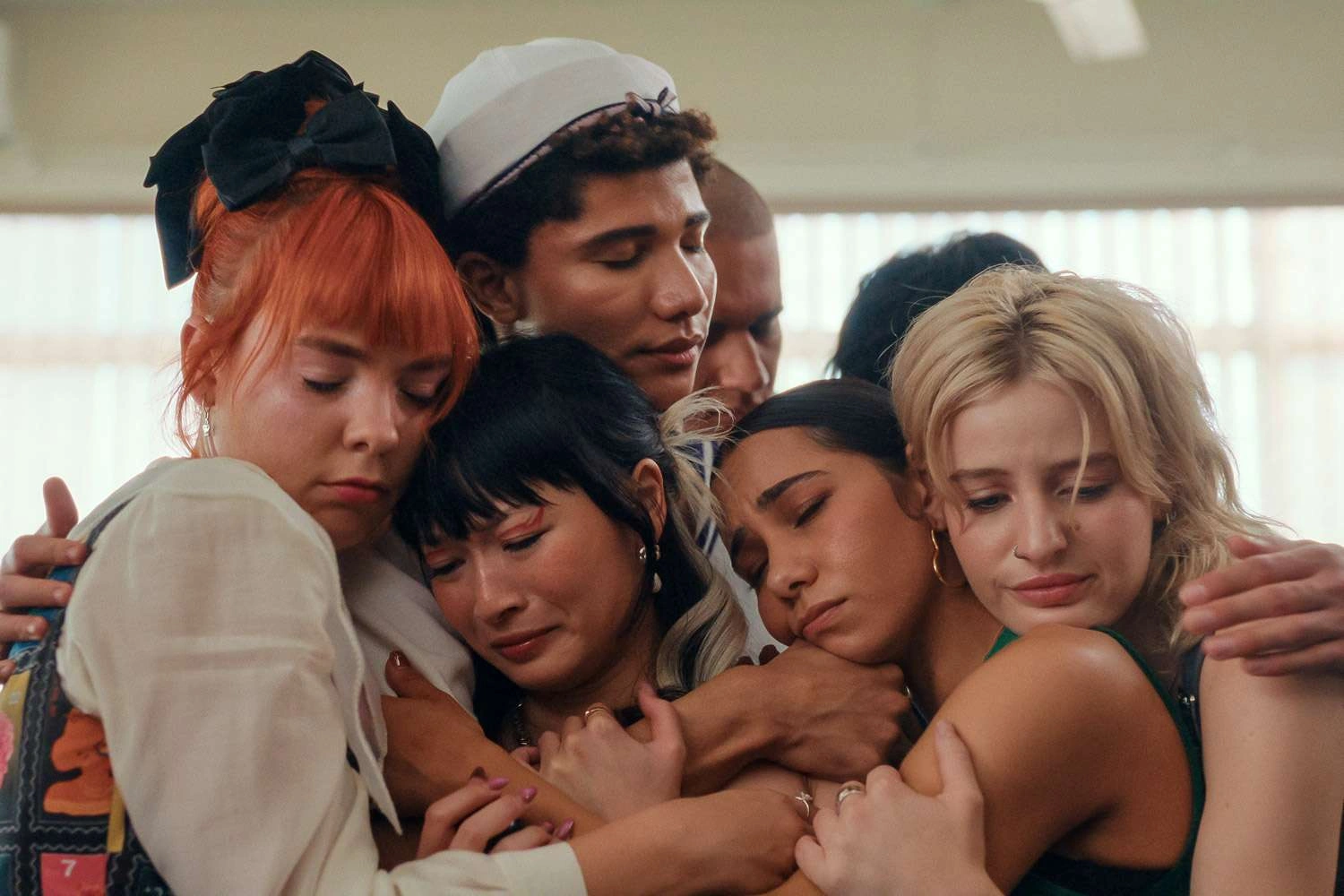
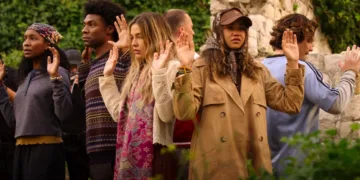
The carnival climax is a controlled escalation of dread. Malakai tries to retrieve the bust from a ride, then a malfunction sends Clancy into a catastrophic fall. The group’s decision to flee becomes a defining moral failure. Their shared integrity collapses in that moment. The secret turns toxic, spreading through them like psychological rot. Friendship changes into conspiracy.
The investigation that follows marks a hard genre shift. Police and school authorities close in. The “wacky hijinx” of earlier seasons start to look like a luxury from another country. The teens learn that the world has little interest in their intentions. The law studies outcomes. Their status changes from kids behaving badly to possible defendants in a criminal case. Adulthood arrives as procedure: cold, filed, stamped, unforgiving.
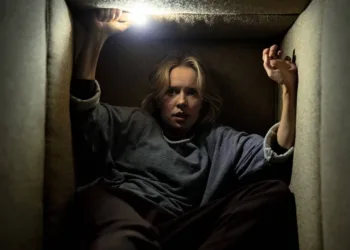
The cover-up leaves a deep psychological bruise. Suspicion replaces support, creating a private version of “cancel culture” inside the group. Each character faces the possibility that one night could wreck a path to university or a stable career. The season uses the incident to examine consequence-realism, a useful little term for the moment youth loses its fantasy of reversible damage. Adulthood begins when a mistake becomes permanent.
The Aesthetic of the Digital Native and Visual Defiance
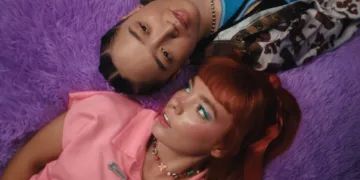
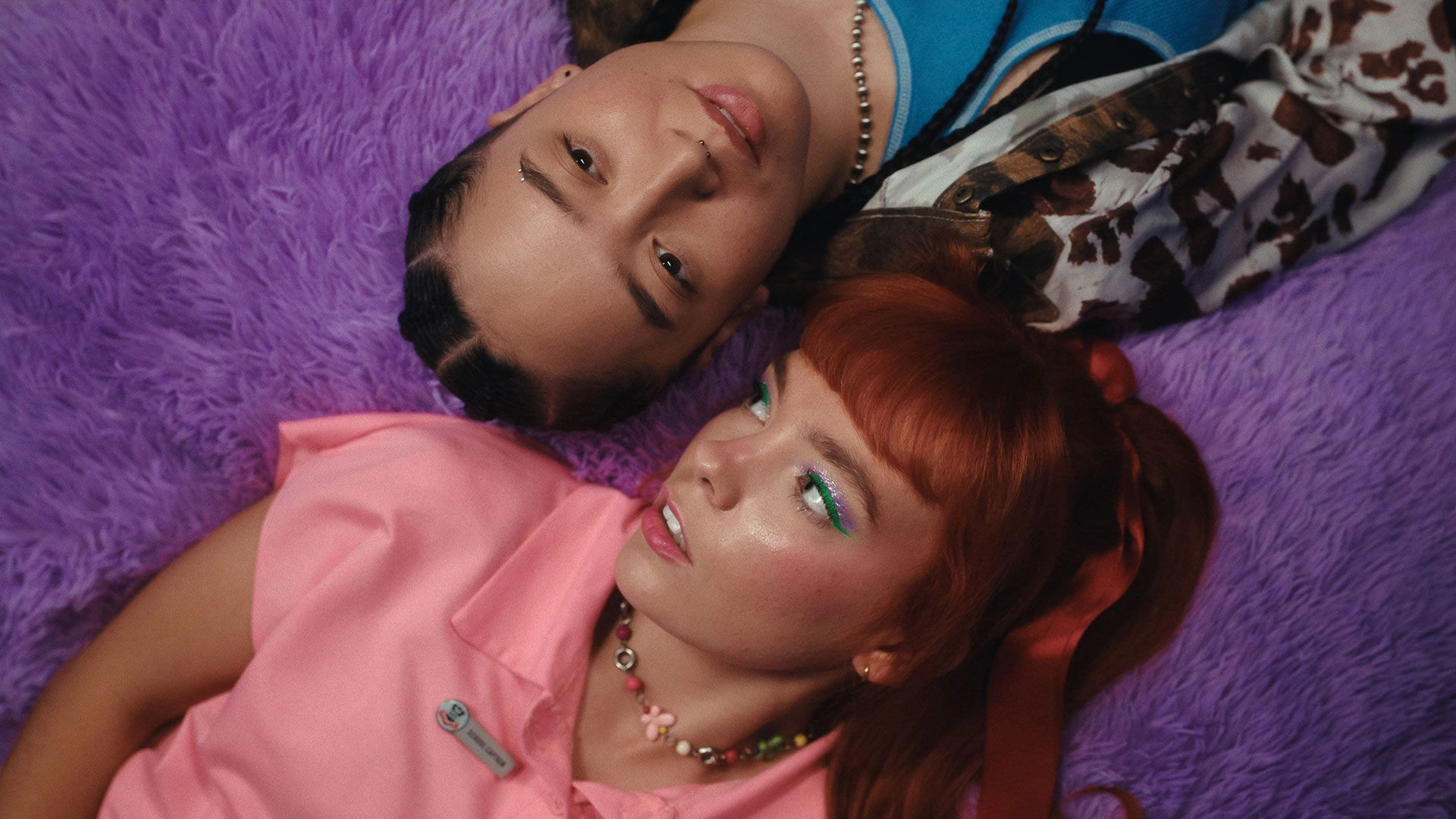
The series’ visual identity remains its sharpest weapon. The wardrobe keeps operating as maximalist defiance. Every outfit becomes a curated identity statement, a visual scream aimed at a world trying to quiet them. Makeup functions like war paint, an “outrageously fashionable” shield against humiliation, surveillance, and plain old insecurity. The cinematography registers the tonal shift. The lighting grows harsher. The framing tightens. Bodies seem trapped inside skin that has become too aware of itself.
Music remains a vital organ in the show’s body. The soundtrack gives the season a pulse, keeping energy alive as the story sinks into gloom. Genesis Owusu’s appearance brings a moment of real cultural charge, placing the show within a specific Australian musical landscape. The series handles diversity with a lived-in ease. These identities register as facts of life, free of lecture-hall stiffness. Quinni’s neurodivergence receives technical depth, avoiding the usual clichés of the “gifted” figure and the “burdened” figure.
The pacing moves in a restless dance between over-the-top silliness and earnest, mature dialogue. At times, the characters can feel “annoyingly earnest.” Are seventeen-year-olds truly parsing the nuances of open relationships with this much intellectual discipline? Maybe.
In the age of constant digital discourse, maturity can look like a side effect of living permanently online. They have grown up in a hall of mirrors, where every thought seems performed for an audience. The show captures that frantic intellectualism without draining away its sense of fun. This is a portrait of a generation painfully aware of its own performance.
The Redemption of the Ruined and the Final Threshold
The finale studies the collapse of “main character syndrome.” The era of the sex map and consequence-free exploration has ended. The focus has shifted to the ordinary horrors of reality: failed exams, bills that require payment, and the discovery that the world refuses to bend around teenage desire. For a series that began in such bright chaos, this ending feels sobering.
The season examines peer-to-peer bullying with particular sharpness, showing how friends can become the most efficient “cancelers.” The damage comes from inside the group, which makes it harder to name and harder to survive. Personal growth appears as painful, messy, and expensive. Mistakes become the route toward change. Redemption remains possible, with a price attached. It requires the shedding of an old self, a process that can destroy as much as it creates.
The final goodbye earns its “generation-defining” charge. The characters stand at a threshold between the ruins of youth and the uncertainty ahead. Hartley High can no longer protect them. The future looks uncertain, and for some, bleak. Hope exists, though it comes with bruises.
It is cautious hope, the kind carried by people who have seen fire, survived the fall, and found themselves still standing. They head out the door without going quietly. High school ends. The struggle to remain a decent human being inside a world of consequences has barely begun.
The third and final season of the acclaimed Australian teen drama premiered on Netflix on March 25, 2026, marking the end of an era for the students of Hartley High. Filmed in Sydney, this concluding chapter follows the group as they navigate the volatile final weeks of Year 12, dealing with the fallout of a prank gone wrong and the looming pressure of adulthood. Fans can stream the entire eight-episode season globally on Netflix, where the show continues to be celebrated for its vibrant aesthetic and its unflinching, contemporary exploration of identity and relationship dynamics.
Where to Watch Heartbreak High Season 3 Online


Full Credits
Title: Heartbreak High Season 3
Distributor: Netflix
Release date: March 25, 2026
Rating: TV-MA
Running time: 45–52 minutes per episode
Director: Jessie Oldfield, Adam Murfet, Tig Terera, Nina Buxton
Writers: Hannah Carroll Chapman, Megan Palinkas, Keir Wilkins, Hannah Samuel, Jessica Paine, Thomas Wilson-White, Sarah Emery, Thomas Weatherall
Producers and Executive Producers: Sarah Freeman, Anna Curtis, Carly Heaton, Jeroen Koopman, Anna Molyneaux, Tarik Traidia, Brian Abel, Michael Jenkins
Cast: Ayesha Madon, James Majoos, Chloé Hayden, Asher Yasbincek, Thomas Weatherall, Will McDonald, Gemma Chua-Tran, Sherry-Lee Watson, Bryn Chapman Parish, Brodie Townsend, Chika Ikogwe, Rachel House, Kartanya Maynard, Aki Munroe, Ioane Sa’ula, William McKenna, Ben Turland
Director of Photography (Cinematographer): Tarik Traidia, Simon Ozolins
Editors: Ariel Shaw, Rodrigo Balart
Composer: Chiara Costanza
The Review
Heartbreak High Season 3
This final season succeeds as a sobering autopsy of teenage invincibility. It replaces the kinetic horniness of earlier chapters with a heavy, consequence-driven realism that feels both earned and unsettling. While the earnestness occasionally veers into the performative, the show remains a vibrant, essential portrait of a generation forced to rebuild itself amid the rubble of its own mistakes. It is a messy, fashionable, and deeply human farewell to the chaos of Hartley High.
PROS
- A masterclass in maximalist fashion and expressive makeup that acts as a vital extension of character psychology.
- Neurodivergence and queer identities are woven into the narrative fabric without becoming didactic "after-school special" tropes.
- The shift toward a darker, grounded reality effectively mirrors the genuine anxiety of transitioning into adulthood.
- Characters like Quinni and Harper are afforded complex, class-conscious arcs that transcend typical teen drama clichés.
CONS
- At times, the teenagers speak with a philosophical rigor that feels more like a writer’s room than a high school hallway.
- The introduction of Taz and certain subplots feel slightly compressed within the eight-episode limit.
- The heavy focus on consequences occasionally saps the freewheeling, anarchic energy that defined the first season.