















The human back, seen from a punishing closeness, becomes a map of tiny ruptures, raised textures, and silent evidence. Julien Gaspar-Oliveri opens The Blow (La Frappe) with that image, announcing a film concerned with the body as a keeper of memory. Nineteen-year-old Enzo and his older sister Carla have survived for years on their own after state care and the disappearance of their mother.
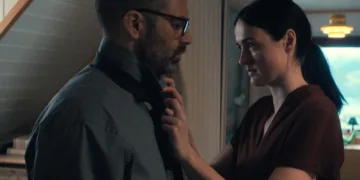
Their unstable calm breaks when their father, Anthony, leaves prison after a five-year sentence for financial fraud. Enzo hungers for a restored family bond and pulls Anthony into a shared street-market venture with almost aching eagerness. Carla answers the reunion with pathological refusal, her body tightening into a visible state of resistance.
Anthony’s entrance into their cramped apartment drags the household backward, bringing old violations into the air again. The film studies the friction between a parent marked by his past and children formed by that past, where physical nearness exposes an emotional gulf that remains catastrophic.
Section 2: The Corporeal Dialect of Domestic Ruin
Cinema often translates psychological trauma into confession. This narrative gives the body a harsher authority, treating posture, recoil, and contact as records of suffering. These characters speak through their limbs before they speak through language.
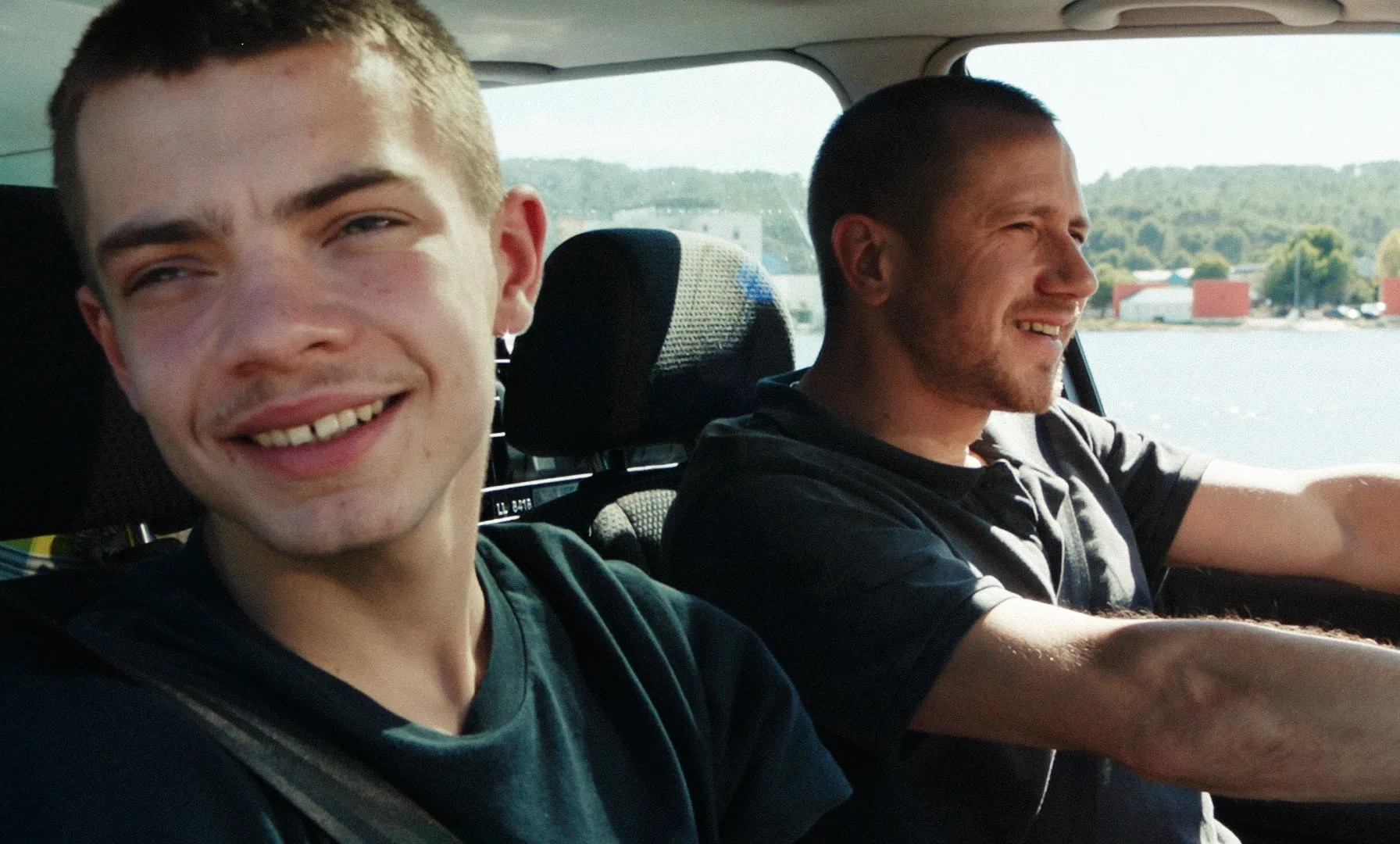
Enzo carries a boyish, fragile optimism, a softness that still reaches toward repair. Carla carries absolute hostility, sharpened into a physical doctrine of self-protection. The slightest mention of their father turns her into an instrument of defensive fury, all clenched presence and combustible anger.
The film’s emotional grammar rests on gestures that reveal what the characters cannot safely articulate. When Enzo collects Anthony from prison, he clings to him in a desperate, extended embrace, burying his head against his father’s chest like an abandoned child trying to pin a vanishing parent to the world. Anthony receives the embrace with chilling stiffness.
On the beach, the same rupture returns through posture: Enzo curls inward with his knees drawn tight, Anthony sprawls across the sand in careless ease. A brief, chaotic cake fight with Roxane’s family makes the siblings’ estrangement from ordinary domestic warmth painfully clear.
Once the buried history rises, Enzo’s sunny surface splits. His inner rot breaks outward through sudden, frightening eruptions of violence. That descent brings him to emotional paralysis. The final act denies tidy repair; Anthony disappears from their lives again, and the siblings meet a quiet parting that leaves Enzo broken at a foundational level.
Section 3: Visceral Framing and Sonic Dissonance
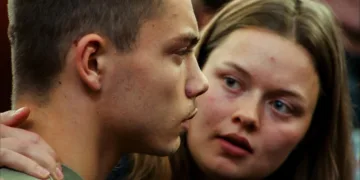
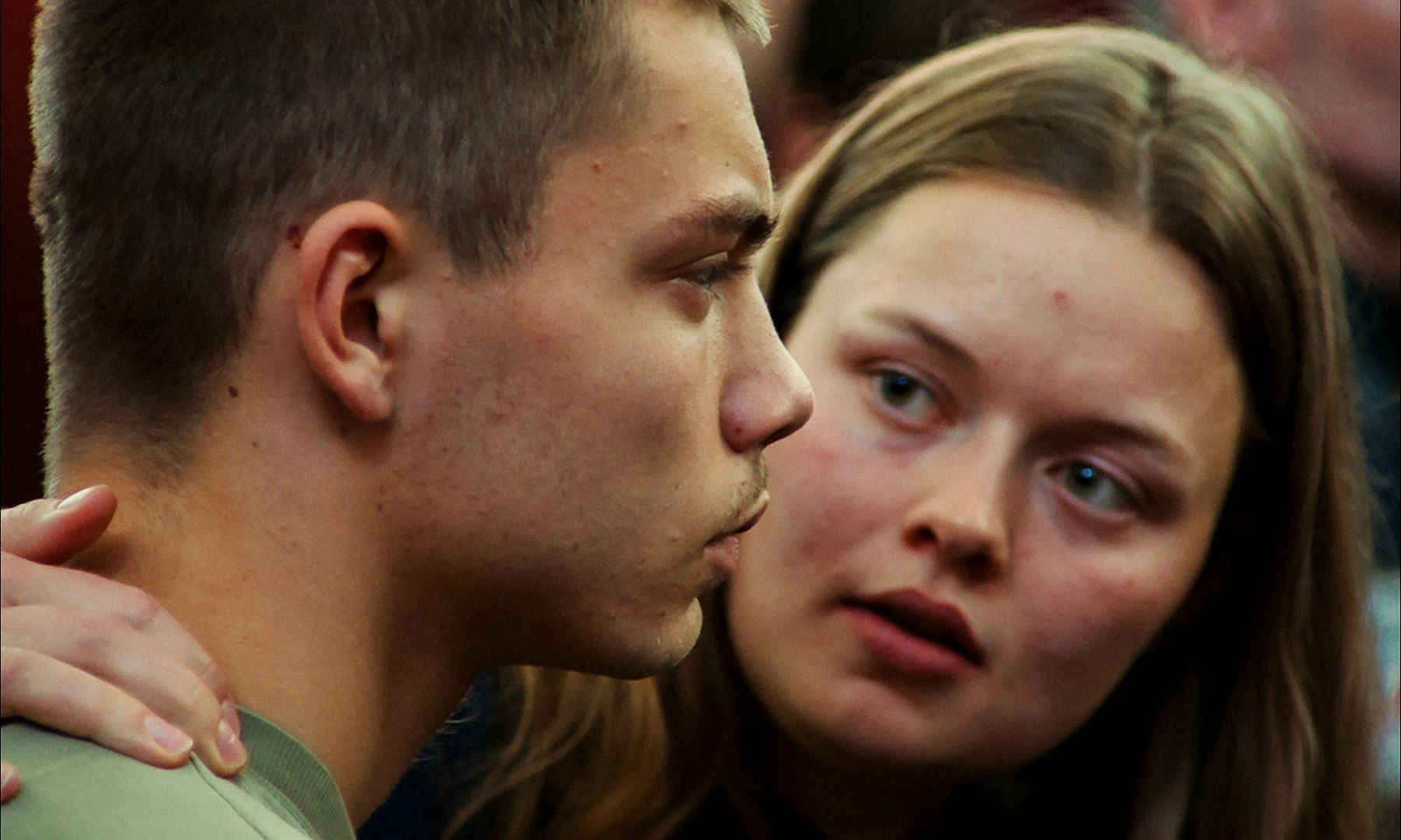
The film’s texture presses this sense of enclosure through a raw, realist surface. Cinematographer Martin Rit uses a handheld camera that hovers inches from the actors, catching skin, twitching eyes, and minute changes in expression.
This closeness creates a difficult intimacy, placing the viewer inside the deterioration of a domestic space with no comfortable distance. The close-ups turn inner claustrophobia into visual pressure. Occasional distant shots place the characters against their surroundings and stress the severity of their isolation.
The approach has serious execution problems, and those problems cloud the narrative line. The shaky camera appears in bursts, sitting awkwardly beside traditional static setups. The result is a jarring visual rhythm. Sloppy zooms and clumsy edits pull attention away from the emotional realism the film seeks to sustain.
Its naturalistic mood fractures whenever the technical apparatus calls attention to itself. The sound design carries steadier discipline. Delphine Malaussena builds an unsettling, string-heavy score filled with rattling violin arrangements that echo Enzo’s inner chaos. Those anxious tones give the piece a sonic architecture, lending a terrifying voice to pain the characters cannot name.
The Limitations of the Unspoken Script
This fragile world depends on the physical commitment of its principal actors. Diego Murgia gives a remarkable performance, carrying the film’s thematic weight through an expressive, watchful gaze. His boyish face and gap-toothed smile create a deceptive mask, making his abrupt shifts from unguarded joy to deep interior shame land with severe force. Romane Fringeli gives Carla fierce, authentic volatility, shaping a screen presence that holds attention through sheer pressure.
Bastien Bouillon’s casting works as a calculated reversal of expectation, using an actor associated with gentler roles to play a deeply flawed patriarch. Bouillon resists cartoon villainy and presents Anthony as a rough, ill-tempered mediocrity, a man profoundly unfit for parenthood.
The performance reveals the tragedy of a father who damages his children through negligence and unacknowledged cruelty. The actors work with striking intensity against a script that feels severely underwritten. At one hundred and six minutes, the film frequently sinks into a tedious slog, harmed by a narrative structure with too little developmental momentum.
The characters remain flat sketches, lacking the psychological density needed to give the late revelations full force. The long withholding of vital background information drains the climax of genuine charge, leaving the audience at a cold, clinical distance.
The feature film The Blow (La Frappe) had its world premiere at the Cannes Film Festival as a special screening in the Critics’ Week section on May 15, 2026. This raw French drama traces the volatile domestic life of two young siblings confronting the sudden return of their estranged father. Distributed domestically in France by Ad Vitam, with international sales managed by Charades, the project is currently showcased across the international film festival circuit prior to its wider theatrical and streaming release schedules.
Full Credits
Title: The Blow
Distributor: Ad Vitam
Release date: May 15, 2026
Running time: 1 hour 46 minutes
Director: Julien Gaspar-Oliveri
Writers: Claudia Bottino, Julien Gaspar-Oliveri, Dorothée Lachaud
Producers and Executive Producers: Marc-Benoît Créancier, Marine Mary
Cast: Diego Murgia, Romane Fringeli, Bastien Bouillon, Héloïse Volle
Director of Photography (Cinematographer): Martin Rit
Editors: Baptiste Petit-Gats
Composer: Delphine Malaussena
The Review
The Blow
The Blow functions as an uncompromising, visceral exploration of inherited trauma, capturing the physical realities of psychological damage through extraordinary lead performances. Julien Gaspar-Oliveri establishes a distinct, tactile cinematic voice, tracking how unspoken history manifests directly through the human body. The production falls short due to structural stagnation and erratic technical execution, leaving the narrative thin and unevenly paced. It remains a raw, commendable piece of realism that struggles to synthesize its ideas into a cohesive whole.
PROS
- Exceptional physical performances from Diego Murgia and Romane Fringeli.
- A disciplined focus on somatic communication and tactile storytelling.
- An unsettling, atmospheric musical score by Delphine Malaussena.
- Bastien Bouillon subverts expectations with a grounded, chilling portrayal of domestic mediocrity.
CONS
- A thin screenplay that leaves characters underwritten and single-dimensional.
- Inconsistent, jarring handheld cinematography and sloppy editing choices.
- Severe narrative pacing issues that cause the film to feel tedious.
- Late revelations lose their emotional weight from a lack of early character development.